
Quick Answer
diy pvc food-grade tubing mistakes — DIY PVC food-grade tubing mistakes sink home systems through the wrong plastics in nutrient contact, UV-brittle lines, glue fumes, undersized returns, and fittings that weep for weeks. Materials safety articles explain ratings; this page catalogs the costly build errors to avoid before you fill the reservoir.
See safe plastics, reservoir setup, bulkheads, and leaks.
Key takeaways for diy pvc food-grade tubing mistakes
- DIY PVC food-grade tubing mistakes often start at the hardware-store aisle, not the plant.
- Food-contact intent matters for pipes, tubs, and flexible lines touching solution.
- PVC cement and primers need full cure/vent time before nutrients and roots.
- UV and heat embrittle cheap tubing outdoors or under strong LEDs.
- Extension soilless/media and hydro primers assume inert, clean delivery hardware.
- Original preflight: material OK | cure done | leak test | UV shield | spare clamps.
- DIY PVC food-grade tubing mistakes include ignoring drain slope and air locks.
- Never assume “it held water once” equals season-proof.
Related HydroponicEra guides
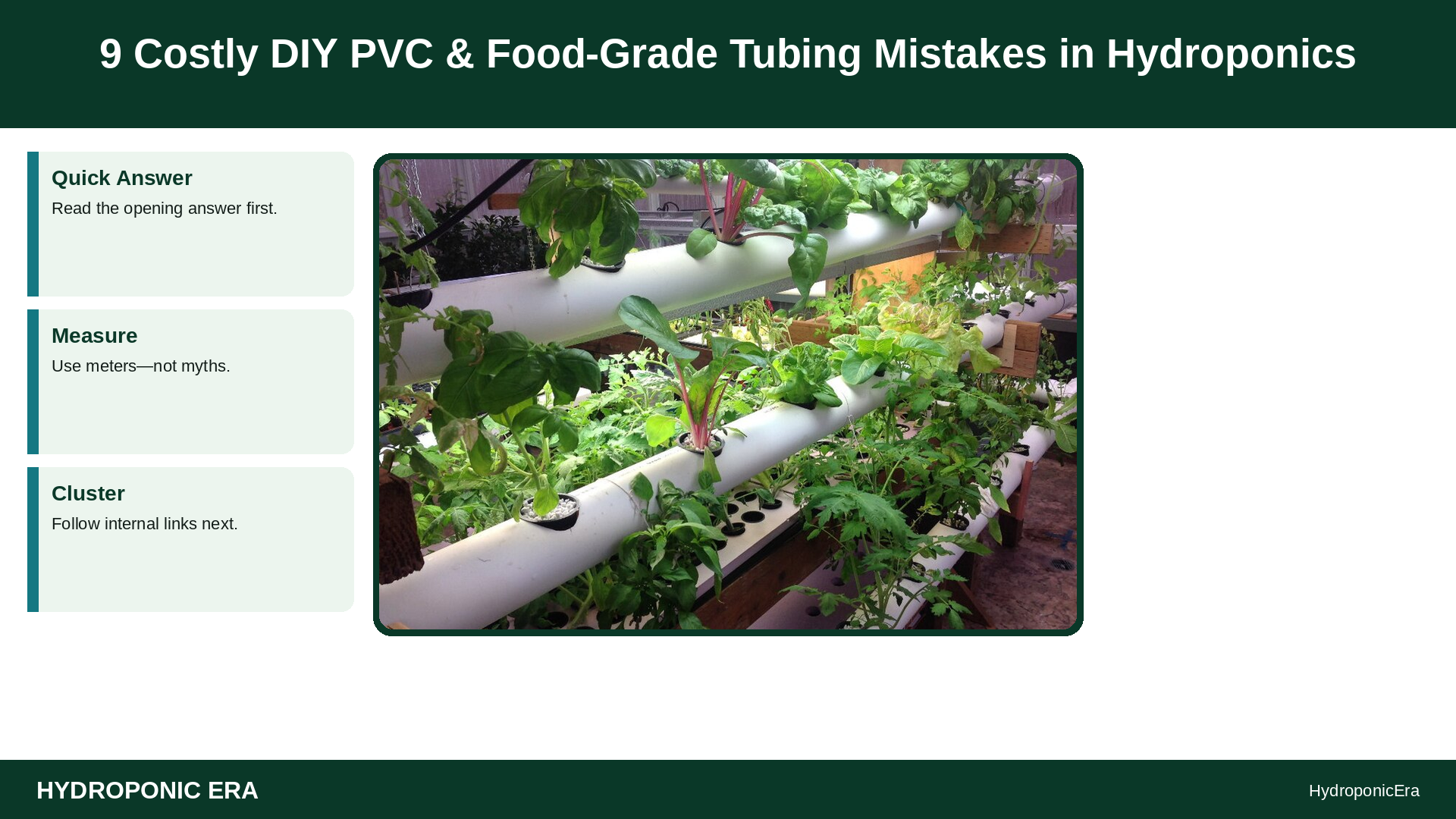
Where DIY Plumbing Goes Wrong

DIY PVC food-grade tubing mistakes matter because nutrient solution sits for days, cycles through pumps, and contacts roots that feed edible leaves. HydroponicEra’s safe plastics guide covers material classes; Oklahoma State and MSU hydroponic overviews treat systems as engineered loops—leaks and contamination are design failures, not badges of honor.
Mistake Catalog
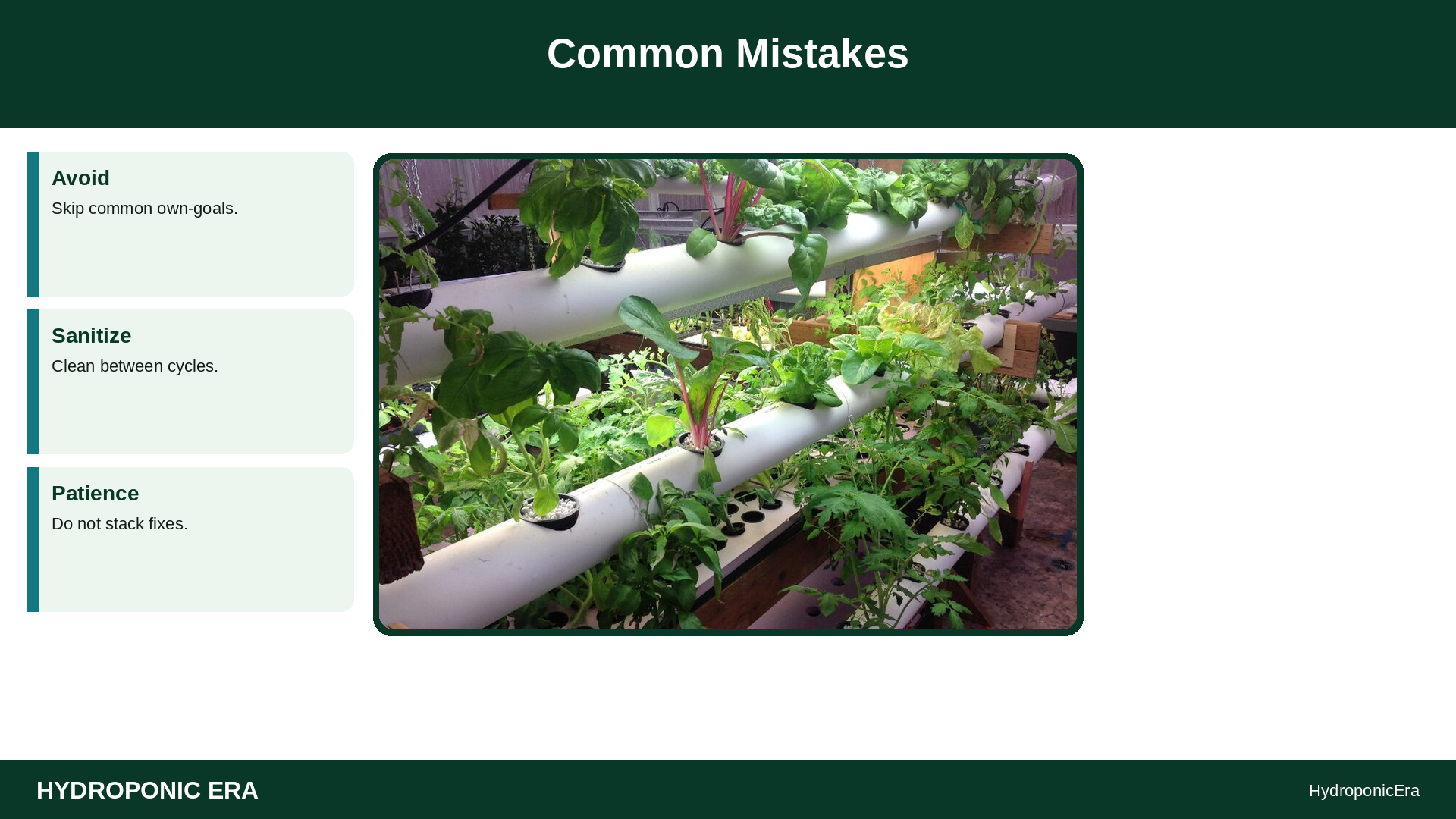
- Using mystery vinyl that stinks or clouds in nutrients
- Solvent-welding then filling same afternoon
- Clear tubing as algae greenhouse lines
- No unions for pump service
- Hose clamps on the wrong bead / overtightened cracks
- Returns that cascade loudly and oxidize poorly placed
- Rigid PVC with zero expansion consideration on hot balconies
- Ignoring manufacturer food-contact markings when you need them
Step-by-Step Safer Build
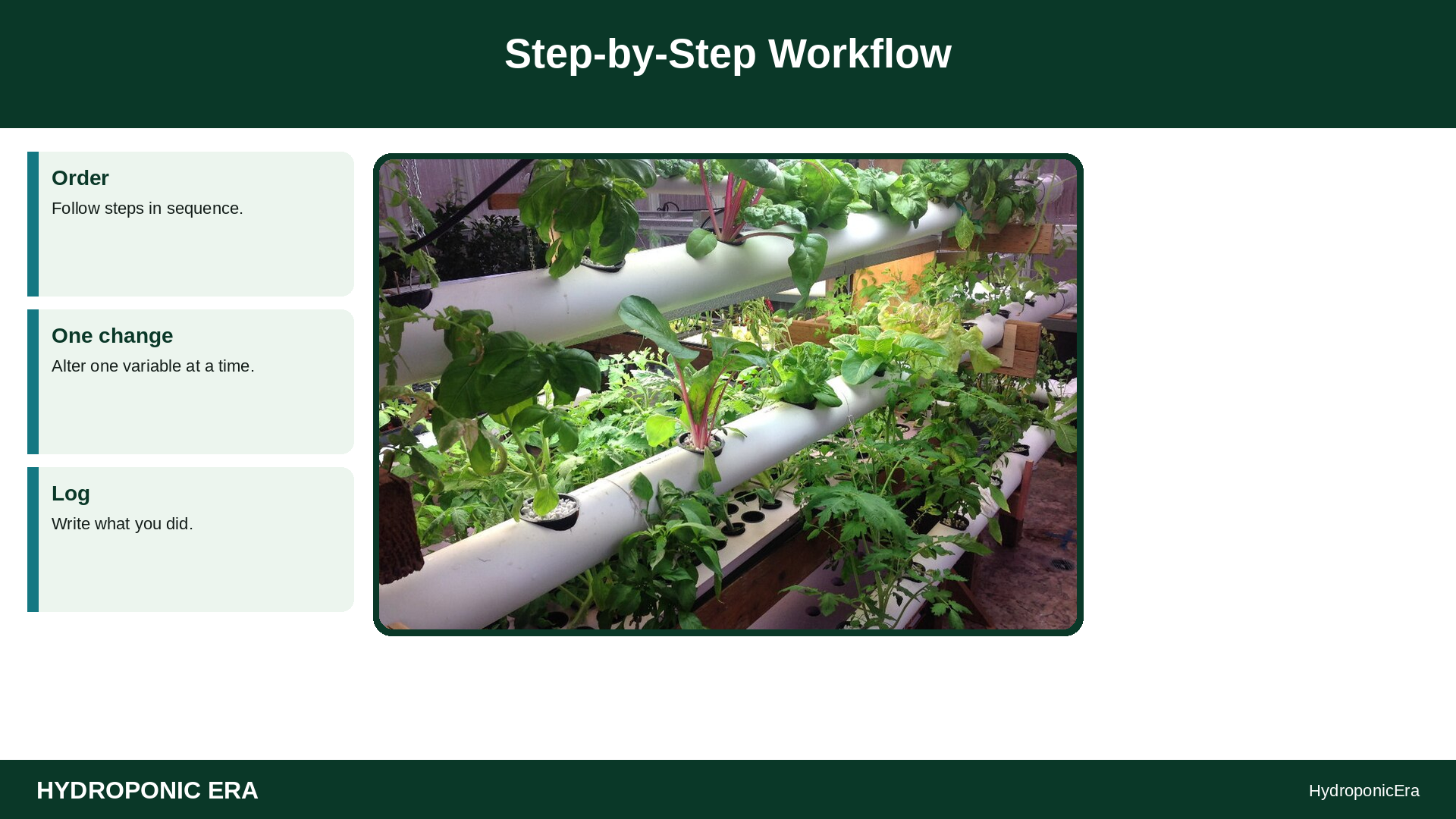
- Read safe plastics and choose vessel/tubing intentionally.
- Dry-fit the entire loop before gluing.
- Install bulkheads with correct gasket orientation (bulkheads).
- Cure solvent welds per label—ventilate.
- Pressure/leak test with plain water for hours ({a(‘leaks’,’leaks’)}).
- Shield outdoor lines from UV; prefer opaque where algae risk is high.
- Add service unions near pumps and filters.
- Label flow direction; avoid air-lock high points without vents.
- Keep a parts bin: clamps, barbs, spare tubing lengths.
- Only then mix nutrients.
Tubing & PVC Comparison Notes
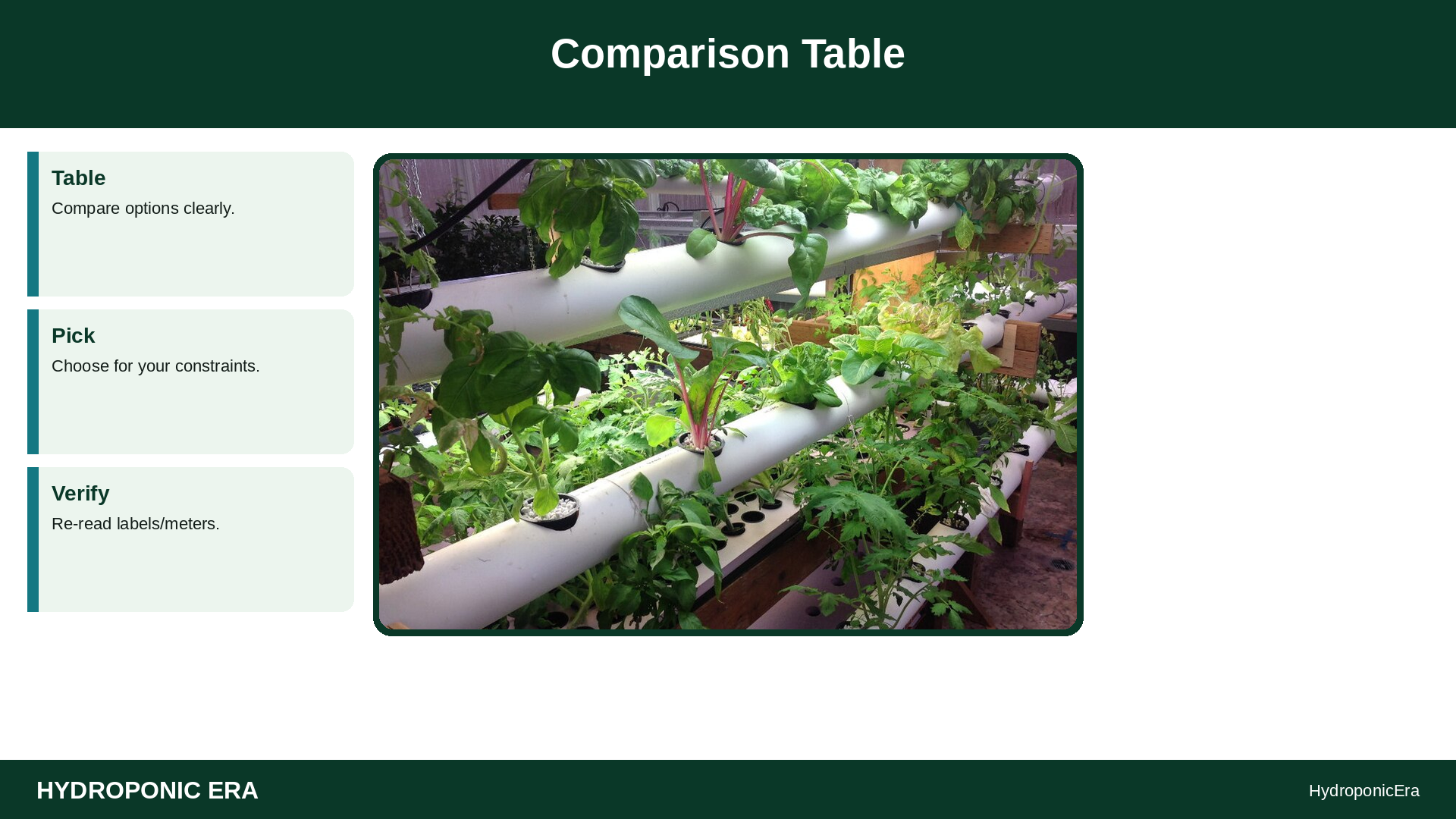
| Component | Watch-out | Tip |
|---|---|---|
| Rigid PVC | Cement cure; schedule 40 vs toys | Dry-fit; mark insertion depth |
| Flexible vinyl / PVC hose | Plasticizer odor; kink | Food-contact rated when needed; short runs |
| Poly tubing (various) | Fitment leaks | Correct barb OD + clamp |
| Clear lines | Algae | Opaque sleeves / darkness |
Reservoir habits: reservoir setup.
Variables
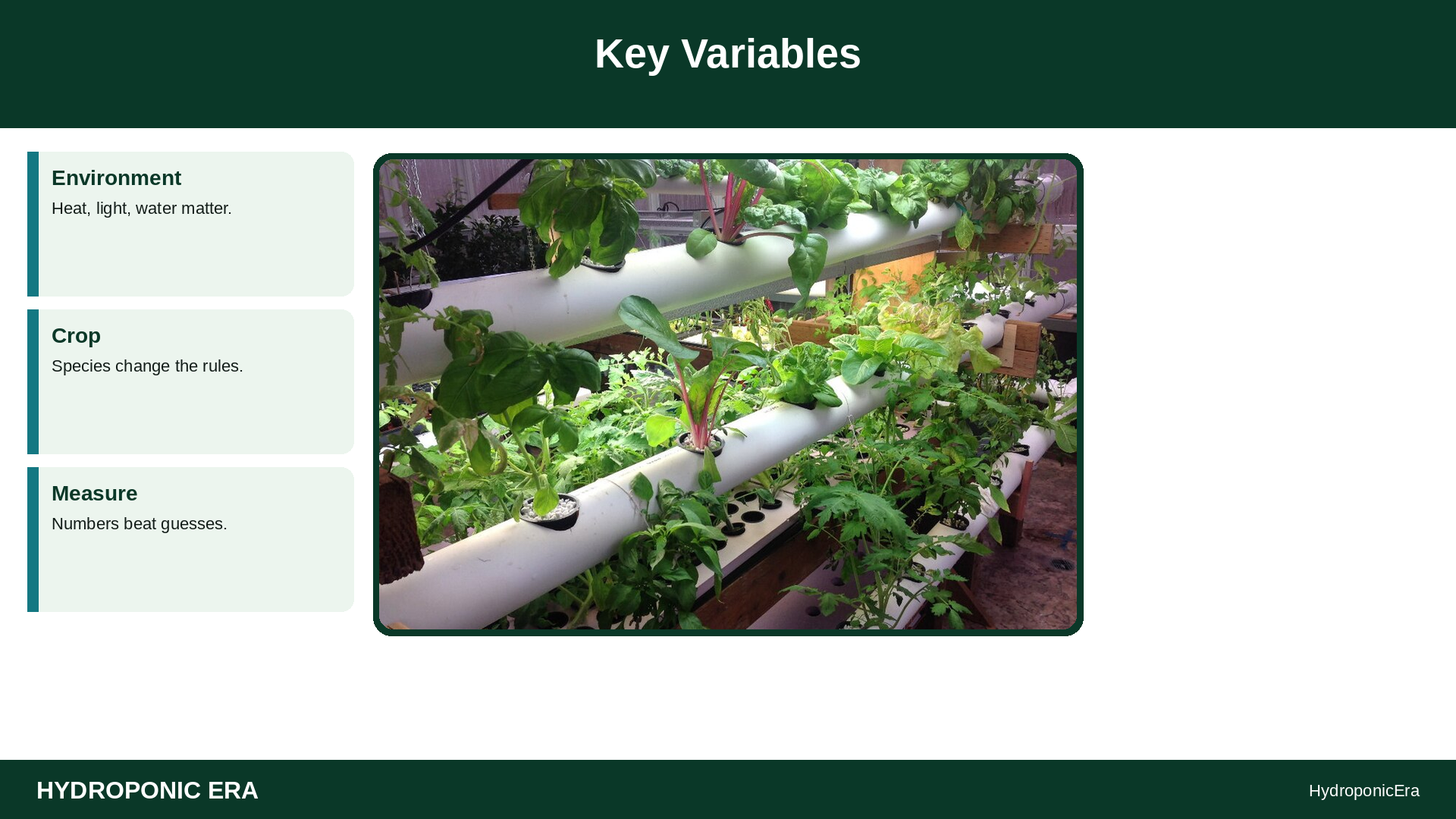
| Variable | Risk | Link |
|---|---|---|
| Heat / sun | Brittle cracks | apartment/balcony |
| Pump vibration | Fitting fretting | pumps |
| Aggressive cleaners | Material attack | cleaning |
Troubleshooting Leaks & Odors
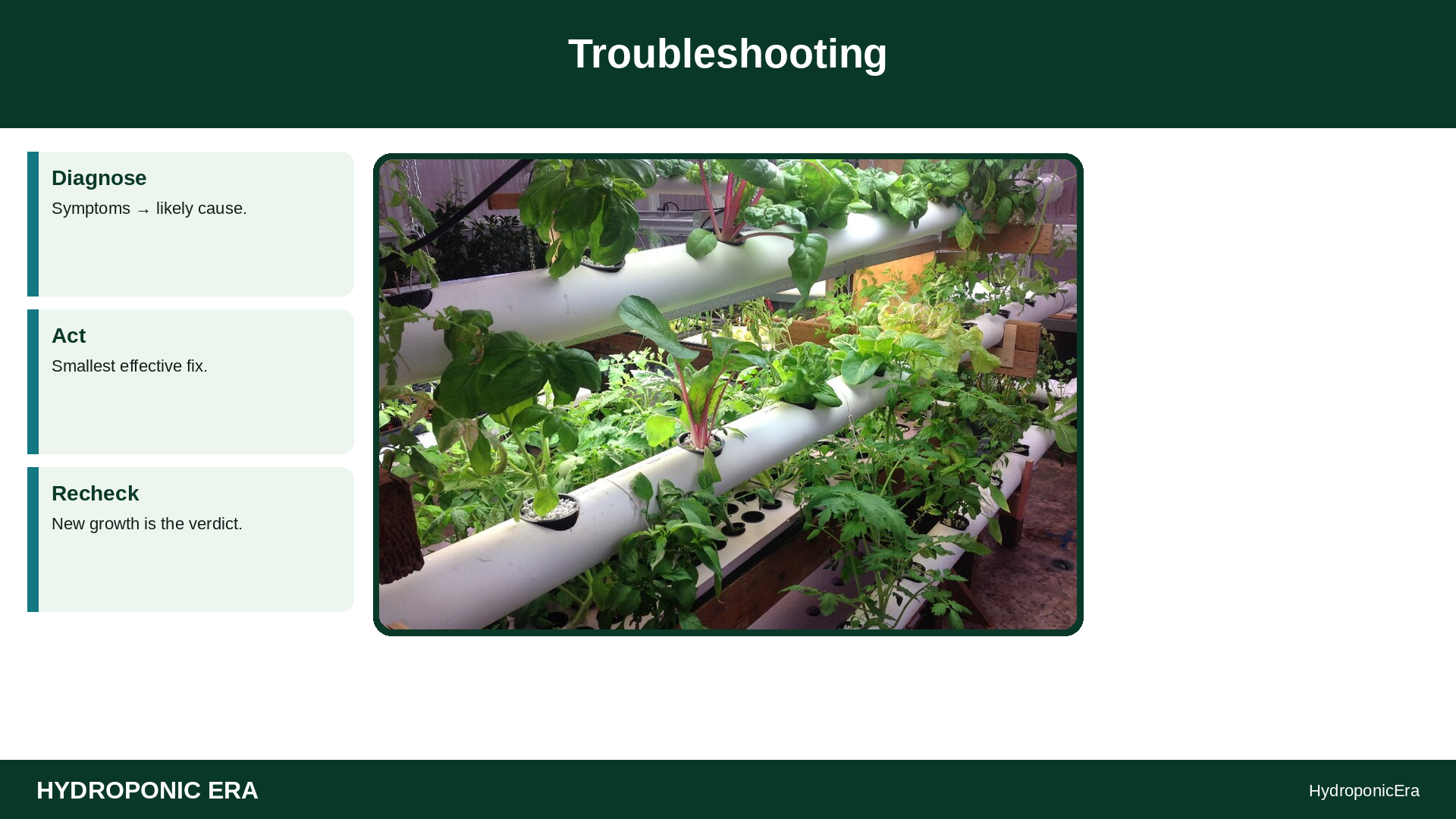
| Symptom | Likely mistake | Action |
|---|---|---|
| Sweet/solvent smell weeks later | Incomplete cure / wrong plastic | Drain; air out; reassess materials |
| Weep at bulkhead | Gasket flip / overtighten | bulkheads |
| Green slime in lines | Light + nutrients | Opaque + clean (algae) |
Original Framework: Plumbing Preflight Card

Card: materials listed | food-contact need y/n | cure hours elapsed | water test hours | UV plan | spare clamps. Stop if any box fails. DIY PVC food-grade tubing mistakes are cheaper on paper than after a midnight flood. Cluster: plastics, leaks, electrical safety near water.
What to Check Before You Glue
- Materials intentional?
- Dry-fit done?
- Cure complete?
- Water leak test passed?
- UV/algae plan?
- Unions for service?
Preflight Rehearsal Against DIY PVC Food-Grade Tubing Mistakes
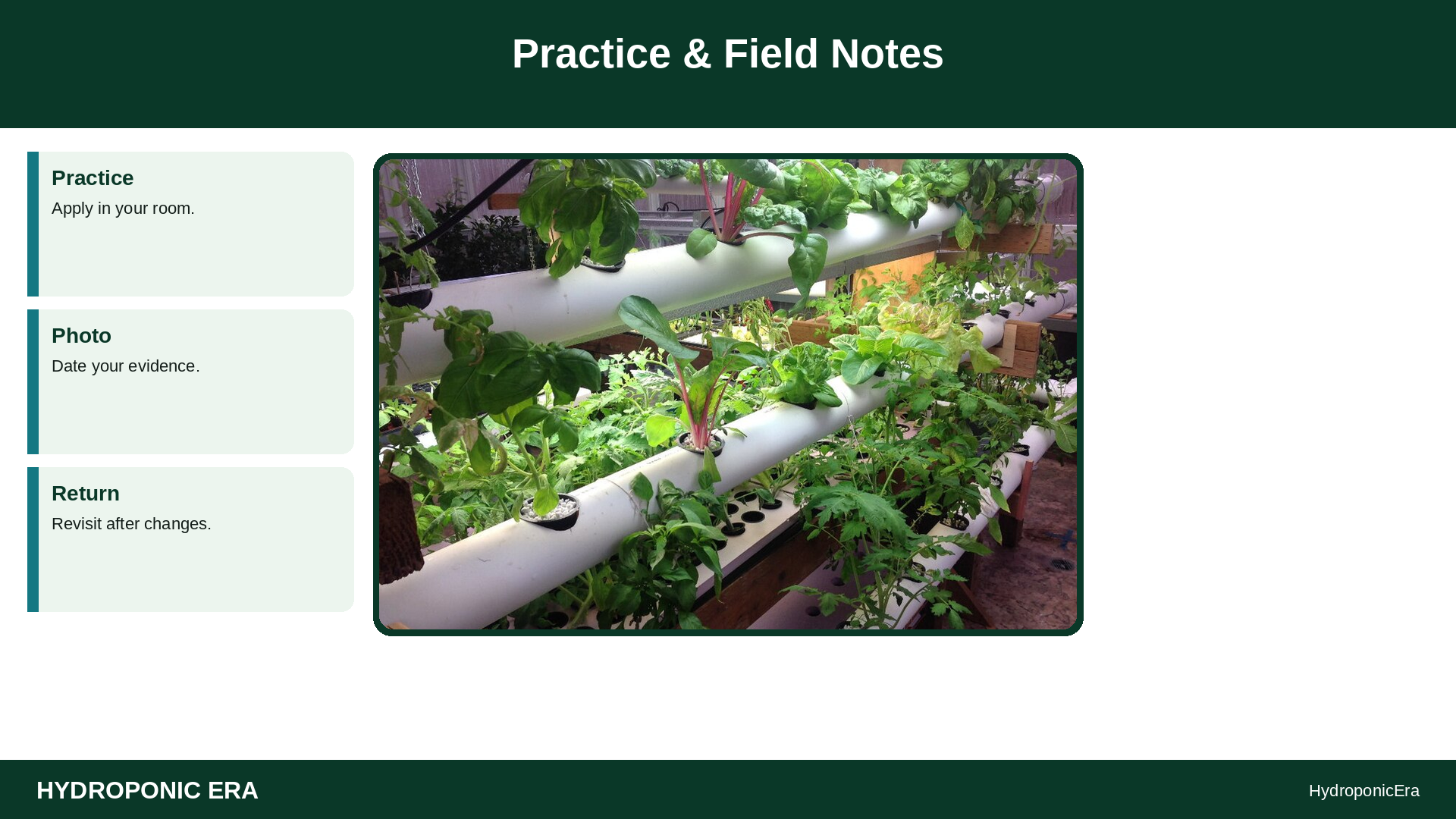
Before glue day, lay every fitting on a towel and photograph the bill of materials. DIY PVC food-grade tubing mistakes shrink when you can see mystery hose in the photo and replace it (safe plastics).
Water-test overnight on a towel farm—catch weeps early (leaks, bulkheads). DIY PVC food-grade tubing mistakes include celebrating a five-minute hold test as season-proof.
Original preflight: materials OK | cure hours | leak-test hours | UV plan | unions present | clamps spare. Say diy pvc food-grade tubing mistakes aloud when reviewing YouTube builds that skip cure time.
After heat waves, re-inspect embrittled outdoor runs (apartment/balcony). Vibration fretting near pumps needs flexible sections (pumps).
Practice: build a tiny loop first—pump, filter, return—before drilling the good reservoir (reservoir). Cluster: electrical, cleaning, emitters.
FAQs

Is all PVC safe?
Not automatically for every use—check intent/markings and local guidance.
Can I use garden hose?
Many are not meant for continuous nutrient contact—choose purpose-built lines.
Black tubing better?
Often helps vs algae vs clear.
How long to cure cement?
Follow the can—rushing is a classic failure.
Flex vs rigid?
Serviceability vs neat runs—hybrids common.
Where materials deep-dive?
Safe plastics article.
Teach the rule: if it smells like a pool toy factory, it does not enter the nutrient loop until verified. DIY PVC food-grade tubing mistakes love bargain bins (plastics).
After any redesign, repeat the water test—diy pvc food-grade tubing mistakes recur when people glue “just one more tee” at midnight without retesting (leaks). Keep a dry towel under new joints for the first 24 hours of nutrient service.
Measurement Habits That Keep Advice Honest
HydroponicEra favors meters and notes over slogans. Calibrate pH and EC instruments on a schedule you can keep (meters, pH, EC). Write the calibration date on painter’s tape stuck to the meter case. When numbers disagree with plant looks, trust a re-calibration before a random bottle dump.
Change one major variable at a time for a week: light, recipe strength, or water source—not all three. That discipline is how home growers build first-hand process knowledge without inventing farm credentials. Photograph the canopy at the start and end of each single-variable week (logs).
Keep a short “stop doing” list on the reservoir: no unmeasured add-ups, no mixing concentrates together, no ignoring smells. Link out to the matching troubleshooting guide when a symptom repeats (deficiency chart, yellow leaves, wilting). Useful content is a loop: observe → measure → act small → re-observe.
Sanitation and electrical safety sit beside nutrition. Wet hands and open outlets do not mix (electrical safety). Dirty tools move pathogens faster than most nutrient mistakes (cleaning). If you sell or share food, revisit food-safe harvest handling even for tiny gifts to neighbors (food safety).
Sources
- Oklahoma State University Extension — Hydroponics
- Michigan State University Extension — Hydroponics as an agricultural production system
- University of Georgia Extension — B1314: Soilless Growing Media
- University of Florida IFAS — HS184: Building a Floating Hydroponic Garden
- Penn State Extension — A Water Quality Toolkit for Greenhouse and Nursery Production
- Ohio State University Extension — AEX-79020 Electrical safety around water (small farm)
- University of Florida IFAS — FS233: Food safety publication
- Penn State Extension — Hydroponics Systems and Principles of Plant Nutrition