
Quick Answer
Safe Plastics Materials Diy Hydroponics (safe plastics materials diy hydroponics) — Safe Plastics Hydroponics (safe plastics hydroponics) is the practical focus of this guide for home growers.
Safe plastics and materials for DIY hydroponics start with food-contact appropriate, opaque, chemically resistant parts that will not shed unknowns into nutrient solution—and avoiding containers never meant for food or acidic fertilizers. UV, heat, and scratches change risk over time.
See reservoir setup, cleaning, food safety, and start at home.
Key takeaways for safe plastics materials diy hydroponics
- Prefer plastics marketed for food contact / potable water when solution touches them.
- Opaque reservoirs reduce algae vs clear hobby bins in light.
- Avoid unknown buckets that held solvents, fuels, or pesticides.
- PVC and other plumbing plastics vary—use potable-water rated parts where solution is carried.
- UV brittle plastics crack and leak; shade outdoor parts.
- Cleaning chemicals must rinse fully ({a(‘clean’,’cleaning’)}).
- HydroponicEra does not certify brands—read labels and manufacturer data.
- Original materials card: food-contact? | opaque? | prior contents known? | UV plan?
Related HydroponicEra guides

Safe Plastics Hydroponics: Why Material Choice Is Food-Adjacent

Nutrient solution contacts roots of edible crops. While home hydroponics is not a certified food facility, choosing food-contact or potable-water appropriate materials is a prudent hygiene habit alongside harvest washing (food safety). Extension food-safety produce handling resources (e.g., Ohio State HYG-style guidance) emphasize clean contact surfaces for edibles—translate that mindset to reservoirs and tubing.
Never invent FDA approval claims for random totes. Read the container’s intended use.
Safe Plastics Hydroponics: Materials Decision Table

| Material use | Prefer | Avoid |
|---|---|---|
| Reservoir | Food-grade / potable opaque plastic | Unknown chemical drums |
| Tubing | Potable/irrigation rated for nutrient use | Mystery garden hoses that leach odor |
| Net pots | Inert hydroponic cups | Degrading foam that sheds |
| Sealants | Products rated for potable water when immersed | Random silicone of unknown chemistry |
Safe Plastics Hydroponics: Step-by-Step DIY Materials Check
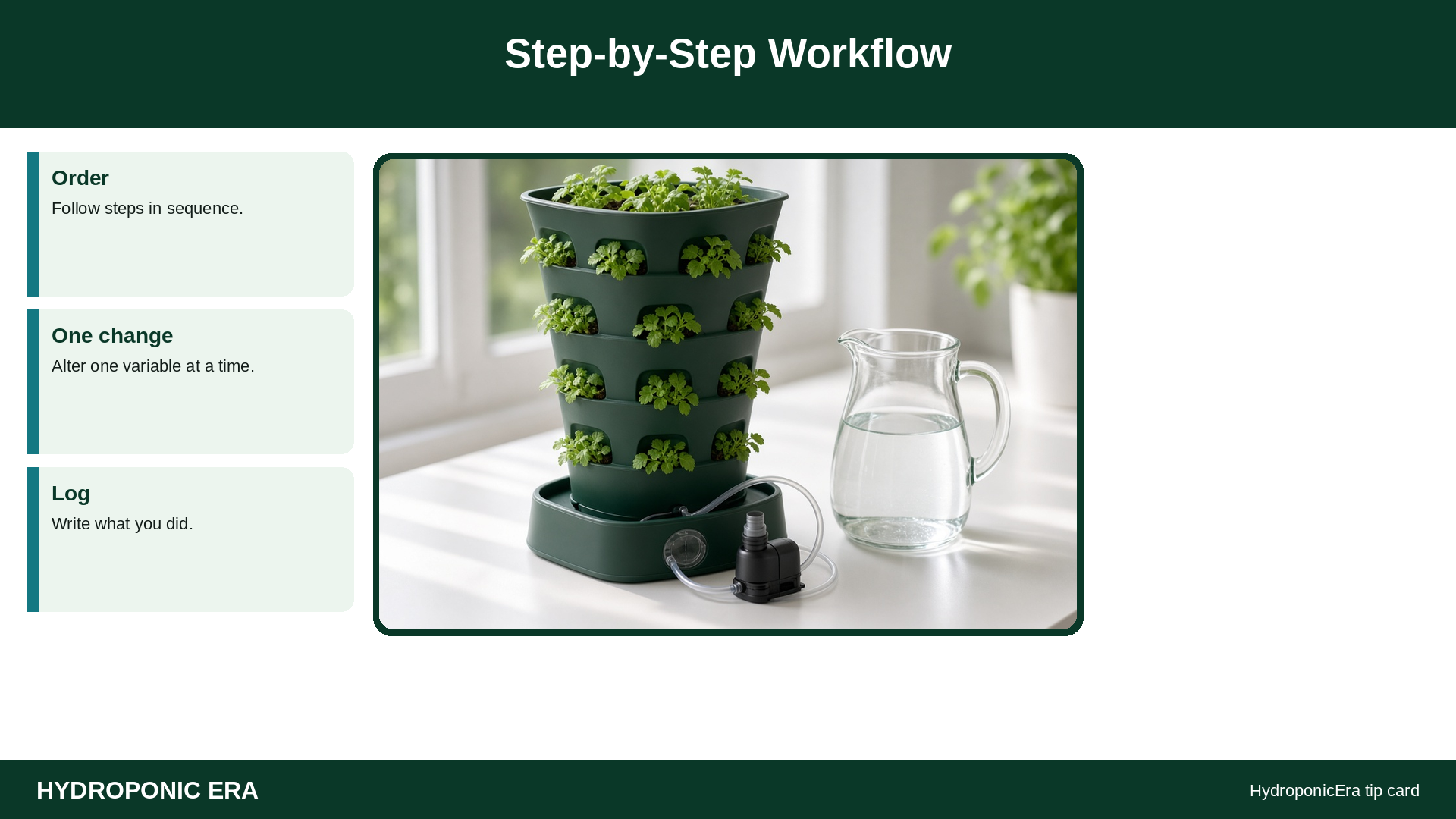
- List every part that touches nutrient solution.
- Verify intended use on labels (food / potable / hydroponic).
- Smell new plastics after a water rinse—strong solvent odors are a red flag.
- Prefer opaque or covered reservoirs to limit algae ({a(‘algae’,’algae’)}).
- Shade balcony plastics from UV.
- Rinse cleaning agents completely before refill ({a(‘clean’,’clean’)}).
- Replace cracked, chalky, UV-damaged parts.
- Keep a spare reservoir lid and bulkhead washers.
- Do not store acids in unlabeled soft drink bottles long-term.
- Document your BOM (bill of materials) for future rebuilds.
Safe Plastics Hydroponics: Variables: UV, Heat, pH Adjusters
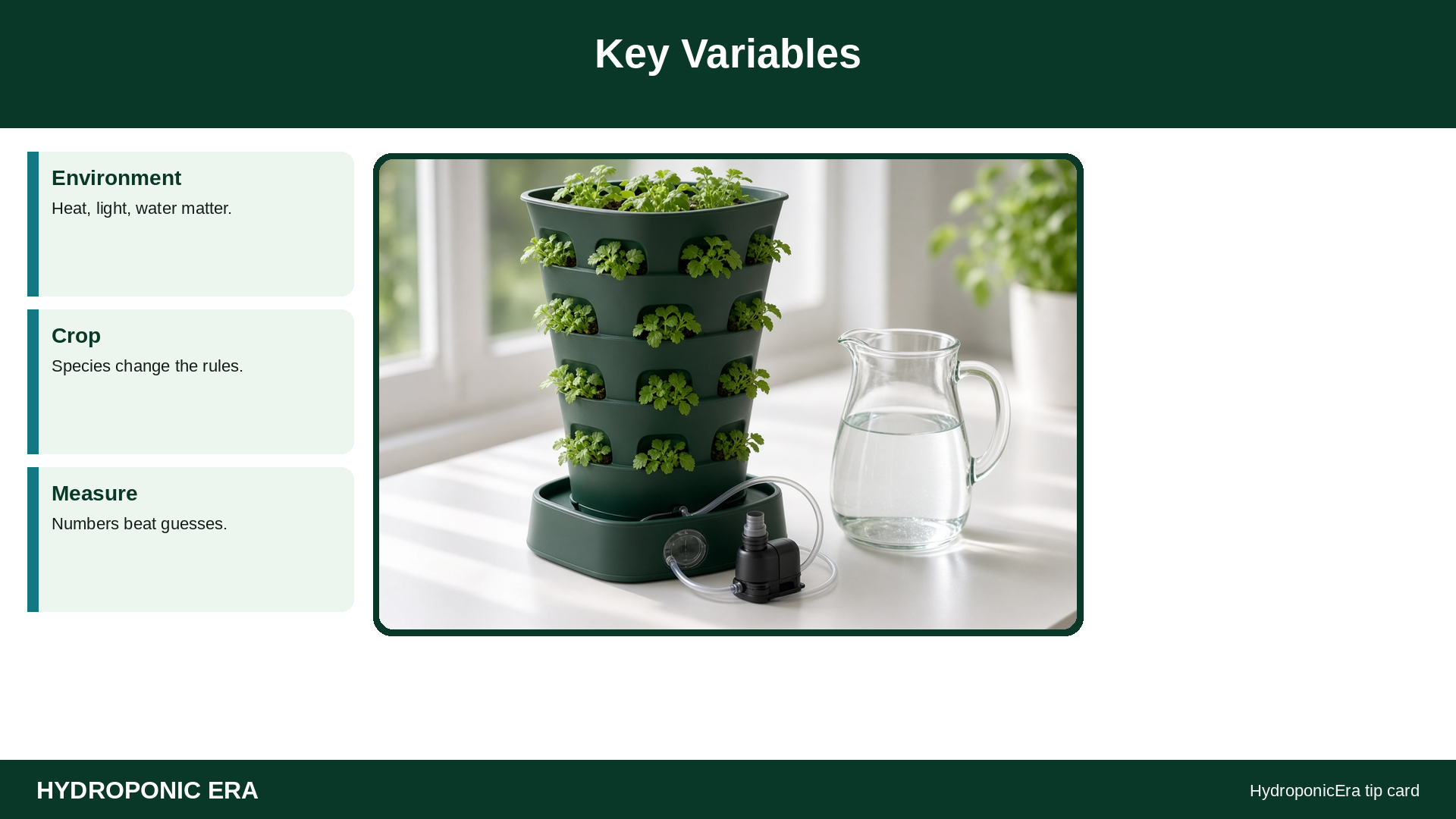
| Stress | Risk | Response |
|---|---|---|
| UV | Brittleness / leaks | Shade; replace aging parts |
| Heat | Warp; faster reactions | res temp |
| pH down acids | Compatibility | Dose carefully; rated containers |
| Abrasive scrubbing | Micro-scratches harbor biofilm | Clean wisely (clean) |
Safe Plastics Hydroponics: Mistakes

- Reusing pesticide or oil drums “after washing”
- Clear totes in full sun
- Unknown flexible tubing that stinks
- Mixing sealants not meant for immersion
- Ignoring chalky UV damage until a flood
Troubleshooting

| Symptom | Material angle | Action |
|---|---|---|
| Plastic taste/odor in solution | Leaching / wrong hose | Replace; flush |
| Sudden leak at bulkhead | UV/age / overtighten | leaks |
| Green walls | Light penetration | Opaque cover |
Original Materials Card

Card per reservoir: brand/type | food/potable claim (y/n/unknown) | prior contents | install date | UV exposed? | replace-by note. Unknown + chemical history = do not use for edibles. Pair with food safety.
What to Check Before Nutrient Touches a New Container
- Parts list complete?
- Food/potable intent verified?
- No mystery prior chemicals?
- Opaque/covered?
- UV plan?
- Cleaning rinse verified?
FAQs about safe plastics materials diy hydroponics
Is any plastic 100% risk-free forever?
No—use appropriate materials and replace damaged parts.
Are HDPE buckets OK?
Food-grade HDPE is commonly used—verify labeling.
Clear bins?
Only if fully darkened; algae loves light.
Metal reservoirs?
Possible with corrosion/compatibility caveats—know your metals.
Silicone sealant?
Use potable-rated products when immersed; cure fully.
Food safety overlap?
Yes—materials + harvest hygiene.
Building a Materials SOP for DIY Systems
Create a bill of materials spreadsheet: part | where purchased | food/potable claim | date installed | sun exposure. When a bulkhead weeps, you will know the age and type without guessing (leaks, reservoir).
Rinse new tubing and reservoirs with clean water before the first nutrient fill; discard the rinse. Strong solvent odors mean rethink the part. Cleaning agents used between cycles must be rinsed until no residue smell remains (cleaning).
Outdoor UV is relentless—balcony growers should prefer opaque, UV-resistant choices and inspect seasonally. Indoor growers still cover clear bins to stop algae (algae).
Original red-flag list: unknown prior chemicals | fuel/pesticide odors | unlabeled flexible hose that smells | crumbling UV plastic | sealant still tacky in water. Any red flag → do not fill with edible crop solution.
Food-safety cluster: materials choices support—but do not replace—harvest washing and hand hygiene (food safety, Ohio State / UF food-safety style extension literacy).
DIY creativity is welcome inside material guardrails. Read start at home and supplies before inventing plumbing from random garage leftovers.
Practice: label every reservoir with install month using exterior paint pen so future-you replaces aging plastics proactively.
Putting This Guide Into Practice
Inventory every wetted part this week. Mark unknowns. Replace mystery chemical drums without debate. Note install months on reservoirs so UV-aged plastics get retired before floods (leaks, reservoir).
Rinse cleaners completely (cleaning). Keep food-safety habits at harvest (food safety). Extension produce-handling literacy pairs with material prudence—without fake FDA endorsements for random totes.
Bottom line: food-contact intent, known history, opacity, UV plan, and rinse discipline. See start at home and supplies.
Advanced tip: when drilling bulkheads, deburr holes so microplastics and stress cracks do not start leaks. Use appropriate gaskets and do not overtighten until plastic creeps (leaks, reservoir). Retire chalky outdoor plastics on a schedule.
Second-pass note: no brand certifications invented here—read labels. Combine materials prudence with food safety and cleaning SOPs.
Operational Checklist Card
Print BOM: part | food/potable claim | prior contents | install month | UV exposure | replace-by. Red flags: unknown chemicals, solvent odor, crumbling UV plastic, mystery hose stink. Rinse cleaners fully (cleaning, reservoir, leaks).
Final reminder: materials prudence supports edible crops alongside harvest hygiene (food safety). Related: start at home, supplies, algae.
Safe Plastics Hydroponics: Practical Checklist
Safe Plastics Hydroponics matters every week in a home system. Recheck safe plastics hydroponics after transplants, heat spikes, and canopy fill-in. Strong safe plastics hydroponics habits beat one-time guesses. When safe plastics hydroponics drifts, leaves crowd, roots stress, or harvest quality drops. Write safe plastics hydroponics targets into your log so you do not rely on memory.
Treat safe plastics materials diy hydroponics as a weekly habit: scan, note, then adjust only when data says so.
Share safe plastics materials diy hydroponics basics with anyone covering your system while you are away.
Print a short safe plastics materials diy hydroponics note and leave it near the reservoir.
Update safe plastics materials diy hydroponics after storms, heat waves, or DIY plumbing changes.
Good safe plastics materials diy hydroponics beats last-minute guessing when something drifts overnight.
Archive last month’s safe plastics materials diy hydroponics notes; patterns beat memory.
Teach one other person your safe plastics materials diy hydroponics so coverage is not a single point of failure.
When safe plastics materials diy hydroponics is clear, you waste less time chasing the wrong variable.
Revisit safe plastics materials diy hydroponics whenever you change lighting, EC, or who waters the system.
Write one line on safe plastics materials diy hydroponics after each reservoir check so patterns show up early.
Keep safe plastics materials diy hydroponics tied to a short list of numbers you already measure.
Sources
- Ohio State University Extension — HYG-1132 Food safety / produce handling
- University of Florida IFAS — FS233: Food safety publication
- Penn State Extension — A Water Quality Toolkit for Greenhouse and Nursery Production
- Oklahoma State University Extension — Hydroponics
- Michigan State University Extension — Hydroponics as an agricultural production system
- University of Georgia Extension — B1314: Soilless Growing Media
- University of Florida IFAS — HS184: Building a Floating Hydroponic Garden
- Ohio State University Extension — HYG-1263
1 thought on “Safe vs Unsafe Plastics and Materials for DIY Hydroponics”