
Philodendron in water works well for vining types like the heartleaf philodendron (Philodendron hederaceum): take a cutting with at least one node, set the node in clean water, give bright indirect light, and add a very dilute fertilizer once roots form. A philodendron in water can grow for a long time as a trailing display, but it needs regular water changes and some nutrients, because water alone cannot sustain healthy growth.
Key takeaway: Nodes make roots, leaves make energy, nutrients make growth. Skip any one and the cutting stalls.
| Factor | Target |
|---|---|
| Best types for water | Vining philodendrons such as heartleaf and ‘Brasil’ |
| Cutting | 4–6 inches, 1–3 nodes, a few leaves |
| Light | Bright, indirect |
| Temperature | About 65–80°F |
| Water change | Weekly while rooting, then every 1–2 weeks |
| Fertilizer | Quarter-strength complete liquid fertilizer after roots form |
| Pets | Philodendrons are listed as toxic to cats and dogs (ASPCA) |

Which Philodendrons Grow Best in Water?

Vining philodendrons are the easiest choice. The heartleaf philodendron and its variegated cultivars root readily at nodes, the same way pothos do. Self-heading or upright types (often sold as “tree philodendrons”) can root in water too, but large cuttings are top-heavy and slower to establish.
NC State Extension describes heartleaf philodendron as a vigorous tropical vine that tolerates indoor conditions well, which is why it is one of the most forgiving houseplants for a philodendron in water display.
How to Root a Philodendron in Water
- Find the node. It is the small bump on the stem where a leaf attaches. Aerial root nubs often appear there.
- Cut just below a node with clean, sharp scissors.
- Remove the lowest leaf so no foliage sits underwater.
- Place the node in water, keeping remaining leaves above the rim.
- Keep it warm and bright, out of direct sun.
- Refresh water weekly. Roots usually appear within a few weeks.
Several cuttings in one container make a fuller display faster. For the general technique, see our cuttings and cloning guide.
Feeding Philodendron in Water
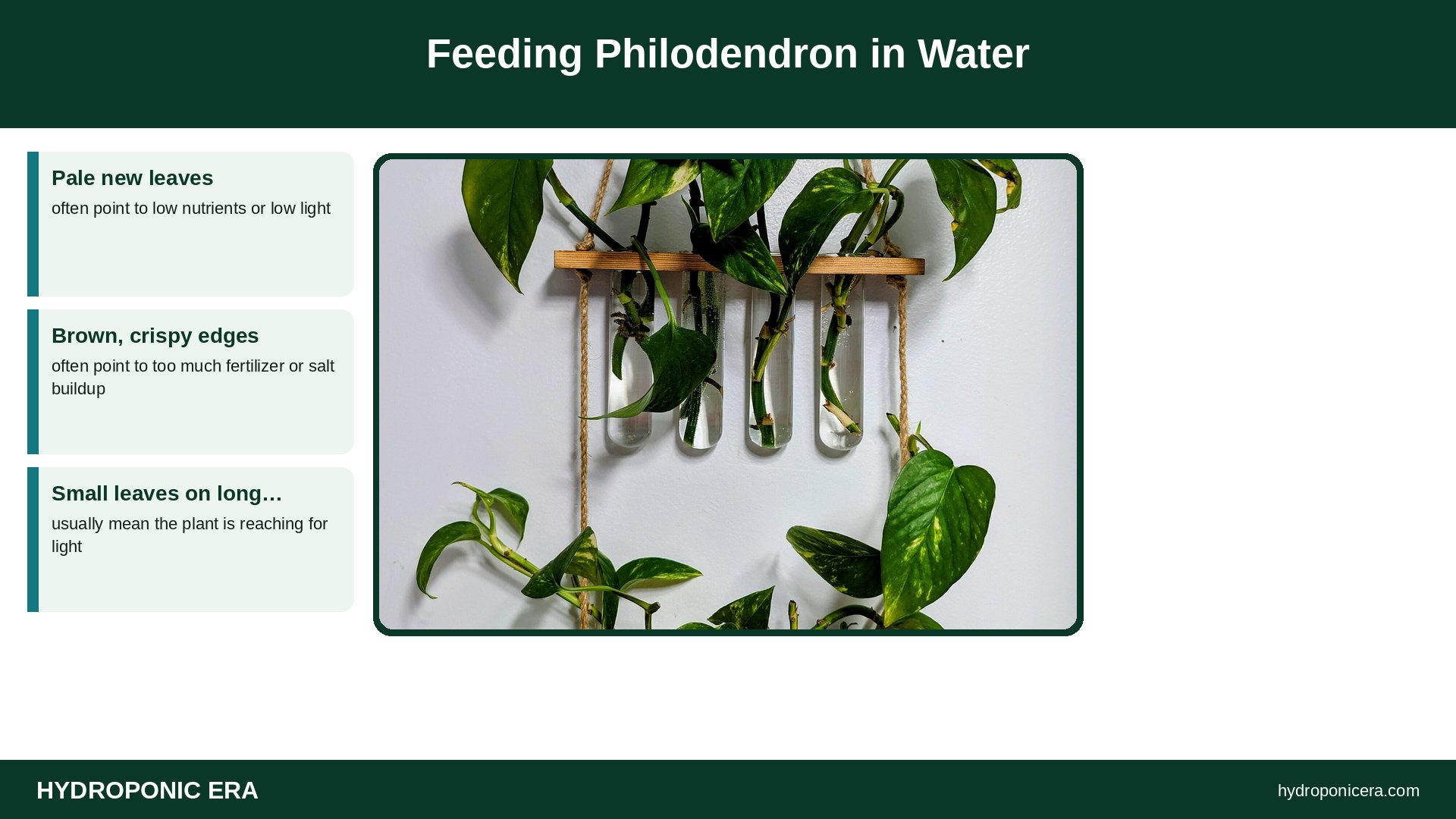
Once roots are 2–3 inches long, start feeding. Use a balanced liquid houseplant fertilizer that includes micronutrients, diluted to about a quarter of the label rate, or a hydroponic base nutrient at low strength. Replace the water every one to two weeks instead of topping off.
- Pale new leaves often point to low nutrients or low light.
- Brown, crispy edges often point to too much fertilizer or salt buildup.
- Small leaves on long stems usually mean the plant is reaching for light.
Our nutrient deficiency chart and nutrient burn guide help you tell these apart.
Light, Containers, and Algae
Bright, indirect light keeps leaves large and colors strong. Variegated philodendrons need more light than plain green ones to hold their patterning. Direct afternoon sun through a window scorches leaves and warms the water, which reduces oxygen and feeds algae.
- Clear glass lets you watch roots, but grows algae faster.
- Opaque or colored containers slow algae.
- Wide containers exchange oxygen better than narrow bottles.
See our guide on algae in hydroponic reservoirs for removal tips.
Common Mistakes With Philodendron in Water
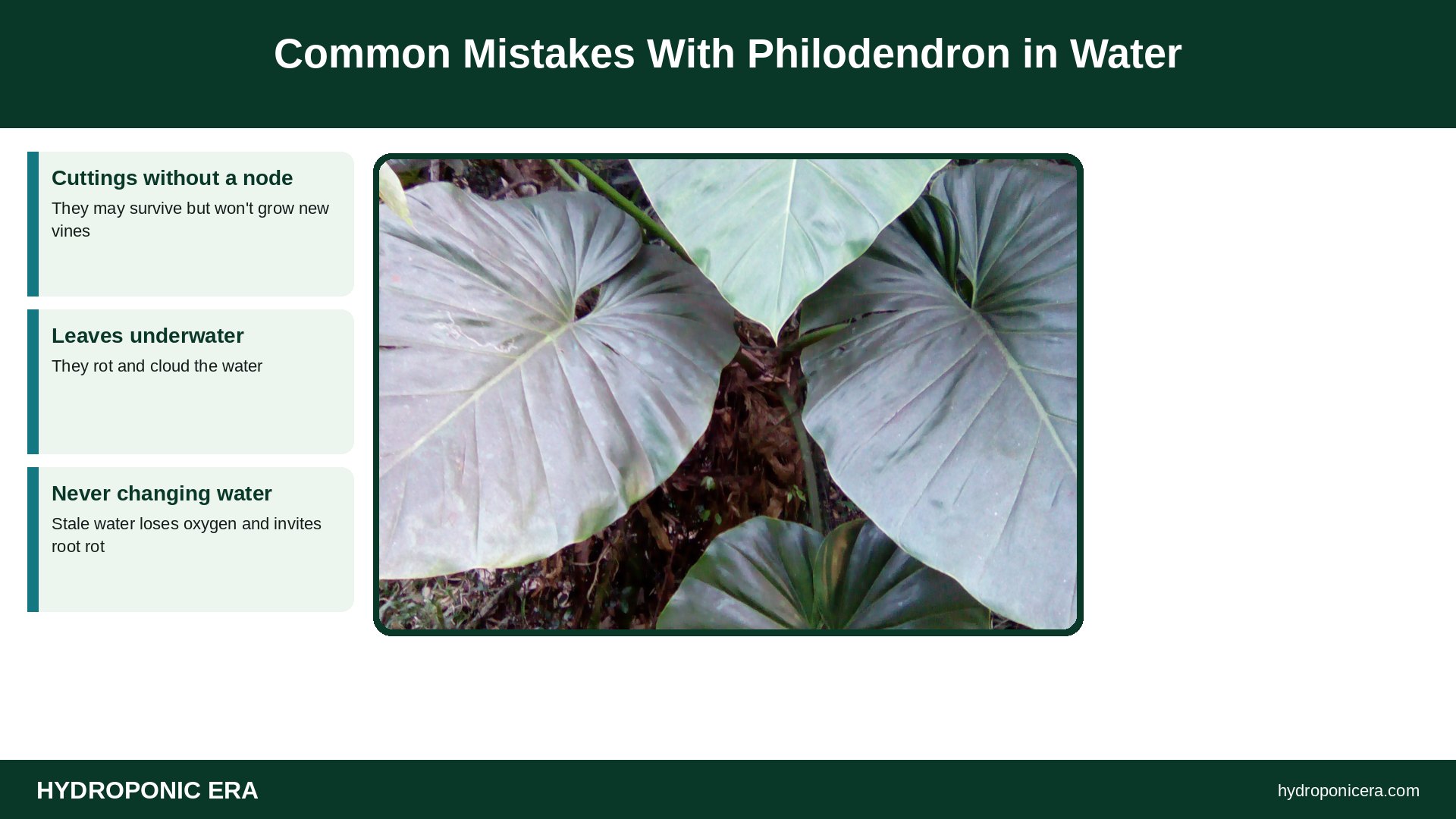
- Cuttings without a node. They may survive but won’t grow new vines.
- Leaves underwater. They rot and cloud the water.
- Never changing water. Stale water loses oxygen and invites root rot.
- Full-strength fertilizer. Water culture has no buffer.
- Cold drafts. Tropical philodendrons slow down or yellow below the 60s °F.
Troubleshooting Table
| Symptom | Likely cause | Fix |
|---|---|---|
| Yellow leaves | Aging leaf, low nutrients, root rot | Check roots, start or adjust dilute feeding |
| Mushy stem at waterline | Rot from stale water | Cut above rot, re-root in clean water |
| No roots after a month | No node, cold room, low light | Use node cuttings; warmer, brighter spot |
| Brown leaf tips | Salt buildup or low humidity | Change water more often, dilute feed |
| Slimy roots | Low oxygen, decaying debris | Trim, rinse, fresh water; consider an air stone |
Roots in water can grow a harmless fuzz of root hairs that people mistake for mold. Our guide to white fuzz on roots in water shows the difference.
Water, Soil, or Semi-Hydro?

A philodendron in water is ideal for shelves and small spaces. For a big, climbing plant, soil or a semi-hydro medium like clay pebbles gives more support and steadier growth. If you move water-rooted cuttings to soil, keep the mix lightly moist at first so the roots can adjust.
Weekly Care Checklist for Philodendron in Water
- Check roots for color and firmness.
- Trim yellow leaves to keep energy on new growth.
- Change water every one to two weeks; rinse the container.
- Pinch long vines to encourage branching, and root the tips.
- Rotate the container so vines don’t all lean one way.
Variables That Change Results
| Variable | Effect on philodendron in water | Adjustment |
|---|---|---|
| Green vs variegated cultivar | Variegated types grow slower, need more light | Brighter spot, patience |
| Number of cuttings per jar | More cuttings = fuller look, faster fouling | Larger container, more frequent changes |
| Winter heating | Dry air can brown leaf edges | Group plants, use a humidifier |
| Water hardness | Mineral buildup on glass and roots | Filtered water, regular changes |
A trailing philodendron in water looks great on shelves and windowsills, and because the roots stay visible, you’ll learn to read plant health quickly. That skill transfers directly to growing herbs and greens in a real hydroponic system, if you decide to take the next step. Start with our hydroponics for beginners guide.
Choosing a Vessel for Philodendron in Water
A heavy glass or ceramic vessel with a wide base keeps a growing vine from tipping over. Narrow-necked bottles look nice but make cleaning and removing roots difficult, so pick a container with an opening wide enough for your hand or a bottle brush. Tinted or opaque containers slow algae growth. If you love clear glass, change the water more often and wipe the inside each time. A philodendron in water that outgrows its vessel can be moved to a larger one, or trimmed and its cuttings rooted separately.
FAQs: Philodendron in Water
Can philodendron live in water permanently?
Yes. A philodendron in water can grow long-term with dilute feeding, fresh water, and bright indirect light.
How long does it take a philodendron cutting to root?
Usually a few weeks in a warm room. Cooler rooms and low light slow it down.
Is philodendron toxic to cats and dogs?
Yes. The ASPCA lists philodendrons as toxic because they contain insoluble calcium oxalate crystals.
Philodendron vs pothos in water: which is easier?
Both are easy. Heartleaf philodendron has thinner, heart-shaped leaves; pothos is slightly more tolerant of neglect. See our pothos in water guide.
Related HydroponicEra Guides
- Pothos in water
- Plants that grow in water
- Convert soil plants to hydroponics
- Chlorine and chloramine in tap water
Sources
- NC State Extension Plant Toolbox — Philodendron hederaceum
- ASPCA — Philodendron toxicity
- Photo credits (Wikimedia Commons, edited with titles): Philodendron hederaceum, Singapore Botanic Gardens (141542) by Moheen Reeyad (CC BY-SA 4.0); Pothos plant on water by Joli Rumi (CC BY-SA 4.0); Philodendron giganteum à goyave by Filo gèn’ (CC BY-SA 4.0)