
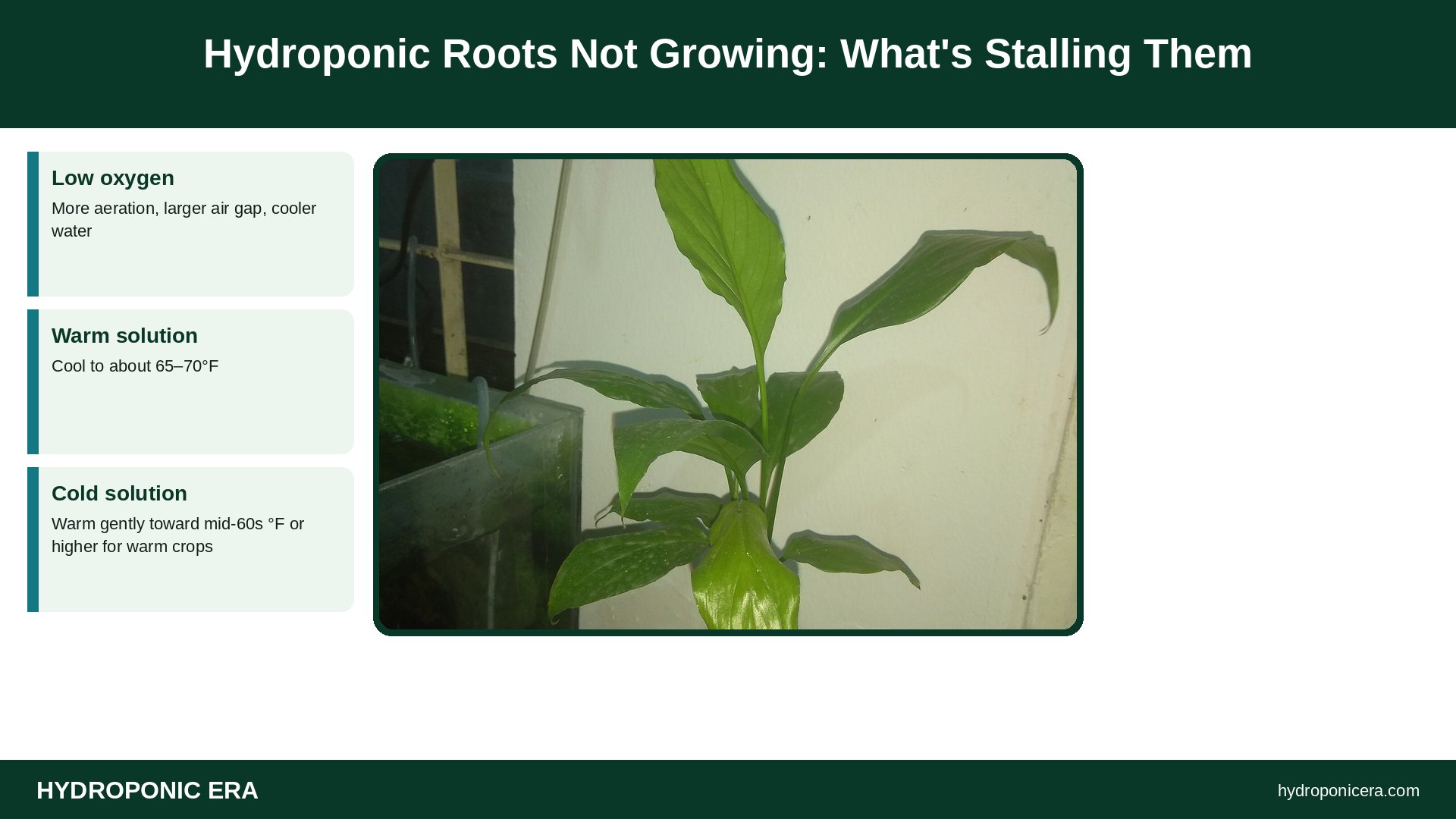
When hydroponic roots not growing is the problem, the usual culprits are low dissolved oxygen, warm or cold nutrient solution, pH or EC outside the crop’s range, root rot or other disease, roots not yet reaching the water, light leaking into the root zone, or transplant shock. Healthy roots in deep water culture and NFT are white to cream, firm, and branch steadily. Start by checking water temperature (aim for roughly 65–70°F), aeration, pH, and EC, then look closely at root color and smell.
Key takeaway: Roots grow where there’s oxygen, moisture, and the right temperature. Fix the root environment first; extra additives rarely solve stalled root growth.
| Cause | Sign | Fix |
|---|---|---|
| Low oxygen | Short, thick, brownish roots | More aeration, larger air gap, cooler water |
| Warm solution | Slime, browning, slow growth | Cool to about 65–70°F |
| Cold solution | Very slow growth, no rot | Warm gently toward mid-60s °F or higher for warm crops |
| pH or EC off | Stunted roots and leaves | Correct to crop range |
| Root rot | Brown, slimy, foul smell | Clean system, trim rot, fix temperature and oxygen |
| Roots can’t reach water | Dry plug, wilting | Raise level or top water until roots reach |
| Light leaks | Green algae on roots or media | Light-proof reservoir and lids |
| Transplant shock | Pause after moving | Stable conditions, patience |
What Healthy Hydroponic Roots Look Like
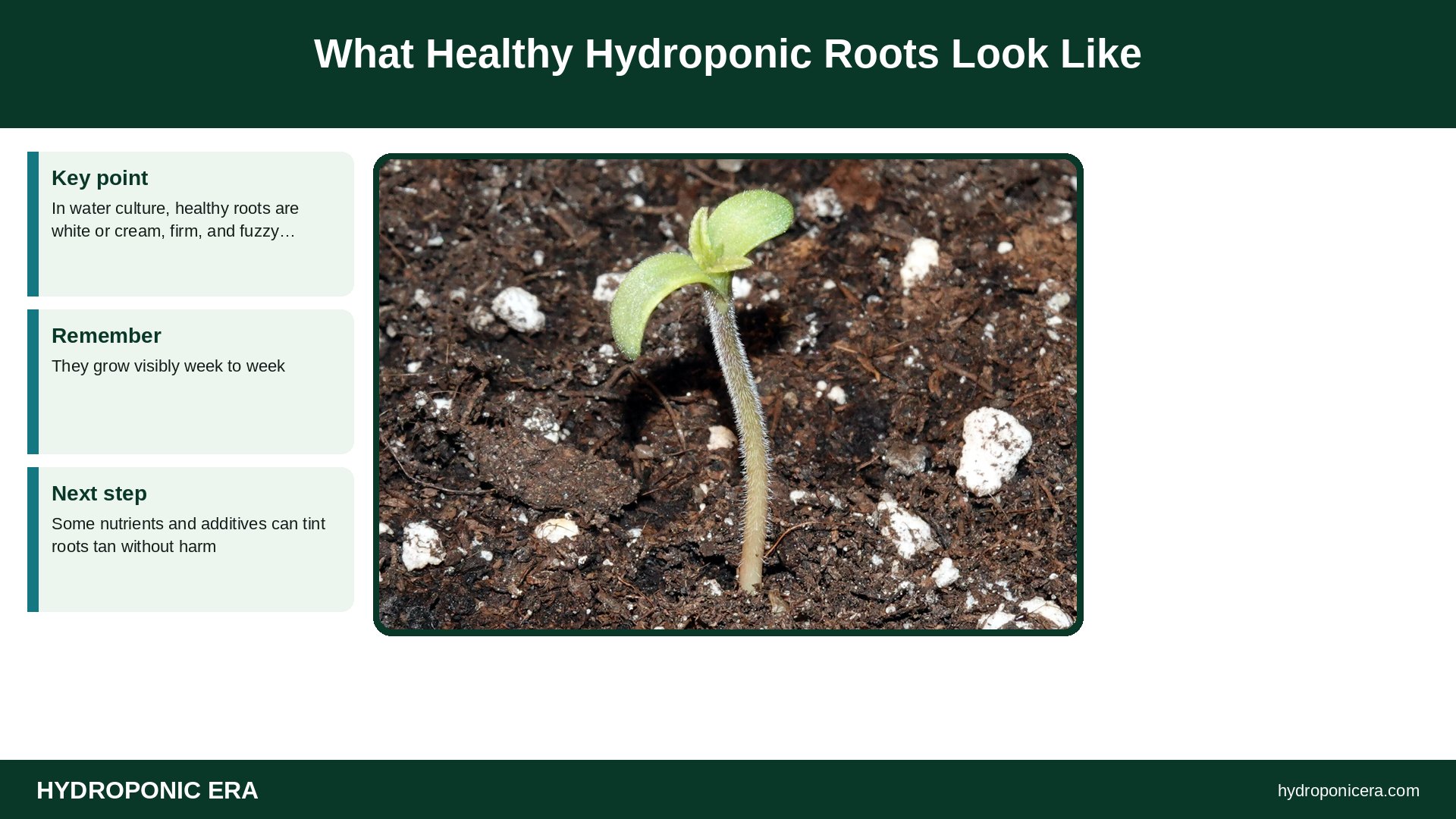
In water culture, healthy roots are white or cream, firm, and fuzzy with fine root hairs. They grow visibly week to week. Some nutrients and additives can tint roots tan without harm. Warning signs are brown, mushy, slimy roots, a sour or rotten smell, and roots that stop extending. See why roots turn brown and white fuzz on roots.
1. Low Dissolved Oxygen
The most common reason for roots not growing is a lack of oxygen. Roots respire and need oxygen. Without it, they stop growing and become vulnerable to rot. In DWC, check that air pumps run and air stones bubble strongly. In Kratky, make sure an air gap develops as plants drink. In NFT, keep the film shallow. See dissolved oxygen and air pumps and stones.
2. Water Temperature and Roots Not Growing
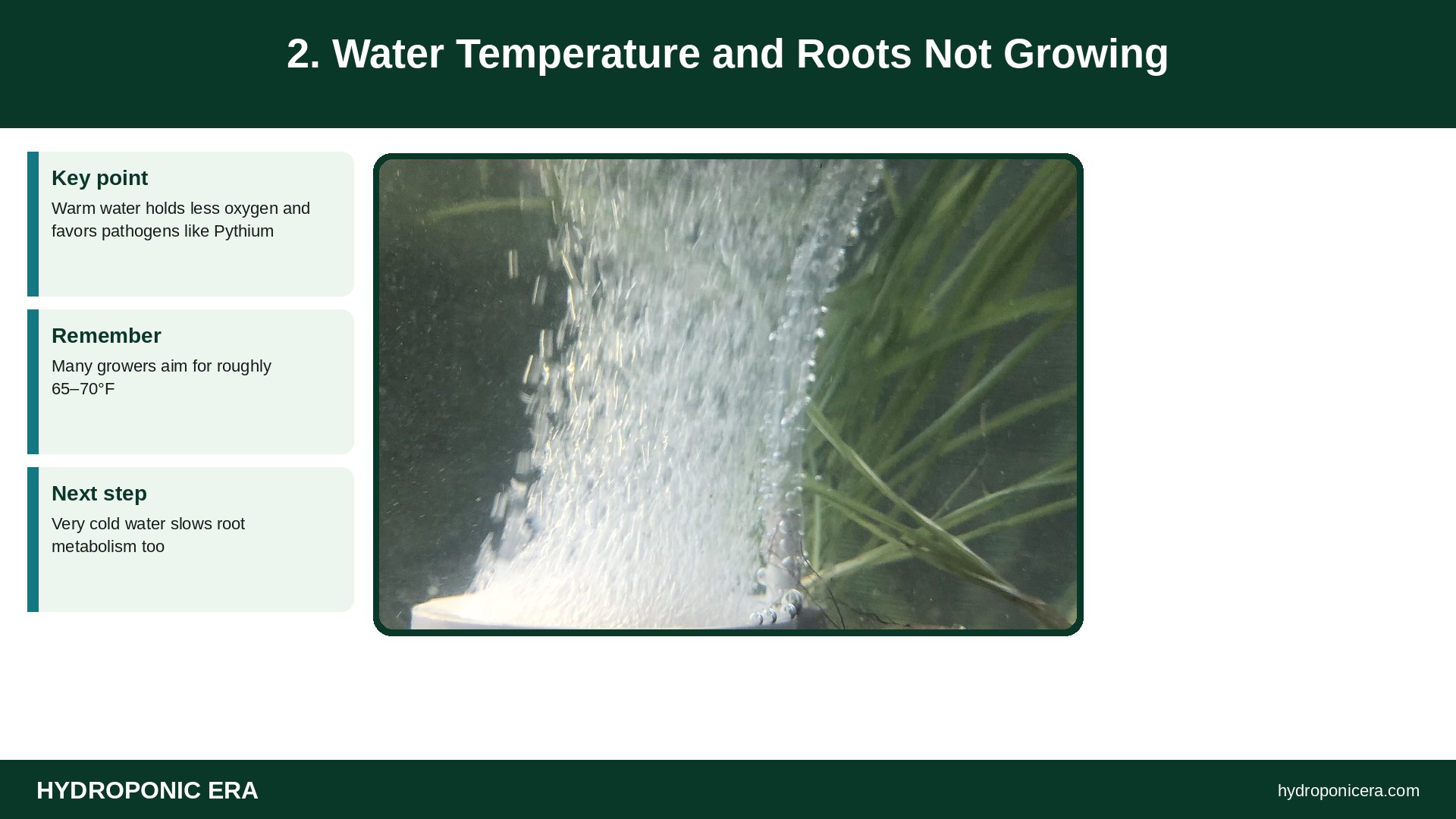
Warm water holds less oxygen and favors pathogens like Pythium. Many growers aim for roughly 65–70°F. Very cold water slows root metabolism too. Measure the reservoir, not just the room. See reservoir temperature, reservoir chillers, and aquarium heaters.
3. pH and EC Out of Range
Extreme pH or very high EC can stunt roots. Very high EC creates osmotic stress, making it harder for roots to take up water. Keep pH around 5.5–6.5 for most crops and EC suited to the plant and stage. See fixing pH and EC and TDS.
4. Root Rot and Disease Behind Roots Not Growing
Brown, slimy roots that smell bad indicate rot. Act quickly: improve oxygen, cool the water, change the solution, trim dead roots with clean scissors, and clean the system. Severely infected plants may not recover. See Pythium root rot and biofilm.
5. Roots Not Reaching the Water
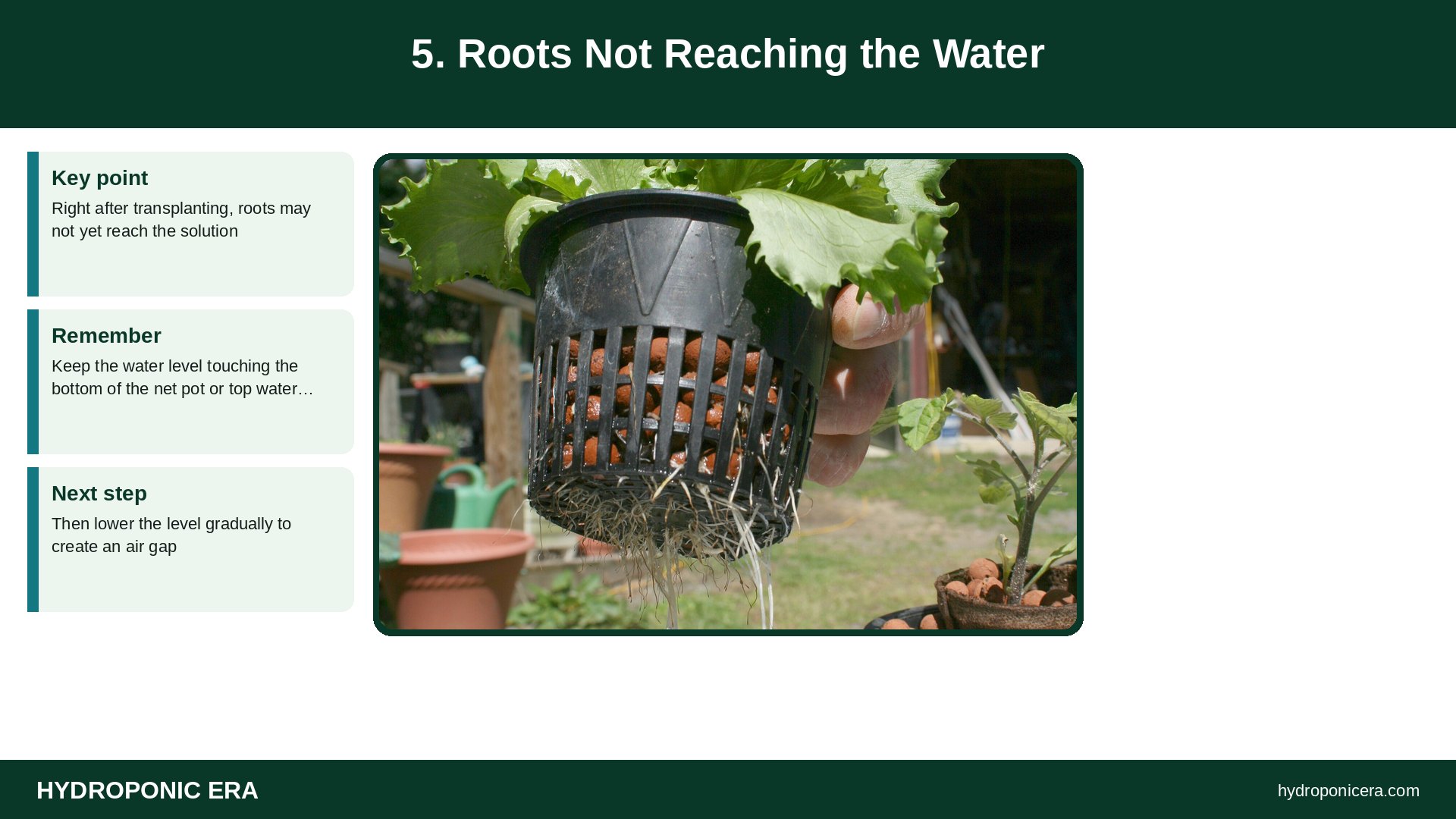
Right after transplanting, roots may not yet reach the solution. Keep the water level touching the bottom of the net pot or top water the plug for the first week until roots dangle into the reservoir. Then lower the level gradually to create an air gap. See transplanting seedlings.
6. Light Leaks
Light reaching roots promotes algae, which competes for oxygen and nutrients and can coat roots. Use opaque reservoirs, cover net pot gaps, and seal lids. See light-proofing methods and algae in reservoirs.
7. Transplant Shock
Moving a seedling, especially from soil to water, can pause root growth for days or weeks. Keep conditions stable, avoid strong nutrients initially, and give it time. See transplant shock recovery and converting soil plants.
8. Low Light or Poor Plant Health Above
Weak light is an overlooked reason for roots not growing. Roots depend on sugars produced in leaves. A plant in weak light grows fewer roots. Check that your light provides enough intensity for the crop. See PPFD and DLI and slow growth.
Step-by-Step Diagnosis
When you find roots not growing, work through these checks in order:
- Measure reservoir temperature.
- Confirm aeration or flow is working.
- Test pH and EC with calibrated meters.
- Lift a plant and inspect roots for color, texture, and smell.
- Check for light leaks around lids and net pots.
- Review recent changes: transplanting, new nutrients, or additives.
- Make one change at a time and watch new root tips for a week.
Do Root Stimulants Help?
Products marketed for root growth, such as some biostimulants or beneficial microbes, may help in specific situations, but they won’t overcome warm, oxygen-poor water. Fix the environment first. See beneficial bacteria and SUPERthrive for what to expect.
Roots Not Growing in Specific Systems
Deep Water Culture
In DWC, roots not growing usually means weak aeration or warm water. Check that the air stone is not clogged and that the pump is sized for the reservoir. Keep a small gap between the net pot and the water once roots reach down. See deep water culture for beginners.
Kratky
In Kratky jars, roots stall if the water level never drops to create an air gap, or if the container is topped off to the brim. Let plants drink the level down and only add water below the root crown.
NFT
In NFT channels, roots not growing can mean the film is too deep, flow is too slow, or the channel is heating up in strong light. Check the slope and flow rate, and shade or insulate channels in warm rooms.
Media Beds and Drip
In media systems, roots not growing often points to media that stays waterlogged or dries out between cycles. Adjust the watering schedule so the media drains and refills with air between irrigations.
FAQs: Hydroponic Roots Not Growing
Why are my hydroponic roots not growing?
Low oxygen, wrong water temperature, pH or EC problems, disease, light leaks, and transplant shock are the most common reasons.
What temperature is best for hydroponic roots?
Many growers target roughly 65–70°F for the nutrient solution.
Are white roots a sign of healthy growth?
Healthy roots are white to cream and firm. Brown, slimy roots signal trouble, though harmless staining can occur.
How long until roots reach the water after transplanting?
Often about one to two weeks, depending on the crop and conditions. Keep the plug moist until then.
Can I trim hydroponic roots?
Yes, to remove rot or manage size. See when to prune roots in DWC.
Sources
- University of Florida IFAS Extension — Leafy Greens in Hydroponics and Protected Culture for Florida
- Penn State Extension — Hydroponics Systems: Nutrient Solution Programs and Recipes
- Photo credits (Wikimedia Commons, edited with titles): Spathiphyllum wallisii hydroponically grown by Kephalian (CC BY-SA 4.0); Hanfsämling mit Wurzelhaaren am Stamm – Hemp seedling with root hairs on the stem by Vschlothauer (CC0); Air Stone Disk aquarium Germany 2024 by Nimmerwelk (CC BY-SA 4.0); 2009-03-30 Lettuce roots by Ildar Sagdejev (Specious) (CC BY-SA 4.0); Avocado seed transplanting in pot by Alif Arefur (CC BY-SA 4.0)