
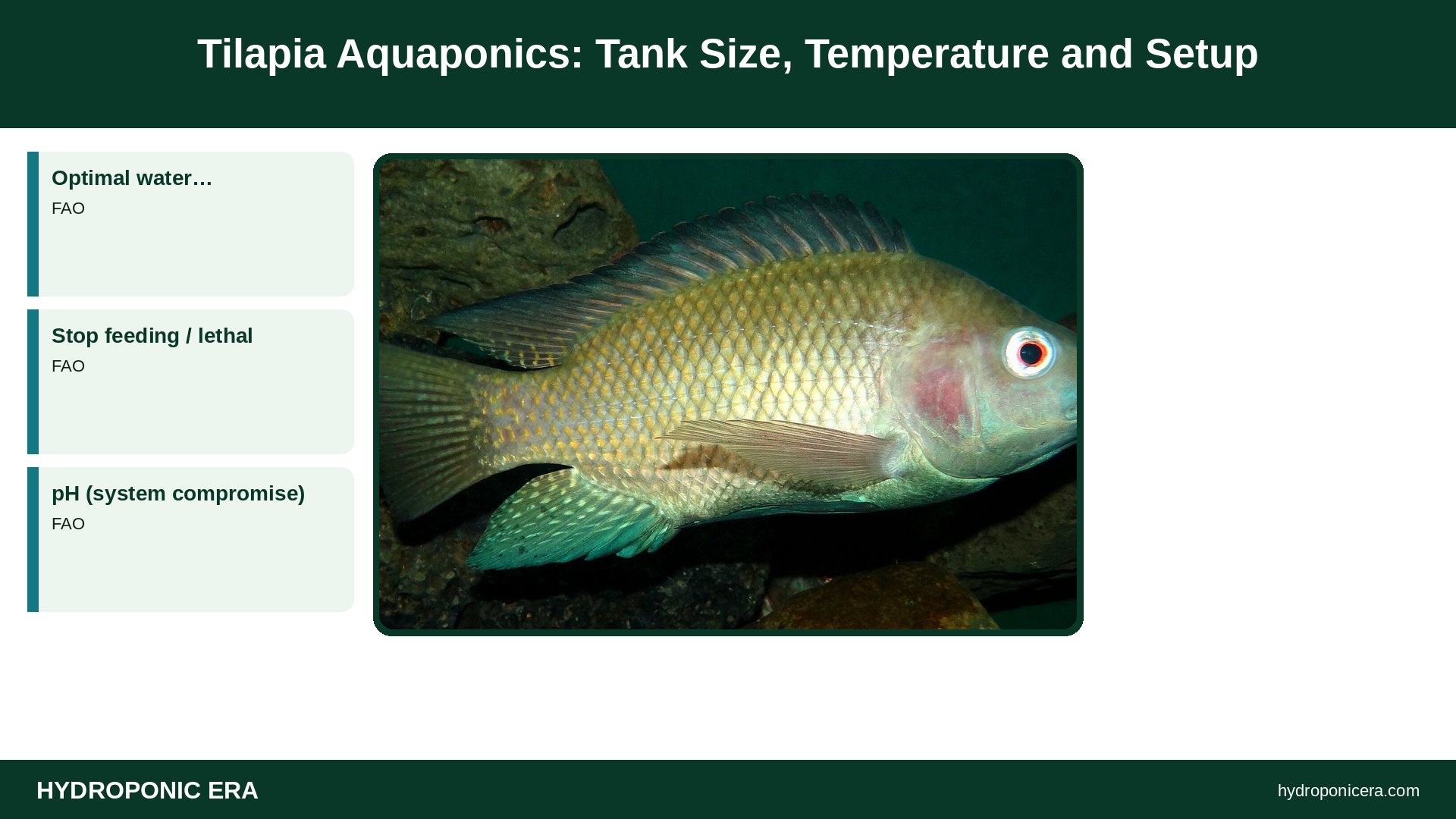
Tilapia aquaponics works best when you can hold the fish tank at roughly 81–86°F, which is where tilapia grow fastest. They stop eating below about 63°F and die below about 54°F, so in most of the US you need a heated greenhouse, an indoor space, or a summer-only season. Stock no more than about 20 kg of fish per 1,000 liters of water (roughly 0.17 lb per gallon) in a small system, feed a pelleted diet with about 28–32% protein for grow-out, keep pH around 6–7 and dissolved oxygen above 5 mg/L, and confirm your state’s rules before buying fingerlings.
Key takeaway: Tilapia are forgiving about water quality but not about cold. Plan heating, legality, and breeding control before you buy fish.
| Parameter | Target for tilapia aquaponics | Source |
|---|---|---|
| Optimal water temperature | 81–86°F (27–30°C) | FAO |
| Stop feeding / lethal | Below ~63°F / below ~54°F | FAO |
| pH (system compromise) | 6–7 | FAO |
| Total ammonia nitrogen | Under 2 mg/L for tilapia; aim under 1 mg/L for the system | FAO |
| Nitrite | Under 1 mg/L | FAO |
| Dissolved oxygen | Above 4 mg/L for fish; 5+ mg/L for the whole system | FAO |
| Feed protein (grow-out) | 28–32% | FAO |
| Max small-scale density | ~20 kg per 1,000 L | FAO |
Why Tilapia Aquaponics Is So Popular
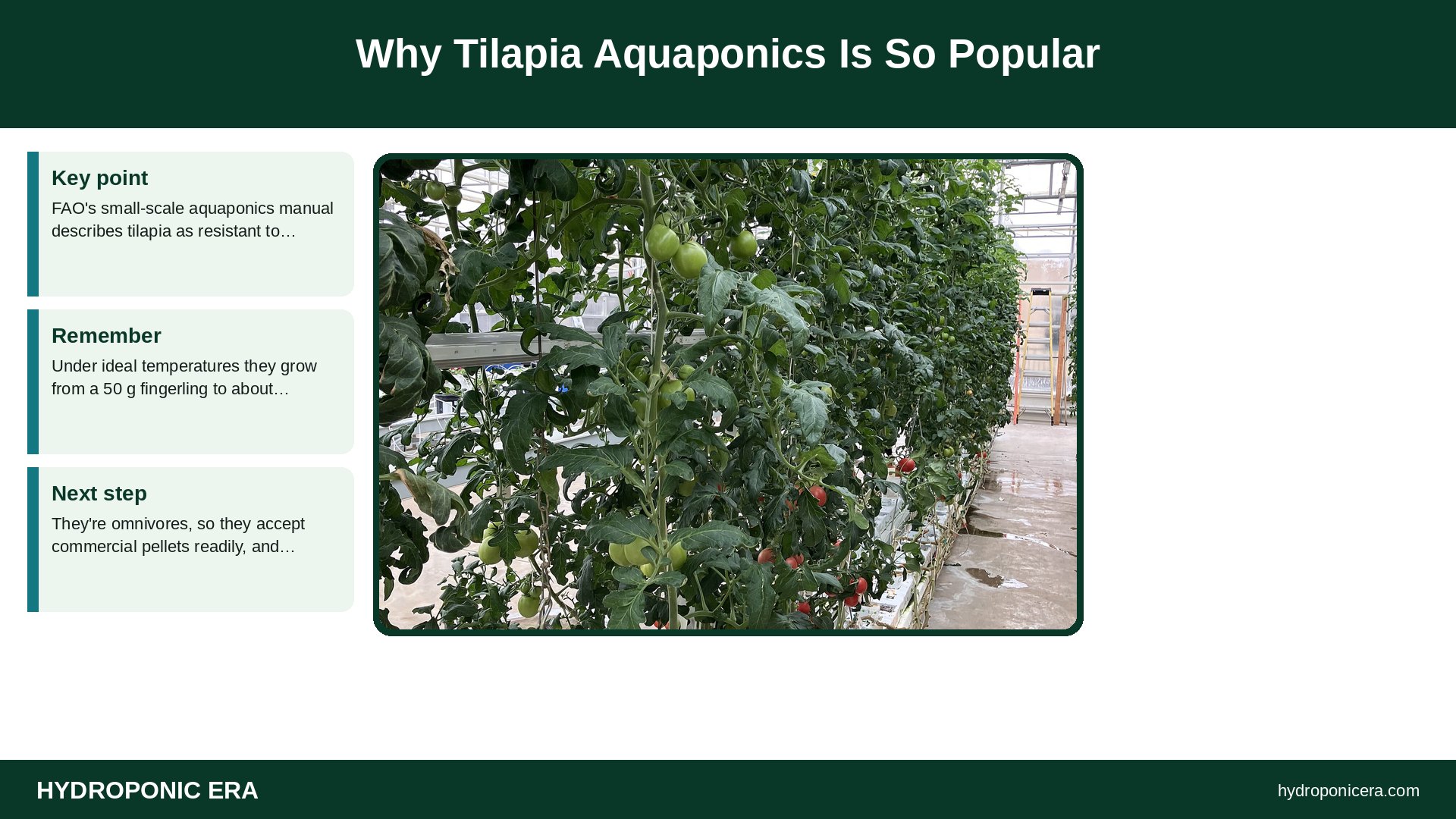
FAO’s small-scale aquaponics manual describes tilapia as resistant to many pathogens, parasites, and handling stress, and tolerant of a wide range of water conditions. Under ideal temperatures they grow from a 50 g fingerling to about 500 g in roughly six months. They’re omnivores, so they accept commercial pellets readily, and they produce steady waste that feeds leafy greens and fruiting crops. These traits make tilapia aquaponics the default design in many university and commercial systems, including the University of the Virgin Islands raft system described by the Southern Regional Aquaculture Center.
Which Tilapia Species to Grow
Most US aquaponic growers raise Nile tilapia (Oreochromis niloticus), blue tilapia (O. aureus), or hybrids. University of Florida IFAS Extension notes that blue tilapia are used partly for their better tolerance of cooler water. Hatcheries also sell “all-male” fingerlings, which grow faster and don’t fill the tank with babies. Buy from a hatchery that can tell you the species and confirm it’s legal where you live.
Tilapia Aquaponics Temperature and Heating
Temperature decides whether tilapia aquaponics is practical for you. Measure the fish tank in your coldest month. If it falls below the mid-60s °F, the fish will stop eating, which also stops nutrients for your plants. Options include:
- Indoor systems in a heated room or basement, using aquarium heaters sized to the tank. See aquarium heaters.
- Insulated tanks with lids to hold heat overnight.
- Greenhouses that gain heat during the day; see greenhouse basics.
- Seasonal growing: raise tilapia from late spring to fall and harvest before the water cools. FAO suggests switching to cold-water fish like trout in winter in temperate regions.
Tilapia Aquaponics Tank Size and Stocking
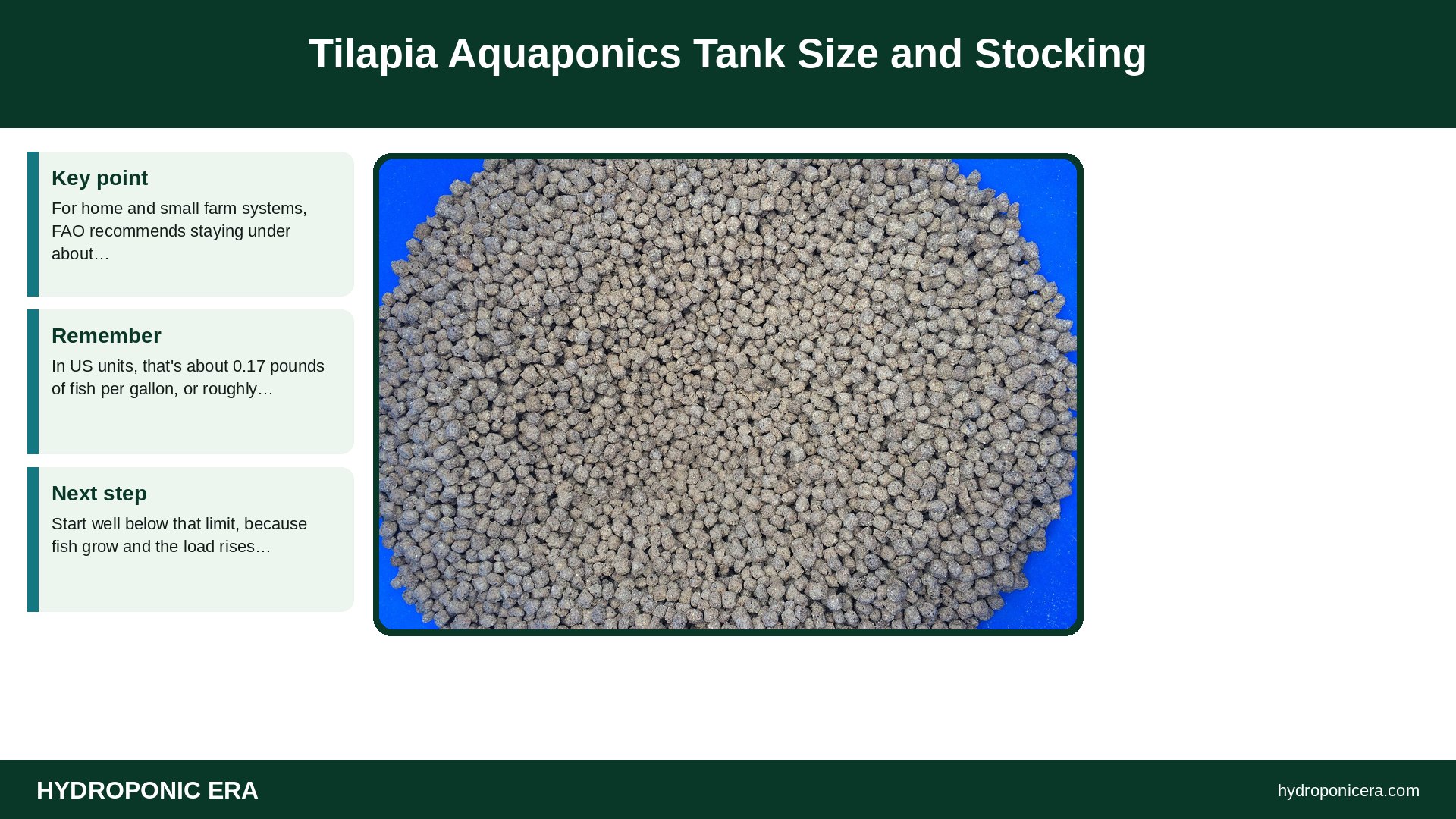
For home and small farm systems, FAO recommends staying under about 20 kg of fish per 1,000 liters of water. In US units, that’s about 0.17 pounds of fish per gallon, or roughly 44 pounds of fish at harvest in a 264-gallon (1,000-liter) tank. Start well below that limit, because fish grow and the load rises every week. Lower density means more stable water and fewer emergencies. Tilapia tolerate crowding better than most species, but the water quality still has to keep up.
Feeding Fish in Tilapia Aquaponics
Feed a floating pellet sized for the fish’s mouth. FAO lists 28–32% crude protein for grow-out tilapia; UF IFAS notes that very small fry need higher protein levels. Feed what the fish eat in a few minutes, once to three times a day, and remove uneaten food. Feeding rate drives your whole system: the plant area you can support depends on how much feed goes in each day. FAO’s guideline for leafy greens is about 40–50 grams of feed per square meter of growing area per day, and 50–80 grams for fruiting crops.
Controlling Breeding
Tilapia mature young and breed readily in warm water. UF IFAS notes spawning continues as long as water stays above about 72°F. In a mixed-sex tank, you’ll soon have many small fish competing for food, and the tank can overcrowd. To manage this:
- Buy all-male or mostly male fingerlings.
- Harvest on a schedule before overcrowding.
- If you want to breed, keep broodstock in a separate tank, as FAO describes.
Tilapia Aquaponics Water Quality Routine
- Test ammonia, nitrite, nitrate, and pH weekly once the system is cycled, and daily during the first weeks.
- Keep pH between 6 and 7 as a compromise for fish, plants, and bacteria.
- Run aeration in the fish tank and biofilter around the clock. See air pumps and air stones.
- Watch fish behavior: gasping at the surface means low oxygen or high ammonia.
- Top off with dechlorinated water; see chlorine and chloramine.
Best Plants for Tilapia Aquaponics
Lettuce, basil, kale, chard, and other leafy greens thrive in tilapia systems and tolerate the warm water. Fruiting crops like tomatoes and peppers work in mature systems with enough fish feed going in. One trade-off: lettuce prefers cooler water than tilapia, so lettuce in very warm systems may bolt sooner. See growing lettuce hydroponically and best herbs.
Is Tilapia Legal Where You Live?
Tilapia are non-native, and several states regulate which species can be kept or where. For example, Florida’s Department of Agriculture and Consumer Services explains that blue tilapia, Nile tilapia, and their hybrids can be possessed and cultured without a special permit only in certain designated regions, while other tilapia species are restricted or prohibited, and backyard possession of conditional species isn’t permitted. Rules differ widely, so contact your state fish and wildlife or agriculture department before you buy fish.
Harvesting Tilapia Aquaponics Fish
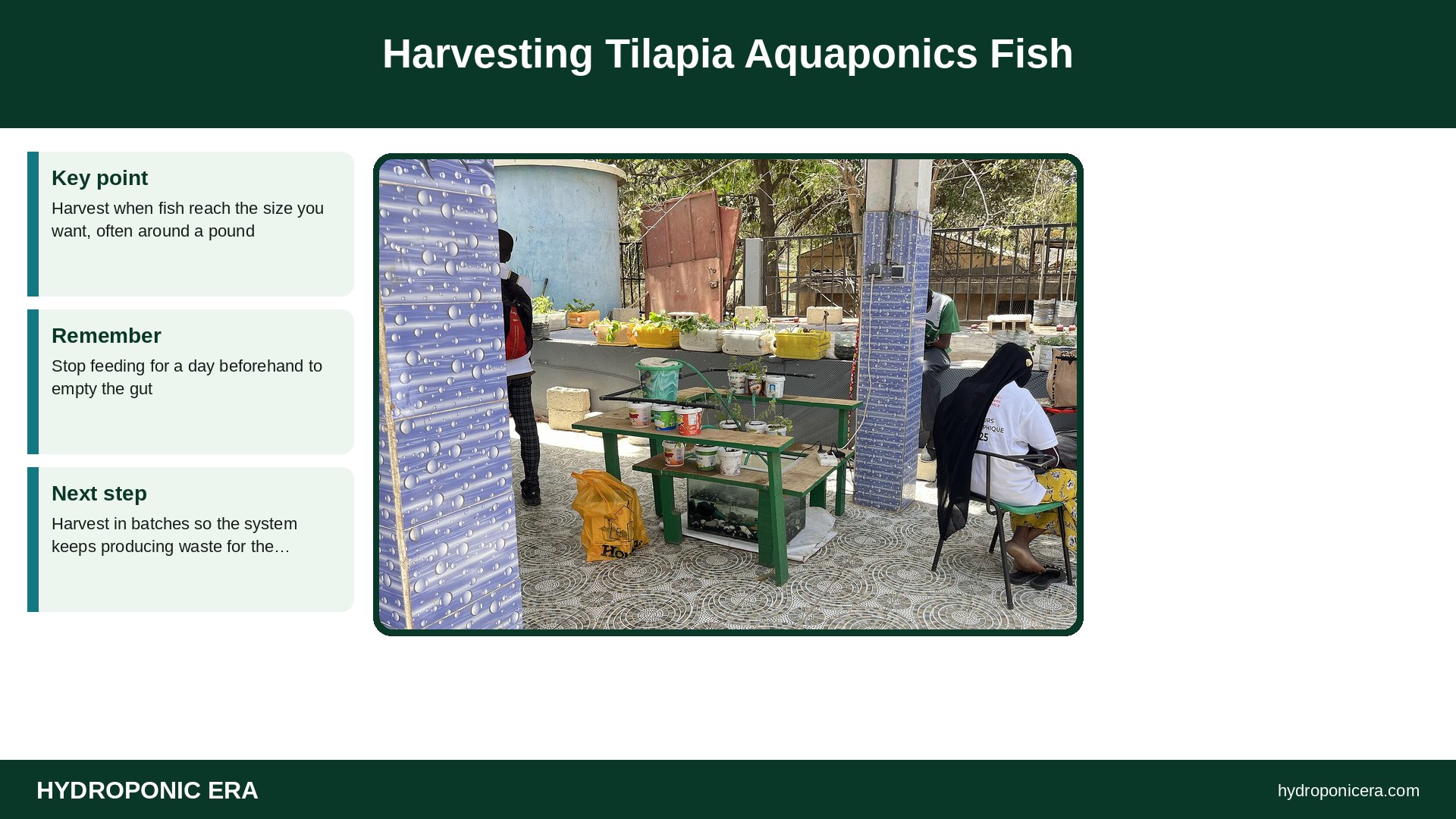
Harvest when fish reach the size you want, often around a pound. Stop feeding for a day beforehand to empty the gut. Harvest in batches so the system keeps producing waste for the plants, and restock with fingerlings to keep the cycle going.
Common Tilapia Aquaponics Mistakes
- Letting the water get too cold in winter.
- Overstocking before the biofilter is mature.
- Overfeeding, which raises ammonia and dirties the water.
- Skipping backup aeration; see backup power.
- Buying fish before checking state rules.
New to the concept? Start with aquaponics for beginners.
FAQs: Tilapia Aquaponics
What temperature do tilapia need?
About 81–86°F for best growth. They stop feeding below the low 60s °F and die below about 54°F.
How many tilapia per gallon?
Use weight, not fish count. FAO’s small-scale limit is about 20 kg per 1,000 liters, or about 0.17 lb per gallon at harvest.
How long do tilapia take to grow?
About six months from fingerling to roughly a pound in ideal warm conditions.
Do tilapia breed in tilapia aquaponics tanks?
Yes, readily in warm water. Use all-male fingerlings to avoid overcrowding.
Can tilapia live outside in winter?
Not in most US climates without heating, because they die in cold water.
Sources
- FAO — Small-scale aquaponic food production
- University of Florida IFAS Extension — Culture of Hybrid Tilapia: A Reference Profile
- Southern Regional Aquaculture Center — Aquaponics: Integrating Fish and Plant Culture (SRAC 454)
- Florida Department of Agriculture and Consumer Services — Commercial Aquaponics: Rules and Regulations
- Photo credits (Wikimedia Commons, edited with titles): Oreochromis-niloticus-Nairobi by Bjørn Christian Tørrissen (CC BY-SA 3.0); Solanum lycopersicum in aquaponics at the NC Greenhouse Nursery by Gogerr (CC BY-SA 4.0); Fish Feed Pellets by Narek75 (CC BY-SA 4.0); Fish farming on Øksfjorden in Loppa, Troms og Finnmark, Norway, 2022 August by Ximonic (Simo Räsänen) (CC BY-SA 4.0); AQUAPONIE by Hopeballa (CC BY-SA 4.0)
1 thought on “Tilapia Aquaponics: Tank Size, Temperature and Setup”