
Aquaponics plants turning yellow usually points to one of four causes: iron deficiency, pH drift, low nitrogen in a young or understocked system, or root problems. The location of the yellowing is the fastest clue. FAO’s aquaponics manual notes that nitrogen deficiency yellows older leaves first, because plants move nitrogen to new growth, while iron deficiency yellows new leaves first, because iron can’t move within the plant. If nitrate is high but new leaves are yellow, FAO recommends adding chelated iron and checking pH. Keep pH around 6–7, the compromise range FAO gives for fish, plants, and bacteria.
Key takeaway: Check where the yellowing starts, then test pH and nitrate before adding anything.
| Symptom | Likely cause (FAO) | First fix |
|---|---|---|
| Yellow new leaves, green veins | Iron deficiency | Chelated iron, check pH |
| Yellow older leaves, thin stems | Nitrogen deficiency | Check nitrate; increase feed slowly |
| Yellow between veins on older leaves | Magnesium (rare in aquaponics) | Confirm before adding |
| Burned spots and edges on older leaves | Potassium deficiency | Buffer with potassium carbonate/hydroxide |
| Yellow new growth, stiff leaves | Sulfur (rare) | Rule out iron and pH first |
| Yellow, wilting with brown roots | Root rot or low oxygen | Improve aeration and flow |

Step 1: Look at Which Leaves Are Turning Yellow
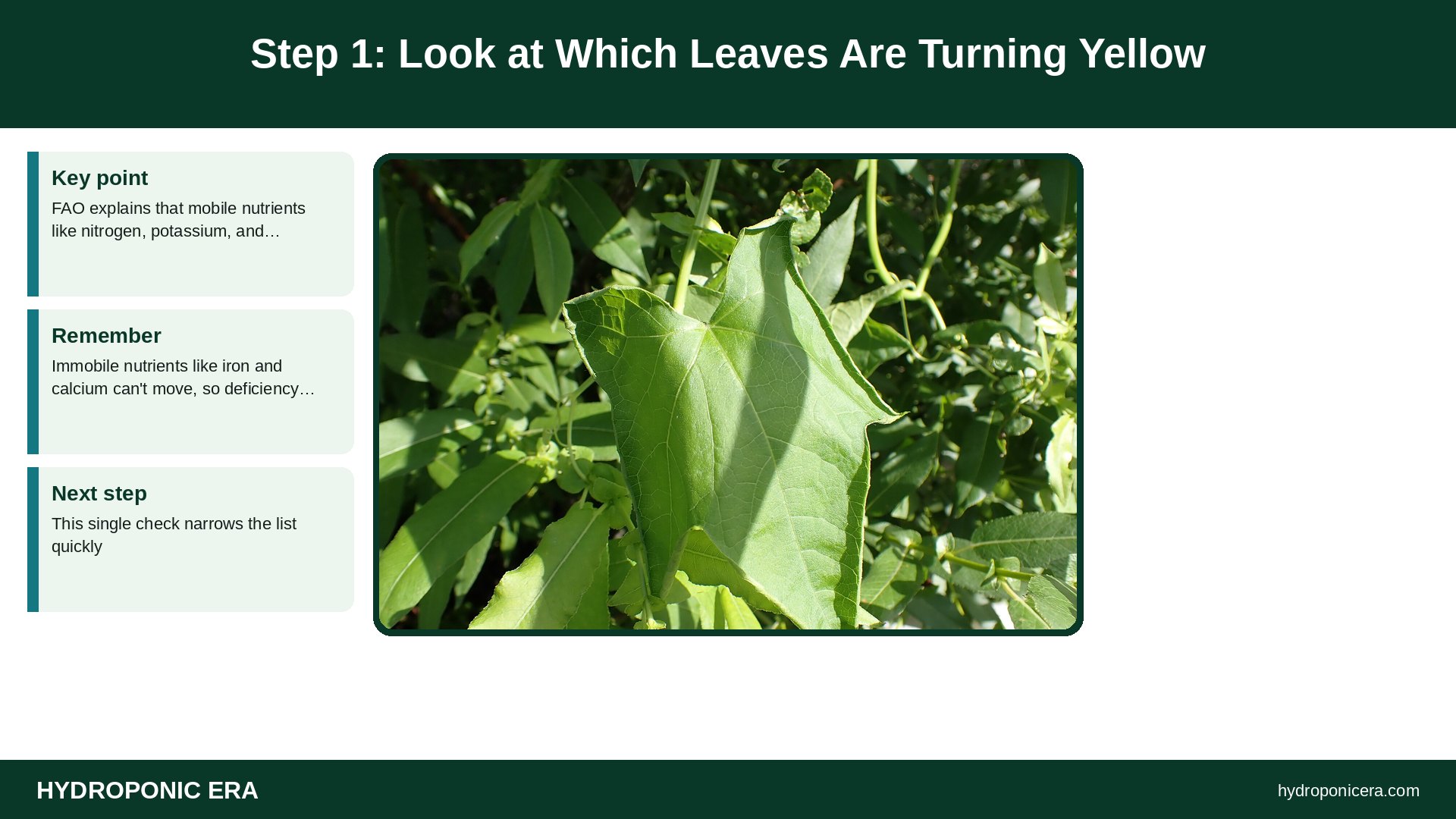
FAO explains that mobile nutrients like nitrogen, potassium, and magnesium move from old leaves to new ones when they run short, so deficiency shows on older leaves first. Immobile nutrients like iron and calcium can’t move, so deficiency shows on new growth. This single check narrows the list quickly.
Step 2: Test pH
pH is the most common hidden cause of aquaponics plants turning yellow. FAO notes that a pH above 7.5 can lead to deficiencies of iron, phosphorus, and manganese, even when those nutrients are present. Nitrification gradually acidifies the water, so many systems drift low, while systems with hard water or limestone media can stay high. Aim for 6–7. See aquaponics pH.
Step 3: Test Nitrate

Nitrate is the main source of nitrogen in aquaponics. If nitrate is very low and older leaves are yellow, the system may have too many plants for the fish feed. FAO suggests slowly increasing daily feed, or adding fish, to raise nitrate. New systems are often low in nitrate until cycling finishes. See fish to plant ratio and aquaponics cycling.
Iron Deficiency: The Top Cause of Aquaponics Plants Turning Yellow
Fish feed is a complete diet for fish but not for plants. FAO notes fish don’t need as much iron, potassium, and calcium as plants, so these often run short. Iron deficiency shows as yellow new leaves with green veins, which can turn pale white in severe cases. FAO recommends chelated iron at about 2 mg/liter, and notes new systems often need iron in the first months. See iron deficiency in hydroponics.
Potassium and Calcium Shortages
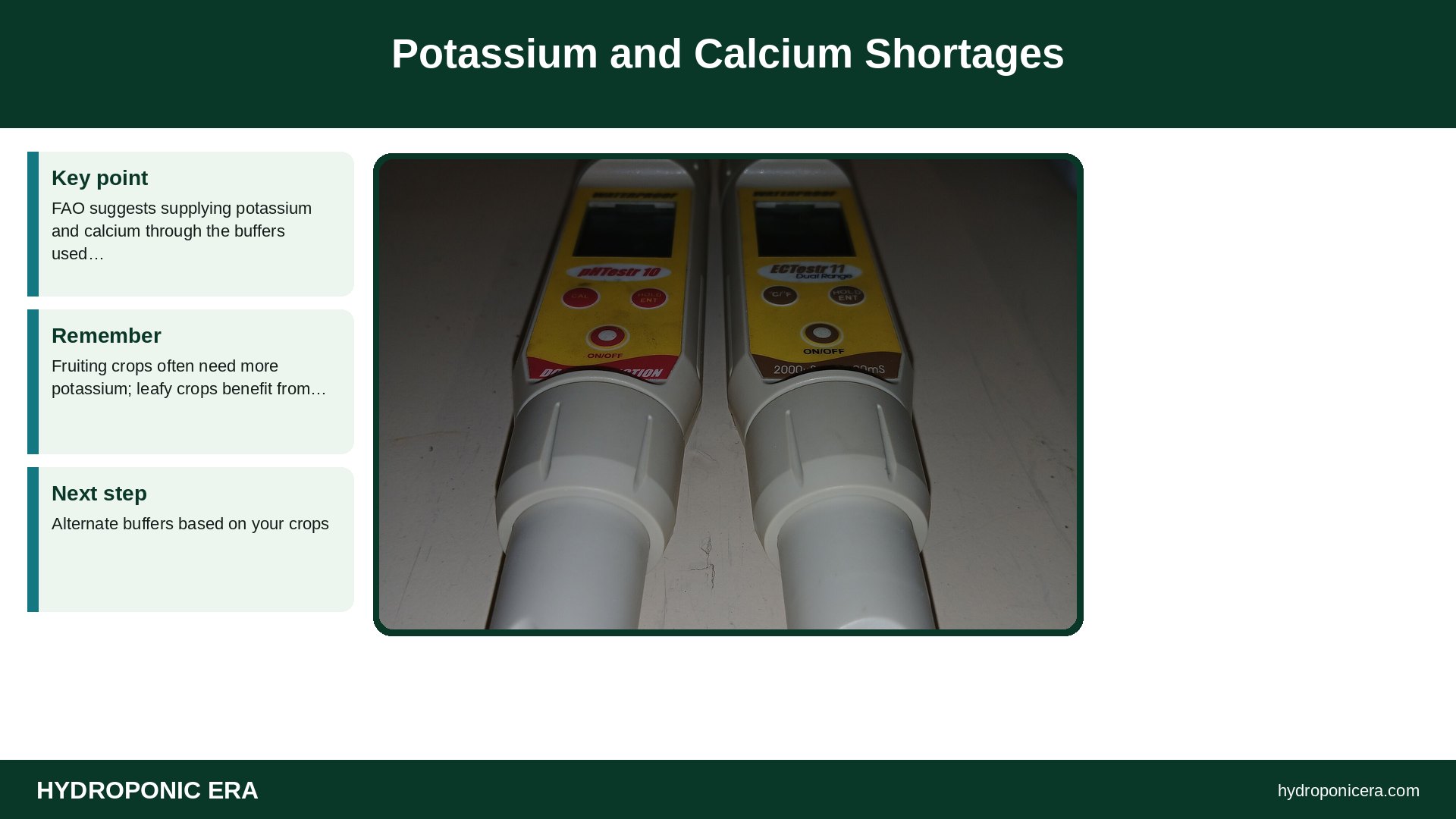
FAO suggests supplying potassium and calcium through the buffers used to correct pH: potassium hydroxide or potassium carbonate, and calcium hydroxide or calcium carbonate. Fruiting crops often need more potassium; leafy crops benefit from calcium. Alternate buffers based on your crops.
Root Problems Behind Aquaponics Plants Turning Yellow
If yellowing comes with wilting, check roots. Healthy roots are white or cream. Brown, slimy roots point to low oxygen, too-warm water, or solids buildup. In raft systems, check aeration; in media beds, check that the bed drains properly. See aquaponics raft system and media beds.
Temperature, Light, and Aquaponics Plants Turning Yellow
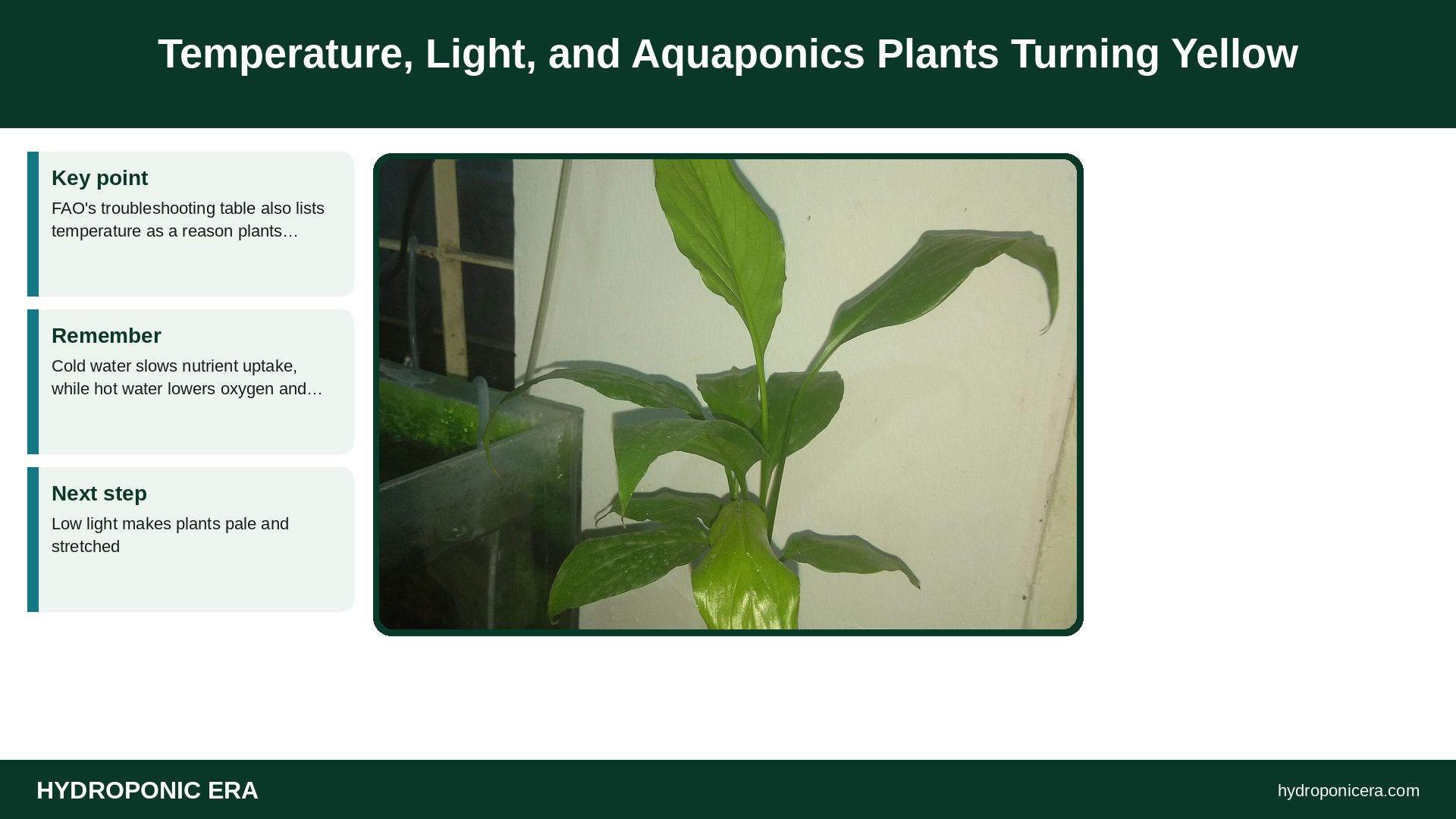
FAO’s troubleshooting table also lists temperature as a reason plants stop growing or change color. Cold water slows nutrient uptake, while hot water lowers oxygen and stresses roots. Low light makes plants pale and stretched. See yellow leaves in hydroponics.
What Not to Do
- Don’t add standard hydroponic nutrients; many are unsafe for fish.
- Don’t change pH quickly; FAO advises gradual adjustment.
- Don’t overfeed fish to “fix” nitrogen; it raises ammonia.
- Don’t spray pesticides that may reach the fish water.
Aquaponics-Safe Supplements
FAO suggests compost tea and seaweed tea as aquaponics-safe ways to add iron and other micronutrients. Use small doses and watch fish behavior.
Aquaponics Plants Turning Yellow in New Systems
New systems are the most common place to see aquaponics plants turning yellow. During cycling, nitrate is still low, and FAO notes some new units show iron deficiency in the first 2–3 months because fish feed doesn’t supply enough iron for early plant growth. FAO recommends adding chelated iron at 1–2 mg/liter during the first three months. Be patient: as the fish population and feed rate grow, nitrate rises and pale plants usually green up.
Aquaponics Plants Turning Yellow by Crop
- Lettuce and greens: often iron or pH; also bolt and yellow in warm water above about 79°F.
- Tomatoes and peppers: heavy feeders; older-leaf yellowing often means low nitrogen or potassium.
- Basil: sensitive to iron shortage and cold water.
- Cucumbers: may yellow from low potassium or magnesium.
Fruiting crops need more nutrients, so FAO’s feed rate for them is higher, 50–80 g per m² per day versus 40–50 g for leafy greens.
A Quick Checklist for Aquaponics Plants Turning Yellow
- Note which leaves yellowed first.
- Test pH, nitrate, ammonia, and temperature.
- Check roots and water flow.
- Fix pH first, then dose iron or adjust feed.
- Watch new growth for a week before changing anything else.
When Pests or Disease Cause Yellow Leaves
Not every case of aquaponics plants turning yellow is nutritional. Sap-sucking pests like aphids, whiteflies, and spider mites can cause yellow speckling and curling, and root diseases like Pythium, which FAO describes as a common cause of root rot, lead to yellowing and wilting. Check leaf undersides with a magnifier and inspect roots. In aquaponics, choose fish-safe controls like insect netting, sticky traps, and beneficial insects, because many pesticides are toxic to fish. FAO also notes that warm water favors root rot, so keep temperatures in range.
Prevent Aquaponics Plants Turning Yellow
- Dose chelated iron in new systems.
- Keep pH 6–7 and test weekly.
- Balance feed to plant area.
- Alternate potassium and calcium buffers.
- Keep roots oxygenated and water temperature stable.
FAQs: Aquaponics Plants Turning Yellow
Why are my aquaponics plants turning yellow?
Usually iron deficiency, pH drift, low nitrate, or root problems.
Yellow new leaves or old leaves: what’s the difference?
New leaves suggest iron; old leaves suggest nitrogen.
How much iron should I add?
FAO suggests chelated iron to about 2 mg/liter.
Can pH cause yellow leaves?
Yes. FAO notes pH above 7.5 can cause iron, phosphorus, and manganese deficiencies.
Can I use hydroponic nutrients?
Generally no. Use fish-safe supplements.
Sources
- FAO — Small-scale aquaponic food production
- Photo credits (Wikimedia Commons, edited with titles): Septoria leaf spot symptoms on tomato leaf (Septoria lycopersici on Solanum lycopersicum leaf) by MerielGJones (CC BY-SA 4.0); Echinocystis lobata – wild cucumber – 52228921022 by Matt Lavin (CC BY-SA 2.0); Solanum lycopersicum in aquaponics at the NC Greenhouse Nursery by Gogerr (CC BY-SA 4.0); PH- und Leitfähigkeitsmessgeräte by Rotkaeppchen68 (CC0); Spathiphyllum wallisii hydroponically grown by Kephalian (CC BY-SA 4.0)