
Aquaponics algae is best controlled by blocking light, not with chemicals. FAO’s aquaponics manual says preventing algae is relatively easy: shade all water surfaces, and cover fish tanks and biofilters with shade cloth, tarps, or lids so no water is in direct sunlight. Algae compete with plants for nutrients, swing pH up by day and down at night, and can crash dissolved oxygen at night, which can kill fish. Filamentous algae also clog drains and filters. If a bloom appears, FAO’s fix is to shade the system and physically remove mature algae. Avoid algaecides and household chemicals in a system with fish and food crops.
Key takeaway: Cover every water surface, keep media beds’ top layer dry, and remove algae by hand.
| Where algae grows | Why | Fix |
|---|---|---|
| Fish tank (green water) | Open to light | Lid or shade cloth |
| Biofilter or sump | Uncovered | Cover completely |
| Raft canals | Gaps between rafts | Cover gaps; fit rafts tightly |
| Clear pipes and tubing | Light passes through | Use opaque pipe or paint it |
| Media bed surface | Wet top layer | Keep the top 1–2 inches dry |
Why Aquaponics Algae Is a Problem
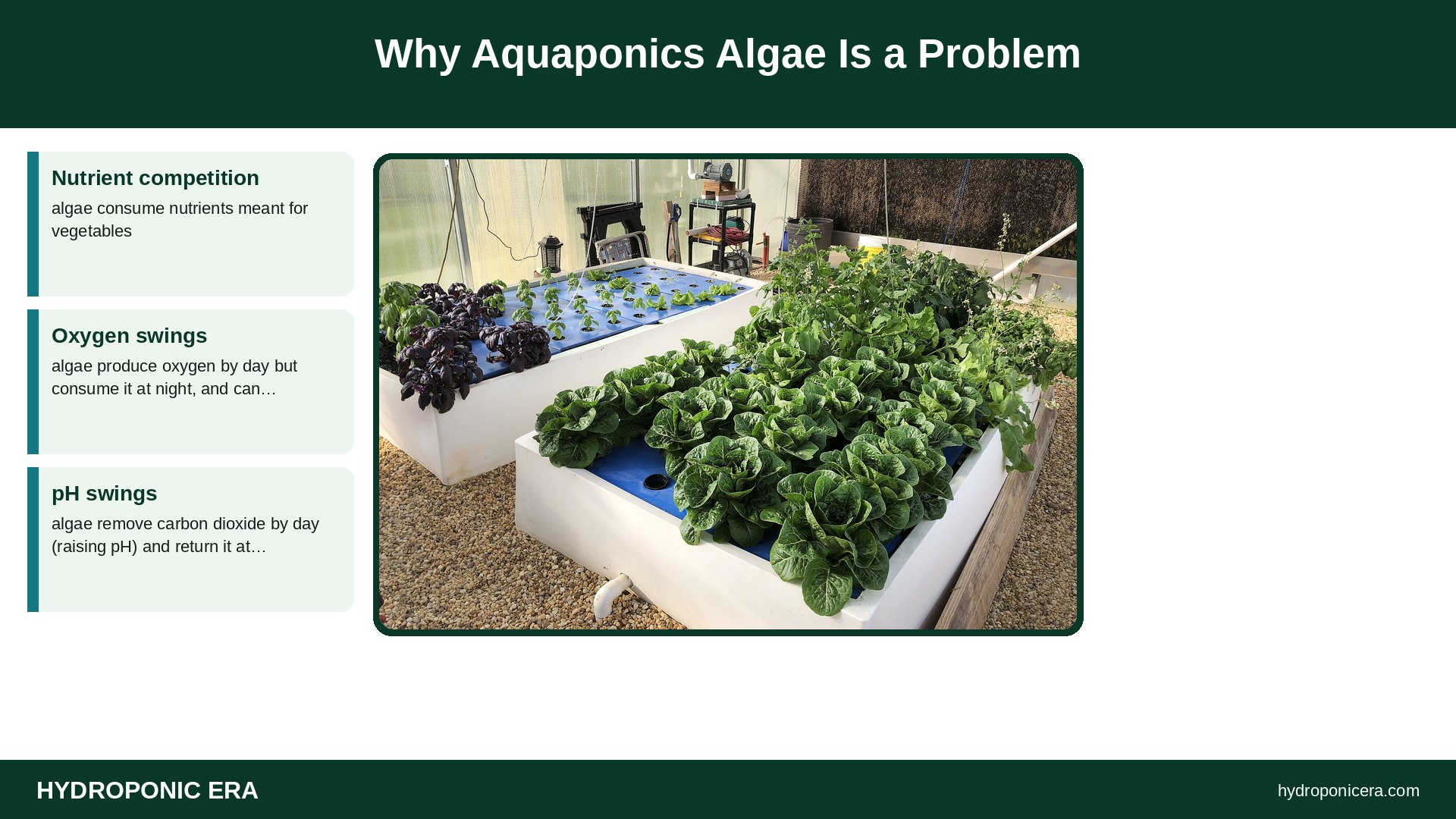
FAO lists several problems:
- Nutrient competition: algae consume nutrients meant for vegetables.
- Oxygen swings: algae produce oxygen by day but consume it at night, and can dramatically reduce oxygen and cause fish deaths.
- pH swings: algae remove carbon dioxide by day (raising pH) and return it at night (lowering pH).
- Clogging: filamentous algae block drains and filters.
- Root growth: brown filamentous algae can grow on plant roots in raft systems and harm growth.
Prevent Aquaponics Algae by Blocking Light
Algae need light and nutrients. Aquaponics water is always rich in nutrients, so the practical control is light. FAO recommends shading all water surfaces and covering fish tanks and biofilters so no water is exposed to direct sunlight. Practical steps:
- Fit lids or shade cloth over fish tanks.
- Cover sumps, swirl filters, and biofilters.
- Use opaque tanks and pipes; paint clear ones.
- Cover IBC totes, which are often translucent. See IBC aquaponics.
- Fill gaps between rafts.
Keep the Media Bed Surface Dry
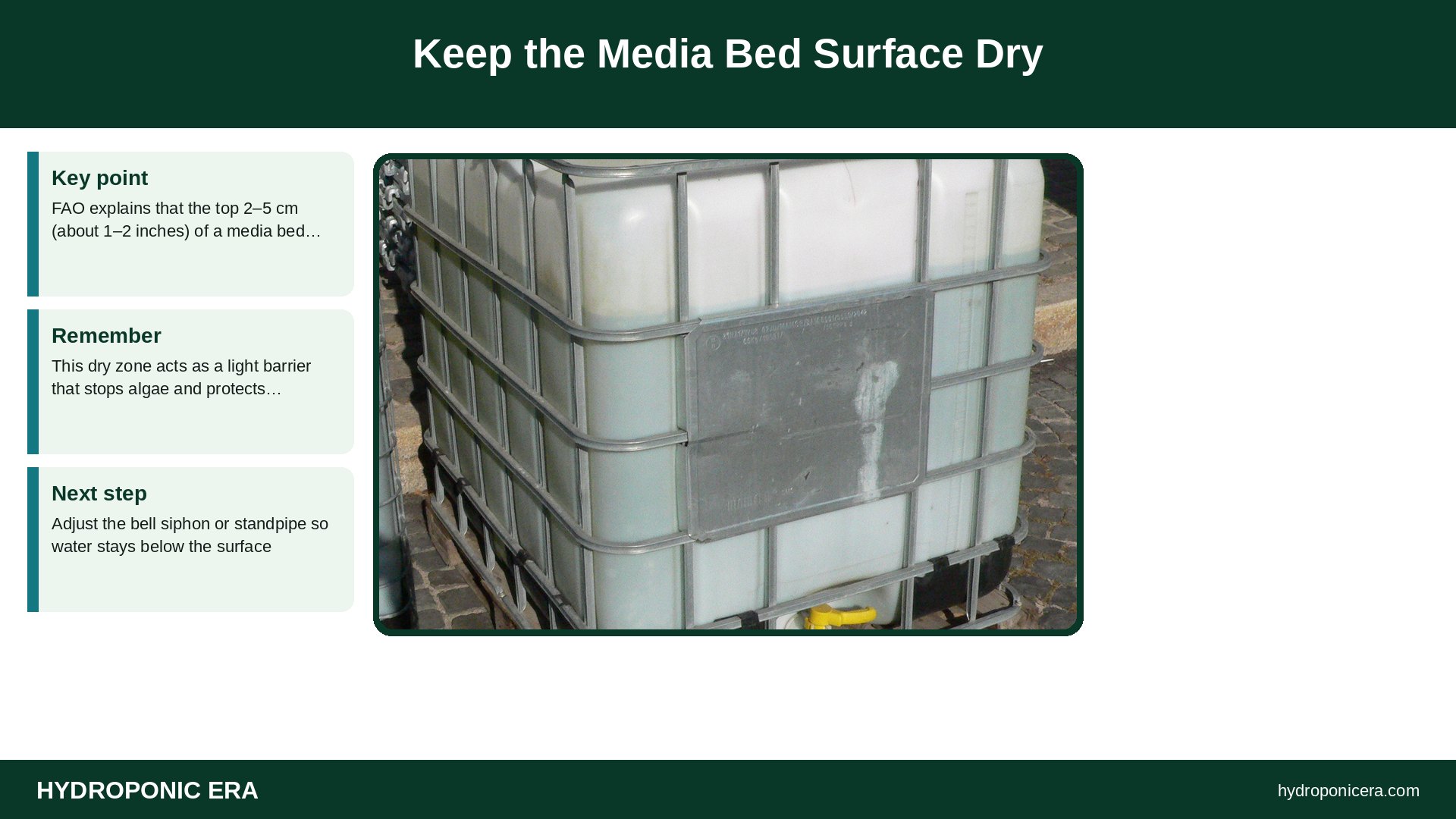
FAO explains that the top 2–5 cm (about 1–2 inches) of a media bed should stay dry. This dry zone acts as a light barrier that stops algae and protects plant stems from collar rot. Adjust the bell siphon or standpipe so water stays below the surface. See aquaponics media bed.
Removing Aquaponics Algae Safely
- Scoop or wipe filamentous algae by hand.
- Clean pipes and drains with a brush.
- Rinse filter pads in system water.
- Use algae-eating snails cautiously; they can clog pipes and eat roots.
FAO’s troubleshooting advice for green water is to shade the system and physically remove mature algal blooms.
Avoid Chemicals
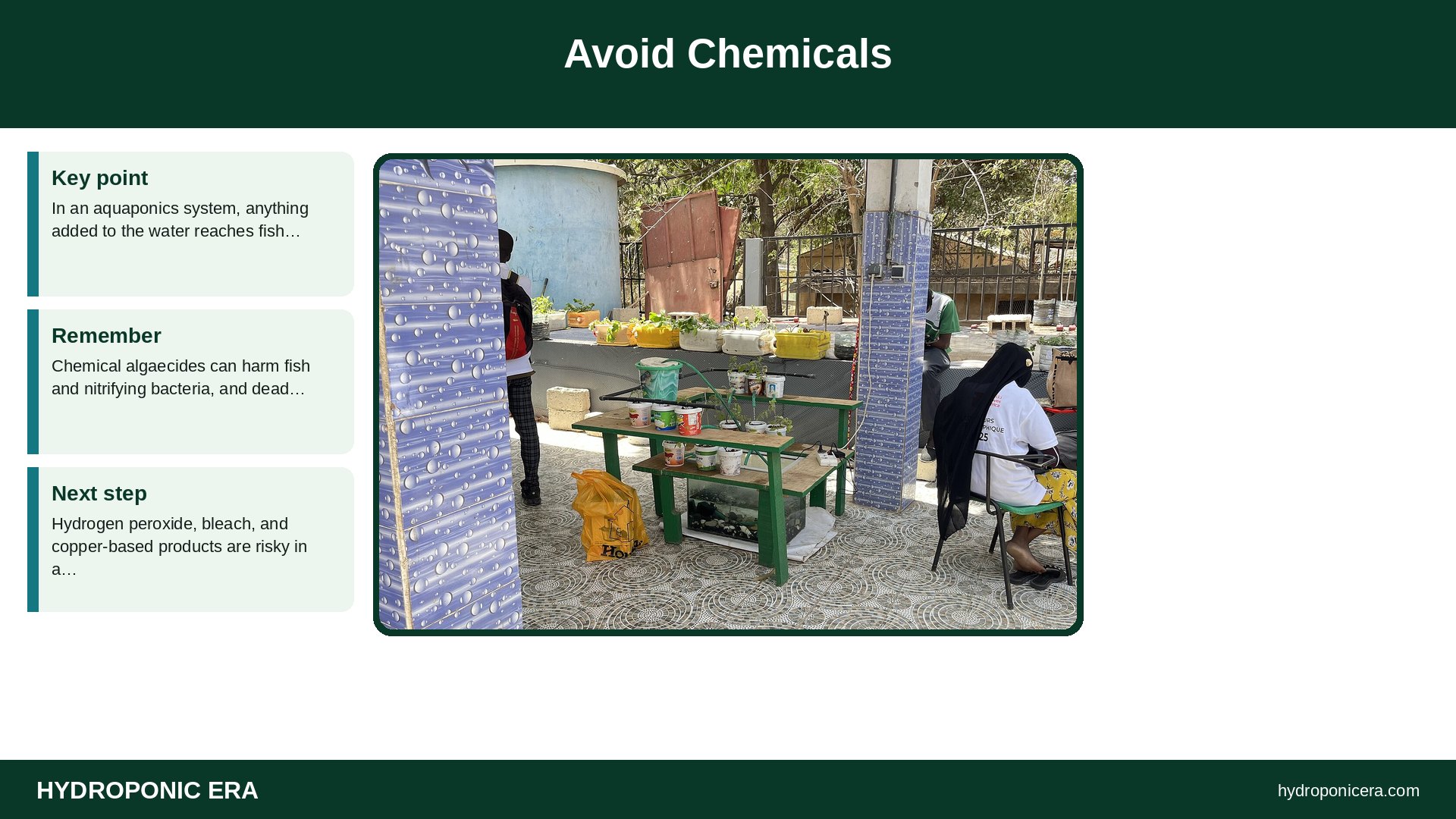
In an aquaponics system, anything added to the water reaches fish, bacteria, and food plants. Chemical algaecides can harm fish and nitrifying bacteria, and dead algae can crash oxygen as they decay. Hydrogen peroxide, bleach, and copper-based products are risky in a live system. Prevention by shading is safer and cheaper.
Is Some Algae Okay?
A thin film on tank walls is common and harmless. The concern is green water, thick mats, and algae on roots. FAO notes some aquaculture uses green water deliberately, such as tilapia breeding, but it’s not recommended in aquaponics because of oxygen and nutrient competition.
Aquaponics Algae and Fish Health
If you see fish gasping at the surface early in the morning, algae may be consuming oxygen at night. Add aeration right away, shade the system, and remove algae. Test pH in the morning and afternoon to see if algae are causing big swings. See aquaponics pH and algae in hydroponic reservoirs.
Seasonal Aquaponics Algae
Algae usually surge in spring and summer when light is strong. Inspect covers, replace torn shade cloth, and recheck after moving tanks. Greenhouse systems still need covered tanks. See aquaponics greenhouse.
Aquaponics Algae in Raft Systems
In raft systems, aquaponics algae grow in gaps between rafts and on roots. FAO notes brown filamentous algae can grow on plant roots, especially in deep water culture, and negatively affect growth. Cut rafts to fit tightly, cover gaps with spare foam, and fill empty net-pot holes with plugs. See aquaponics raft system.
Aquaponics Algae Checklist
- Walk the system and look for any water exposed to light.
- Cover it with lids, shade cloth, or opaque material.
- Remove mats by hand and clean drains.
- Check that media bed surfaces stay dry.
- Test morning and afternoon pH for daily swings.
- Recheck in one week.
Aquaponics Algae on Pipes and Tanks
FAO shows algae growing on plastic pipe, a common sight with clear or white tubing. Replace clear tubing with opaque tubing, or wrap or paint exposed pipes. White tanks reflect sunlight and stay cool, but still need lids. If you use translucent IBC totes, FAO notes a paint coating also protects them from sunlight, which helps with both algae and tote life span.
Aquaponics Algae and Nutrients
You can’t starve algae of nutrients in aquaponics, because the same nutrients feed your plants. Strong plant growth does help by taking up nutrients first, but light control remains the main tool. Overfeeding fish raises nutrients and solids, so balance feed to plant area.
How Algae Affects Aquaponics Water Quality
FAO explains that algae growth affects pH, dissolved oxygen, and nitrogen levels in aquaponic units. Algae grow readily in any nutrient-rich water exposed to sunlight; microscopic phytoplankton can turn water green, while larger macroalgae form mats. Because algae photosynthesize by day and respire at night, they can push pH up during the day and pull oxygen down overnight. FAO’s practical fix is shading: it says all fish tanks should be covered, and shade covers prevent algal growth. Cover sumps and biofilters too, and use opaque pipes.
FAQs: Aquaponics Algae
How do I stop algae in aquaponics?
Shade and cover all water surfaces, as FAO recommends.
Is algae harmful to fish?
Heavy algae can crash oxygen at night and kill fish.
Can I use algaecide?
It’s not recommended in a system with fish and food crops.
Why does my media bed have algae?
The top layer is wet. Keep the top 1–2 inches dry.
Is green water okay?
Not in aquaponics. Shade the system and remove algae.
Sources
- FAO — Small-scale aquaponic food production
- Photo credits (Wikimedia Commons, edited with titles): Fish farming on Øksfjorden in Loppa, Troms og Finnmark, Norway, 2022 August by Ximonic (Simo Räsänen) (CC BY-SA 4.0); Deepwater Aquaponics Floating Rafts Growing Lettuce, Basil and Arugula by Alabama Extension (CC0); Intermediate Bulk Container (fcm) by Photograph: Frank C. Müller, Baden-Baden (CC BY-SA 4.0); AQUAPONIE by Hopeballa (CC BY-SA 4.0); South Sister lava flows, USGS by C. Dan Miller, USGS/Cascades Volcano Observatory (Public domain)