
A complete hydroponic equipment list for a small farm covers seven areas: the growing structure (greenhouse, high tunnel or indoor room), the growing system (NFT channels, rafts, Dutch buckets or towers), water and nutrient handling (reservoirs, pumps, filters, injectors, meters), climate control (heating, cooling, fans, shade and controllers), lighting where needed, propagation gear, and harvest and post-harvest equipment such as a wash station, cooler and packaging. Start with the crop and market, then size each item to that plan rather than buying a kit first.
Key takeaway: Most small-farm budgets go first to the structure and climate control. Buy reliable pumps, meters and backup power early, because one failure can wipe out a crop.
| Category | Core items | Priority |
|---|---|---|
| Structure | Greenhouse, high tunnel or insulated room | Essential |
| Growing system | NFT, DWC rafts, Dutch buckets, troughs | Essential |
| Water and nutrients | Tanks, pumps, filters, injector, EC/pH meters | Essential |
| Climate | Heater, fans, vents, shade, controller | Essential |
| Lighting | LEDs for indoor or winter supplement | Depends on site |
| Propagation | Trays, media, germination area | Essential |
| Harvest and post-harvest | Wash sink, cooler, scales, packaging | Essential if selling |
| Backup and safety | Generator, alarms, spare pump | Strongly advised |
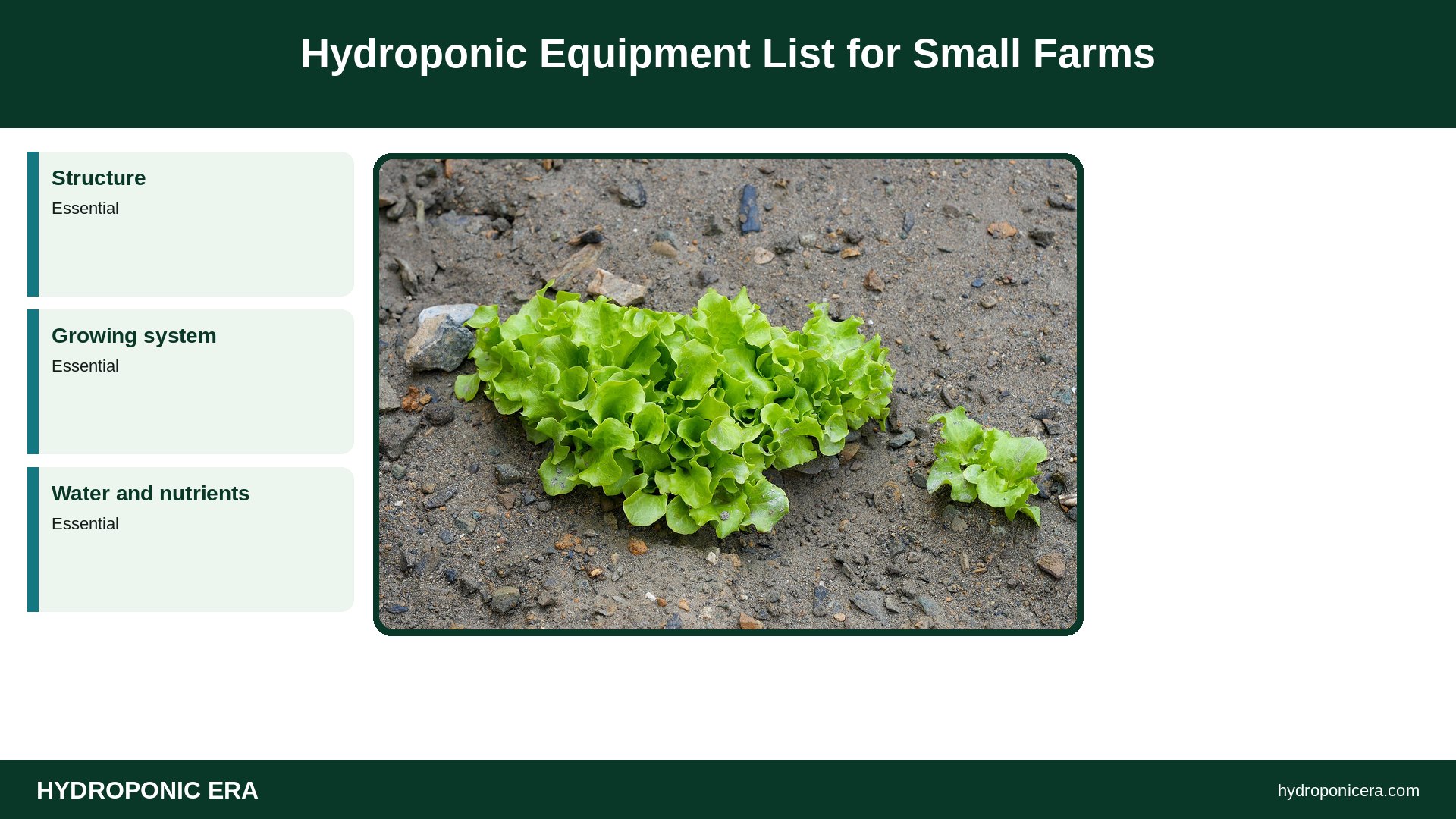
Start Your Hydroponic Equipment List With the Crop Plan
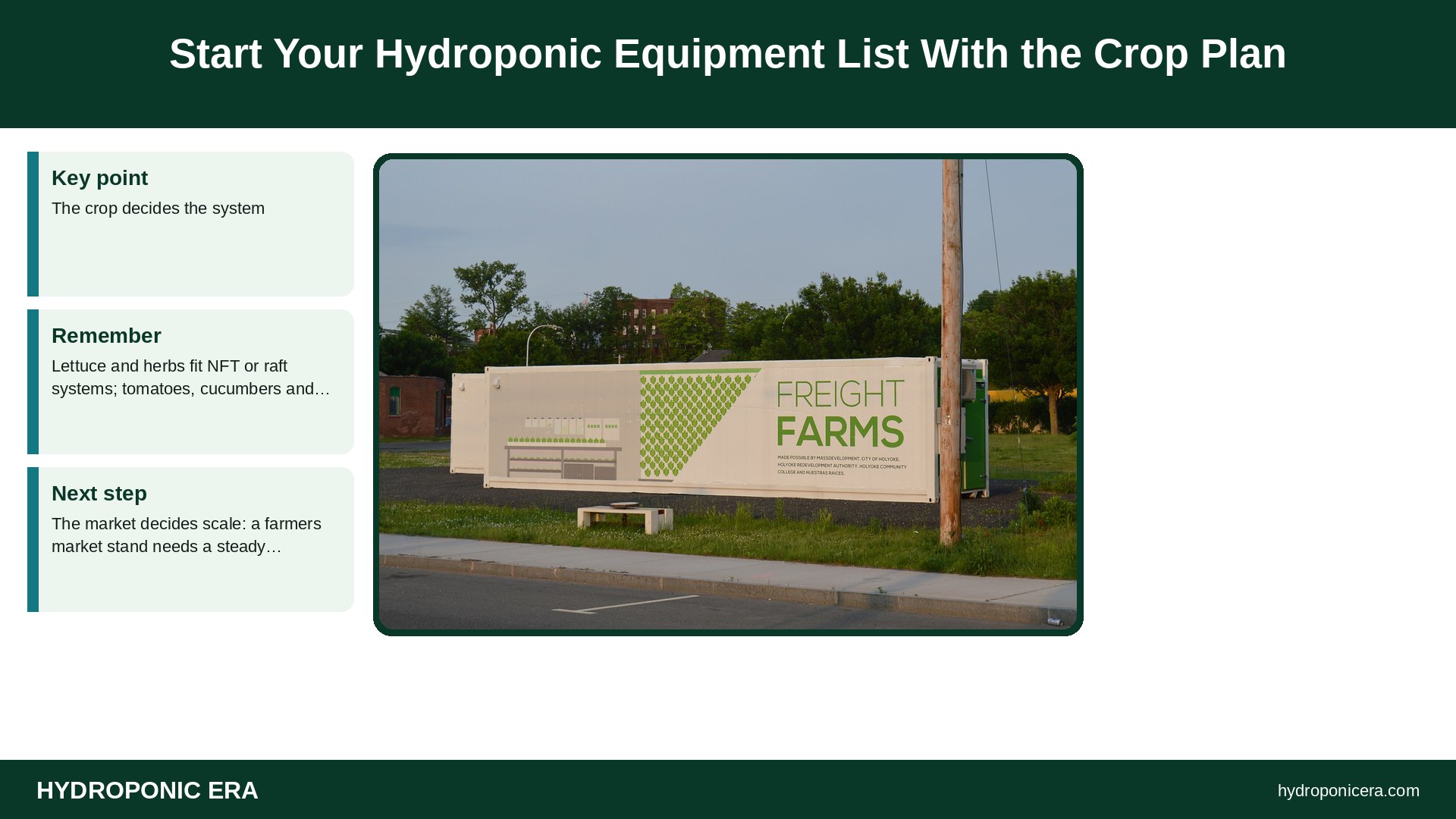
The crop decides the system. Lettuce and herbs fit NFT or raft systems; tomatoes, cucumbers and peppers need Dutch buckets, slabs or bags with trellising. The market decides scale: a farmers market stand needs a steady weekly supply, while a restaurant account needs consistent size and quality. Ohio State’s hydroponic crop budgets show how equipment, labor and yield combine for different crops. See crop selection and business plan.
Structure
- Greenhouse: double-poly or polycarbonate for winter growing; plan for snow and wind loads. See hydroponic greenhouse for beginners.
- High tunnel: cheaper, but less climate control.
- Indoor room or container farm: full control, but high lighting and power costs.
- Benches or floor prep: level concrete or gravel with weed barrier.
Growing System Equipment
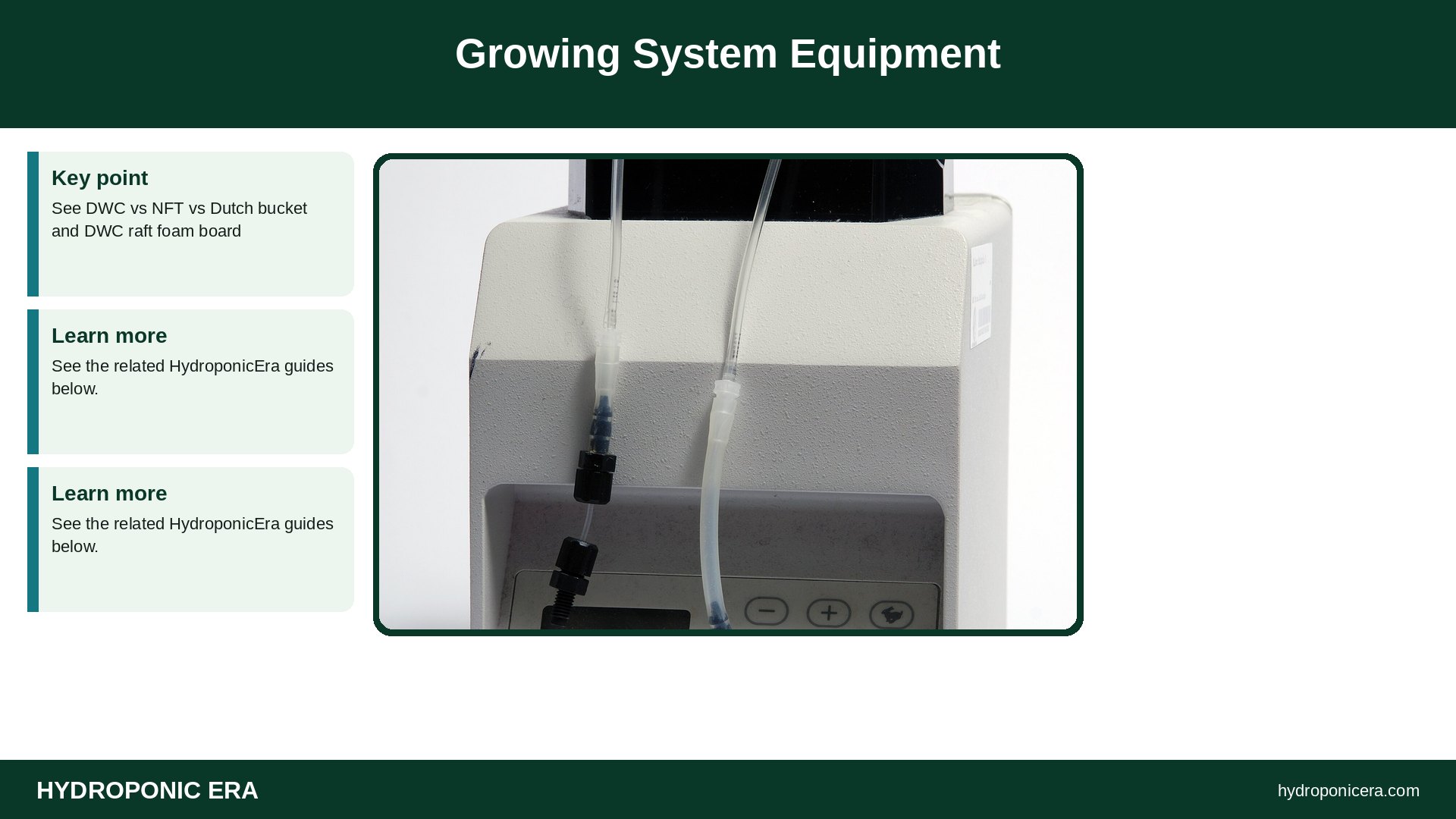
- NFT channels, stands, supply manifolds and return gutters.
- DWC tanks or lined beds, rafts and air pumps.
- Dutch buckets, drip lines and drain lines for vine crops.
- Trellis wire, hooks, twine and clips.
- Net pots, grow plugs and media.
See DWC vs NFT vs Dutch bucket and DWC raft foam board.
Water and Nutrient Equipment on Your Hydroponic Equipment List
- Water test: a lab test of the source water before you buy anything else.
- Treatment: sediment filter; RO system if water is hard or high in sodium.
- Reservoirs: food-grade tanks sized for daily use plus a buffer.
- Pumps: continuous-duty pumps with a spare for every critical pump.
- Nutrient dosing: stock tanks with an injector or dosing pumps.
- Meters: a reliable EC and pH meter plus calibration fluids; a backup handheld.
- Filtration: screen filters for drip lines; UV or other sanitation optional.
UF/IFAS recommends regular monitoring of EC, pH and source water for greenhouse hydroponic vegetables. See pH and EC meters and dosing pumps.
Climate Control
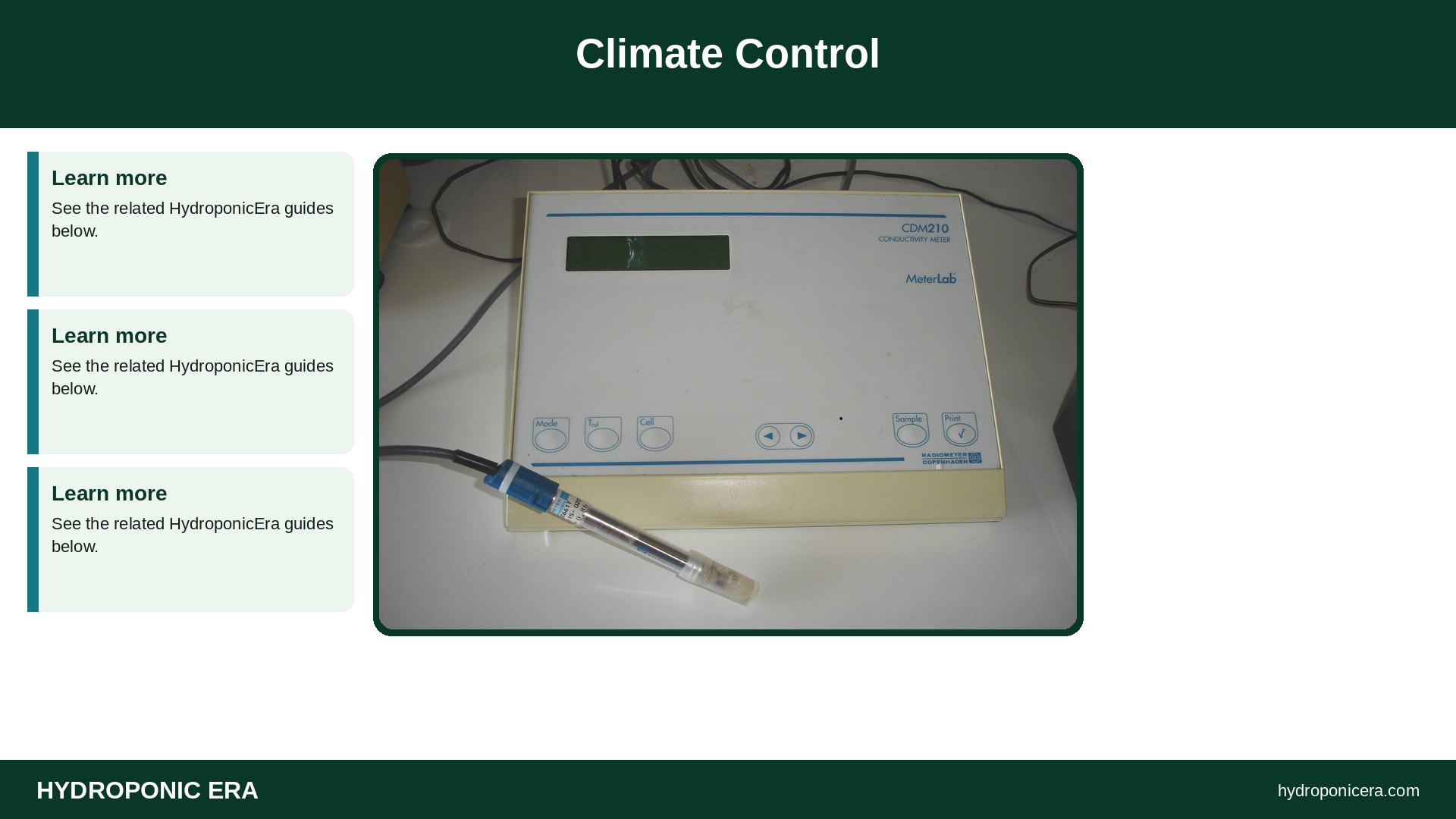
- Heater sized to the greenhouse heat loss.
- Exhaust fans and intake shutters or roll-up sides.
- Horizontal airflow fans for even temperature.
- Shade cloth for summer.
- Evaporative cooling pads in hot climates.
- A climate controller or thermostats with alarms.
- Dehumidification for indoor farms.
See airflow and fans.
Lighting
Indoor farms need full LED lighting; greenhouses in northern states often add supplemental lights in winter to reach the target daily light integral. Price fixtures by output and efficiency, not watts alone. See PPFD and DLI.
Propagation Equipment
- Seed trays, plug media (rockwool, oasis or coco plugs).
- Germination area with heat mats, humidity domes and lights.
- A seeder or vacuum seeder for larger operations.
- A labeled seed storage area.
Harvest and Post-Harvest Items for Your Hydroponic Equipment List
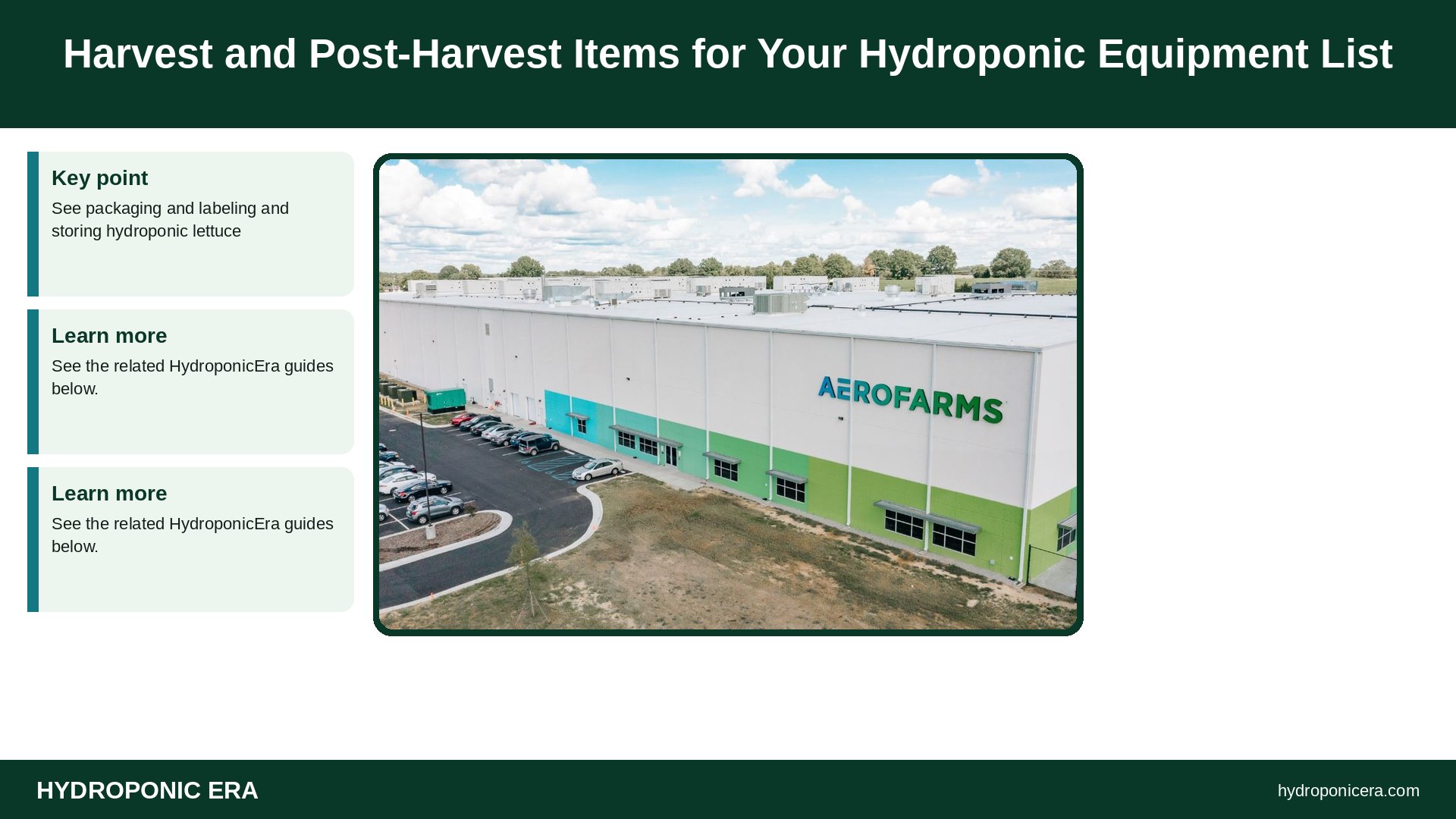
- Clean harvest bins and knives.
- Wash and pack station with food-safe surfaces and potable water.
- Walk-in or reach-in cooler for leafy greens.
- Scale, labels and packaging.
- Hand-washing station and cleaning supplies.
See packaging and labeling and storing hydroponic lettuce.
Backup and Safety
- Generator or battery backup for pumps and air.
- Power and temperature alarms that text you.
- Spare pump, air pump, meter and timer.
- GFCI outlets for all wet-area electrical.
See backup power, electrical safety and spare parts kit.
Used vs New Equipment
Used greenhouse frames, fans, tanks and benches can save a lot of money, especially from farms that are upgrading or closing. Inspect them carefully, sanitize anything that held water or plants, and avoid used channels or rafts with scratches that hold biofilm. Buy pumps, meters, probes and electrical controls new so you have a warranty and know their history.
Records and Software
A simple spreadsheet or farm app for planting dates, EC, pH, yields and sales is part of the equipment too. Good records show which crops pay. See record keeping.
Buying Tips
- Buy from suppliers who stock spare parts.
- Standardize channel, pot and fitting sizes.
- Get quotes for the structure first, since it sets the rest of the plan.
- Check for USDA and state grant or loan programs. See USDA farm loans.
Sample Hydroponic Equipment List for a Lettuce Greenhouse
Here is how the categories come together for a small greenhouse growing lettuce and herbs in NFT. Quantities depend on size, so treat this hydroponic equipment list as a checklist rather than a shopping cart.
- Double-poly greenhouse with end-wall fans, intake shutters and a gas or propane unit heater.
- Horizontal airflow fans and a thermostat or climate controller with high and low temperature alarms.
- NFT channels on stands, a supply manifold with a valve per channel and a return gutter.
- A covered reservoir, a continuous-duty pump plus a spare, and a chiller or heater if the climate needs it.
- Two-part nutrient stock tanks with an injector, or a dosing controller.
- Benchtop and handheld EC and pH meters with calibration solutions.
- A propagation bench with plug trays, heat mats and lights.
- A wash and pack area, a cooler, scales and clamshells or bags.
- A generator or battery backup and a power-failure alarm.
Keeping Your Hydroponic Equipment List Up to Date
Equipment wears out. Pumps, air pumps, pH probes and timers are consumables on any hydroponic equipment list, and probes in particular usually need replacing every year or two. Keep a log of purchase dates, serial numbers and warranty terms, and add a column for the date each item was last cleaned or calibrated. When you expand, add new rows rather than starting over, so you can see what each system really costs to run.
Common Mistakes When Building a Hydroponic Equipment List
- Buying growing systems before testing source water.
- Undersizing the heater or cooling for local extremes.
- Skipping backup power and alarms.
- Forgetting post-harvest gear, which buyers notice first.
- Mixing many incompatible fitting sizes and brands.
A careful hydroponic equipment list built from your crop plan, local climate and market saves money and avoids most first-year surprises.
FAQs
What equipment do I need to start a hydroponic farm?
A structure, a growing system, water and nutrient gear, climate control, propagation and post-harvest equipment.
What should I buy first?
A water test, then the structure and climate system for your crop.
Do greenhouse farms need grow lights?
Often only in winter, to reach the daily light target.
How many spare parts should I keep?
At least one spare for every pump, meter and timer you rely on.
Is a cooler necessary?
For leafy greens sold fresh, yes.
Can I start small?
Yes; test one system and one crop before scaling up.
Sources
- Ohio State University — Hydroponic Crop Program: Economic Budgets
- UF/IFAS Extension — Water and Nutrient Management Guidelines for Greenhouse Hydroponic Vegetable Production
- University of Kentucky — Hydroponic Lettuce Production in Controlled Environments
- Cornell CEA — Cornell CEA Lettuce Handbook
- Photo credits (Wikimedia Commons, edited with titles): Lettuce Closeup Greenhouse Phuktal Zanskar Jun24 A7CR 00442 by This Photo was taken by Timothy A. Gonsalves. Feel free to use my photos, but pl (CC BY-SA 4.0); Freight Farms project, Holyoke, Massachusetts by Simtropolitan (CC BY-SA 4.0); Laboratory peristaltic pump Gilson-01 by Lilly_M (CC BY-SA 3.0); Electrical conductivity meter by Nuno Nogueira (Nmnogueira) (CC BY-SA 2.5); AeroFarms Danville Location by Kristian Bottini (CC0)