
Buckwheat microgreens are tender, lemony-tasting greens with pink-red stems and broad, heart-shaped leaves. Soak the seed for 6–12 hours, sow it thickly on moist media, cover and weight it for a few days, then grow under light and harvest when the cotyledons open, often within about 1–2 weeks. Buy unhulled seed sold for sprouting or microgreens. One caution: buckwheat greens contain fagopyrin, a compound that can cause light sensitivity, so enjoy them in normal portions rather than by the bowlful.
Key takeaway: Treat buckwheat like sunflower: soak, weight, then give bright light. Eat it as a salad green, with a sensible portion of about 40 grams a day or less.
| Buckwheat microgreens at a glance | Value | Source |
|---|---|---|
| Presoak | 6–12 hours | University of Maryland |
| Days to harvest | About 5–6 days listed; longer for fully open leaves | University of Saskatchewan |
| Family | Polygonaceae (not a true grain) | Virginia Tech |
| Best storage | 34–50°F (1–10°C); 41–50°F (5–10°C) recommended | USDA ARS (Kou et al.) |
| Suggested intake limit | Under about 40 g of sprouts a day | Kreft et al. (2013) |
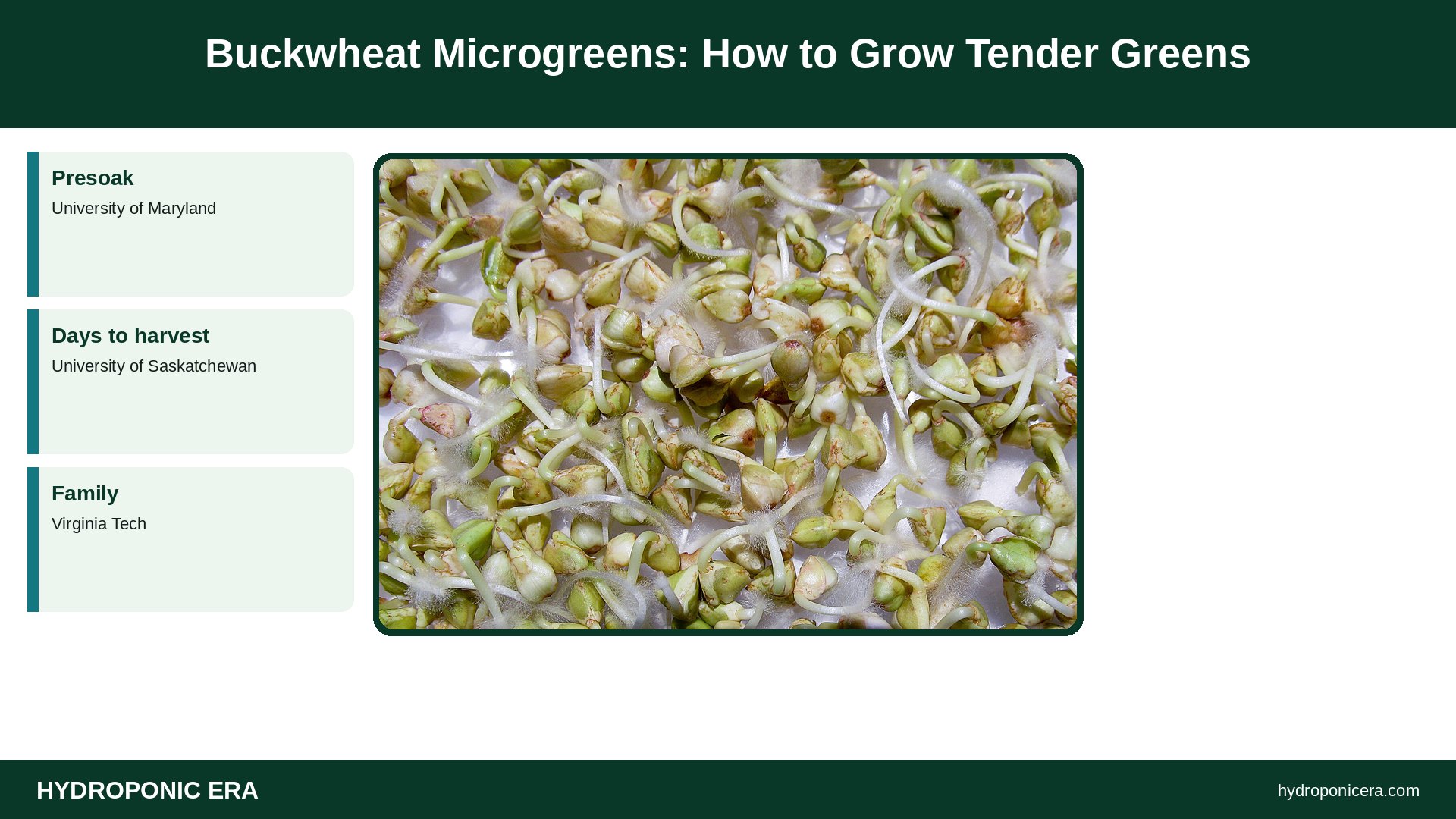
What Makes Buckwheat Microgreens Special
Buckwheat (Fagopyrum esculentum) isn’t a grass or grain; Virginia Cooperative Extension lists it under the Polygonaceae, the knotweed and rhubarb family, among common microgreen families. Its large seeds give fast, sturdy seedlings with wide, soft cotyledons. A USDA Agricultural Research Service team noted buckwheat microgreens are rich in antioxidants and provitamins and vitamins, including flavonoids, carotenoids and alpha-tocopherol, but have a short shelf life, which their research aimed to extend.
How to Grow Buckwheat Microgreens
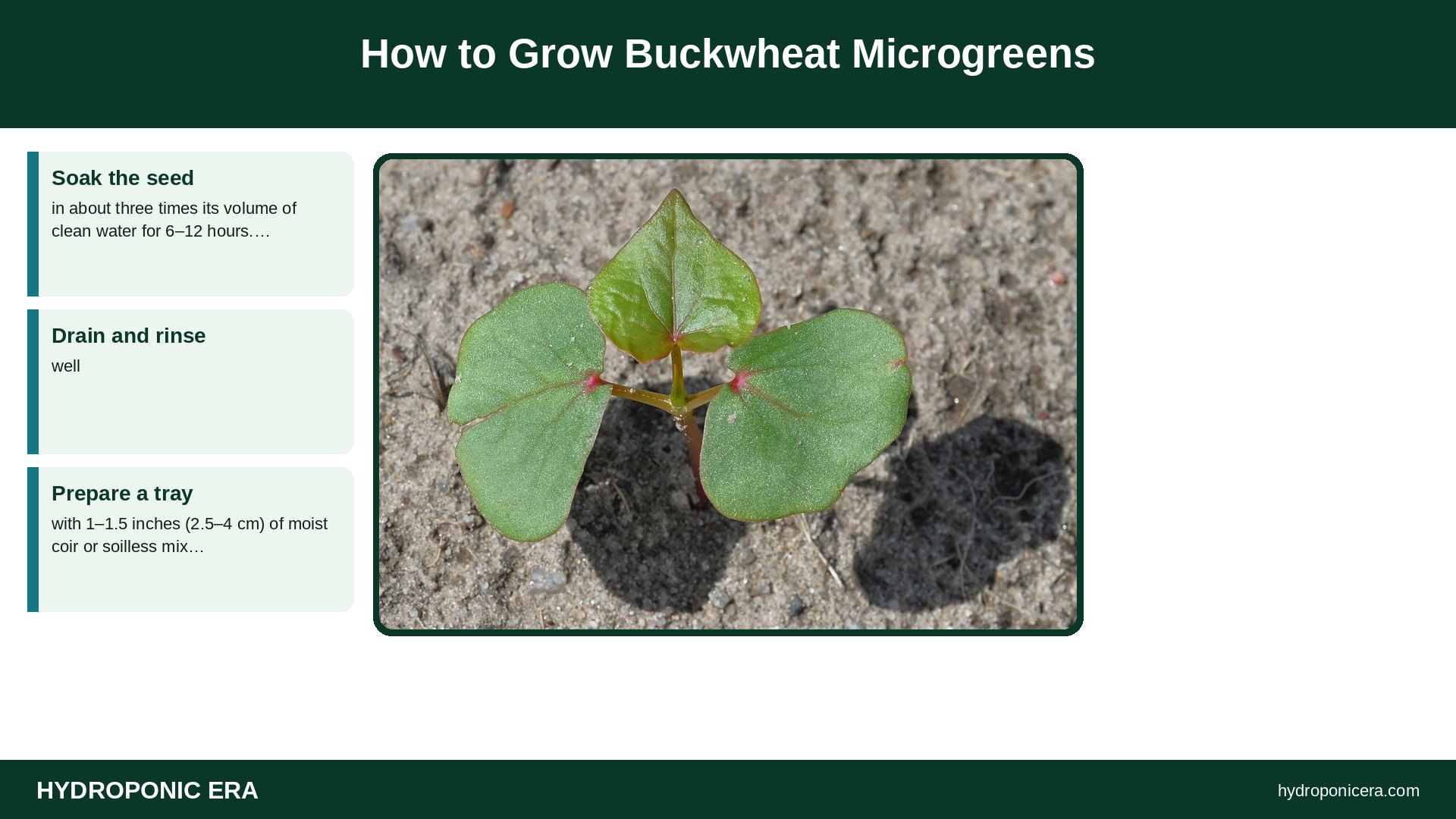
- Soak the seed in about three times its volume of clean water for 6–12 hours. Maryland lists buckwheat among seeds that germinate faster after soaking.
- Drain and rinse well.
- Prepare a tray with 1–1.5 inches (2.5–4 cm) of moist coir or soilless mix; Saskatchewan suggests about 1 inch (2–3 cm) of mix.
- Sow thickly and evenly, with seeds nearly touching in a single layer.
- Cover and weight with a second tray and a few pounds of weight for 2–3 days. Penn State notes keeping weight on large seeds like sunflower during germination helps hulls detach.
- Uncover when the seedlings push up against the cover and give 16–18 hours of light.
- Bottom water so the soft leaves stay dry.
- Harvest once the cotyledons are open and the hulls have dropped.
Getting the Hulls Off
Buckwheat hulls often cling to the leaves. Saskatchewan’s guide says that once seed hulls on young plants are misted, they naturally fall off. Keep the tray weighted during early germination, mist the canopy a day before harvest and brush gently with your palm. Any hulls left on can be picked off after cutting. See sunflower microgreens for the same technique.
Light and Temperature
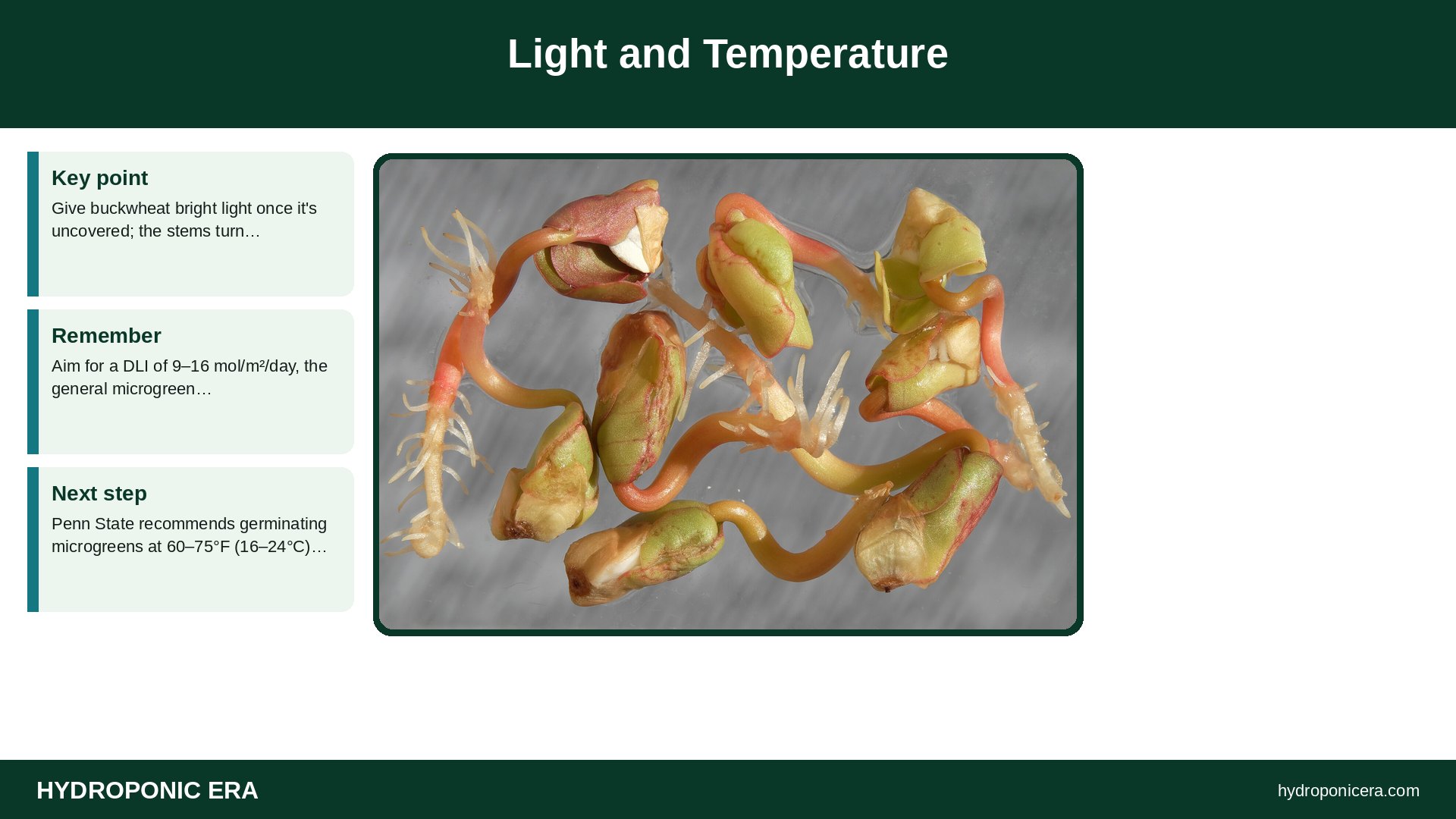
Give buckwheat bright light once it’s uncovered; the stems turn pinker and the leaves greener with good light. Aim for a DLI of 9–16 mol/m²/day, the general microgreen recommendation from Virginia Cooperative Extension. Penn State recommends germinating microgreens at 60–75°F (16–24°C) soil temperature with 60–70°F (16–21°C) air. In warm, humid rooms, add a fan; soft buckwheat leaves can rot if water sits on them. See microgreens light requirements.
A Safety Note: Fagopyrin
Buckwheat plants contain fagopyrins, compounds that can make skin more sensitive to sunlight after they’re eaten. In a 2013 study in Acta Pharmaceutica, Kreft and colleagues found fagopyrin and flavonoids were located almost entirely in the cotyledons of buckwheat sprouts, which are the part you eat as microgreens. Comparing fagopyrin to the similar compound hypericin, they estimated a recommended intake of buckwheat sprouts of less than 40 g per day. That’s a generous handful, so normal use as a salad green is fine; just don’t make buckwheat greens your main daily vegetable, and use extra caution if you’re already sensitive to sunlight.
Storage: What USDA Research Found
Kou and colleagues at USDA ARS tested how to keep buckwheat microgreens fresh. Samples stored at 34, 41 and 50°F (1, 5 and 10°C) had lower microbial growth, less tissue damage and better quality than samples at 59 and 68°F (15 and 20°C). Package film that let in a moderate amount of oxygen kept them fresher. A chlorine wash reduced bacteria at first, but counts rebounded after 7 days. The team concluded buckwheat microgreens should be stored at 41–50°F (5–10°C) with moderately high oxygen and moderately low carbon dioxide. For home growers, that means a breathable container in the fridge, unwashed until use. See how long microgreens last.
Common Problems With Buckwheat Microgreens
| Problem | Likely cause | Fix |
|---|---|---|
| Hulls stuck on leaves | Light weighting or dry canopy | Weight early; mist before harvest |
| Sour smell during soak | Soaked too long or too warm | Keep soaks to 6–12 hours in cool water |
| Uneven stand | Seed stacked in layers | Sow a single layer |
| Soft rot | Too wet, poor airflow | Bottom water; add a fan |
| Leggy, pale stems | Covered too long | Uncover as soon as shoots lift the cover |
See microgreens mold and damping-off.
Buckwheat Microgreens vs Buckwheat Sprouts
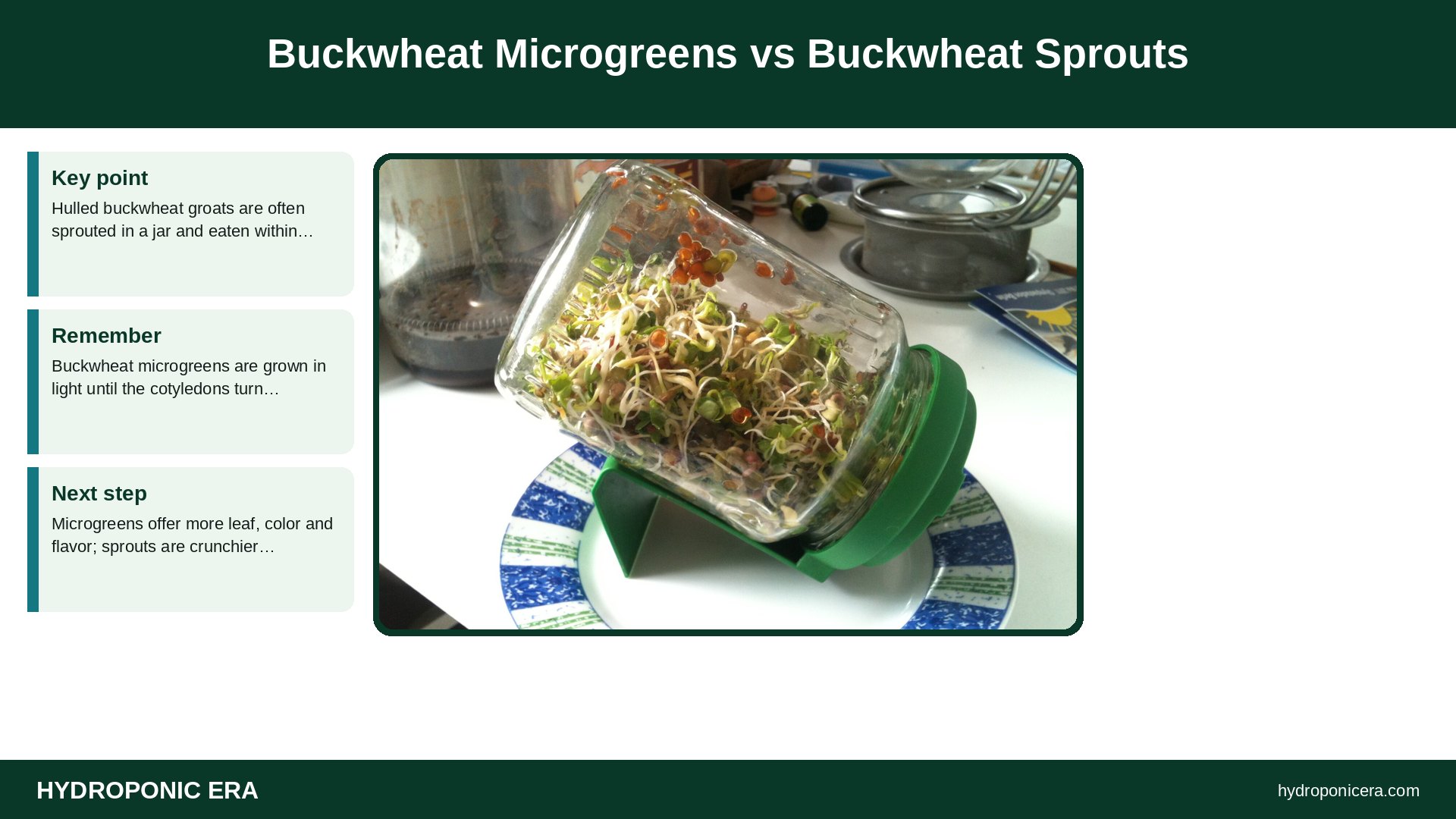
Hulled buckwheat groats are often sprouted in a jar and eaten within a couple of days, roots and all. Buckwheat microgreens are grown in light until the cotyledons turn green, then cut above the media. Microgreens offer more leaf, color and flavor; sprouts are crunchier and faster. Both should be grown from seed sold for sprouting, with clean equipment. See microgreens vs sprouts.
With a soak, a weight and good light, buckwheat microgreens are quick and rewarding. Their mild, slightly tart leaves are a nice change from spicy brassicas. See best microgreens to grow.
Choosing the Right Buckwheat Seed
Seed choice makes or breaks this crop. Look for raw, unhulled buckwheat sold for sprouting or microgreens. Roasted buckwheat, sold as kasha, has been heat-treated and won’t sprout. Raw hulled groats from the grocery store may sprout, but they don’t have the protective hull and tend to rot before they make good greens, so they’re better for sprouting in a jar than for trays.
How to Use Buckwheat Microgreens
Buckwheat microgreens have a mild, lemony, slightly tangy taste and a tender, juicy texture. Use them raw in salads, sandwiches, wraps and grain bowls, or as a garnish for soups and eggs. Their pink stems and big green leaves look good on a plate. Because of the fagopyrin note above, treat them as one ingredient in a meal rather than eating a whole tray at once, and mix them with other greens like sunflower or pea shoots.
FAQs
Should I soak buckwheat seeds?
Yes, for 6–12 hours.
Hulled or unhulled buckwheat for microgreens?
Unhulled seed sold for sprouting or microgreens.
How long do buckwheat microgreens take?
About 1–2 weeks, depending on conditions.
Are buckwheat microgreens safe?
Yes in normal portions; research suggests under about 40 g a day.
How do I remove buckwheat hulls?
Mist the tops and brush gently; hulls fall off when damp.
How should I store buckwheat microgreens?
Cold, about 41–50°F (5–10°C), in a breathable container.
Sources
- University of Maryland Extension — Growing Microgreens and Baby Greens Indoors
- University of Saskatchewan Gardening — Grow With USask: Microgreens
- USDA ARS — Postharvest Biology, Quality and Shelf-Life of Buckwheat Microgreens
- Kreft, Janeš and Kreft (2013), Acta Pharmaceutica — The Content of Fagopyrin and Polyphenols in Common and Tartary Buckwheat Sprouts
- Virginia Cooperative Extension — Introduction to Microgreen Production
- Penn State Extension — Growing Microgreens
- Penn State Extension — A Step-by-Step Guide for Growing Microgreens at Home
- Photo credits (Wikimedia Commons, edited with titles): Buckwheat sprouts by Jacopo Werther (CC BY-SA 4.0); Fagopyrum esculentum kz15 by Krzysztof Ziarnek, Kenraiz (CC BY-SA 4.0); 3-day-old buckwheat sprouts by V.Boldychev (CC BY-SA 4.0); Vegetables in Refrigerator Bin by Alabama Extension (CC0); Growing bean sprouts by User:tlcoles (CC BY-SA 3.0)