
Can you grow shishito peppers hydroponically? Yes. Shishito peppers are compact, quick peppers that suit a Dutch bucket or deep water culture system. Start seeds about 8 weeks before transplanting on a heat mat at 80–90°F (27–32°C), give full sun or strong light, and pick pods at 3–4 in (8–10 cm). Green fruit is ready about 60 days after transplant.
Key takeaway: These mild Japanese peppers mature early and fruit heavily. Most pods are mild, but about one in ten may be hot, so they are a fun crop for an indoor or greenhouse system.
| Growth factor | Target | Source |
|---|---|---|
| Seed start | 8 weeks before transplant | University of Minnesota |
| Germination heat | 80–90°F (27–32°C) heat mat | University of Minnesota |
| Ideal root zone | About 70°F (21°C) | University of Minnesota |
| Plant spacing | 18–24 in (46–61 cm) | Vanderbilt UMC |
| Days to green fruit | 60–65 days | UC Master Gardeners Sonoma |
| Harvest size | 3–4 in (8–10 cm) long | Vanderbilt UMC |
What Are Shishito Peppers?
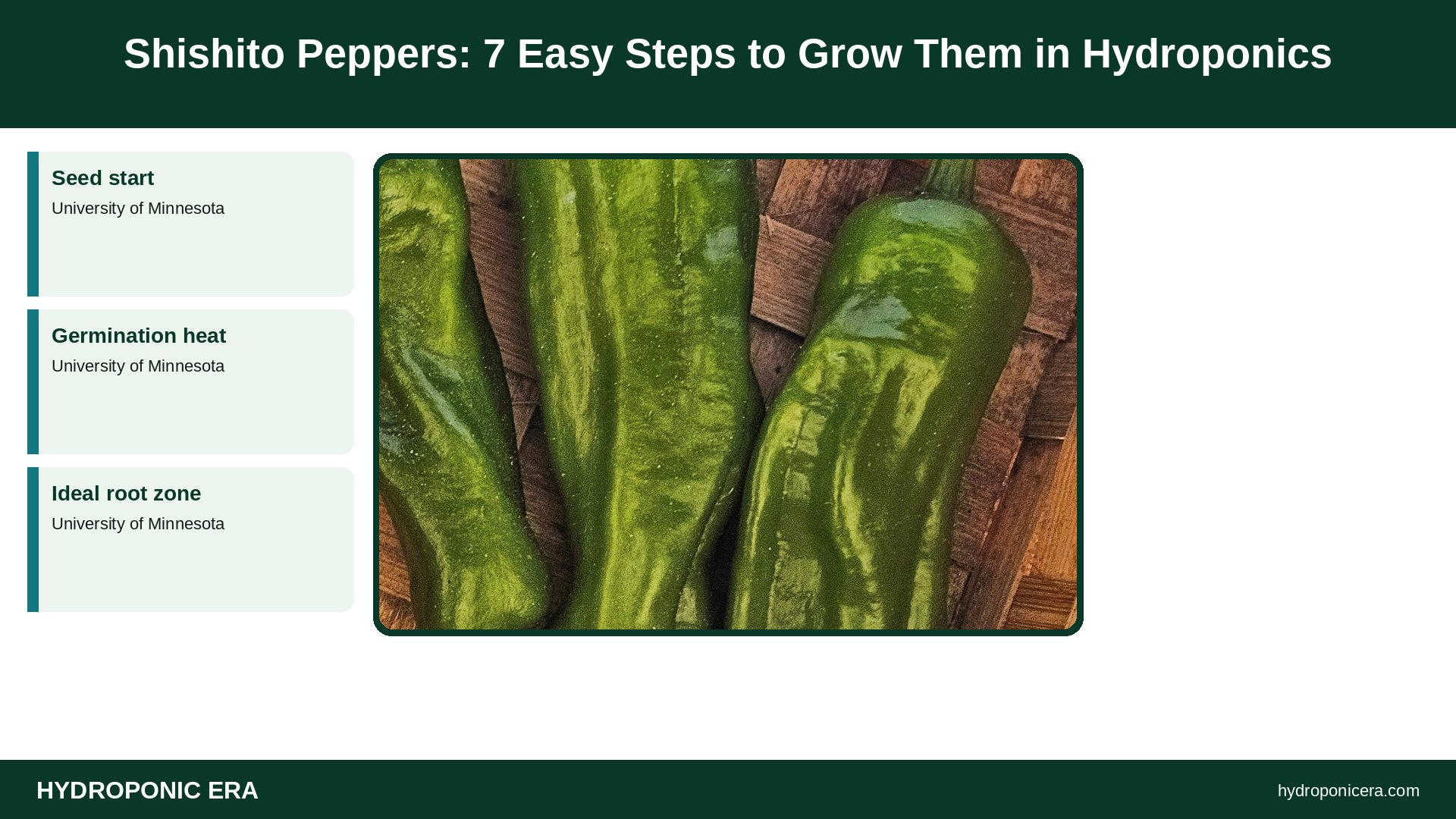
Shishito peppers are a Japanese pepper variety (Capsicum annuum) with thin walls and wrinkled green pods. UC Master Gardeners of Sonoma County say they mature early, in 60–65 days, need consistent water, and are generally mild, although one in ten may be hot. In Japan they are often skewered and grilled over an open fire.
Like other peppers, they need warmth, bright light and steady feeding. Read our complete guide to growing peppers hydroponically for the basics.
How Do You Start Shishito Pepper Seeds?
Start seeds about 8 weeks before you plan to move plants into the system. The University of Minnesota recommends a heat mat at 80–90°F (27–32°C), since warm soil speeds germination, and notes 70°F (21°C) is ideal once seedlings grow. Rockwool cubes or plugs work well. Our heat mat and humidity dome guide covers setup.
- Sow 1–2 seeds per rockwool cube.
- Keep cubes moist and warm on a heat mat.
- Give strong light as soon as they sprout.
- Thin to the strongest seedling.
- Transplant when roots show through the cube.
Which Hydroponic System Works Best for Shishito Pepper Plants?
A Dutch bucket or deep water culture tote works best, because pepper plants grow large roots and need support. Space plants 18–24 in (46–61 cm) apart, as Vanderbilt UMC suggests for these peppers. A 3–5 gallon (11–19 L) bucket per plant gives room. See our Dutch bucket guide for beginners.
Indoors, add a stake or cage. Fruit clusters get heavy, and stems can snap without support.
What Temperature and Light Do Shishitos Need?
Shishito peppers need full sun outdoors and strong light indoors. University of Minnesota Extension says temperatures above 90°F (32°C), or nights below 60°F (16°C) or above 70°F (21°C), weaken fruit set. Hot days and nights cause flowers to drop. Move plants outdoors only when nights stay above 50°F (10°C).
How Do You Feed and Pollinate Shishito Peppers?
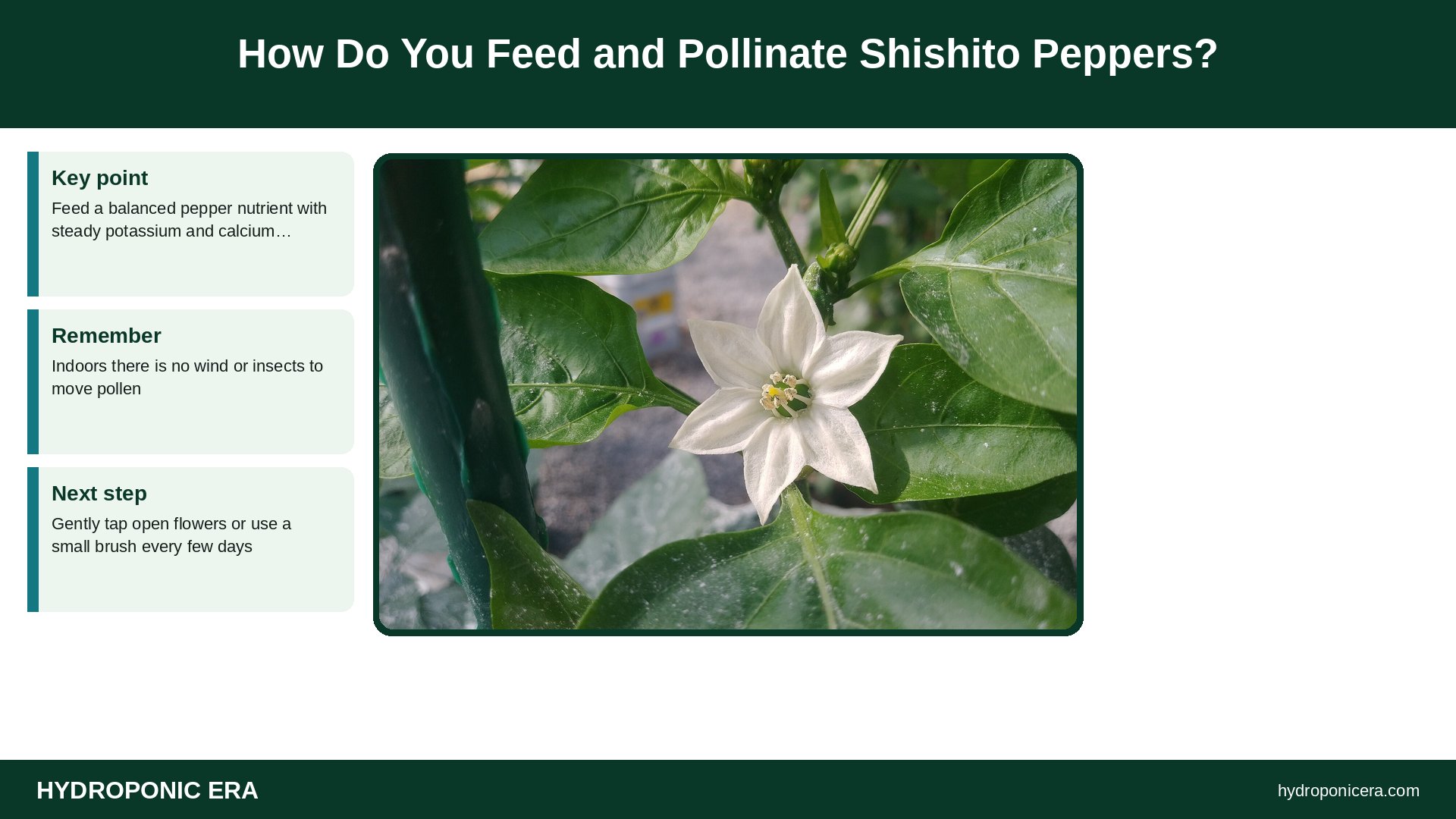
Feed a balanced pepper nutrient with steady potassium and calcium during fruiting; our pepper nutrient guide lists EC and pH targets. Indoors there is no wind or insects to move pollen. Gently tap open flowers or use a small brush every few days.
Minnesota Extension also suggests pinching off early flowers so the young plant builds roots and leaves first. Learn more in our indoor pollination guide.
When Should You Harvest Shishito Peppers?
Harvest shishito peppers when the pods are 3–4 in (8–10 cm) long and still green. Vanderbilt UMC lists about 60 days to green fruit and 80 days to red. Most cooks pick them green. Use clean shears instead of pulling, as Minnesota Extension advises, because pulling can tear brittle pepper branches.
- Pick often; regular harvests keep new flowers coming.
- Store unwashed pods in the fridge in a loose bag.
- Use them within about one week.
Why Are Some Shishito Peppers Hot?
Heat in peppers comes from capsaicin. University of Minnesota Extension explains that capsaicin sits mainly in the seeds and the inner membrane. Shishitos are bred to be mild, but UC Master Gardeners note about one in ten can still be hot. You cannot reliably tell a hot pod by looking at it, so taste carefully.
What Problems Affect Shishito Pepper Plants Indoors?
Flower drop is the most common problem, and Minnesota Extension links it to hot days and warm nights. Uneven water is next: UC Master Gardeners stress that shishitos need consistent moisture, which a hydroponic system supplies well if the reservoir never runs dry. Check leaf undersides weekly for aphids and spider mites.
- Flower drop: lower air temperature and keep nights cooler.
- Wilting: top up the reservoir and check pumps and air stones.
- Sticky leaves: look for aphids; see our aphid and mite guide.
- Leggy plants: raise light intensity or lower the light.
Should You Prune Shishito Peppers?
Light pruning helps indoors. Remove early flowers, as Minnesota Extension suggests, and trim low leaves that touch the water or the bucket lid to improve air flow. Avoid heavy cuts once the plant is fruiting, since leaves shade pods and fuel growth. Our pepper pruning guide shows where to cut.
FAQ About Growing Shishitos
How tall do shishito plants get?
They stay compact, but stake them in fruit.
Are shishito peppers good for beginners?
Yes; they mature early and fruit freely.
Why do my pepper flowers fall off?
Heat above 90°F (32°C) or warm nights often cause flower drop.
Can I grow them with Kratky?
Yes in a large container, though DWC or buckets are steadier.
How long do they keep?
About one week in the fridge.
Sources
- University of Minnesota Extension — Growing Peppers in the Home Garden
- UC Master Gardeners of Sonoma County — Peppers in a Drought
- Vanderbilt University Medical Center — Shishito Peppers
- Photo credits (Wikimedia Commons, edited with titles): Shishito peppers by Eric Polk (CC BY-SA 4.0); Man turns drying chili peppers, Turkey by Rotadefterim (CC BY-SA 4.0); PepperFlower4K by Bst9jkj (CC0); Pepper No. 30 by Edward Weston (Public domain)