
Can you grow luffa hydroponically? Yes, if you have space. Luffa is a long-season cucurbit vine that can reach 30 ft (9 m), so it suits Dutch buckets on a patio or in a greenhouse with a strong trellis. Soak seeds for 24 hours, start transplants 4–6 weeks early at 65–70°F (18–21°C), and allow about 120 days for sponges.
Key takeaway: Young fruit up to 6 in (15 cm) is edible, while mature fruit dries into a natural sponge. Hand pollination and a sturdy trellis are the keys to success.
| Growth factor | Target | Source |
|---|---|---|
| Seed prep | Soak in warm water for 24 hours | NC State Extension |
| Transplant age | 4–6 weeks at 65–70°F (18–21°C) | NC State Extension |
| Preferred pH | 6.0–7.0 | NC State Extension |
| Vine length | Up to 30 ft (9 m) | University of Illinois Extension |
| Eat young fruit at | 4–7 in (10–18 cm) | University of Illinois Extension |
| Time to sponge | About 120 days | NC State Extension |
What Is Luffa?
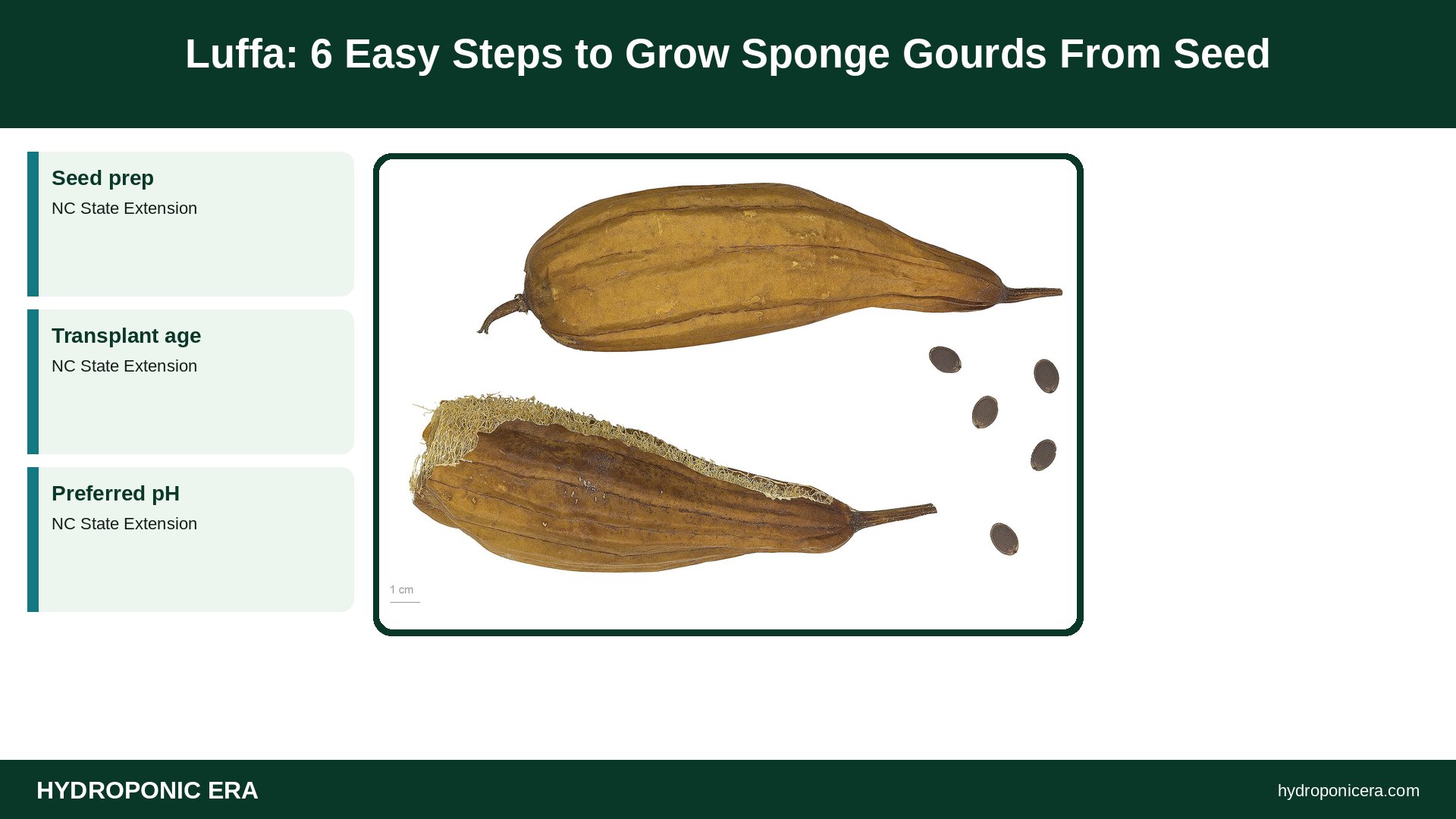
Luffa, also spelled loofah, is a tropical cucurbit vine whose mature fruit becomes a fibrous sponge. NC State Extension describes it as an annual vine with tendrils and large cylindrical fruit that is edible when young. It grows much like a cucumber but needs a longer season: about 120 days to sponge, per NC State’s Gaston County center.
University of Illinois Extension lists a 150–200-day growing season, so most growers in cool climates need an early indoor start. If you already grow vines, our hydroponic cucumber trellis guide is a useful starting point.
How Do You Germinate Sponge Gourd Seeds?
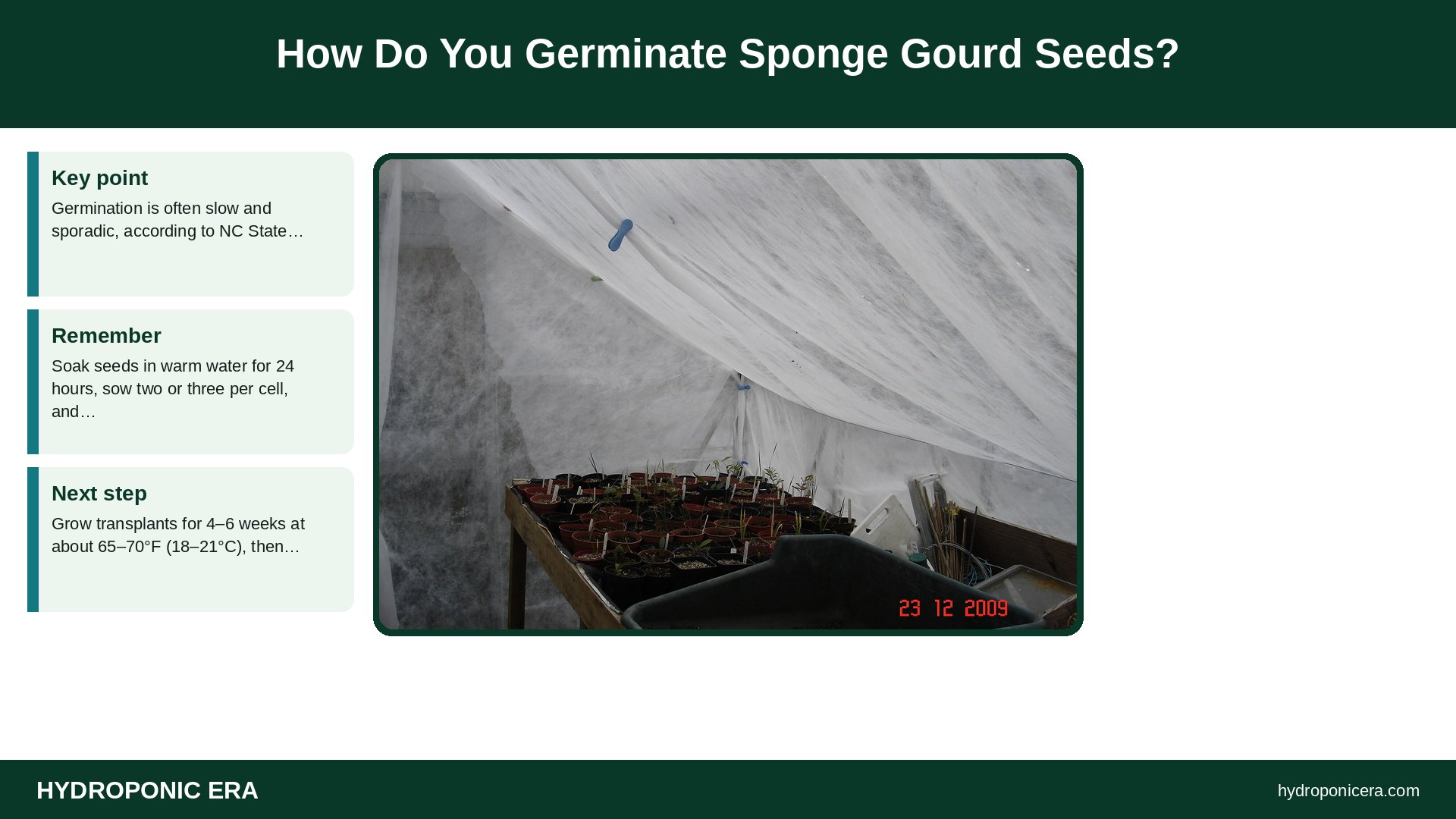
Germination is often slow and sporadic, according to NC State Extension. Soak seeds in warm water for 24 hours, sow two or three per cell, and thin to one after the first true leaves appear. Grow transplants for 4–6 weeks at about 65–70°F (18–21°C), then harden them off before moving them out.
- Soak seeds in warm water for 24 hours.
- Sow 1/2–1 in (1.3–2.5 cm) deep in plugs or cells.
- Keep seedlings warm and in strong light.
- Thin to one plant per cell.
- Harden off and transplant after frost danger has passed.
What Hydroponic System Works for Loofah Vines?
Dutch buckets or a large drip-fed container work best, because the vine is heavy and lives for months. NC State Extension reports the highest commercial yields with 12–18 in (30–46 cm) in-row spacing on a trellis. Drip irrigation is the preferred method, which a recirculating Dutch bucket line copies well. See our Dutch bucket guide.
Keep the nutrient solution near the pH 6.0–7.0 range NC State recommends for soil.
How Strong Does a Luffa Trellis Need to Be?
Very strong. NC State Extension says the crop benefits greatly from a vertical trellis like those for cucumbers and pole beans, but it must be sturdy, using posts set about 10 ft (3 m) apart. Fruit that touches the ground often rots, discolors or misshapes. Train vines weekly until they reach the top wire.
- Remove the first four lateral shoots from the base upward, as NC State advises.
- Keep fruit off the ground and away from wires.
- Read our trellising and pruning guide for clip and string methods.
Does Luffa Need Hand Pollination?
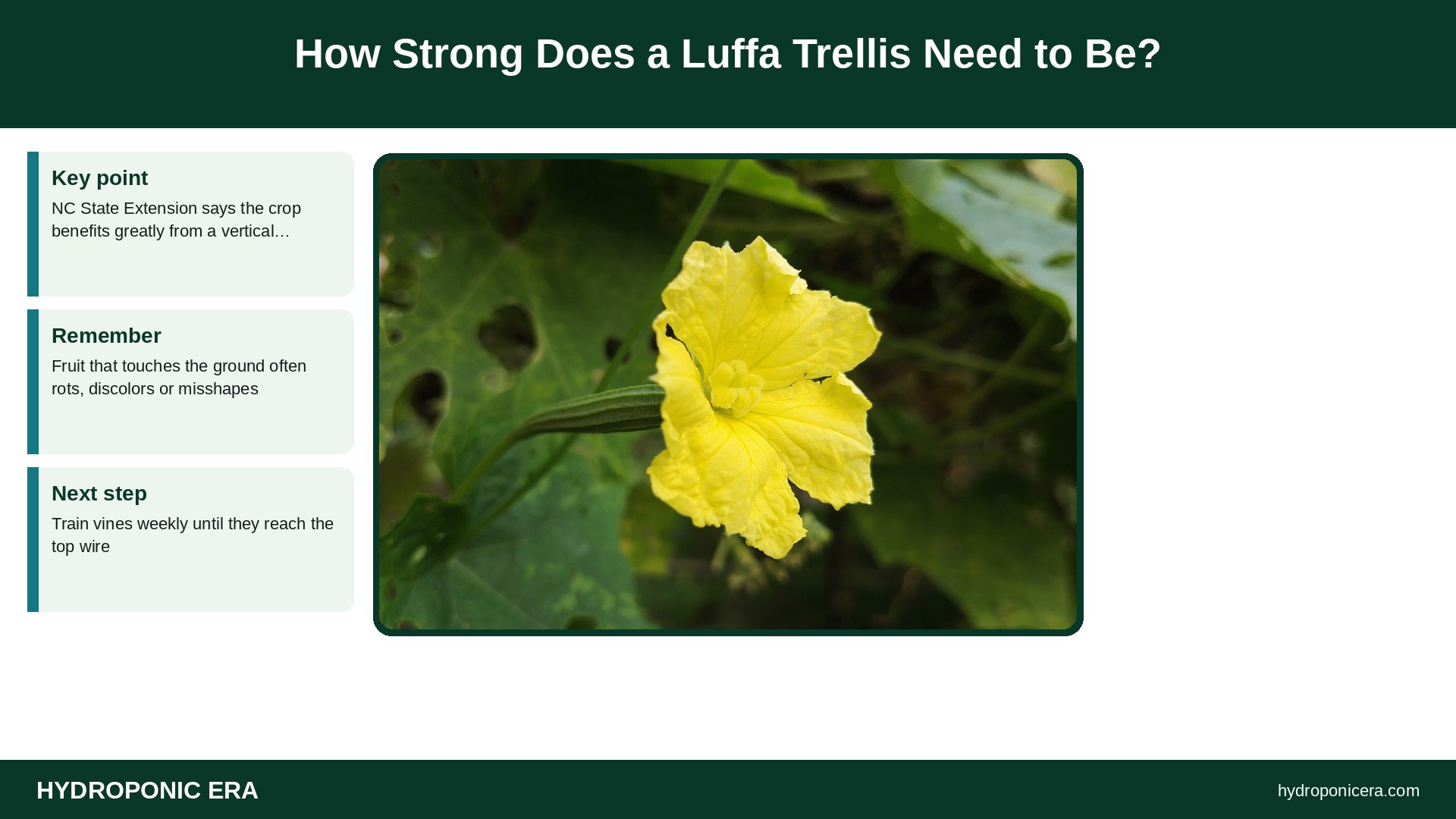
Yes, indoors it does. NC State Extension says that, as with all cucurbits, the vine must be pollinated, and commercial growers place bee hives nearby. Most plants carry separate male and female flowers; lower nodes bear only male flowers, followed by mixed nodes, then female flowers higher up. Move pollen from a male flower to a female flower with a small brush.
Female flowers have a tiny fruit behind the petals. Our indoor pollination guide shows the technique.
When Do You Harvest Luffa?
Harvest luffa for eating when fruit is 4–7 in (10–18 cm) long, per Illinois Extension, or no more than 6 in (15 cm), per NC State. For sponges, NC State says dried gourds turn brown, feel light and rattle with loose seeds. You can also pick mature green fruit once the skin separates from the fibers.
How Do You Process a Luffa Sponge?
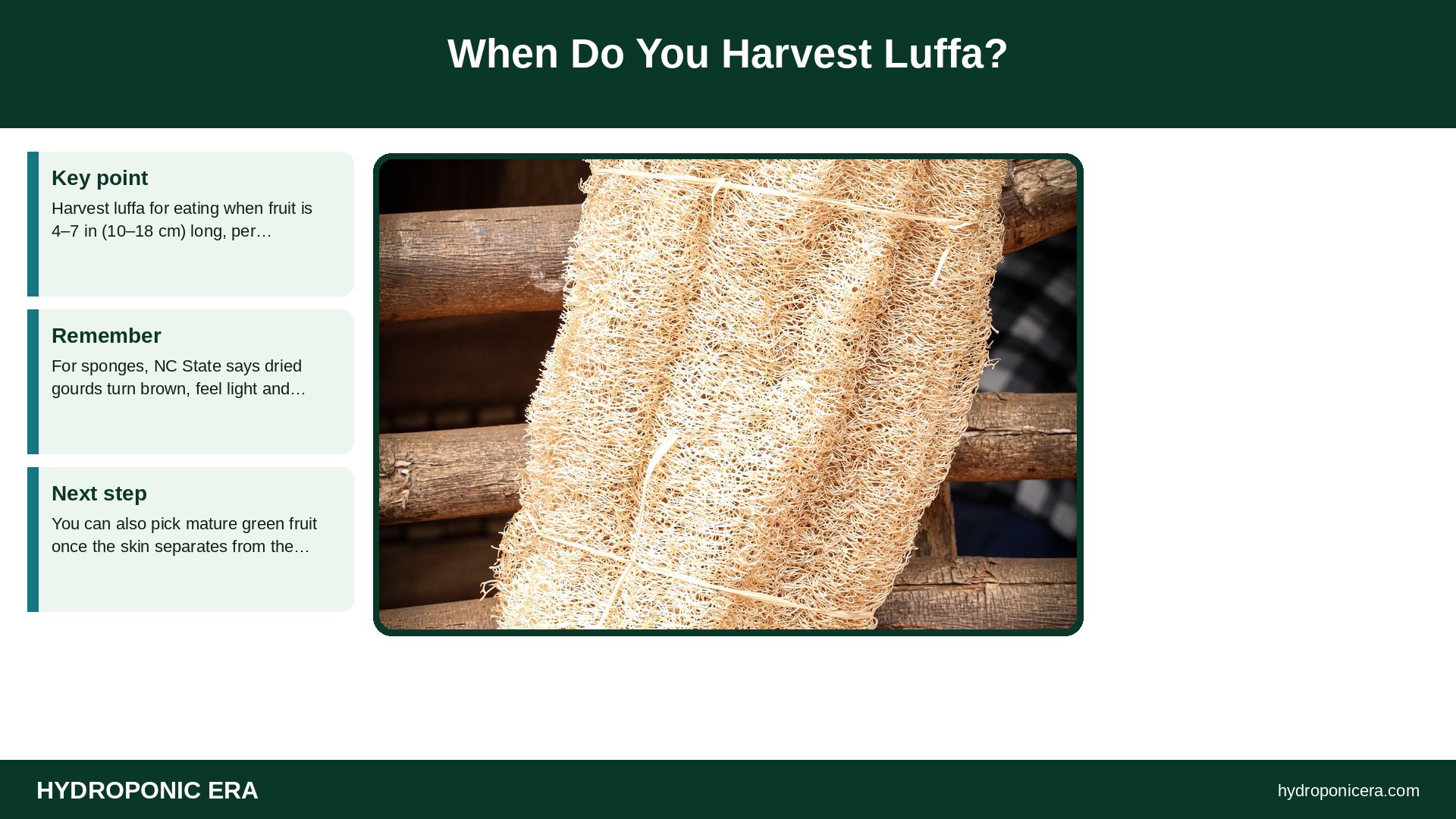
Peel the dried skin of the luffa, shake out the seeds and rinse away the pulp. NC State Extension says mature dried gourds release their sponges after a 5–20 minute soak in warm water. A 10% bleach solution for 30–60 minutes can whiten and strengthen sponges, according to the Gaston County center. Dry them fully in the sun.
- Save dark, mature seeds for next season.
- Grow only one variety, because it cross-pollinates easily.
- NC State isolates varieties by 1,500 ft (457 m) to keep seed true.
What Pests Affect Sponge Gourd Vines?
Few pests trouble this gourd, but NC State Extension lists cucumber beetles, spider mites, mildews and viruses as minor problems. Pruning the lower laterals and using drip irrigation both reduce disease. Indoors, check leaf undersides for mites, and space vines for good air flow.
FAQ About Growing Luffa Sponges
Is the young fruit edible?
Yes; Illinois Extension says young fruit is traditionally served in Asian dishes.
How long does luffa take to grow?
About 120 days to sponge; Illinois lists a 150–200-day season.
Why does my vine only have male flowers?
Lower nodes bear only male flowers; females come higher up.
Can it grow indoors?
Only with lots of space, strong light and a tall trellis.
How do I whiten a sponge?
Soak in 10% bleach for 30–60 minutes, then rinse.
Sources
- NC State Extension — Commercial Luffa Sponge Gourd Production
- NC State Extension, Gaston County — Growing and Harvesting Luffa
- University of Illinois Extension — Try Growing Loofah Sponge
- Photo credits (Wikimedia Commons, edited with titles): Luffa aegyptiaca MHNT.BOT.2011.3.94 by Roger Culos (CC BY-SA 3.0); Fleece lined greenhouse potting tray and seed pots – Flickr – peganum by peganum from Small Dole, England (CC BY-SA 2.0); Luffa acutangula Chinese okra female flower 2 by Nayan j Nath (CC BY-SA 4.0); Dried Luffa Sponge in Uganda by NANTUMBWEJ (CC BY-SA 4.0)