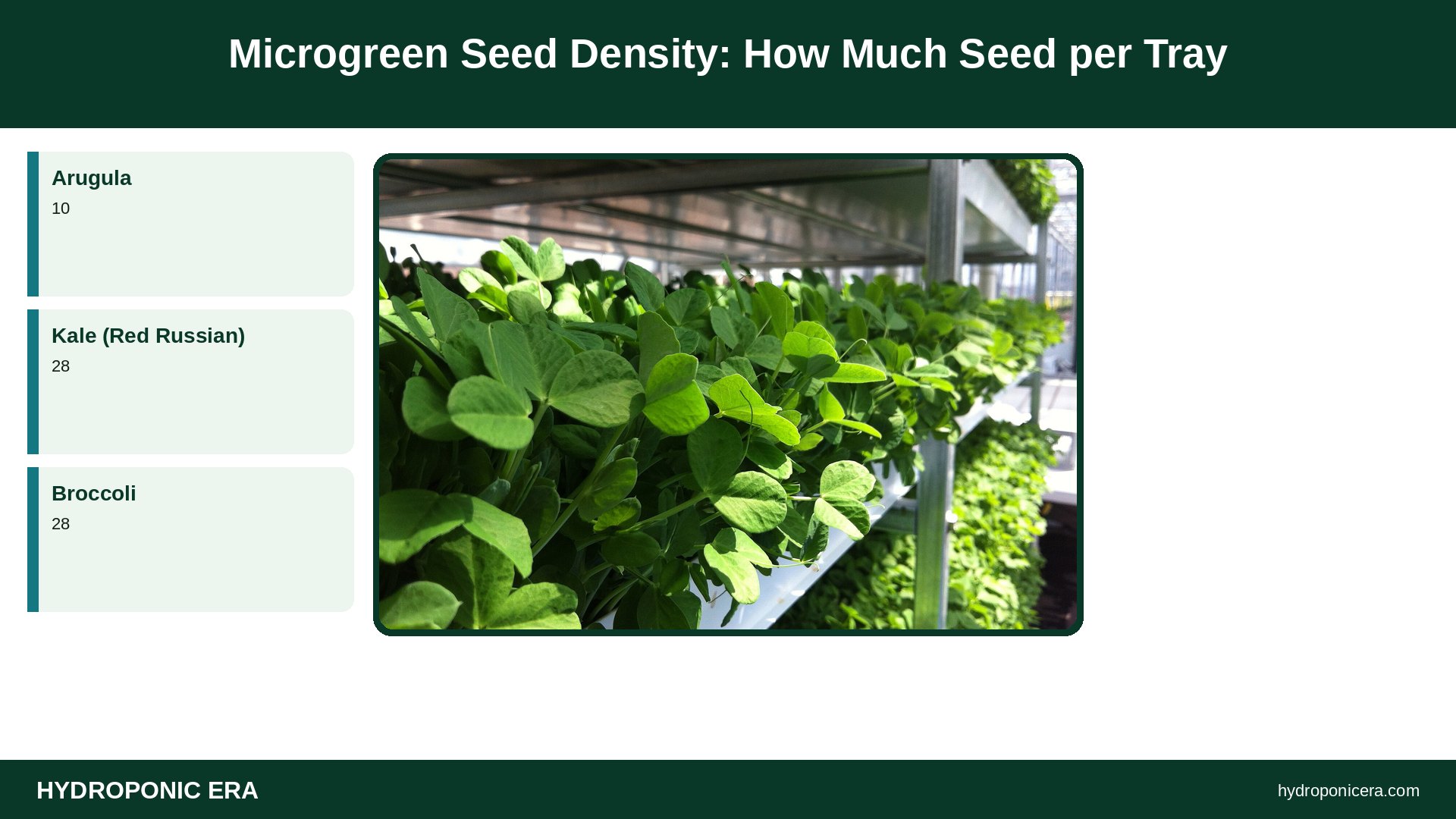
Microgreen seed density for a standard 10 x 20 inch (25 x 51 cm) tray is usually about 10–15 grams for small seeds like broccoli, kale, arugula and mustard, 20–30 grams for medium seeds like radish, beet and cilantro, and much more for large seeds, such as about 150 grams of pea or 48 grams of sunflower. Weigh seed instead of guessing, scale the amount by tray area, and adjust after each tray: sow thinner if you see mold or stretching, thicker if the tray looks patchy.
Microgreens light requirements are modest: most crops need a daily light integral (DLI) of about 9–16 mol/m²/day after germination, which you can reach with a grow light run 16–18 hours a day at roughly 150–250 µmol/m²/s (the math: 16–18 hours at those levels gives a DLI of about 9–16). Germinate seeds in the dark for 2–4 days (the “blackout period”), then move trays under light once most seeds have sprouted. A bright south-facing window can work, but a simple LED shop light 6–12 inches (15–30 cm) above the trays gives straighter, greener, more uniform greens.
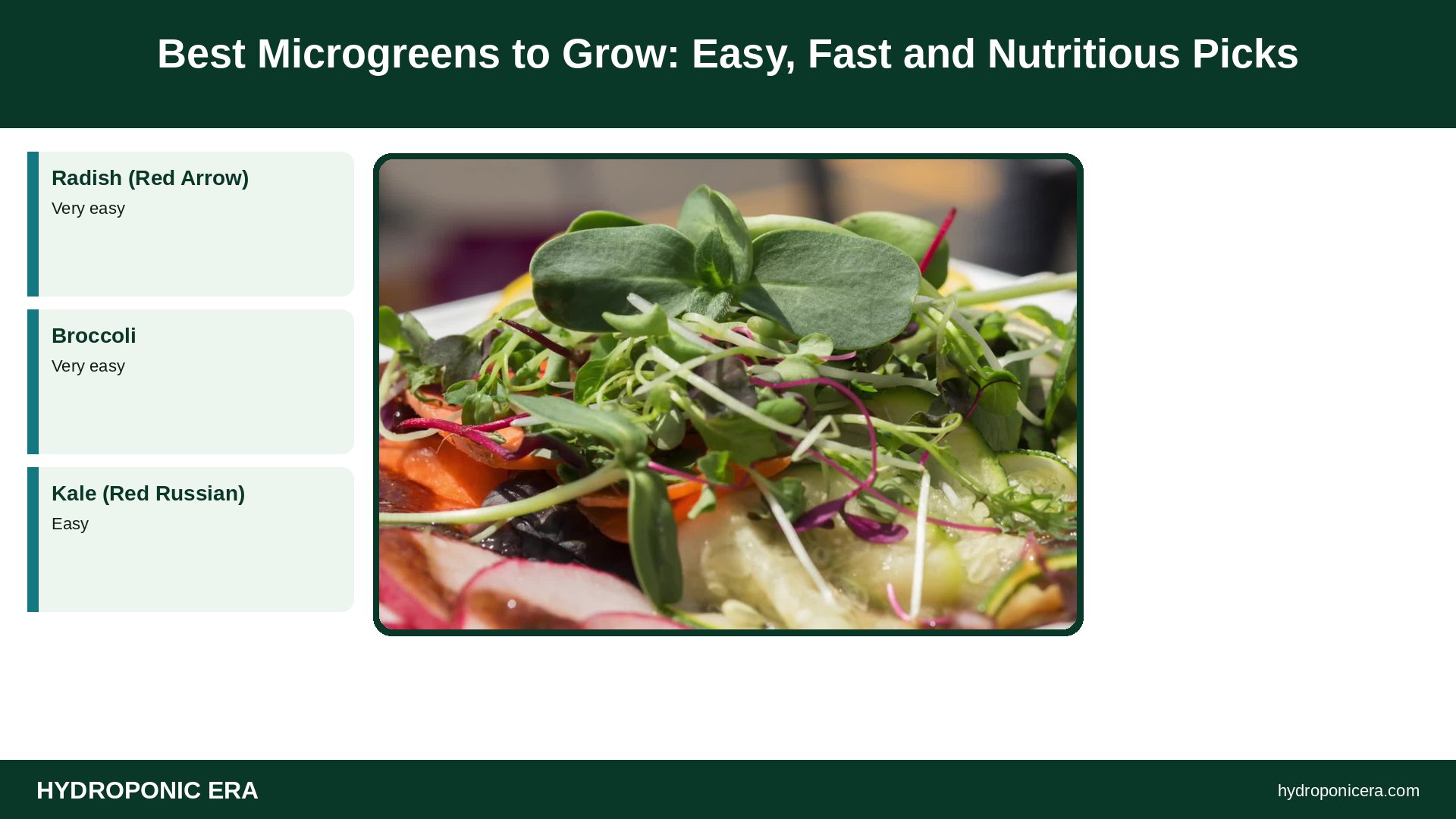
The best microgreens to grow for most beginners are radish, broccoli, kale, mustard, arugula, red cabbage, pea shoots and sunflower. They sprout reliably, need no soaking (except peas and sunflower), and are ready in about 8–14 days. If you want the most nutrition per bite, add red cabbage, cilantro and amaranth. If you want speed, start with radish and arugula. Save slow crops like basil, beet and cilantro for after you’ve had a few easy wins.
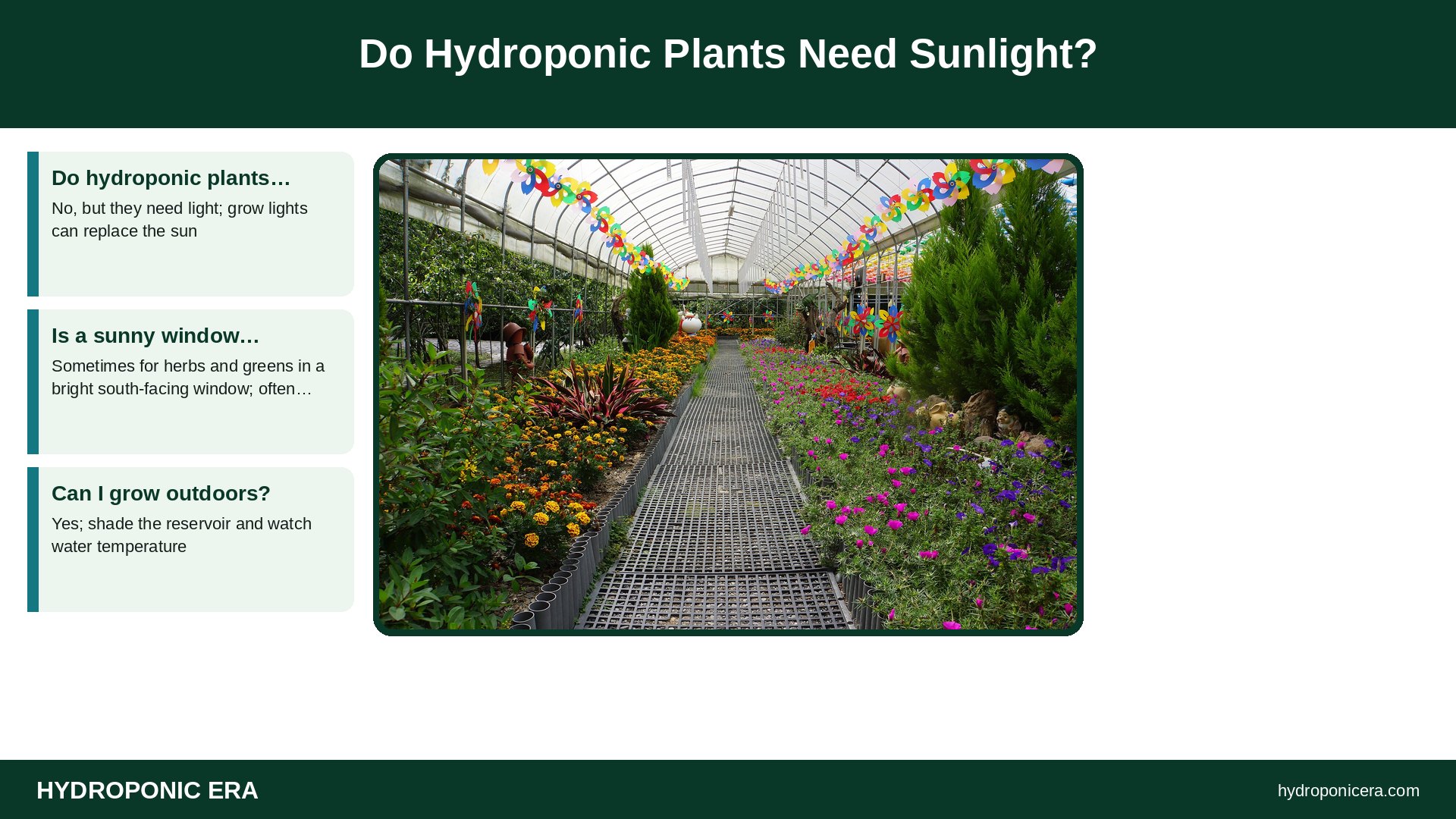
Hydroponic plants don’t need sunlight specifically, but they do need light. Plants use light for photosynthesis, and they can’t tell whether those photons came from the sun or a grow light. Indoors, an LED grow light can fully replace sunlight; outdoors or in a greenhouse, sunlight is free and powerful. What matters is getting enough light intensity for enough hours each day, measured as PPFD and DLI, for the crop you’re growing.
Commercial aquaponics can be profitable, but most farms are not yet. In the largest survey of commercial operations (Love et al., 2015, 257 respondents), only 31% said they were profitable in the previous 12 months. Profitable farms were more likely to treat aquaponics as their main job, have more experience, sell at least $5,000 a year, be in warmer USDA zones 7–13, and also sell non-food products such as workshops, consulting or supplies. Plan around high-value crops like herbs and leafy greens, a confirmed local market and a realistic budget before you build.
Aquaponics food safety comes down to keeping pathogens out of the system and off the produce. Most risks come from people, animals and soil, not from fish. Wash hands and sanitize tools, keep pets, birds and rodents away, don’t let system water or wet gloves touch leaves at harvest, wash produce before eating, and handle harvested fish like any fresh seafood: chill to 40°F or below and cook to 145°F. If you sell produce, check whether the FDA Produce Safety Rule and your state’s rules apply to your farm.
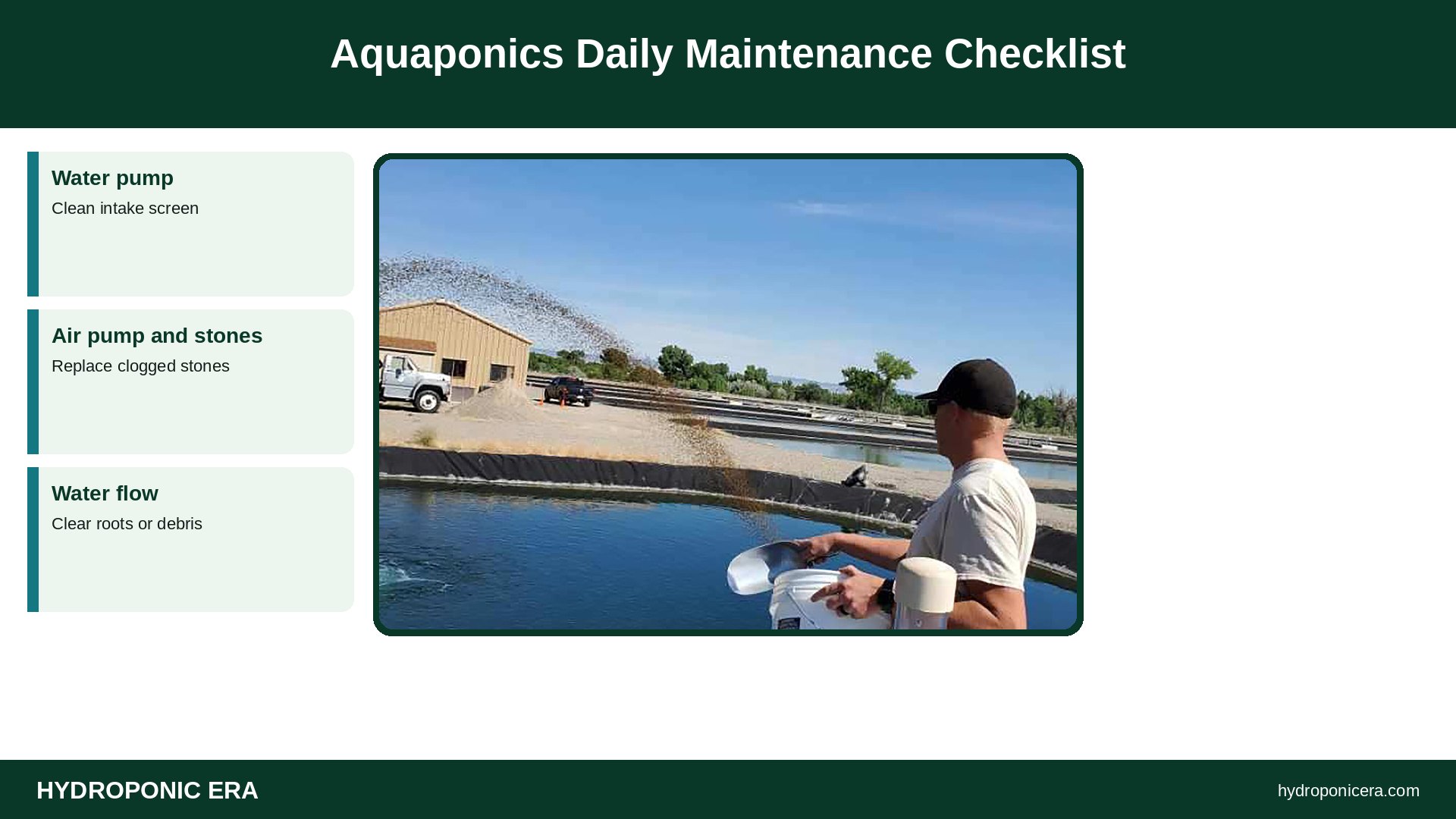
An aquaponics daily maintenance routine takes about 10–20 minutes for a home system. Every day, check that water and air pumps run and water flows, top off evaporation with dechlorinated water, look for leaks, check water temperature, feed the fish two or three times and remove uneaten feed, watch fish behavior, scan plants for pests, remove any dead fish or sick plant parts, and clear solids from the filter. Weekly, test pH, ammonia, nitrite and nitrate; monthly, deep-clean filters and check fish health.
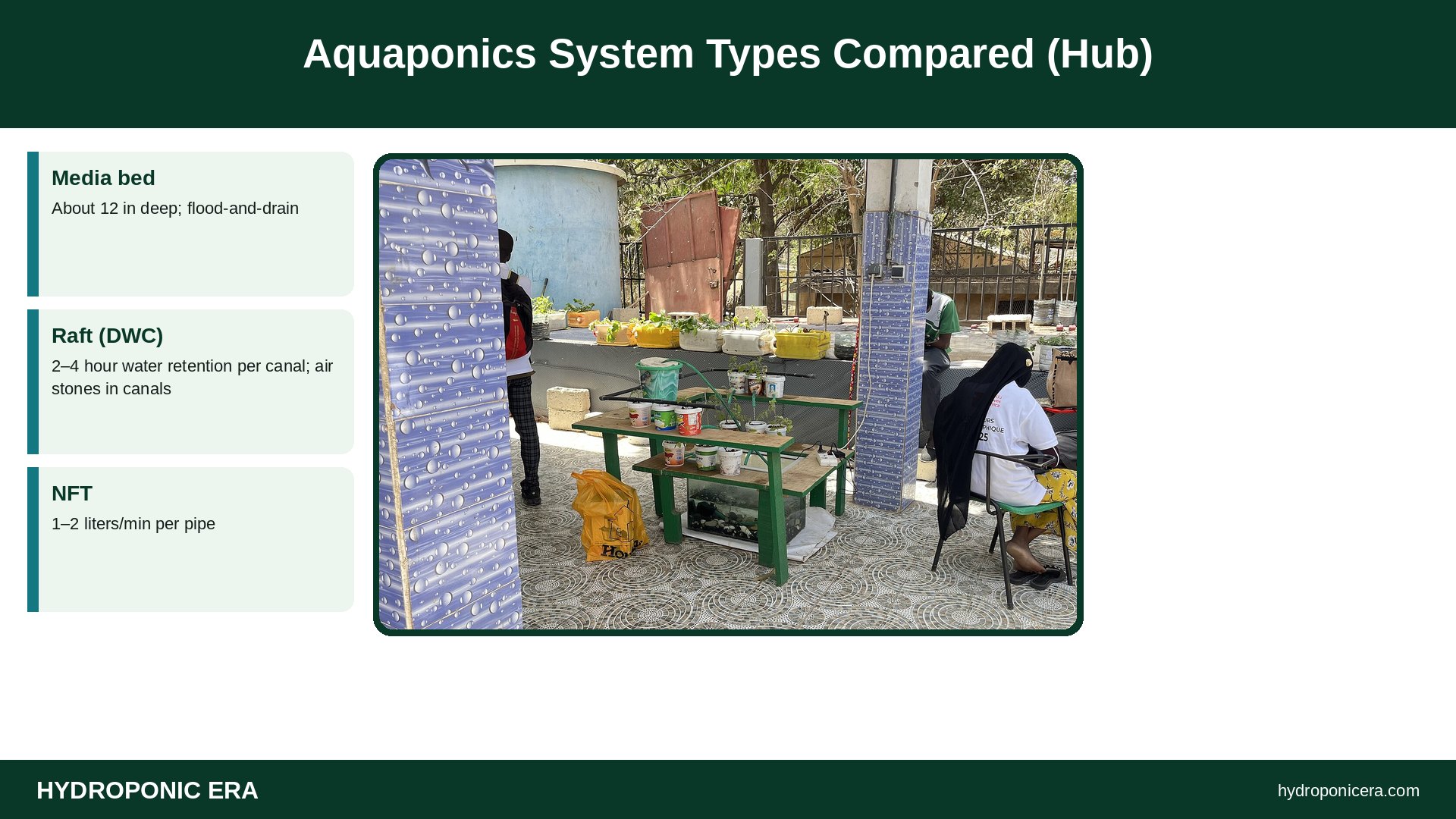
The three main aquaponics system types are media beds, deep water culture (raft) and nutrient film technique (NFT). Media beds are gravel- or clay-filled beds that filter water and grow almost any plant, making them the best choice for beginners and home gardens. Raft systems float plants on boards over aerated troughs and are the standard for commercial lettuce and herbs. NFT runs a thin film of water through pipes or channels and suits small leafy greens in tight spaces. Vertical towers, aquarium kits and hybrid or decoupled systems are variations on these.
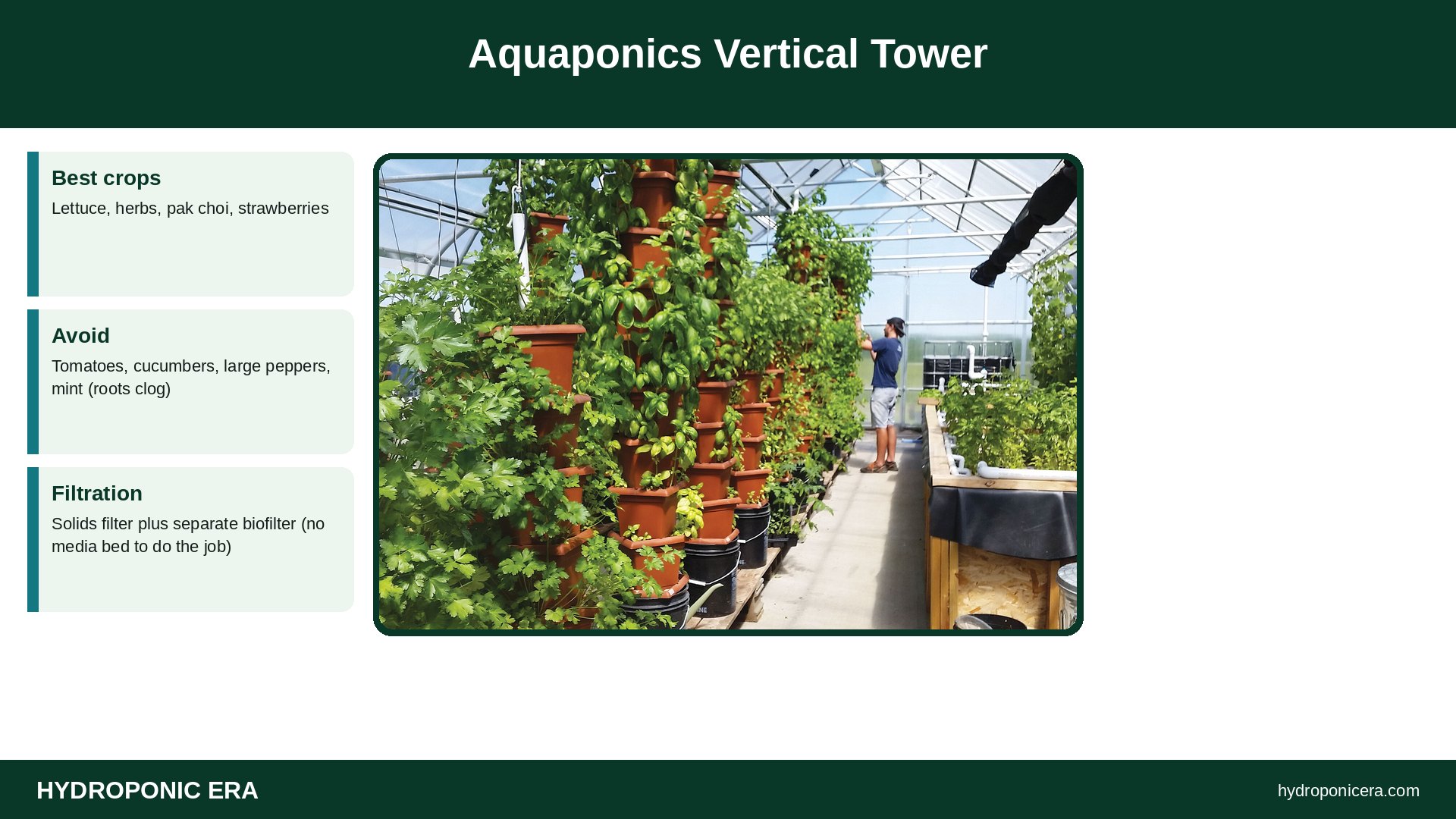
An aquaponics vertical tower grows plants in stacked pockets or columns fed by fish water pumped from a sump. Water trickles down past the roots and drains back to the fish tank or sump, so you can grow dozens of lettuce, herb or strawberry plants in a few square feet. Towers are space-efficient, but they depend on excellent solids filtration, a separate biofilter, reliable pumps and even light on all sides. They suit leafy greens and herbs; large fruiting plants are poor fits.
The aquaponics best plants for most growers are leafy greens and herbs: lettuce, basil, mint, chard, kale, pak choi, watercress, parsley and chives. They have low nutrient needs that fish waste supplies well, grow fast and tolerate the system pH of about 6.8–7.0. Once the system is mature and well stocked, fruiting crops such as tomatoes, cucumbers, peppers and strawberries can do very well with potassium, calcium and iron support. Root crops need deep media beds, and big trees or field crops are poor fits.