
Quick Answer
Grow tomatillos hydroponically means treating husk fruit Physalis as a sprawling, heat-loving cousin of tomato culture—not a cherry-tomato clone. Oregon State Extension notes tomatillos are bushy (often 2–4 ft), benefit from staking/caging, set fruit inside papery husks, and can grow in large containers. In hydro, favor Dutch buckets or large media systems, trellis early, and plan pollination. See tomatoes, Dutch bucket, trellising, pollination, and PPFD.
Key takeaways for grow tomatillos hydroponically
- Grow tomatillos hydroponically is a practical home-hydro workflow—not filler.
- Stake or cage—tomatillos sprawl and need airflow.
- Fruiting nutrition and warm conditions beat leafy lettuce recipes.
- Husk maturity cues differ from red tomato color charts.
- Prefer university/extension sources over forum myths.
- Give more horizontal room than a single pepper column.
- Original ops card keeps Grow tomatillos hydroponically decisions consistent.
- Grow tomatillos hydroponically fails when growers skip the boring checks.
Related HydroponicEra guides
Why This Matters

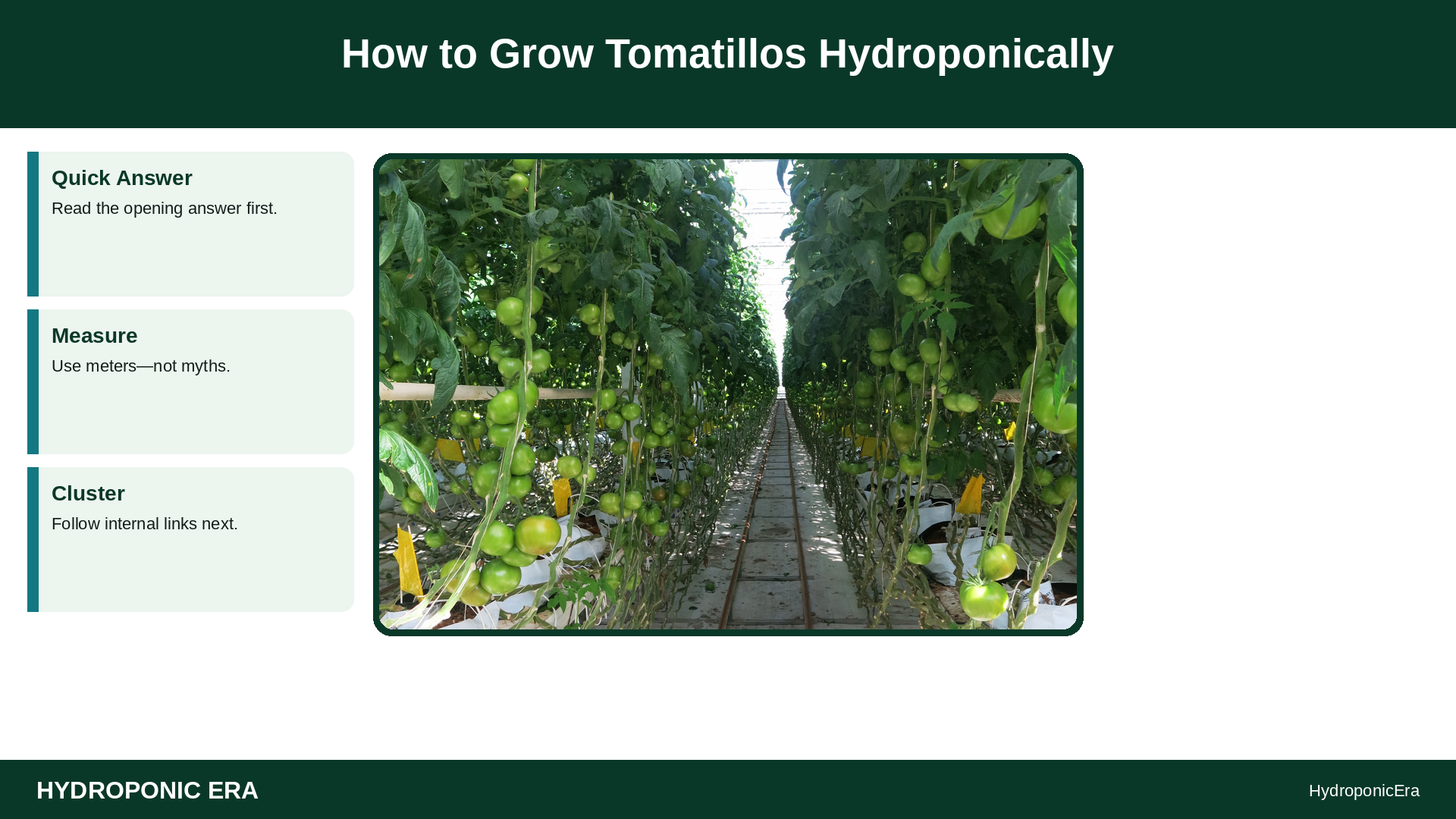
Grow tomatillos hydroponically fills a salsa-verde gap beside tomato guides. OSU Extension describes tomatillos as multi-branched and bushy, happier with support for airflow and fruit quality, and workable in 5-gallon or larger containers when supported. Translate that to hydro: sturdy media volume, fruiting EC lane, and canopy management.
Do not invent indoor yield tables—use extension morphology and home hydro fruiting practice.
Comparison / Decision Table

| System | Fit | Note |
|---|---|---|
| Dutch bucket / big media | Best | Support + volume |
| Large DWC with trellis | OK | Watch lid heat and root oxygen |
| Shallow NFT | Poor | Vigor and sprawl outgrow channels |
| Shared leafy raft | Poor | Wrong EC/climate class |
Step-by-Step Workflow
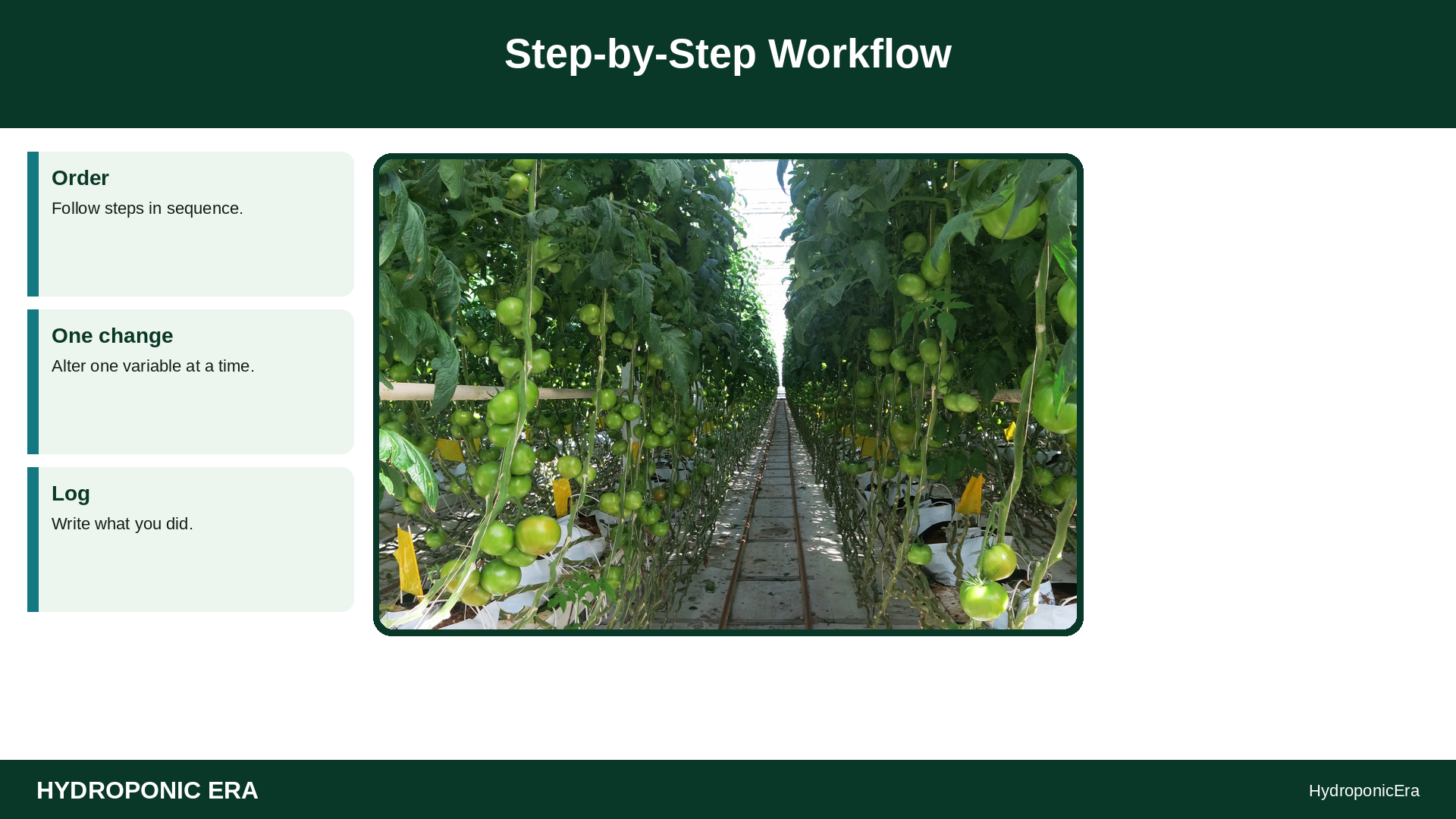
- Start seeds warm like tomatoes; transplant sturdy seedlings.
- Use a fruiting-capable system with trellis ready on day one.
- Set fruiting nutrition—not butterhead EC forever.
- Provide strong light; map PPFD across the bushy canopy.
- Shake flowers or assist pollination indoors.
- Prune for airflow without stripping the bush bare.
- Harvest when husks fill and fruit is firm for your cuisine goal.
- Support lateral branches before they snap.
- Scout for the same pest classes as other solanums.
- Sanitize between cycles; tomatillo debris still harbors problems.
Key Variables
| Variable | Effect | Link |
|---|---|---|
| Support | Airflow + fruit off media | trellis |
| Light | Flowering/fruit set | PPFD |
| Pollination | Husk fill | pollination |
| EC/stage | Vigor vs burn | NPK stages |
Common mistakes with grow tomatillos hydroponically

- Treating them like compact cherry tomatoes in a tiny kit
- No trellis until collapse
- Leafy nutrient strength all season
- Ignoring pollination indoors
- Overcrowding two bushes in one under-lit corner
- Harvesting empty husks too early
Troubleshooting
| Signal | Action |
|---|---|
| Flowers drop | Heat/stress/pollination audit |
| Huge vine, few fruit | Light + feed balance; assist pollination |
| Tip burn on leaves | EC/climate—see tip burn guide |
| Sprawl shades everything | Prune/trellis; give footprint |
Practical Framework
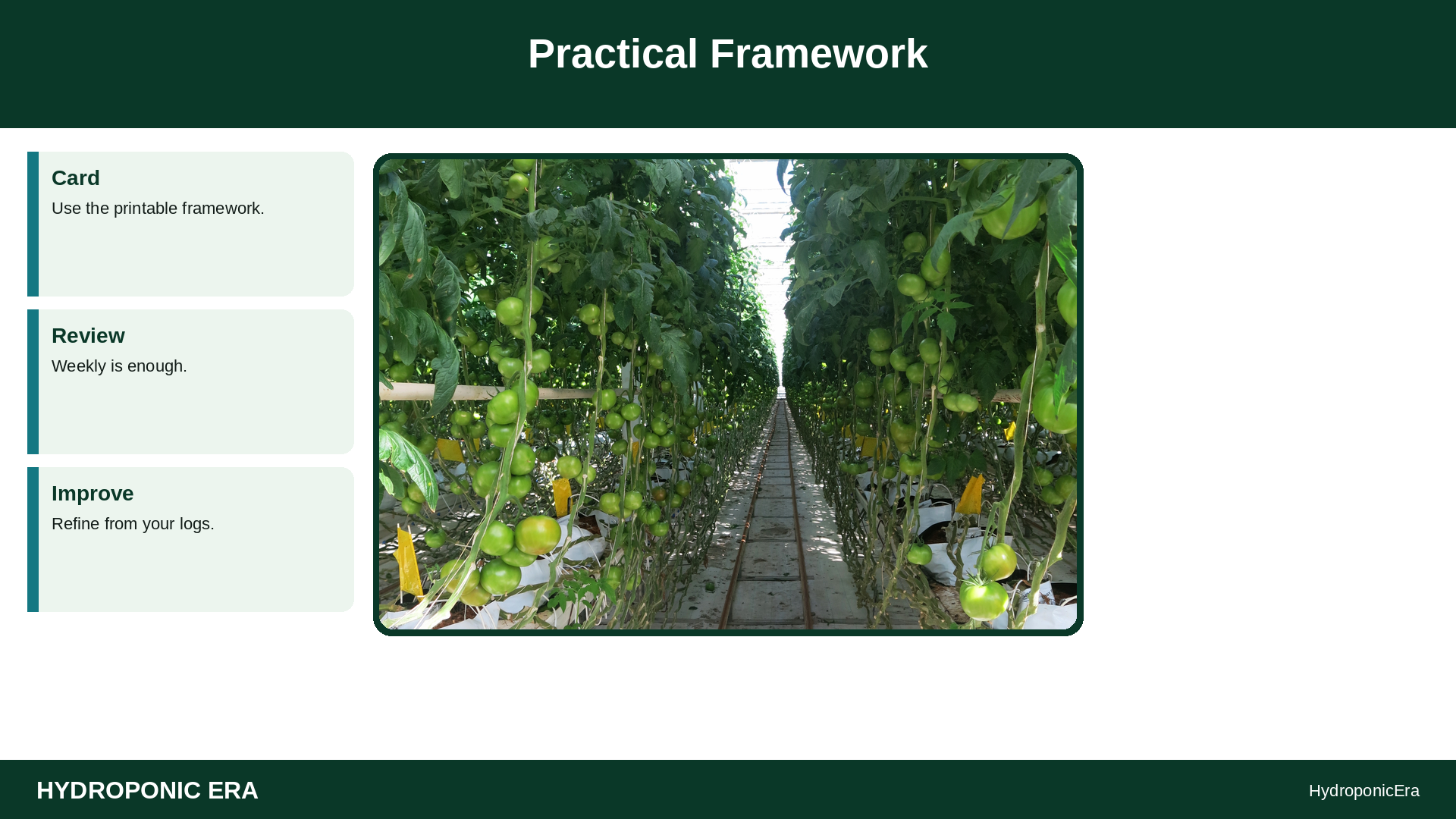
Tomatillo card: Dutch/media? | Cage up? | Fruiting EC? | Pollination plan? | Husk harvest cues.
Closing practice for grow tomatillos hydroponically: support first—salsa comes after structure.
What to Check Before Transplanting Tomatillos into Hydro
- System volume enough?
- Trellis installed?
- Fruiting nutrition set?
- PPFD mapped?
- Pollination method chosen?
- Harvest husk cues known?
FAQs about grow tomatillos hydroponically
Same as tomatoes?
Related culture, different sprawl and husk fruit—still not identical.
Self-fertile?
Assist pollination indoors anyway for better set.
NFT tower?
Usually a poor fit for bushy tomatillos.
Companion with lettuce?
Separate reservoirs if EC/climate differ.
Purple vs green types?
Label cultivars; culture similar.
Outdoor hydro?
Possible in warm seasons with support—watch storms.
Trellis, Pollination, and Husk Harvest Cues

Oregon State Extension’s tomatillo guidance stresses bushy growth and the value of staking or caging for airflow and fruit quality—including container culture in large pots. In hydro, install support before the plant argues with you. Map PPFD across a wide canopy; tomatillos are not a single-cola pepper silhouette.
Indoor fruit set still needs a pollination plan: gentle flower vibration, airflow, or hand assistance. Harvest for salsa when husks have filled and fruit firmness matches your recipe—not when empty lanterns look decorative. Keep fruiting nutrition in a dedicated system rather than sharing a mild lettuce raft. Sanitize between solanum cycles the same way you would for tomatoes.
Give footprint. Two unsupported bushes under one bar light usually create shade, pest harborage, and disappointment—not double salsa.
Cage diameter matters: tomatillos branch wide. Leave walkway access for pollination work and harvest. If husks fill unevenly, check light uniformity and pollination before raising EC again.
Keep a fruiting-only nutrient lane; borrowing lettuce residual solution underfeeds a sprawling Physalis canopy.
Practice Notes for Home Systems
Keep changes sequential. If you alter reservoir temperature, nutrient strength, and photoperiod on the same day, you will not know which lever worked. Write the date, the single change, and the plant response on new growth—not on already-damaged leaves. Prefer opaque, light-proof reservoirs, calibrated meters, and clean measuring tools over boutique additives.
Internal links on this site exist to prevent orphan pages: open the related guides when a symptom points outside this article’s scope. Extension sources in the Sources list are the external backbone—use them when you need deeper greenhouse or crop-culture context, and do not invent ppm tables the citations do not support.
For edible crops, food-safety hygiene (clean hands, clean harvest tools, no storm-drain dumping of nutrients) is part of hydro ops, not an afterthought. If a step feels unclear for your municipality or building, pause and ask a local authority rather than improvising a risky shortcut.
Seedlings hate cold shocks after a warm germ tray—harden climate steps before the Dutch bucket. When flowers open, a daily mid-day pass with gentle vibration improves set in still tents. Remove ground-touching leaves that stay wet against media. If one plant dominates the light map, prune or reposition rather than only raising fertilizer. Keep pest scouting on the undersides of leaves weekly once canopy densifies.
Husk fruit can hide soft spots—harvest into a clean tray and refrigerate promptly for salsa batches. Empty lanterns after a stress event usually mean pollination or carbohydrate stress, not a missing “tomatillo bottle.”
Setup Checklist Recap
Before you scale plant count, confirm the system class matches the crop class: leafy rafts for chicories and purslane, aerated media or Dutch buckets for sprawling tomatillos and bitter melon vines, and well-drained media for woody or drainage-sensitive herbs like French tarragon and lemon verbena. Match EC lane, climate, and support hardware on paper first. Keep a quarantine mindset for new cuttings and a sanitation step between cycles. Use meters on a schedule, not only when leaves complain. When something fails, change one variable, log it, and judge new growth. That ops discipline is the real upgrade path—not another unlabeled bottle.
Return to the related HydroponicEra guides linked above whenever symptoms point to pH, EC, pests, lights, or food safety. Extension sources remain the external authority layer for crop biology and greenhouse principles cited in this article.
Extended Home-Grower Walkthrough
Use this extended walkthrough as a second pass after the Quick Answer. Walk the system with a notebook: write the date, crop, EC, pH, reservoir temperature, and one observation about roots or leaves. Change only one control at a time when a problem appears. If last week’s fix did not show in new growth, revert and try the next smallest lever. Keep university and extension principles in mind—oxygen, sanitation, and measured nutrition beat product stacking.
Photograph the canopy and the reservoir surface weekly. Dated photos settle arguments about algae, tip burn, or stretch faster than memory. When a helper waters for you, leave a one-page card with do-not-touch items and the exact top-off rule. Store calibration sachets next to the meters so “I will calibrate later” stops being the default. Review timers after any power event. Confirm air stones still roar. Confirm drains still drain.
At the end of the week, score the cycle 1–5 for ease and plant quality. Low scores should trigger a sanitation or climate review before you buy new hardware. Link neighboring HydroponicEra guides when the symptom matches a cluster page. Prefer labeled procedures over improvisation under stress. Healthy boring routines are the real upgrade path for home hydroponics.
Keep grow tomatillos hydroponically on your ops card so helpers follow one standard.
Keep grow tomatillos hydroponically on your ops card so helpers follow one standard.
Keep grow tomatillos hydroponically on your ops card so helpers follow one standard.
Keep grow tomatillos hydroponically on your ops card so helpers follow one standard.
Keep grow tomatillos hydroponically on your ops card so helpers follow one standard.
Keep grow tomatillos hydroponically on your ops card so helpers follow one standard.
Keep grow tomatillos hydroponically on your ops card so helpers follow one standard.
Keep grow tomatillos hydroponically on your ops card so helpers follow one standard.
Practical note: grow tomatillos hydroponically belongs in weekly review notes.
Practical note: grow tomatillos hydroponically belongs in weekly review notes.
Sources
- Oregon State University Extension — Grow your own tomatoes and tomatillos (EC 1333)
- University of Florida IFAS — CV266: Production of Greenhouse Tomatoes
- University of Minnesota Extension — Growing tomatoes
- Penn State Extension — Hydroponics Systems and Principles of Plant Nutrition
- Oklahoma State University Extension — Hydroponics
- Virginia Cooperative Extension — SPES-720: Calculating and Using Daily Light Integral (DLI)