
Quick Answer
Hydroponic Vacation Away Checklist (hydroponic vacation away checklist) — A hydroponic vacation and away-from-home checklist prevents weekend crashes by confirming reservoir volume, automation, leak risk, and backup power before you leave. Leafy systems can fail from dry NFT channels, dead air pumps, or slow leaks onto floors.
Use timers & automation, backup power, water-change guide, and leak fixes.
Key takeaways for hydroponic vacation away checklist
- Top off and verify EC/pH the morning you leave—not the night before in a rush.
- Test timers and outlets under load before travel days.
- NFT/drip are less forgiving away than buffered DWC—plan accordingly.
- Leak trays and shutoff habits protect apartments ({a(‘apartments’,’apartments’)}).
- Backup power matters for pumps/air more than lights on short trips ({a(‘backup’,’backup’)}).
- Ask a friend only if you write a one-page SOP—they are not mind readers.
- Do not invent “14-day no-check” guarantees—match trip length to system fragility.
- Original preflight card: volume | leaks | timers | backups | contact SOP.
Related HydroponicEra guides
Why Short Trips Still Fail Systems
Home hydro fails from boring causes: clogged dripper, tipped float, heat wave raising transpiration, or a GFCI trip. Automation helps only if tested (timers). Oklahoma State and MSU hydroponic framing treat water/oxygen delivery as continuous requirements—not optional when you are at the beach.
Pre-Trip System Choices
| System | Away risk | Mitigation |
|---|---|---|
| NFT | High if pump dies | Backup; or pause plantings before long trips |
| Drip | Clogs / leaks | Flush lines; trays; spare emitter |
| DWC | Air pump failure | Backup air; volume buffer |
| Kratky | Lower pump risk | Still check heat and volume |
Step-by-Step Away Checklist
- Inspect for drips; tighten fittings; empty drip trays once to confirm dry ({a(‘leaks’,’leaks’)}).
- Clean filters/screens that starve pumps.
- Top off; set EC/pH; log readings (EC, pH).
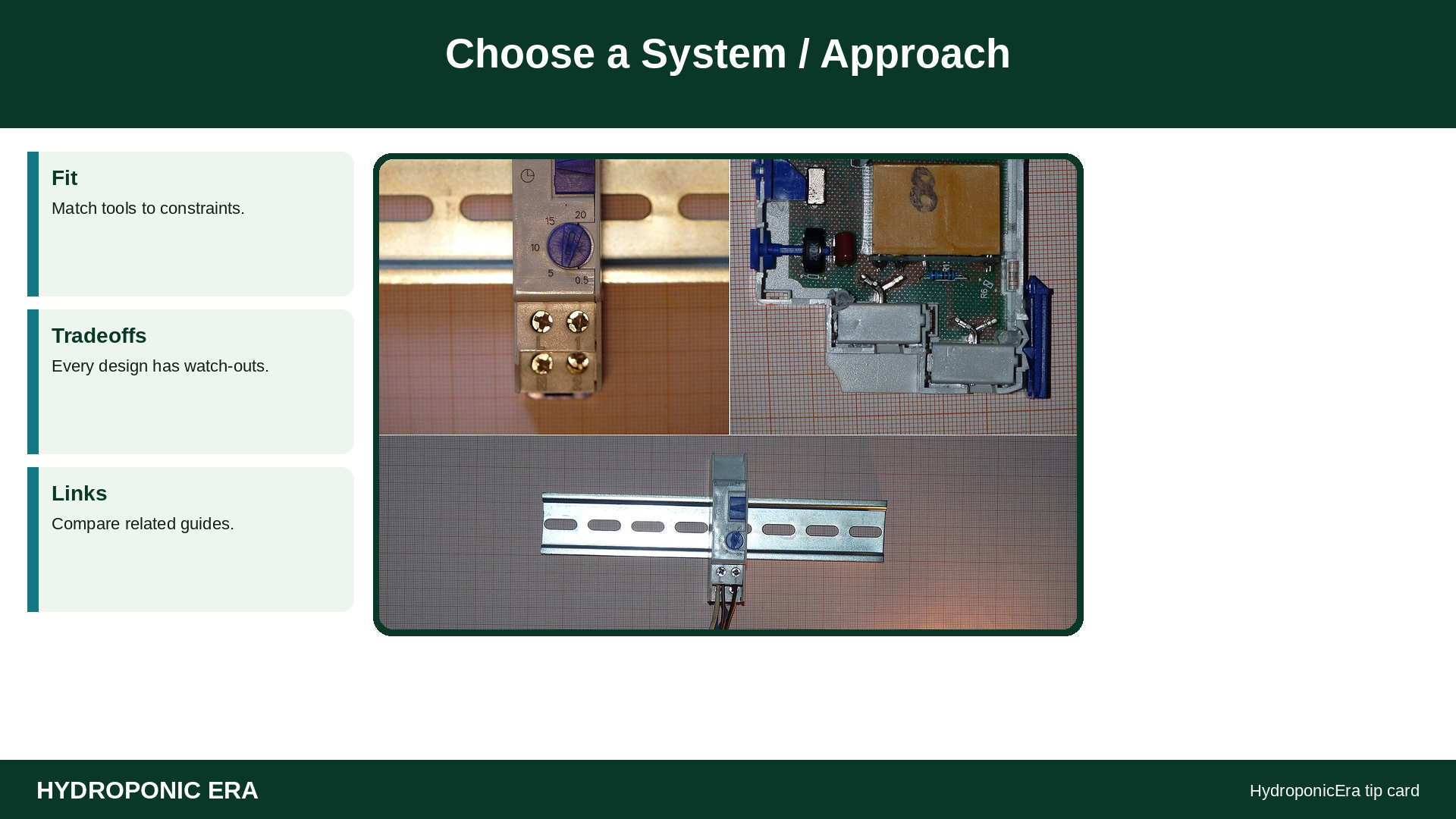
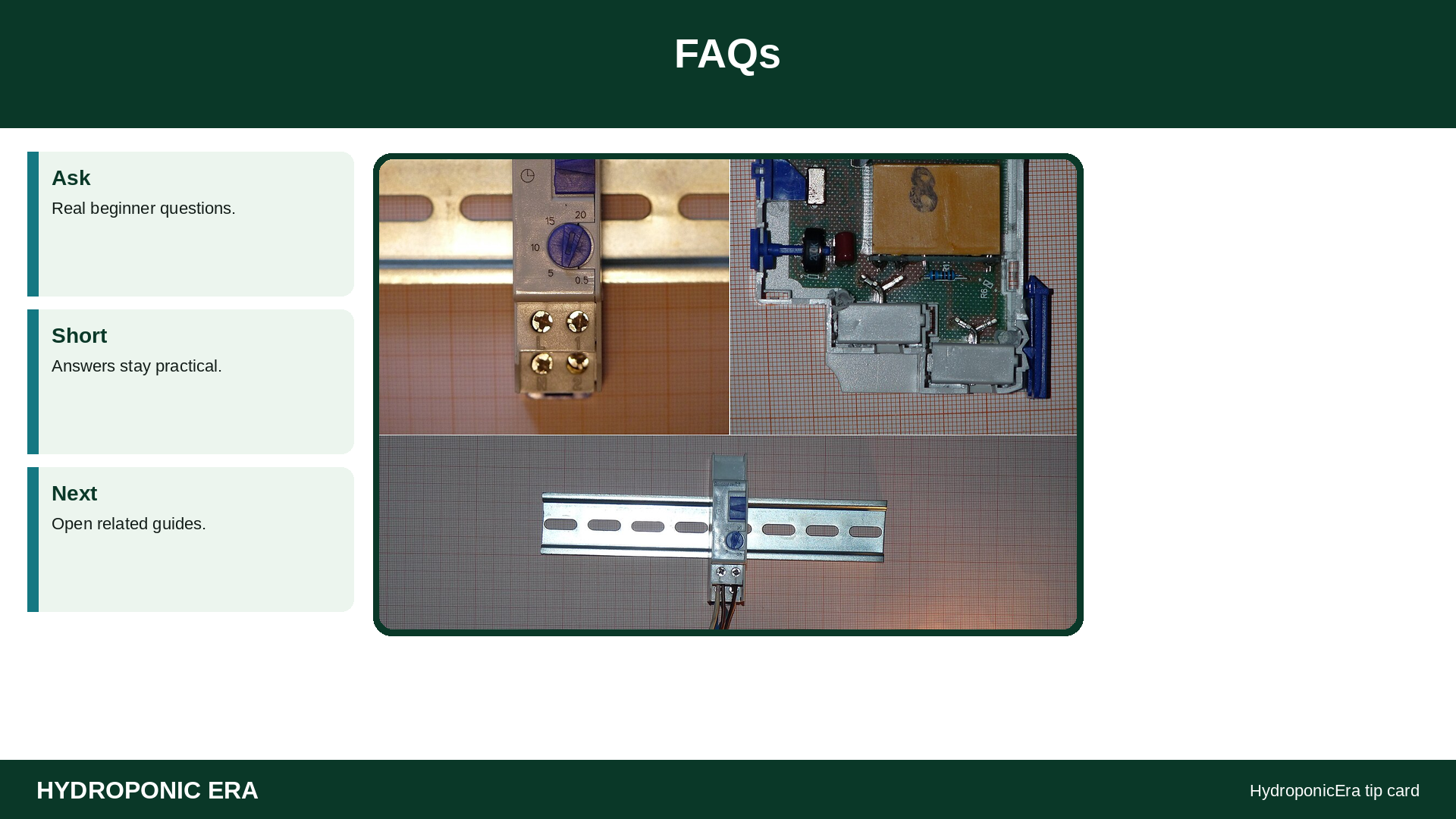
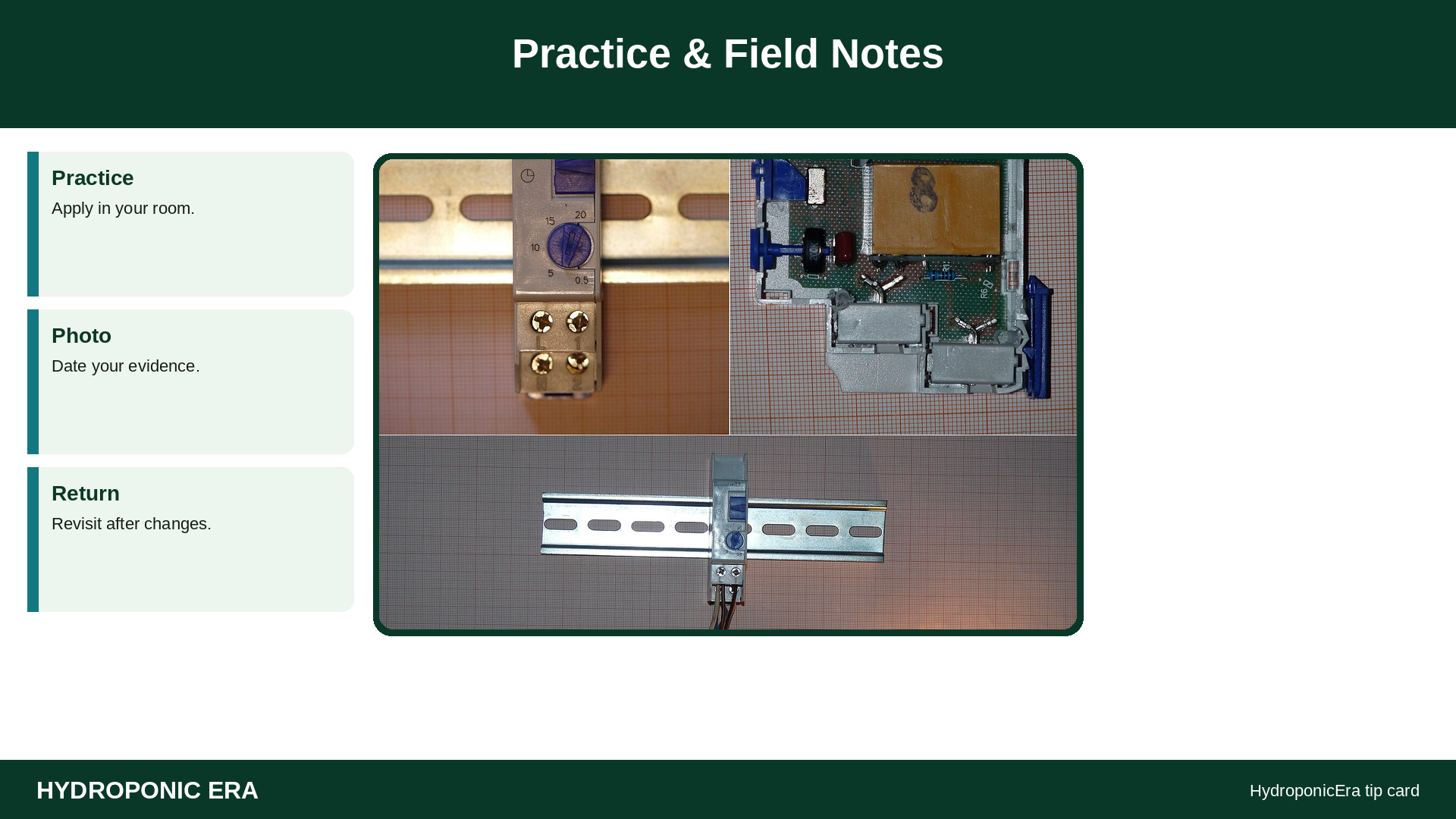
- Verify timer on/off with a live observation cycle.
- Confirm backup power path for pumps/air (backup).
- Reduce light intensity slightly in hot rooms if heat waves are forecast.
- Leave labeled bottles and a one-page friend SOP if someone will visit.
- Share a photo of “normal” reservoir level.
- Unplug nonessential gadgets that could trip breakers.
- On return: smell roots, check EC/pH, inspect for leaks before celebrating.
Variables by Trip Length
| Trip | Focus | Notes |
|---|---|---|
| 1–2 nights | Leaks + timers | Most leafy DWC OK if healthy |
| 3–5 nights | Volume + air backup | Heat waves matter |
| 1–2 weeks | Sitter SOP or pause NFT | Honest risk assessment |
Mistakes
- First-ever timer test on departure morning
- No drip tray under apartment reservoirs
- Trusting a “smart” plug never tested
- Leaving seedlings in NFT without buffer
- No sitter instructions
Troubleshooting On Return
| Finding | Action | Link |
|---|---|---|
| Wilted NFT | Re-wet gently; triage | wilt |
| Smelly DWC | Check air; consider clean | DO, clean |
| Floor damage | Fix leak path | leaks |
| EC sky-high | Dilute / change | water changes |
Original Preflight Card
Card: date leaving | return | system type | reservoir liters now | EC | pH | timer verified (y/n) | backup tested (y/n) | sitter name | emergency dump instructions. Photograph the card. Pair with automation and backup power.
What to Check the Morning You Leave
- Leak check done?
- Timers observed through a full cycle?
- Reservoir topped and logged?
- Backup for pumps/air?
- Sitter SOP written?
- Return inspection planned?
FAQs about hydroponic vacation away checklist
Is Kratky vacation-proof?
More pump-independent, not heat-proof or neglect-proof.
Should lights stay on?
Keep photoperiod; consider intensity if heat is the risk.
Friend dosing nutrients?
Usually have them only top off plain water unless trained.
Smart plugs enough?
Only if tested; they are not magic.
Long cruise strategy?
Harvest down; pause fragile NFT; or hire knowledgeable help.
Related leak guide?
Yes—fix leaks before you leave.
Friend SOP and Return-Day Protocol
If someone visits while you are gone, hand them a one-page SOP: photos of correct water line, “add only plain water to THIS mark,” “do not adjust pH unless trained,” emergency power-off location, and your phone number. Untrained friends dosing randomly cause more harm than a slightly hungry system.
Smart plugs and cameras help only if you tested notifications on a workday. Watch one full irrigation cycle remotely before travel. Pair with timers and backup power—a camera that shows a dry NFT channel is useful only if someone can act.
Return day: smell the reservoir, check roots on one sample plant, read EC/pH, inspect floors/trays for slow leaks (leaks). Stabilize before aggressive feeding. Wilted plants may need shade and gentle rewetting (wilting), not an EC spike.
Original trip tiers: 48 hours = leak + timer verify; 5 days = volume + air backup; 10+ days = sitter or pause fragile NFT plantings. Write your tier on the preflight card.
Heat waves change the math—balcony and sun-facing rooms need extra volume and shade planning (reservoir temperature, climate-aware placement).
Cluster: pumps, air pumps, water changes. Honesty about system fragility beats optimistic neglect.
Extra practice: run a “fake vacation” Saturday—do not touch the system—and see what fails before real travel.
Putting This Guide Into Practice
Run a fake vacation before real travel. Leave the system untouched for the planned duration on a weekend and note what alarms—dry channels, warm reservoirs, tripped GFCI. Fix those before flights.
Write the friend SOP at a sixth-grade reading level with photos. Plain water to a marked line beats improvised chemistry. Pair with timers, backup, and leaks.
Return protocol is non-negotiable: smell, roots, EC/pH, floors. Stabilize before “catch-up” feeding. Extension hydroponics overviews treat water and oxygen as continuous—your checklist is that principle applied to calendars.
Bottom line: verify leaks, timers, volume, backups, and human instructions. See water changes and wilting after any scare.
Advanced tip: for NFT, consider pausing new transplants a week before long trips so the channel is not full of seedlings with tiny roots. For DWC, verify air stone flow the morning of departure and keep a battery USB air pump tested as a micro-backup (air pumps, NFT, DWC). Write the return-day checklist on the same card as departure.
Second-pass note: no fabricated “guaranteed 10-day unattended” claims. Match trip length to system fragility. Cluster with timers, backup, leaks, and water changes.
Operational Checklist Card
Print preflight: leaks dry | timer observed full cycle | EC/pH logged | volume topped | backup tested | sitter SOP + photos | return inspection fields blank for later. Fake-vacation test once (timers, backup, leaks).
Final reminder: match trip length to fragility—NFT is less forgiving than buffered DWC. Related: water changes, wilting, air pumps.
Good hydroponic vacation away checklist practice beats last-minute scrambles the morning you leave.
Teach one other person your hydroponic vacation away checklist so coverage is not a single point of failure.
Keep hydroponic vacation away checklist short: volume, power, leaks, and who to call.
Rehearse hydroponic vacation away checklist once on a short overnight before a longer absence.
If hydroponic vacation away checklist feels bloated, cut cosmetics and keep only failure-prevention steps.
Archive last month’s hydroponic vacation away checklist notes; patterns beat memory.
Treat hydroponic vacation away checklist as a habit you review before every trip or major system change.
When hydroponic vacation away checklist is clear, you waste less time guessing which valve or timer failed.
Print a one-page hydroponic vacation away checklist note and leave it near the reservoir for helpers.
Update hydroponic vacation away checklist after storms, heat waves, or any DIY plumbing change.
Sources
- Oklahoma State University Extension — Hydroponics
- Michigan State University Extension — Hydroponics as an agricultural production system
- University of Florida IFAS — HS184: Building a Floating Hydroponic Garden
- Penn State Extension — A Water Quality Toolkit for Greenhouse and Nursery Production
- Virginia Cooperative Extension — SPES-720: Calculating and Using Daily Light Integral (DLI)
- Ohio State University Extension — HYG-1263
- University of Florida IFAS — HS1279: Leafy Greens in Hydroponics and Protected Culture for Florida
- University of Georgia Extension — B1314: Soilless Growing Media