
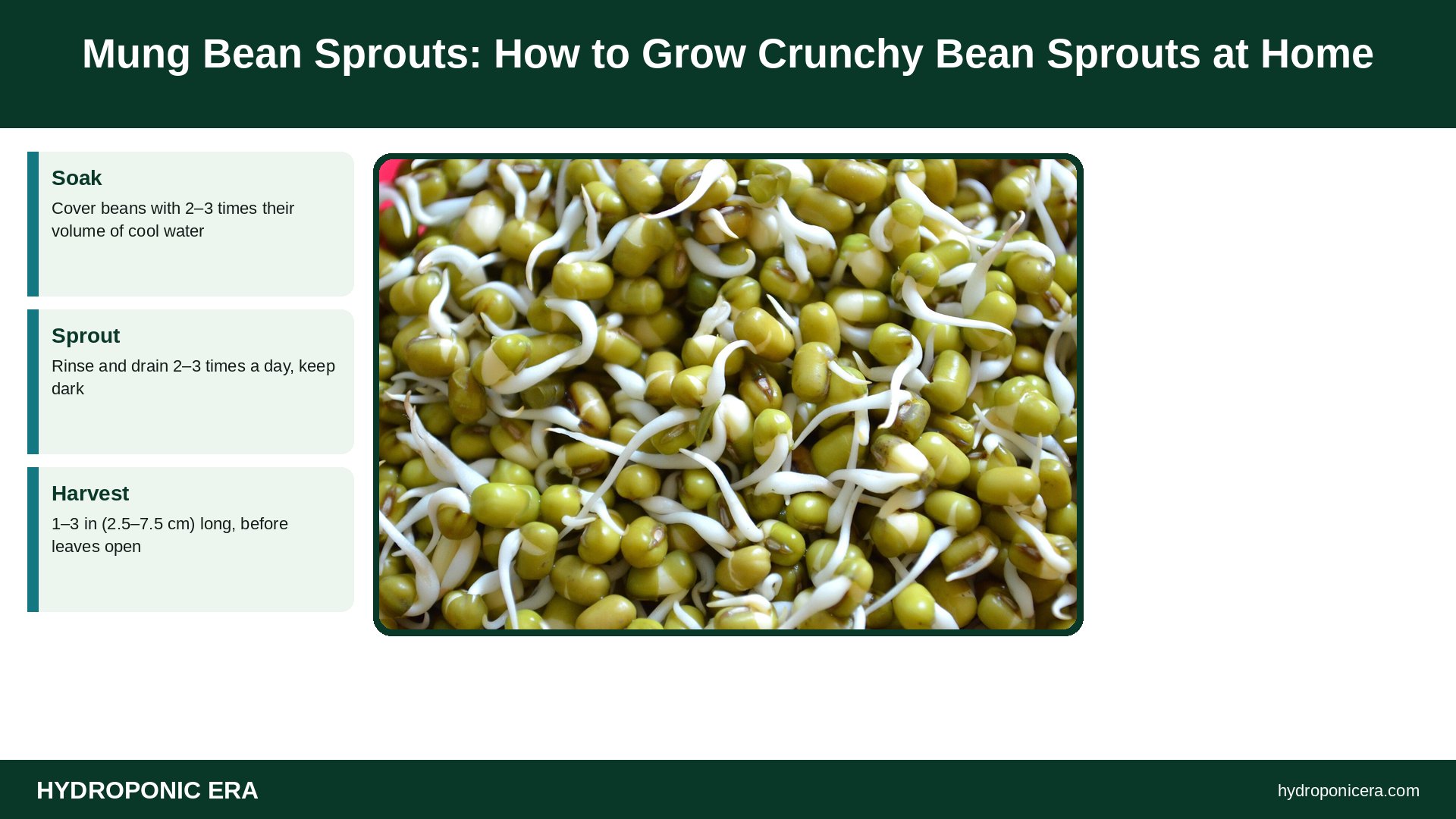
How do you grow mung bean sprouts at home? Soak clean, sprouting-grade mung beans for 8–12 hours, drain them, then rinse and drain two or three times a day in a dark spot at room temperature. Mung bean sprouts are usually ready in 3–5 days, when they are 1–3 inches (2.5–7.5 cm) long. Refrigerate them right away.
Key takeaway: Mung bean sprouts are easy, but they are one of the sprouts most often tied to foodborne illness. Use seed sold for sprouting, sanitize your jar, keep rinsing, and cook them if anyone in your home is high-risk.
| Stage | Typical timing | What to do |
|---|---|---|
| Soak | 8–12 hours | Cover beans with 2–3 times their volume of cool water |
| Sprout | Days 1–3 | Rinse and drain 2–3 times a day, keep dark |
| Harvest | Days 3–5 | 1–3 in (2.5–7.5 cm) long, before leaves open |
| Store | A few days | Dry well, refrigerate at 40°F (4°C) or below |
What Are Mung Bean Sprouts?
Mung bean sprouts are the young shoots of mung beans (Vigna radiata), eaten a few days after germination. They are the crunchy, white “bean sprouts” used in stir-fries, pho, spring rolls and salads across Asian cooking. You eat the whole sprout, including the swollen stem, the small root and the split seed.
Unlike microgreens, sprouts grow in water without soil or light and are harvested before true leaves form. If you are new to the difference, our guide to growing sprouts in a jar covers the basic method that works for most seeds.
Are Homegrown Mung Bean Sprouts Safe to Eat?
Homegrown mung bean sprouts carry the same risk as store-bought ones. The FDA warns that sprouts grow in warm, humid conditions that are ideal for Salmonella, Listeria and E. coli, and that a few bacteria on the seed can multiply to high levels even in a clean home setup. Cooking them reduces that risk.
University of California ANR Publication 8151 reports that alfalfa, clover and mung bean sprouts have been involved in outbreaks most often, and that the seed is usually the source. The FDA advises children, older adults, pregnant women and people with weakened immune systems to avoid raw or lightly cooked sprouts. UC ANR adds that cooked sprouts can be eaten if heated to steaming hot, above 165°F (74°C), which works especially well for mung bean sprouts.
What Do You Need to Grow Mung Bean Sprouts?
- Seed: Whole mung beans sold for sprouting, ideally from a supplier that tests seed for pathogens.
- Container: A wide-mouth quart (1 L) jar with a mesh lid, or a sprouting tray.
- Water: Clean, cool drinking water for soaking and rinsing.
- Darkness: A cupboard or a towel over the jar keeps sprouts white.
- Optional weight: A small plate or bag of water on top gives thicker, straighter sprouts.
Start with about 2–3 tablespoons of dry beans per quart jar; they expand many times in volume.
How Do You Grow Mung Bean Sprouts Step by Step?
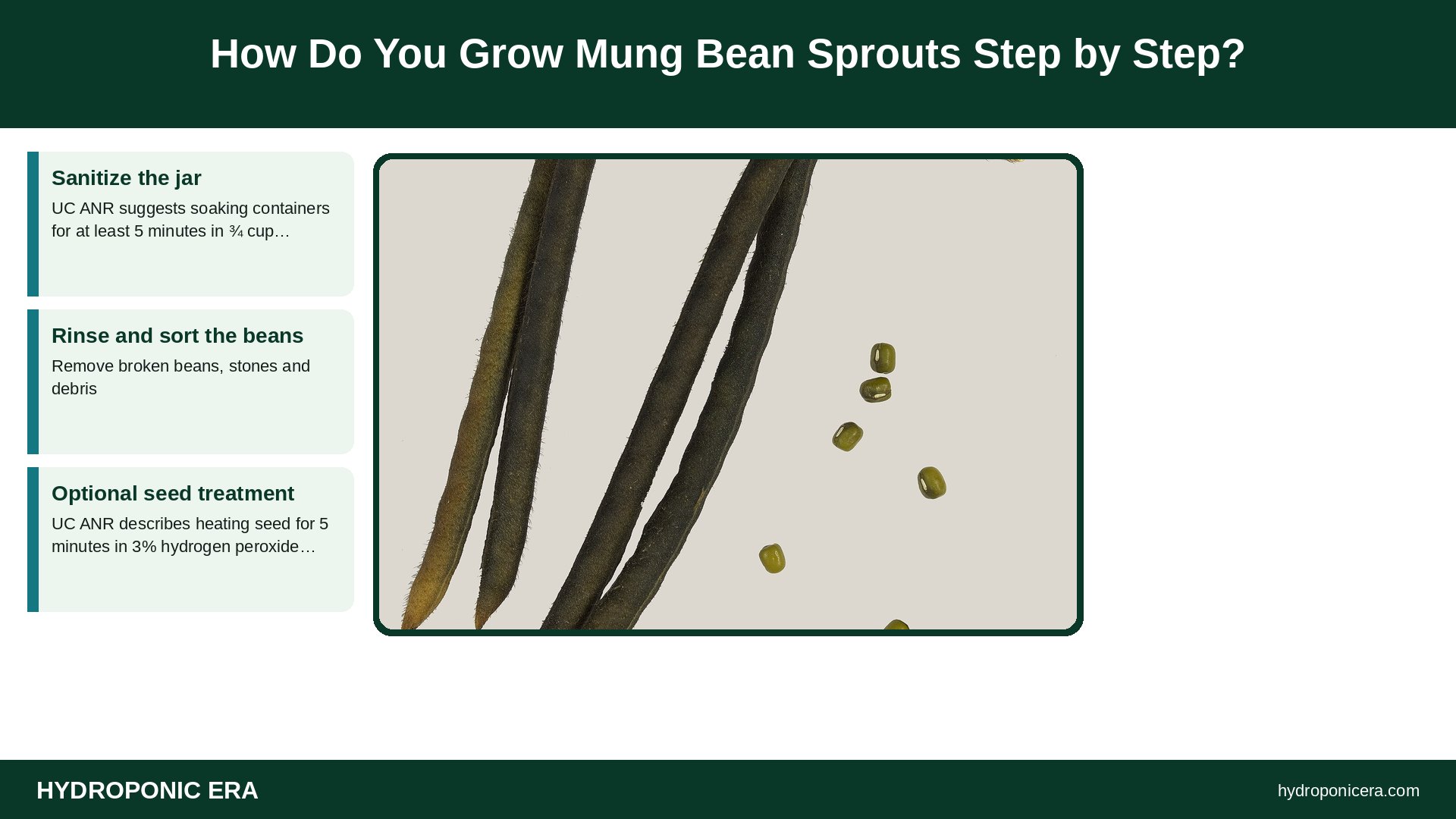
- Sanitize the jar. UC ANR suggests soaking containers for at least 5 minutes in ¾ cup unscented bleach per gallon of water (3 tablespoons per quart), then rinsing.
- Rinse and sort the beans. Remove broken beans, stones and debris.
- Optional seed treatment. UC ANR describes heating seed for 5 minutes in 3% hydrogen peroxide held at 140°F (60°C), then rinsing in running water for 1 minute.
- Skim floaters. Cover beans with water and skim off floating seeds and hulls; UC ANR ties most contamination to this debris.
- Soak 8–12 hours in cool water, then drain completely.
- Rinse and drain 2–3 times a day. Tilt the jar mouth-down so no water pools.
- Keep it dark at normal room temperature, out of direct sun.
- Harvest at 3–5 days, rinse, remove loose hulls and dry well.
How Do You Get Thick, Crunchy Mung Bean Sprouts?
Thick, crunchy mung bean sprouts come from darkness, steady rinsing and gentle pressure. Commercial growers sprout beans in the dark under weight, which pushes stems to thicken instead of stretching. At home, a tray with a light plate on top or a bag of water over the beans copies the effect and gives shorter, fatter sprouts.
- Keep them dark: Light turns sprouts green and leafy.
- Rinse with cool water: It keeps the bed from overheating.
- Do not crowd the jar: Packed sprouts heat up and spoil.
- Harvest early: Long sprouts turn stringy and bitter.
How Long Do Mung Bean Sprouts Take to Grow?
Mung bean sprouts usually take 3–5 days from soaking to harvest at room temperature. Small tails appear within a day of soaking, and sprouts reach 1–3 inches (2.5–7.5 cm) by day three to five. Warm kitchens speed growth and cool ones slow it. Harvest before green leaves open for the best texture and mild flavor.
How Do You Store Mung Bean Sprouts?
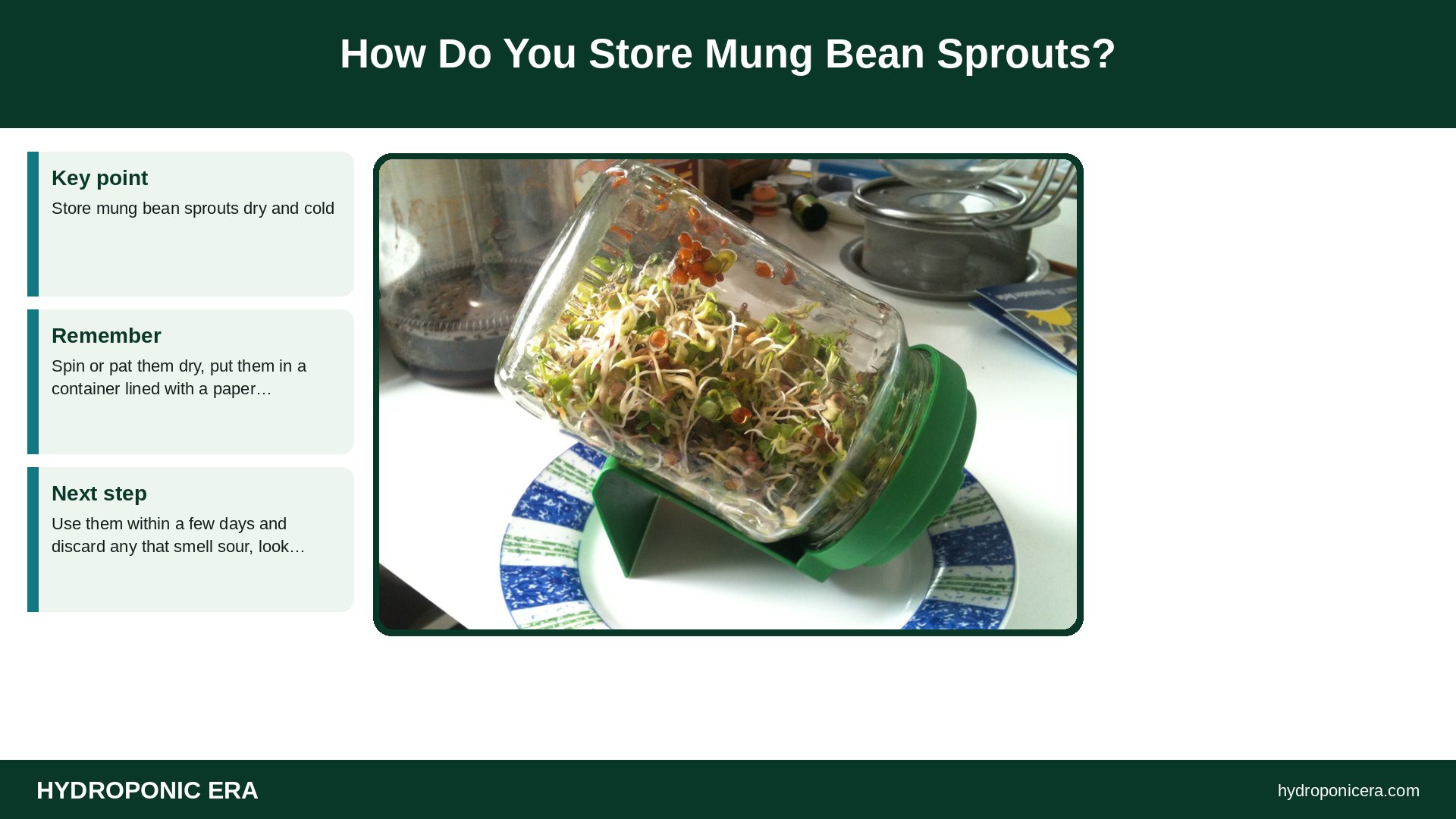
Store mung bean sprouts dry and cold. Spin or pat them dry, put them in a container lined with a paper towel and refrigerate at 40°F (4°C) or below, as the FDA recommends for perishable produce. Use them within a few days and discard any that smell sour, look slimy or turn brown.
The FDA also advises washing hands for at least 20 seconds before handling produce and keeping sprouts away from raw meat. For general tips on keeping greens fresh, see our guide to storing hydroponic lettuce.
Why Are My Mung Bean Sprouts Not Growing Well?
- Beans stay hard: Old or heat-damaged seed. Buy fresh sprouting seed; a few “hard seeds” are normal.
- Sour smell or slime: Water pooled in the jar. Drain fully and rinse more often.
- Green, leafy sprouts: Too much light. Cover the jar.
- Thin, long sprouts: No weight and too warm. Add gentle pressure and rinse with cooler water.
- Fuzzy white hairs: Fine root hairs are normal; gray or colored fuzz with a bad smell is mold, so discard the batch.
Root hairs often confuse beginners. Our post on white fuzz on roots in water explains the difference.
Can You Grow Mung Bean Sprouts Without a Jar?
Yes, you can grow mung bean sprouts without a jar. A colander, a plastic tray with drainage holes or a stack of sprouting trays all work, as long as water drains freely and the beans stay dark and moist. Trays make it easier to add weight, which many cooks prefer for thicker sprouts.
If you let mung beans grow in light for about a week in a growing medium instead, you get leafy mung bean microgreens. See our microgreens beginner guide for that method.
How Do You Cook Mung Bean Sprouts Safely?
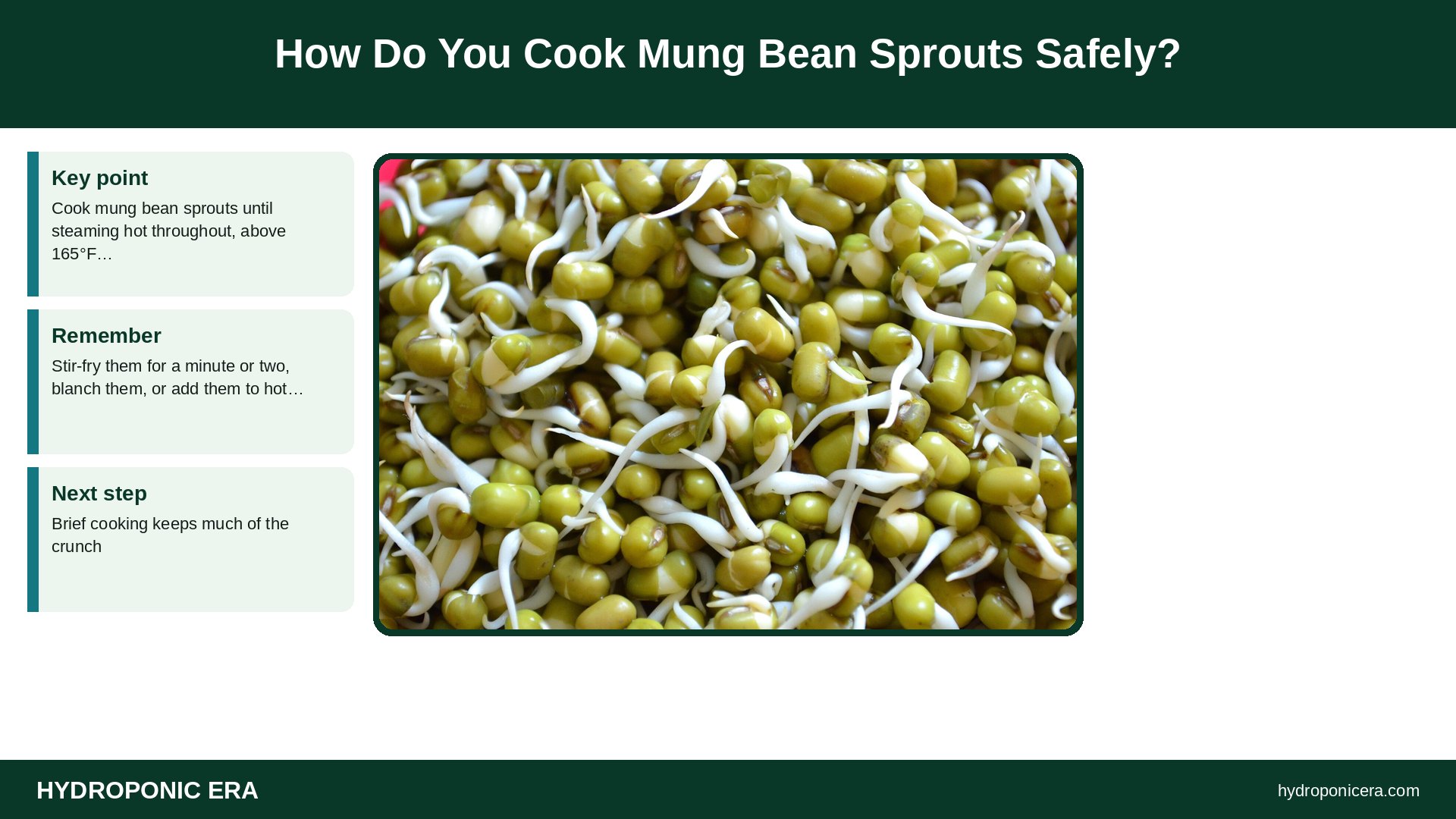
Cook mung bean sprouts until steaming hot throughout, above 165°F (74°C), which UC ANR says makes sprouts safe for people who should not eat them raw. Stir-fry them for a minute or two, blanch them, or add them to hot soup just before serving. Brief cooking keeps much of the crunch.
FAQs
Do mung bean sprouts need light?
No. Grow them in the dark to keep them white and crisp.
Can I use grocery-store mung beans?
They may sprout, but seed sold for sprouting is a safer choice.
Should I remove the green hulls?
Optional; float them off in a bowl of water for a cleaner look.
Why do my sprouts smell bad?
Poor drainage or warmth; discard sour-smelling batches.
Can children eat raw sprouts?
The FDA advises young children to avoid raw or lightly cooked sprouts.
Sources
- U.S. Food and Drug Administration — Selecting and Serving Produce Safely
- University of California ANR — Growing Seed Sprouts at Home (Publication 8151)
- Photo credits (Wikimedia Commons, edited with titles): Mung bean sprouts, close-up by pics_pd (CC0); Vigna radiata MHNT.BOT.2009.17.4 by Roger Culos (CC BY-SA 3.0); Growing bean sprouts by User:tlcoles (CC BY-SA 3.0); Mung bean sprouts, close-up by pics_pd (CC0); Salad, Romaine lettuce, cucumber, tomato, green pepper, radish, alfalfa sprouts, black olives, lemon juice, salt & olive oil (7765310086) by Lablascovegmenu from London (CC BY 2.0)