
Quick Answer
Net pot sizes hole spacing by crop means matching cup diameter, lid hole size, and center-to-center spacing to the plant’s mature canopy and root mass—not buying one “universal” basket for every crop. Undersized pots choke roots in DWC; oversized holes waste raft space and invite light into the reservoir (algae).
Use this with plant spacing, net pots basics, and system comparisons so cups, lids, and crop choice agree.
Key Takeaways
- Common home diameters: ~2″ for herbs/lettuce starts, 3″ for many leafy sites, 4–6″ for peppers/tomatoes in DWC or Dutch lids.
- Hole diameter should cradle the pot lip without dropping through; leave a snug seat so pots do not rattle dry.
- Center-to-center spacing follows canopy more than pot size—see the spacing guide for airflow gaps.
- NFT channels often use smaller cups; raft DWC can use denser small pots for baby leaf.
- Fruiting crops need larger root volume and wider lids even if the seedling started in a 2″ cup.
- Opaque lids + correct hole count reduce light leaks that feed algae.
- Transplant up a pot size when roots circle heavily or push the cup out of the lid.
- Measure your lid grid before ordering bulk cups—hole patterns are not interchangeable across brands.
Related HydroponicEra guides
- Net pots and grow cups
- Plant spacing for home systems
- Deep water culture beginners
- NFT for beginners
- Dutch bucket beginners
- DWC vs NFT vs Dutch
- Seedlings and transplanting
- Algae in reservoirs
- Best plants for hydroponics

Why Pot Size and Hole Spacing Matter Together
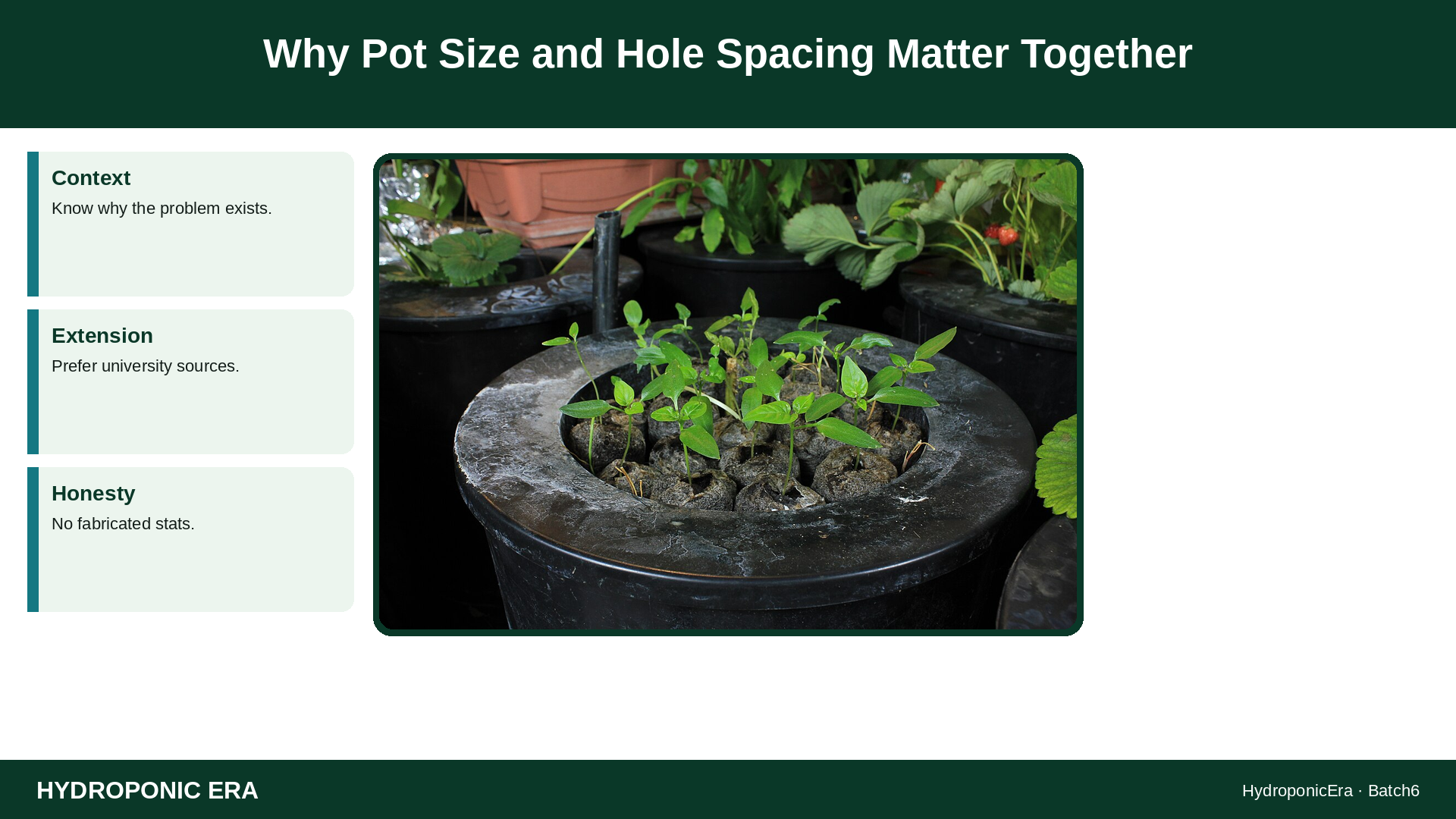
A net pot is both a root cage and a lid plug. Diameter sets how much media and root mass you can support; hole spacing on the lid sets how many plants share light, airflow, and reservoir volume. University of Florida IFAS materials on small hydroponic herb systems and leafy greens emphasize matching container and plant density to the production method—home growers face the same geometry problem at smaller scale.
If you only enlarge pots without widening spacing, canopies overlap and humidity climbs (humidity/VPD). If you space generously but keep tiny cups on heavy feeders, roots rope the air stone and starve for oxygen (dissolved oxygen).
Crop Decision Table: Typical Home Ranges
| Crop type | Typical net pot | Lid / site notes |
|---|---|---|
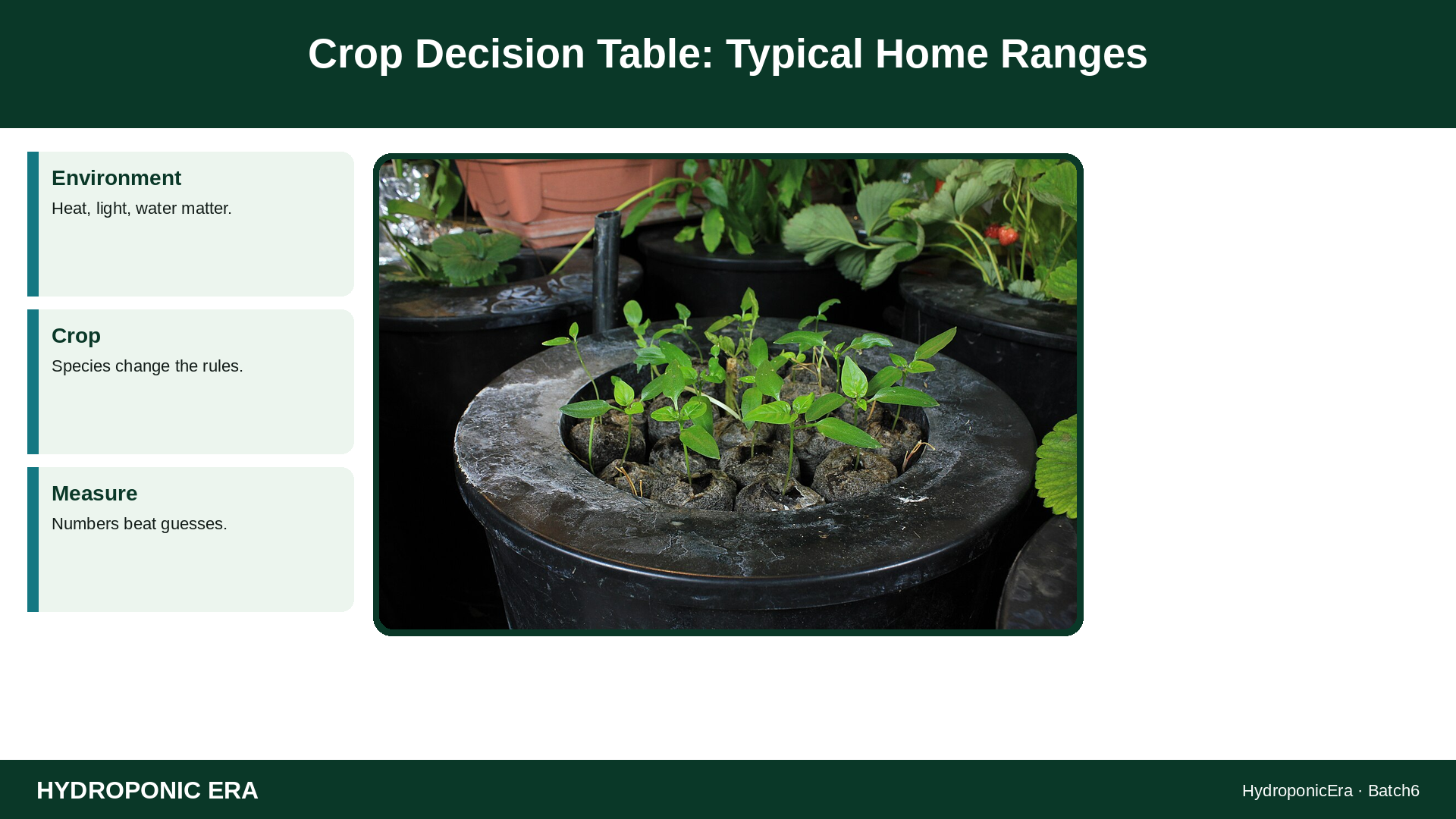
| Lettuce, bok choy, herbs (leaf) | 2–3 in (5–8 cm) | Closer centers OK if airflow is strong |
| Basil bushes, kale, chard | 3–4 in | Wider than baby leaf; prune canopy |
| Peppers, determinate tomato | 4–6 in | Wide lid holes; trellis load separate |
| Cucumber / large indeterminate | 6 in+ or Dutch bucket | Often leave DWC lids for Dutch/drip |
| Microgreens trays | Usually no net pots | Different workflow entirely |
Ranges are frameworks, not brand warranties. Always confirm your lid cutout matches the pot collar.
Step-by-Step: Size Cups to Your Lid and Crop
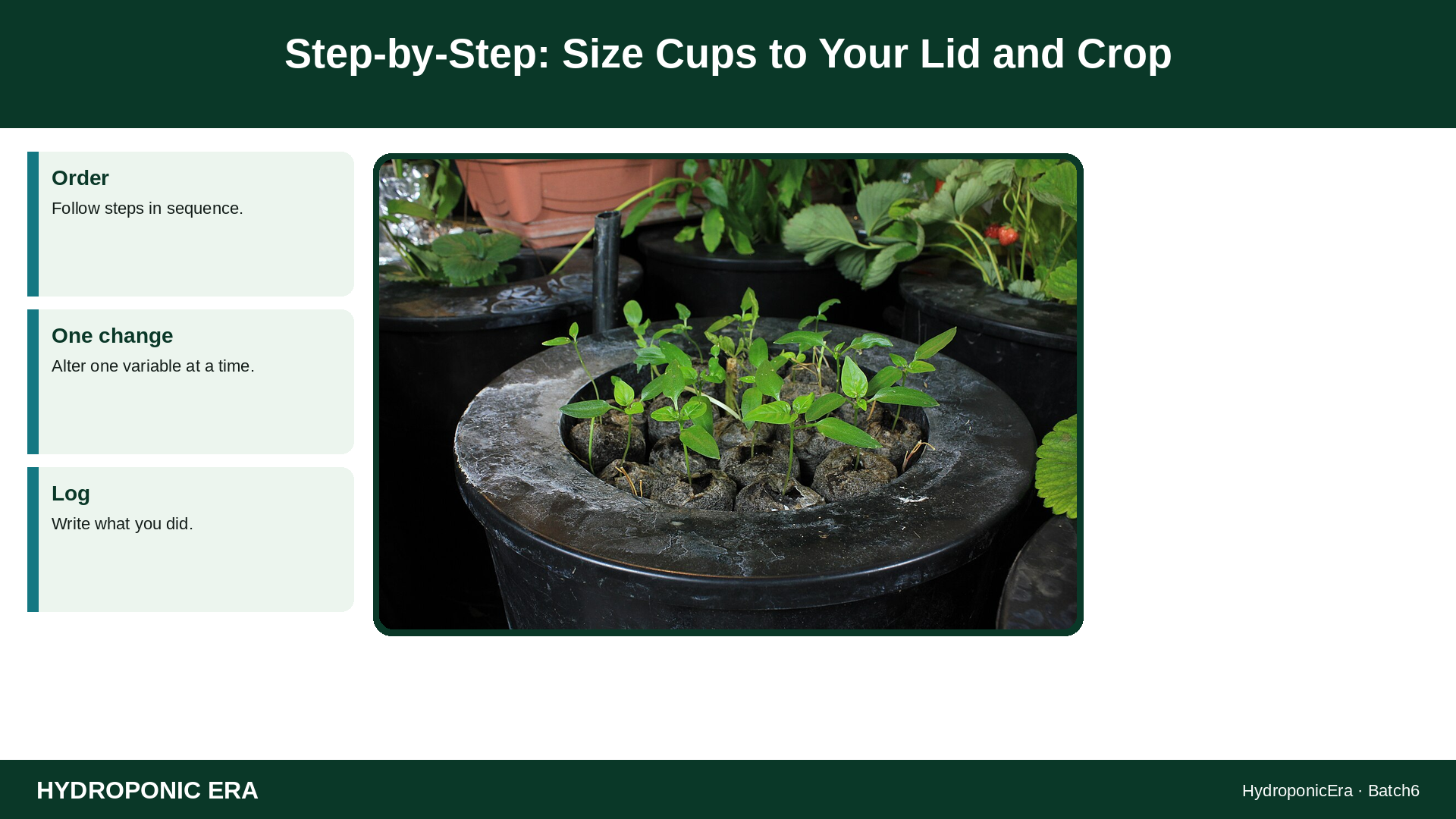
- List crops for the next cycle (leafy vs fruiting).
- Measure lid holes (diameter and center-to-center) before buying cups.
- Pick pot diameter that seats firmly in each hole with media room for the crop class.
- Check spacing against the spacing guide for canopy width.
- Plan transplants: start in small cups, step up if roots dominate (transplanting).
- Count air stones / pump capacity if DWC site density rises.
- Mark spare lids for dense baby-leaf vs sparse fruiting layouts.
- Reject warped pots that leak light around the collar.
System Notes: DWC, NFT, Raft, Dutch
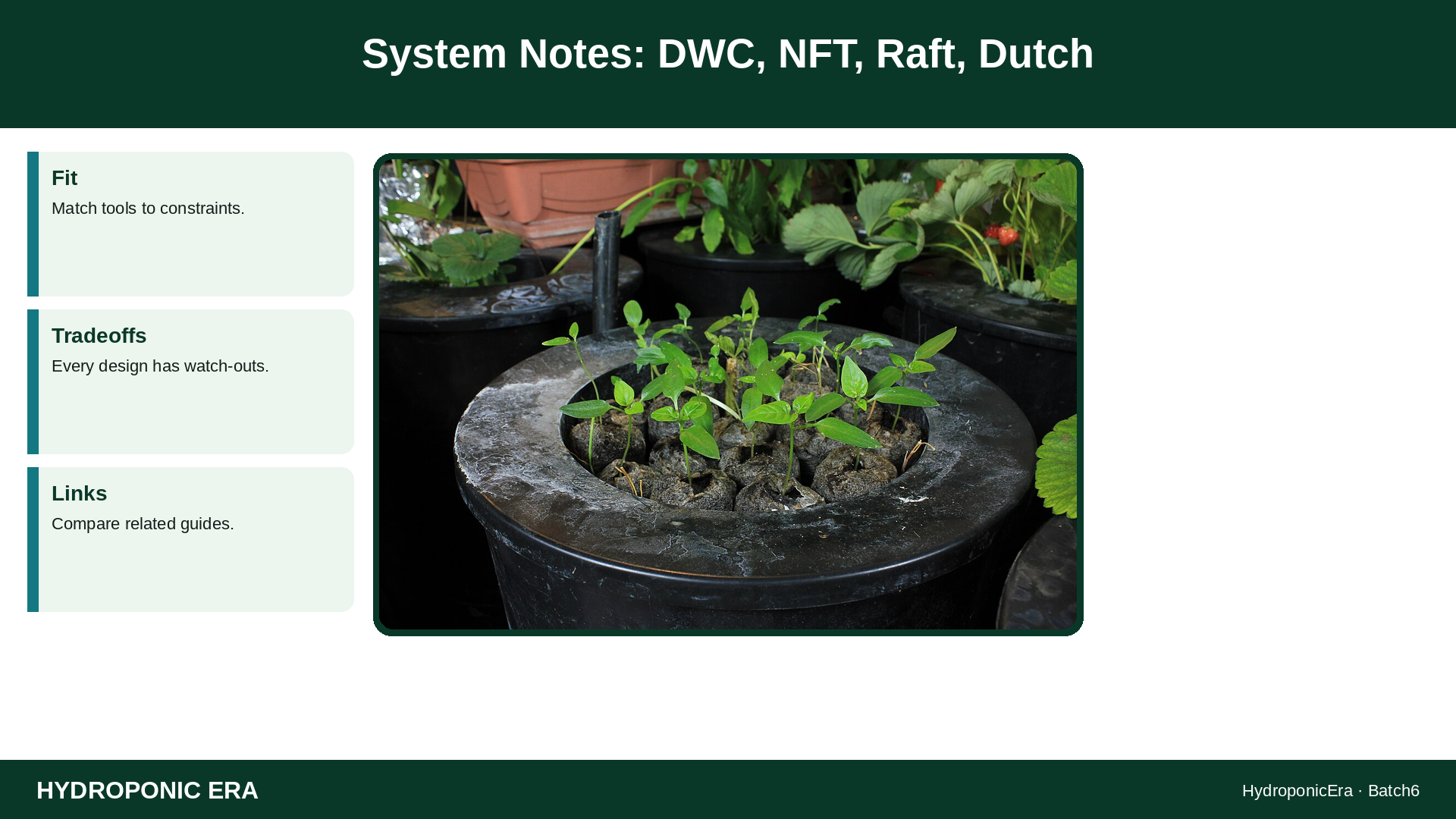
DWC / raft: pot size sets root immersion depth; keep air gap under the stem. Crowded 2″ sites work for baby leaf; fruiting plants need fewer, larger holes.
NFT: small cups and channel width limit media; long root mats can dam flow (NFT guide).
Dutch / drip: larger pots or buckets matter more than raft hole grids; still match emitter count (Dutch bucket, drip systems).
Kratky jars: often one plant per vessel—choose pot to fit the jar mouth without sealing oxygen out (Kratky)
Common Mistakes

- Buying one pot size for lettuce and tomatoes alike
- Drilling lid holes larger than the pot lip “for airflow” and dropping cups into the tank
- Ignoring center-to-center spacing until leaves yellow from shade
- Starting fruiting crops in 2″ cups and never upsizing
- Clear lids plus oversized holes → algae blooms
- Mixing square and round pots in lids cut for only one collar shape
- Forgetting that media (clay, coco) changes effective root volume inside the same cup
Troubleshooting Fit Problems
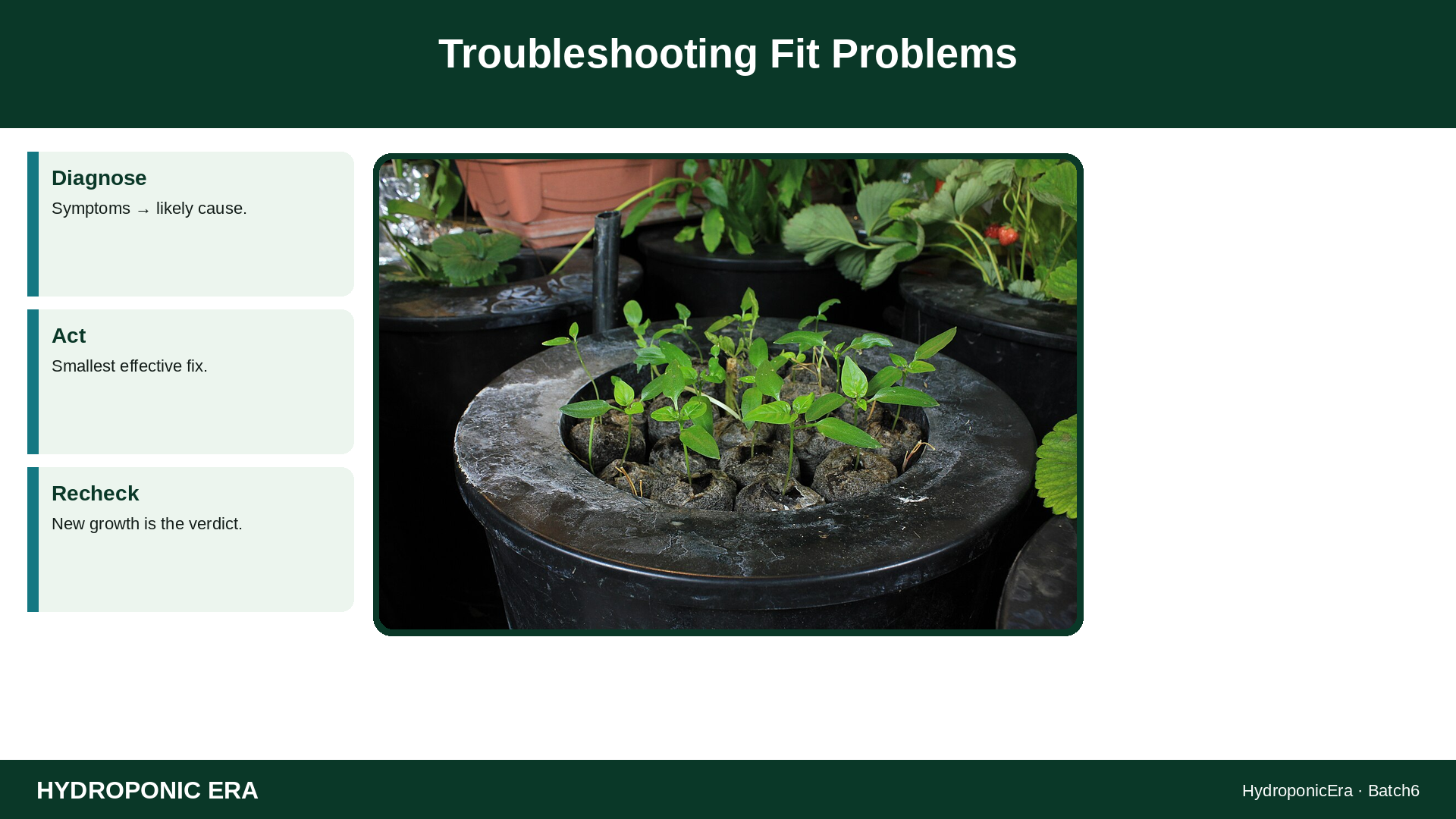
| Symptom | Likely cause | Next step |
|---|---|---|
| Cup falls into reservoir | Hole too large / soft lid | Replace lid or add collar ring |
| Roots choking pump | Pot too small / too many sites | Upsize pot or thin plants; see root prune guide when published |
| Algae on pot walls | Light leak | Opaque lid, snug holes (algae) |
| Wilting despite wet roots | Oxygen / heat / tiny pot | DO, reservoir temp |
What to Check Before You Drill or Buy Lids
- Crop list split into leafy vs fruiting?
- Lid hole diameter measured with calipers or a gauge?
- Center-to-center spacing recorded?
- Pot collar matches hole shape (round/square)?
- Opaque lid material chosen?
- Transplant path from seedling cup defined?
- Airflow plan for the densest layout?
- Spare pots on hand for mid-cycle upsizing?
Field Notes for Home Net Pot Layouts
When you plan net pot sizes hole spacing by crop, sketch the lid on paper first. Mark each hole, write the crop code, and leave paths for your hand to reach inner sites without snapping leaves. Crowded 2-inch cups in a DIY tote look efficient on day 7 and chaotic on day 28 when basil bushes collide.
For raft boards, keep a spare board drilled for baby-leaf density and another for finishing heads. Swapping boards is faster than redrilling mid-cycle. In DWC buckets, one large plant per lid is often wiser than four struggling cups. In NFT, confirm the channel lid knockout matches the collar before you order a case of cups.
Media fill height inside the cup also changes effective root volume: clay pebbles settle; coco can sit higher. After transplant, check that the stem crown is not buried in wet media. Recheck spacing against the spacing guide once true leaves expand. If algae rings form around collars, your hole is leaking light—resize or gasket the seat. Keep a small bin of mixed 2-inch and 3-inch pots so upgrades do not wait on shipping. Finally, photograph your best lid layout; the next cycle should copy success, not reinvent hole math.
Checklist phrase for logging: net pot sizes hole spacing by crop verified against canopy width and pump access. Repeat the phrase in notes when you change crops so future you remembers why the lid looked “sparse” on purpose. Good net pot sizes hole spacing by crop decisions also reduce heat pockets by keeping airflow lanes open between plants.
Buying and Drilling Without Regret
Before you commit to a lid pattern, buy a single sample pot and test-fit it in a scrap board. Cheap cups vary by a millimeter that matters. If you DIY PVC rafts, drill undersized then step up with a hole saw so the collar seats without cracking acrylic. Keep a deburring tool handy—sharp plastic edges cut root hairs and fingers.
Order 10% extra pots; UV and clamps age them. Mix brands only if collars match. When teaching a beginner, start them on a pre-drilled lid rather than improvising hole spacing on day one. Connect purchasing to supplies and kits so the rest of the system is not starved while you obsess over cups.
If you sell starter plants later, standardize on one cup size for labeling. Inconsistency confuses customers and your own transplant calendar. Revisit hole maps each season as your favorite crops change.
FAQs

Can I reuse net pots?
Yes after scrubbing and sanitizing between cycles—see cleaning/teardown guides.
Is a bigger pot always better?
No. Oversized pots on dense lids waste space and can hold stale media; match crop class.
Do clay pebbles change spacing rules?
They change root anchorage inside the cup, not the canopy spacing between holes.
What about mesh vs slotted pots?
Both work; ensure slots stay submerged enough for capillary contact without drowning the stem.
Should tomatoes share a lettuce lid grid?
Usually no—use a fruiting lid layout or Dutch buckets.
Where do microgreens fit?
They typically skip net pots; do not force them into DWC hole math.
Keep net pot sizes hole spacing by crop on your weekly ops card so the next cycle inherits the habit, not just the gear list.
When training a helper, explain net pot sizes hole spacing by crop in plain language before handing them scissors, timers, or meters.
Keep net pot sizes hole spacing by crop on your weekly ops card so the next cycle inherits the habit, not just the gear list.
When training a helper, explain net pot sizes hole spacing by crop in plain language before handing them scissors, timers, or meters.
Keep net pot sizes hole spacing by crop on your weekly ops card so the next cycle inherits the habit, not just the gear list.
When training a helper, explain net pot sizes hole spacing by crop in plain language before handing them scissors, timers, or meters.
Keep net pot sizes hole spacing by crop on your weekly ops card so the next cycle inherits the habit, not just the gear list.
When training a helper, explain net pot sizes hole spacing by crop in plain language before handing them scissors, timers, or meters.
Sources
- University of Florida IFAS — HS1421: Growing Herbs in Small Hydroponic Systems
- University of Florida IFAS — HS1279: Leafy Greens in Hydroponics and Protected Culture for Florida
- University of Florida IFAS — HS184: Building a Floating Hydroponic Garden
- Oklahoma State University Extension — Hydroponics
- Michigan State University Extension — Hydroponics as an agricultural production system
- University of Georgia Extension — B1314: Soilless Growing Media