
What does a pond skimmer do? A pond skimmer pulls floating leaves and surface film off the water before they sink and rot. A floating weir door draws the top layer in, a net or basket catches large debris, a pad or brushes trap finer bits, and the pump inside sends pre-filtered water on to a waterfall or filter.
Key takeaway: Install a pond skimmer opposite the waterfall, set level so the water sits about 1 in (2.5 cm) below the top of its window, and pick a model rated for at least your pump’s flow. Empty the basket weekly, daily during leaf fall, and rinse the mat gently so helpful bacteria stay on it.
| Part | Job | Source |
|---|---|---|
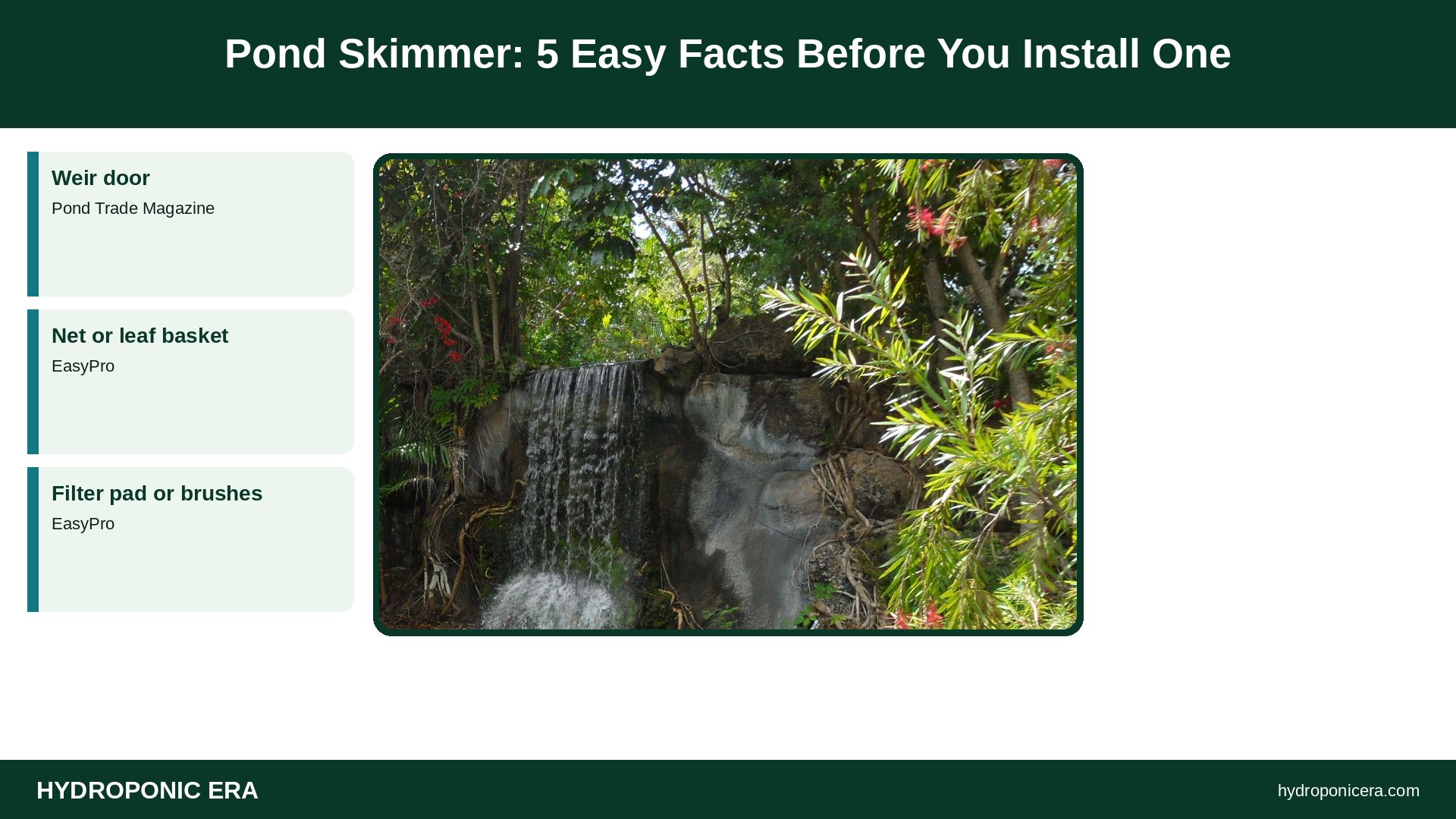
| Weir door | Floats just below the surface and draws in the top layer | Pond Trade Magazine |
| Net or leaf basket | Catches leaves and large debris | EasyPro |
| Filter pad or brushes | Trap finer particles before the pump | EasyPro |
| Pump chamber | Holds a submersible pump out of the pond | Pond Trade Magazine |
| Discharge | Sends water to a waterfall or biofilter | EasyPro |
How Does a Pond Skimmer Work?
A pond skimmer works by drawing the top layer of water over a floating door called a weir. Pond Trade Magazine explains that the weir pivots at the bottom with its top edge just below the surface, creating surface tension that pulls in floating debris and the oily film ponds produce. Water then passes a net and pads before reaching the pump.
- The pump pulls water through the skimmer window.
- The weir skims the surface layer.
- A leaf basket or net catches leaves and twigs.
- A filter mat or brushes trap smaller particles.
- The pump sends water to a waterfall, stream or filter, then back to the pond.
Why Do You Need a Pond Skimmer?
You need a pond skimmer to catch debris before it sinks and decays. EasyPro says capturing surface debris before it becomes waterlogged lessens clean-outs, lightens the load on the biofilter and keeps water clearer. K-State Extension notes that beneficial bacteria must break down leaves, debris and waste, so removing it early reduces that load.
Pond Trade Magazine says the skimmer began as a way to move the submersible pump out of the pond, away from fish and plant debris, into a protected housing. That also makes the pump easier to reach and service than one sitting on the pond floor. Pair the skimmer with a biofilter or a bog filter for clean water.
What Size Pond Skimmer Do You Need?
Choose a pond skimmer rated for at least the flow of the pump you plan to run in it. EasyPro’s Eco-Series manual rates its small Prelude model up to 30 GPM, or gallons per minute (114 L/min) and its largest Ovation up to 135 GPM (about 511 L/min), so ratings vary widely. In a skimmer-only pond, all outgoing water passes the skimmer.
Pond Trade Magazine notes that in those skimmer-only ponds, the full flow goes through the intake, so the weir design matters less. Ponds that also use bottom drains need a more buoyant weir to skim well. Work out flow first with our pump sizing guide, then match the skimmer to it.
Where Should a Pond Skimmer Go?
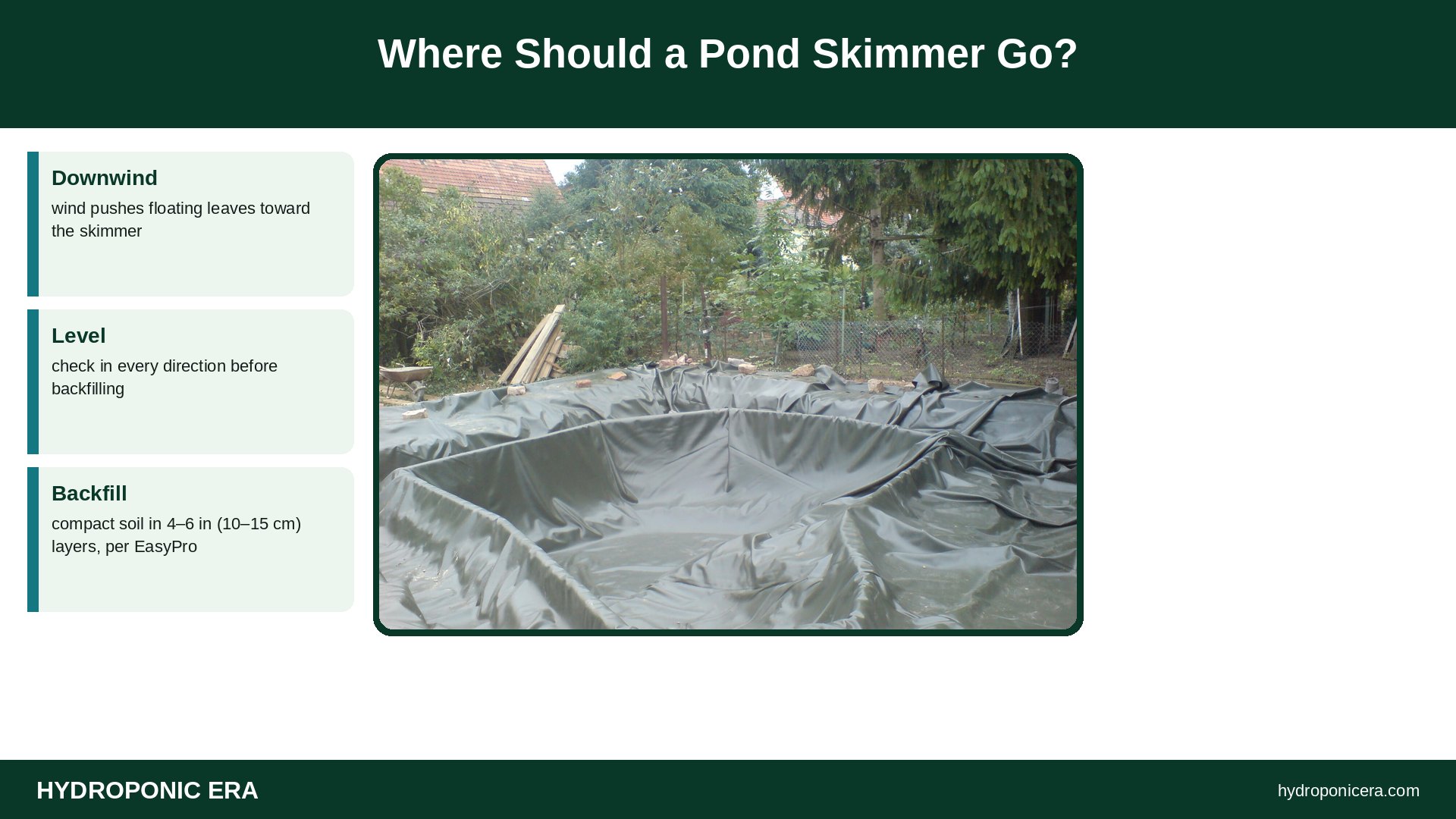
Put a pond skimmer on the pond edge opposite the waterfall. EasyPro says that position gives the best skimming action, ideally in a corner with extra liner. Set it level, with the normal water line about 1 inch (2.5 cm) below the top of the faceplate window, so it keeps working as the level rises and falls.
- Downwind: wind pushes floating leaves toward the skimmer.
- Level: check in every direction before backfilling.
- Backfill: compact soil in 4–6 in (10–15 cm) layers, per EasyPro.
- Power: plug the pump into a GFCI-protected outlet.
How Do You Clean a Pond Skimmer?
Clean a pond skimmer by switching off the pump, emptying the leaf basket and rinsing the filter mat. EasyPro recommends emptying the basket weekly, and daily in fall if needed, because a clogged basket starves the pump of water and can overheat it. Rinse the mat lightly rather than 100% clean to keep beneficial bacteria.
- Turn off the pump.
- Lift out and empty the leaf basket or net.
- Spray out decomposed material.
- Slowly lift the mat to keep debris on it, then rinse lightly.
- Refit everything and restart the pump.
EasyPro’s Axiom manual adds that in freezing climates you should pull the pump if it will not run, but you do not need to drain the skimmer.
Is a Pond Skimmer Safe for Fish?
A pond skimmer is generally safe for adult fish, but small fish can be drawn toward the window. Pond Trade Magazine says a floating circular weir is the most fish-safe design it knows. Keep the basket clean so the flow stays gentle, and check the net when you clean it. Koi keepers, see our koi aquaponics guide.
Do I need a skimmer if I have a filter?
A skimmer is a pre-filter. It catches floating debris before it sinks, which, per EasyPro, lightens the biofilter’s load.
How often should I empty a pond skimmer?
Weekly, and daily during leaf fall if needed, per EasyPro.
Can a pond skimmer run in winter?
EasyPro says to pull the pump in freezing climates if it will not run; draining the skimmer is not necessary.
Why is my skimmer not pulling water?
A clogged basket or mat often starves the pump. Clean it first, then check that the water level sits in the window.
Should the mat be cleaned completely?
No. EasyPro advises rinsing lightly to keep beneficial bacteria on the mat.
Sources
- Pond Trade Magazine. How to Choose the Right Skimmer for Your Pond.
- EasyPro Pond Products. Eco-Series Skimmer Installation Instructions.
- EasyPro Pond Products. Axiom Skimmer Installation Manual.
- Kansas State University. MF2911 Water Gardening: Biological Balance.
- Photo credits (Wikimedia Commons, edited with titles): Waterfall View at Garden of the Groves Botanical Garden in Grand Bahama by EgorovaSvetlana (CC BY-SA 4.0); Pond-edge plants at Achamore Garden – geograph.org.uk – 5446824 by M J Richardson (CC BY-SA 2.0); Teichbau2-Teichfolie by A.Fiebig (Public domain); Garden Pond 1 by Gilles San Martin (CC BY-SA 3.0)