
Hydroponic flowers are easy to grow if you pick compact annuals that bloom fast, such as marigolds, zinnias, snapdragons, nasturtiums, petunias, and pansies, and grow them in a simple DWC tote, Kratky container, tower, or Dutch bucket with a complete nutrient, pH around 5.5–6.5, and bright light. Start seeds in plugs, transplant when roots show, and deadhead to keep blooms coming. University extension guides note zinnias germinate in about 1–2 weeks at 70–80°F, and snapdragon seed should be surface-sown because it needs light to germinate.
Key takeaway: Choose fast, compact annuals, give them strong light, keep pH and nutrient steady, and remove spent flowers often.
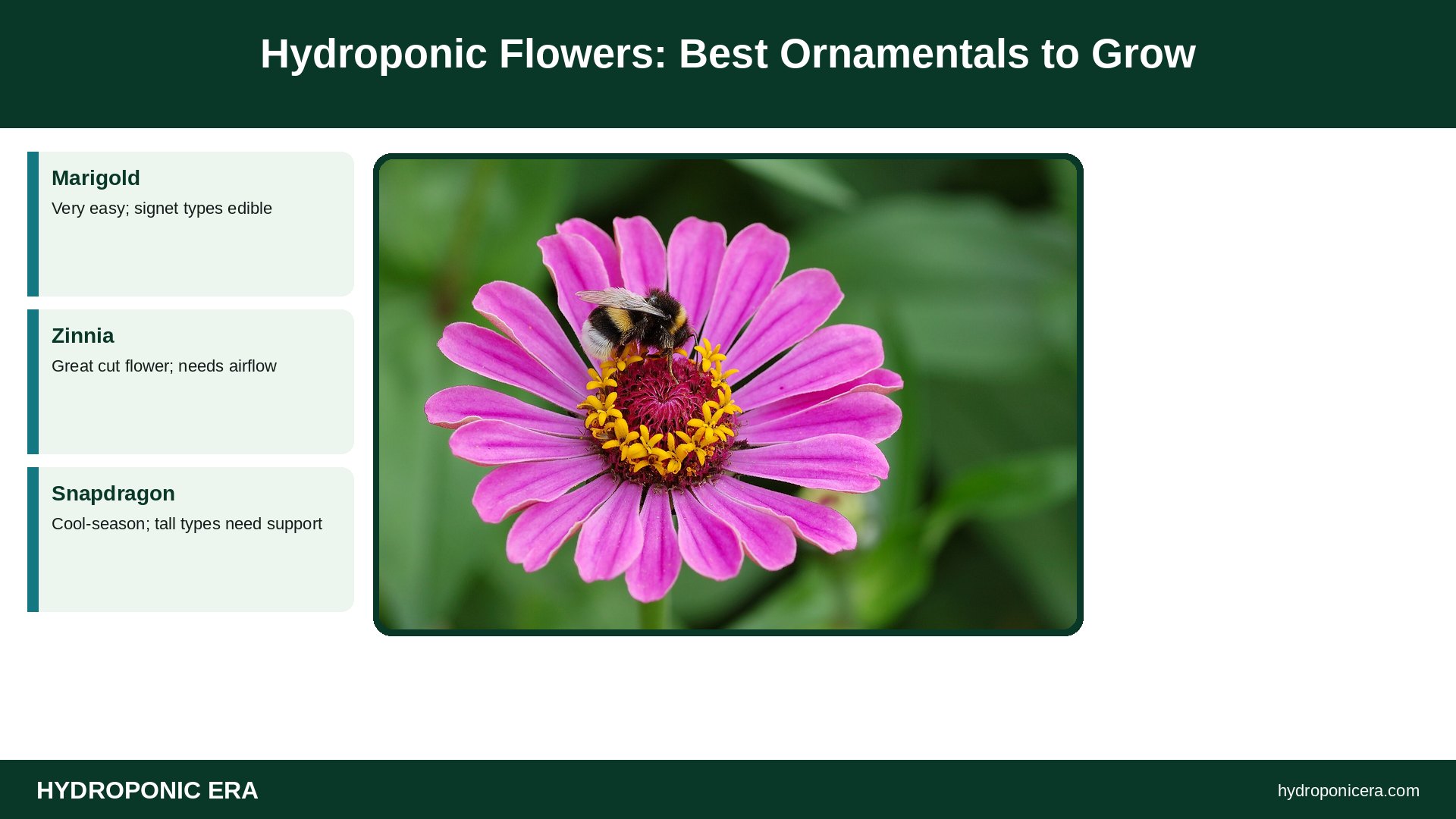
| Flower | Best system | Notes |
|---|---|---|
| Marigold | DWC, Kratky, tower | Very easy; signet types edible |
| Zinnia | Dutch bucket, DWC | Great cut flower; needs airflow |
| Snapdragon | Dutch bucket, NFT | Cool-season; tall types need support |
| Nasturtium | DWC, tower | Edible leaves and flowers |
| Petunia | Tower, wall garden | Trailing color |
| Pansy, viola | NFT, tower | Cool-season; edible flowers |
Why Grow Hydroponic Flowers?
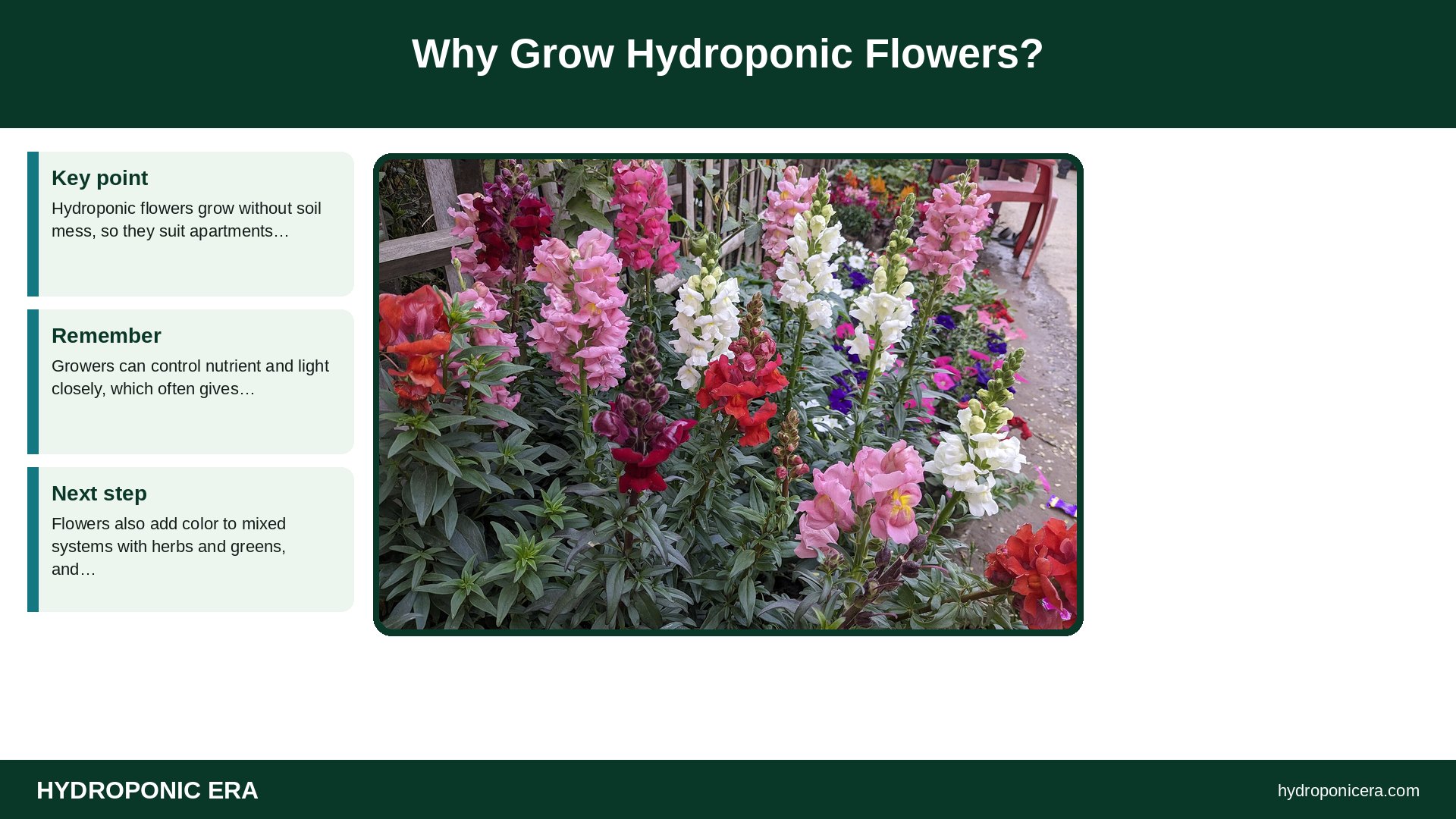
Hydroponic flowers grow without soil mess, so they suit apartments, offices, and classrooms. Growers can control nutrient and light closely, which often gives steady, compact plants. Flowers also add color to mixed systems with herbs and greens, and some, like nasturtiums and violas, are edible. See hydroponic marigolds.
Best Hydroponic Flowers for Beginners
Start with annuals that bloom quickly from seed and stay small. Marigolds and nasturtiums are among the easiest. Zinnias and snapdragons make excellent cut flowers but grow taller. Bulbs like tulips can be forced in water but bloom once; see hydroponic tulips. Perennials and shrubs such as roses are possible but take more space and care.
Starting Hydroponic Flowers From Seed
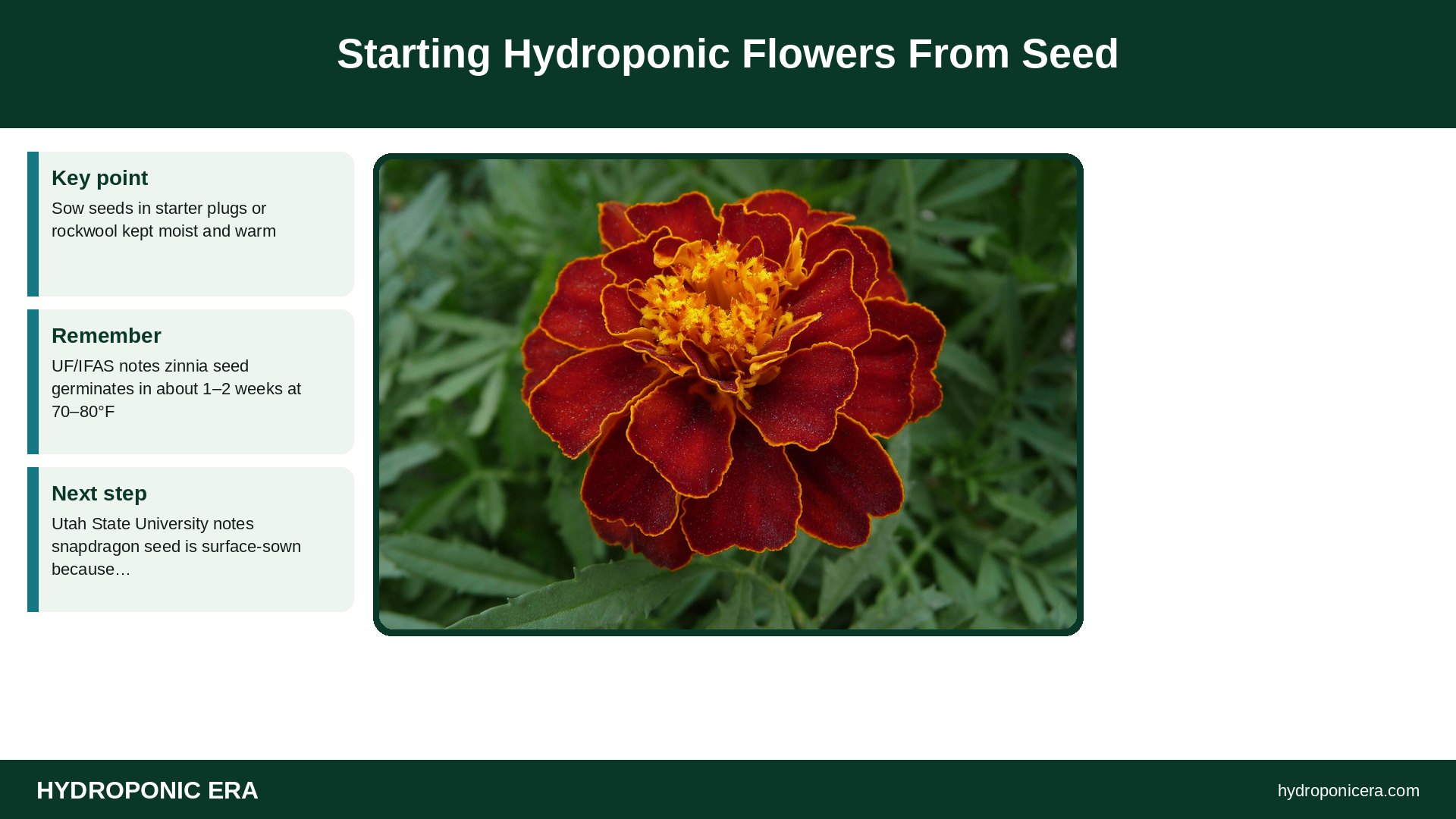
Sow seeds in starter plugs or rockwool kept moist and warm. UF/IFAS notes zinnia seed germinates in about 1–2 weeks at 70–80°F. Utah State University notes snapdragon seed is surface-sown because it needs light to germinate, and it sprouts in about 10–14 days at 65–70°F. Move seedlings to net pots once roots reach the bottom of the plug. See starter sponges.
Best Systems for Hydroponic Flowers
- Kratky or DWC: simple and suits marigolds, nasturtiums, and pansies.
- Dutch buckets: best for tall cut flowers like zinnias and snapdragons.
- Towers and wall gardens: good for trailing petunias and small annuals.
- NFT: works for small, shallow-rooted flowers.
See hydroponic wall garden and DIY hydroponic tower.
Light for Hydroponic Flowers
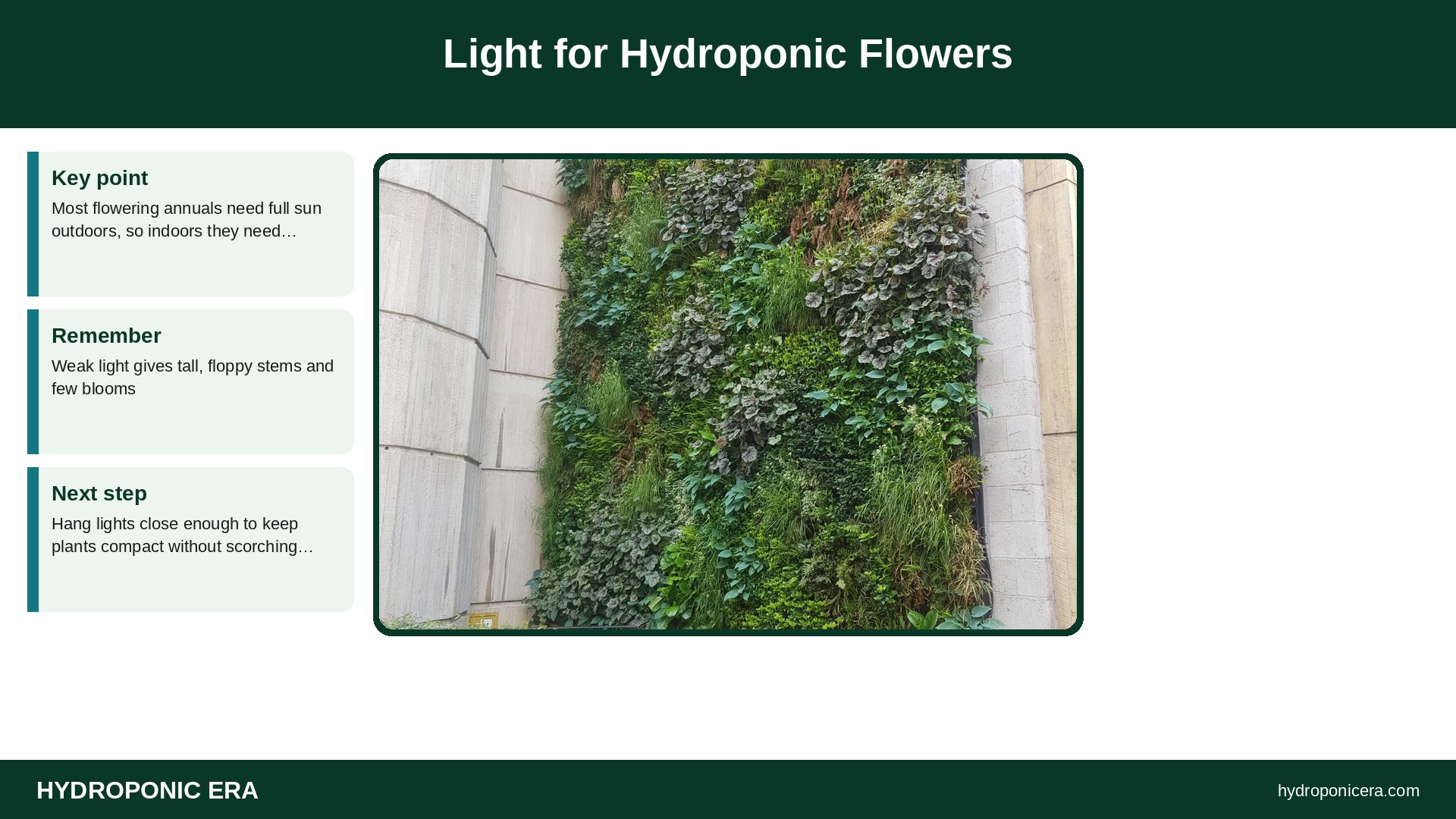
Most flowering annuals need full sun outdoors, so indoors they need strong LED light for much of the day. Weak light gives tall, floppy stems and few blooms. Hang lights close enough to keep plants compact without scorching them, and raise them as plants grow. See LED watts per square foot.
Nutrients and pH for Hydroponic Flowers
Use a complete hydroponic nutrient with calcium, magnesium, and micronutrients. Many growers use a bloom formula once buds form, with a little less nitrogen and more potassium and phosphorus. Keep pH around 5.5–6.5 and start at a mild strength, raising it slowly as plants grow. Brown leaf tips often mean the nutrient is too strong.
Temperature for Hydroponic Flowers
Warm-season flowers like zinnias and marigolds prefer warm rooms, while snapdragons, pansies, and violas prefer cooler conditions and may fade in heat. Keep the nutrient cool and aerated to protect roots. See hydroponics in hot climates.
Deadheading and Pinching Hydroponic Flowers
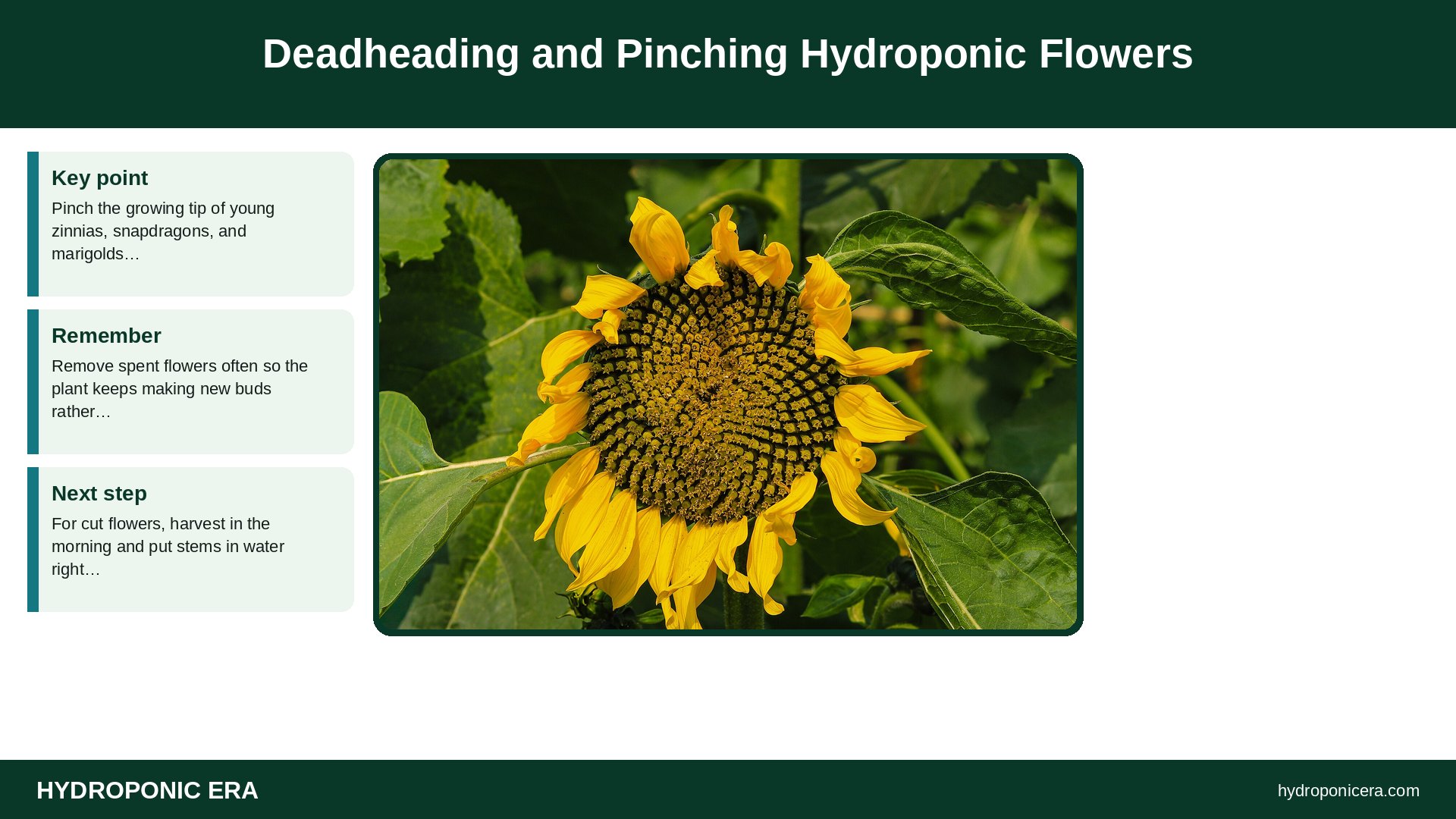
Pinch the growing tip of young zinnias, snapdragons, and marigolds once to get bushier plants with more stems. Remove spent flowers often so the plant keeps making new buds rather than seed. For cut flowers, harvest in the morning and put stems in water right away.
Pollination and Seed Saving
Most ornamental annuals don’t need pollination for blooms, only for seed. If you want seed, leave a few flowers to fade on the plant. Hybrid varieties may not come true from saved seed.
Common Problems With Hydroponic Flowers
- Few blooms: usually low light or too much nitrogen.
- Powdery mildew: common on zinnias in still, humid air; improve airflow.
- Aphids and thrips: check buds and leaf undersides weekly.
- Root rot: warm water and low oxygen. See hydroponic plants dying.
- Leggy stems: lights too far away or too weak.
Weekly Routine for Hydroponic Flowers
- Check pH and EC and write them down.
- Top off with plain, pH-adjusted water.
- Deadhead faded blooms.
- Look for pests on buds and leaf undersides.
- Change the nutrient every two to three weeks.
Edible Hydroponic Flowers
Nasturtiums, signet marigolds, violas, and pansies are commonly grown as edible flowers. Use only plants grown without pesticides not labeled for food crops, and wash them gently before eating. Edible flowers make a good crop for small systems since they’re often expensive to buy.
Hydroponic Flowers vs Soil Flowers
Hydroponic flowers avoid soil pests and weeds and let you control nutrients closely. Soil is more forgiving if you forget to check the system, and it needs no pumps. For a windowsill or kitchen, a small hydroponic setup is clean and tidy; for a big cut-flower bed outdoors, soil is usually cheaper.
Growing Hydroponic Flowers for Cutting
If you want cut stems, choose tall varieties bred for cutting, such as cut-flower zinnias and tall snapdragons, and grow them in Dutch buckets or deep containers that can support large roots. Use netting or stakes to keep stems straight. Cut stems when flowers are just opening for the longest vase life, strip the lower leaves, and place them in clean water. Keep cutting regularly, because harvesting acts like deadheading and encourages more stems.
Hydroponic Flowers in Mixed Systems
Flowers can share a system with herbs and greens when their needs match. Marigolds and nasturtiums sit well beside basil, while violas pair with lettuce in cooler rooms. Keep tall flowers on the north side so they don’t shade shorter plants.
FAQs: Hydroponic Flowers
What flowers grow best hydroponically?
Marigolds, nasturtiums, zinnias, snapdragons, petunias, and pansies.
Do hydroponic flowers need special nutrients?
A complete hydroponic nutrient works; a bloom formula can help once buds form.
How much light do hydroponic flowers need?
Strong light for most of the day; full-sun annuals need bright LEDs indoors.
Can I grow roses hydroponically?
It’s possible, but roses need more space, light, and care than annuals.
How long until hydroponic flowers bloom?
It depends on the variety; fast annuals often bloom within a couple of months from seed.
Sources
- UF/IFAS — Zinnia spp. (FP623)
- Utah State University Extension — Snapdragon Cut Flower Production in Utah
- Photo credits (Wikimedia Commons, edited with titles): Zinnia elegans with Bombus 01 by Simon Koopmann (CC BY-SA 2.0 de); Snapdragon flowers, Jessore, Bangladesh by Tanvir Rahat (CC BY-SA 4.0); French marigold garden 2009 G1 by George Chernilevsky (Public domain); St Edmund Hall Living Wall by Harry Princethorpe (CC BY-SA 4.0); Sunflower in Bloom 07 by A S M Jobaer (CC BY-SA 4.0)