
Fish Farming for Beginners: How Home and Small Systems Work
Fish farming (aquaculture) means raising fish in controlled tanks, raceways, or ponds for food, stocking, or study. At home or small scale it usually starts with a sound tank, aeration, filtration, careful feeding, and water tests—not a business pitch. Beginners in the United States, United Kingdom, Australia, and Canada should learn water quality first and check local rules before keeping food fish.
This guide explains what fish farming is, how home setups differ from commercial farms, tanks versus ponds, beginner species with caveats, how the work connects to aquaponics, and why regulations matter without giving legal advice.
Published by Hydroponic Era, beginner hydroponics and small-system growing guides.
Key takeaways
- Fish farming is controlled culture of aquatic animals—not catching wild fish.
- Home systems are usually tanks with aeration and filtration; ponds are a different skill.
- Water quality (oxygen, ammonia, nitrite, temperature, pH) decides success.
- Start with hardy species matched to your climate and local rules.
- Overfeeding is the most common beginner failure.
- Fish farming can link to aquaponics, but fish-only learning comes first.
- Permits and species bans vary by country—verify; this is not legal advice.
Table of contents
- What Fish Farming Is
- Home vs Commercial Fish Farming
- Tanks vs Ponds
- Water Quality Basics
- Beginner Species (With Caveats)
- How Fish Farming Connects to Aquaponics
- Regulations Caveat (US/UK/AU/CA)
- Frequently Asked Questions
- Final Thoughts
What Fish Farming Is
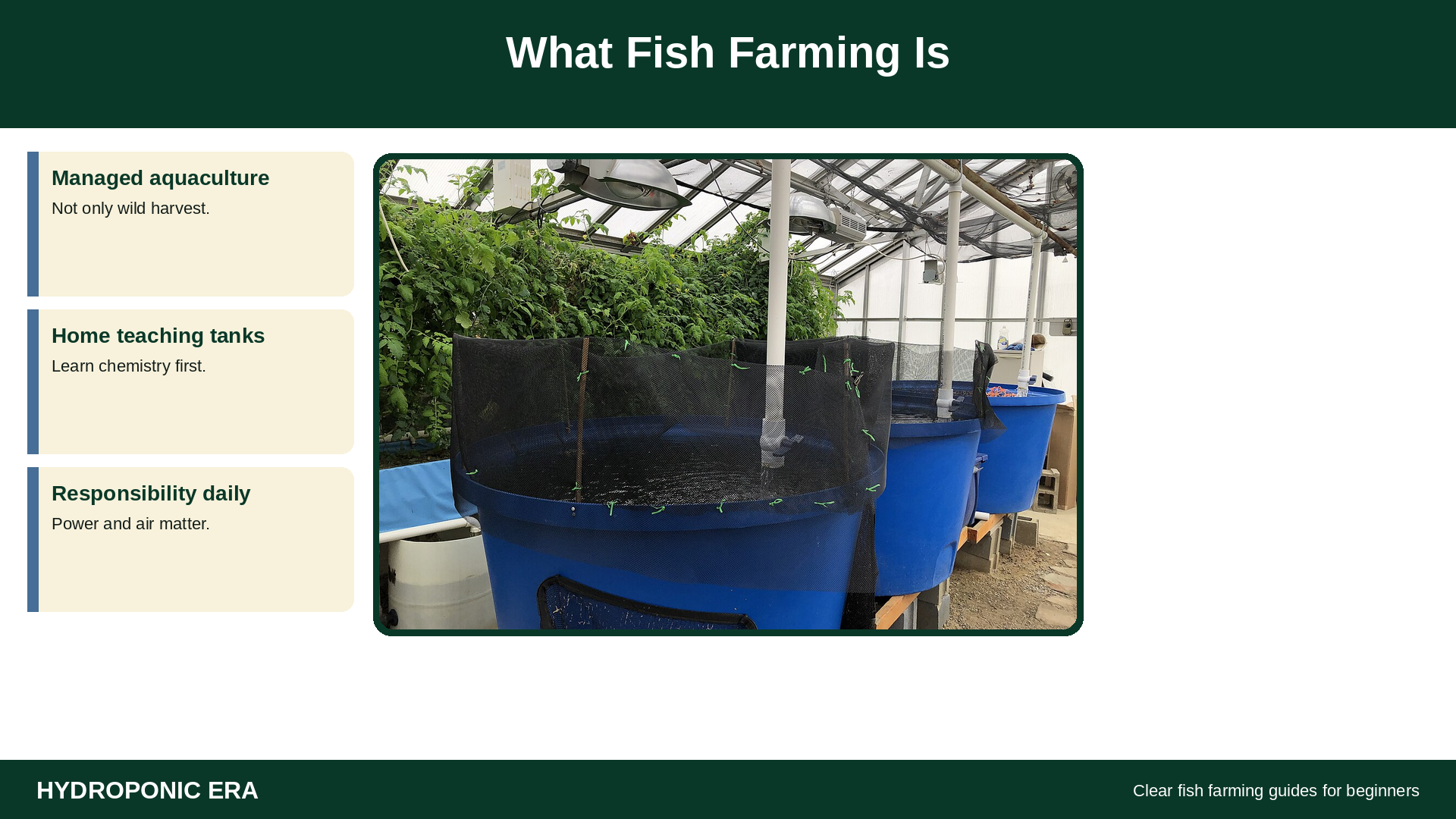
Fish farming is a branch of aquaculture: keeping or growing aquatic animals in managed systems. NOAA Fisheries and university Extension programs describe aquaculture as ranging from backyard teaching tanks to large commercial operations. The shared idea is intentional husbandry—feeding, water management, health observation—rather than relying on a wild harvest alone.
For a household, fish farming often means a recirculating tank in a garage, greenhouse, or spare room. You control density, feed, and water exchanges. You also carry the risk when electricity fails or ammonia climbs overnight. That responsibility is the real beginner lesson.
Maryland Sea Grant and classroom recirculating aquaculture manuals emphasize measuring temperature, dissolved oxygen, pH, ammonia, nitrite, and nitrate. Those parameters are not trivia. They are the difference between a calm tank and a crash. Treat the water as the animal’s entire environment.
Stay practical. This page does not promise profits, grant money, or a turnkey company. It explains how small systems work so you can decide whether a tank belongs in your life beside a garden or a hydroponic shelf.
Home vs Commercial Fish Farming
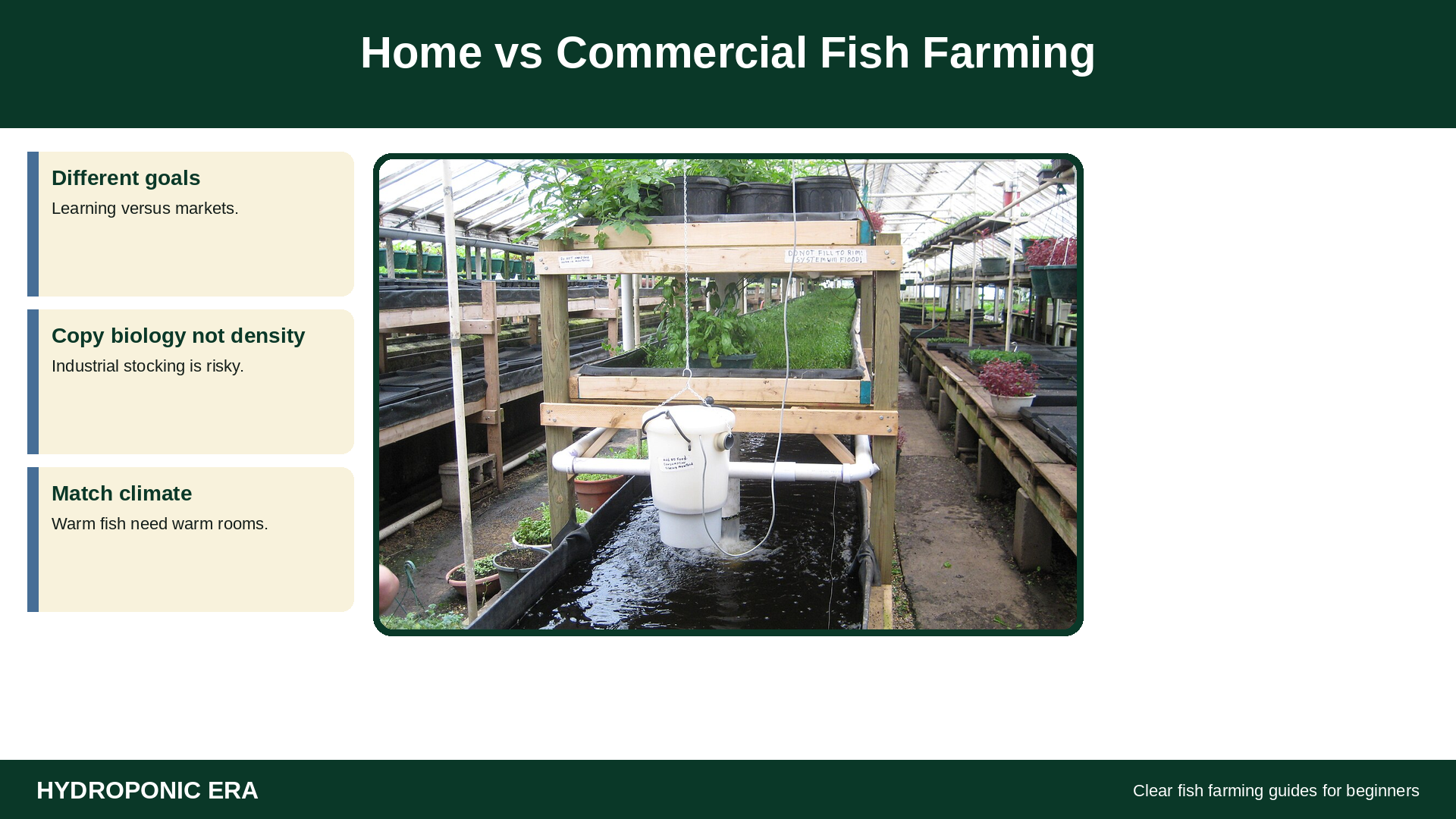
Commercial fish farming uses engineered ponds, cages, or recirculating aquaculture systems (RAS) with biosecurity plans, markets, and labor. Home systems trade scale for simplicity. You may raise a few dozen fish for learning or household meals where rules allow. You will not match hatchery throughput, and you should not copy industrial stocking densities in a plastic tote.
| Topic | Home / small system | Commercial (typical) |
|---|---|---|
| Goal | Learning, food for household, teaching | Consistent market supply |
| Infrastructure | Tanks, air pumps, basic filters | Ponds, RAS halls, backup power, labs |
| Labor | Daily owner checks | Staff and protocols |
| Risk tolerance | Low density, forgiving species | Managed density with monitoring |
| First skill | Water tests and feeding discipline | Same chemistry plus business systems |
USDA and NOAA materials on aquaculture stress that production systems must match species biology. A warm-water fish in an unheated northern garage is a welfare problem, not a clever hack. Match the animal to the room you actually have.
Tanks vs Ponds
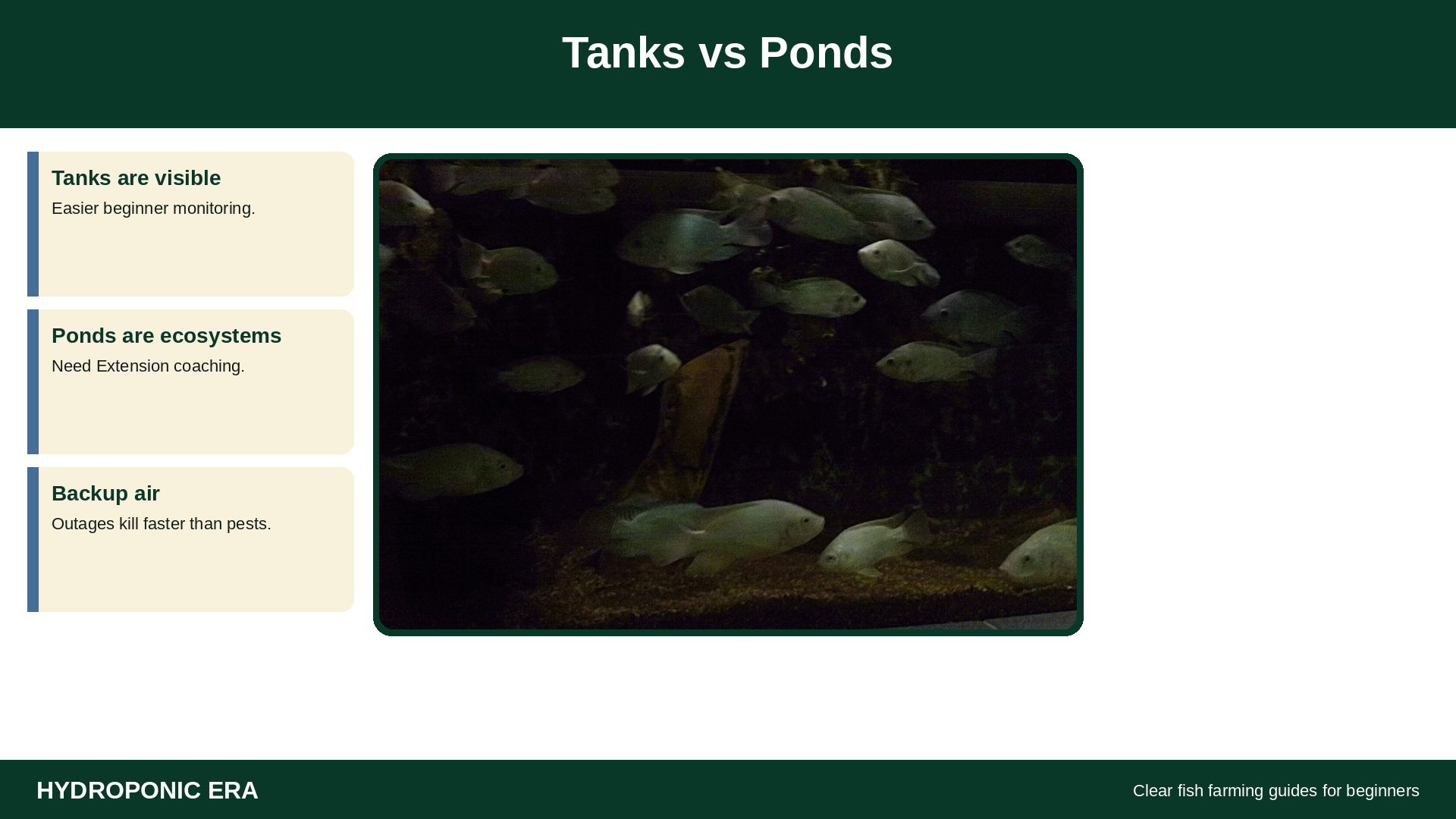
Tanks suit beginners who want visible fish, controllable volumes, and indoor options. Circular or rectangular tanks with smooth interiors are easier to clean. Aeration and a biological filter are non-negotiable in recirculating setups. Ponds add ecology: algae, predators, seepage, and seasonal oxygen swings. Pond fish farming can be wonderful with Extension coaching; it is a poor first surprise for someone who only owns a shovel.
National fish hatchery photos and Extension tank guides show the same theme: depth, shade or cover, screened outlets, and backup air. Mark water lines. Keep nets and buckets dedicated to the system. Quarantine new fish when possible so one bag does not infect the whole group.
If you later add plants on the same water, you are moving toward aquaponics. Learn to keep fish alive alone first. Plant uptake can hide early mistakes until a heat wave arrives.
Water Quality Basics
Dissolved oxygen keeps fish breathing. Warm water holds less oxygen, so summer or heated rooms need more aeration. Ammonia from waste and uneaten feed is toxic; nitrite is also toxic; nitrate is safer at moderate levels but should not climb without a plan (water changes or plant uptake).
Classroom and Extension aquaculture manuals commonly urge daily observation plus regular kit tests. Aim for stable temperature suited to the species, pH in a range the fish tolerate (often near neutral to slightly alkaline for many freshwater species), and ammonia/nitrite near zero once the biofilter is mature. Exact numbers depend on species—read a fact sheet for the animal you keep.
Dechlorinate tap water. Temperature-match additions. Do not dump tank water into storm drains if local rules forbid it. Clean filters in old tank water so you do not kill the bacteria that protect your fish.
Feeding drives water quality. Offer only what fish finish in a few minutes. Fasting a day when numbers look odd is kinder than “extra feed to help them grow.” Growth does not happen in a toxic spike.
Beginner Species (With Caveats)
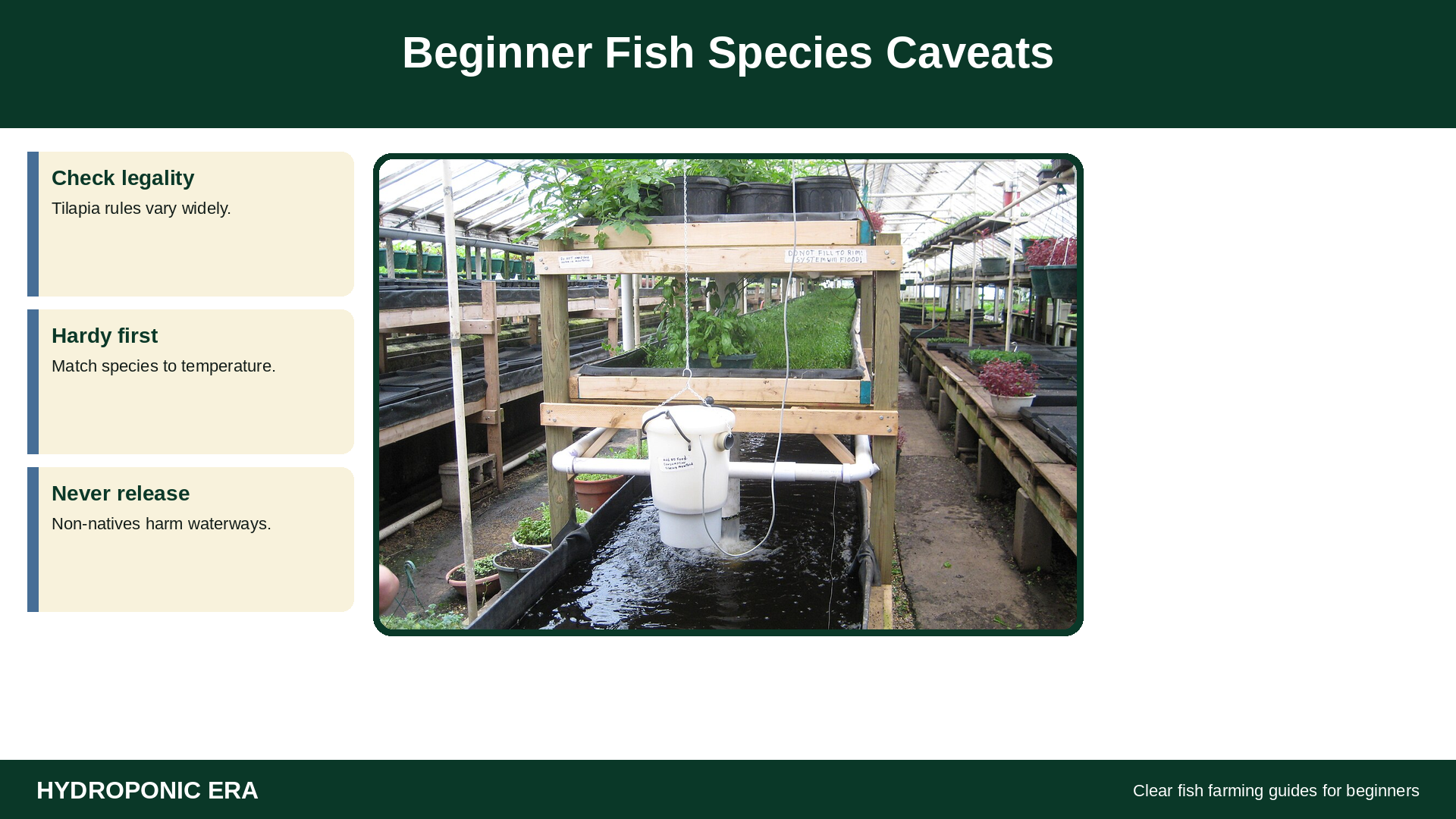
Hardy warm-water fish such as certain tilapia lines appear often in teaching and small fish farming discussions, but many places restrict tilapia because they can harm wild ecosystems if released. Channel catfish and other regional species appear in USDA aquaculture contexts. Cold-water species such as trout need cooler, oxygen-rich water that a garage seldom provides without planning.
Ornamental species can teach filtration and testing with fewer food-fish rules, yet they are not a dinner plan. Whatever you choose, buy from reputable suppliers, avoid dumping fish or water into local waterways, and confirm that the species is legal to possess where you live.
Stocking density should start embarrassingly low. Crowding feels productive until the power flickers. Leave headroom for growth and for mistakes.
Daily habits beat fancy gear in small fish farming. Glance at the surface for gasping, check that air stones stream evenly, and confirm the water line has not dropped overnight. Wipe salt creep or splash from lids so covers stay sealed. Keep a spare charged battery aerator if storms knock out power in your area. Those five minutes matter more than a new gadget.
Feed charts on bags are starting points, not laws. Fish metabolism rises with temperature; warm weeks need careful watching so leftovers do not foul the biofilter. Weigh feed for a week and write it down. Many beginners discover they were offering twice what the stock could finish. Cutting feed often clears mild ammonia faster than a panic water change that shocks temperature.
Biosecurity sounds corporate until a single bag introduces disease. Net new arrivals into a quarantine tub when you can. Disinfect shared nets between systems. Do not visit a sick tank and then dip tools into a healthy one. Home fish farming rarely needs a laboratory, but it does need a clean-bucket rule.
Algae on tank walls is common with light. Scrub what you can reach during water changes; do not bleach a living biofilter. Green water may shade outdoor tanks usefully in heat, yet it also swings oxygen at night. Balance light and feeding rather than chasing crystal-clear water at the cost of bacterial stability.
When you are ready to link plants, reread aquaponics water-quality sheets and keep fish density modest. The plants will not rescue an overloaded tank. Think of plant beds as a helpful sink, not a license to stock harder. That humility keeps both halves of a combined system alive.
Record mortalities without shame. A calm log of dates, symptoms, and water numbers teaches more than deleting the evidence. Share anonymized numbers with Extension agents if you ask for help. Good fish farming advice starts from data, not from guessing which product to buy next.
Seasonal checklists help: spring leak tests, summer shade and oxygen, autumn leaf screens, winter heater redundancy. Print the list. Stick it on the door. Small systems fail when life gets busy, not when the idea was wrong.
If children help, assign observation tasks with clear limits—no medicating, no changing heaters, no releasing fish outdoors. Supervision keeps curiosity from becoming a welfare incident. Teaching tanks can inspire future growers when adults stay in charge of life-support decisions.
How Fish Farming Connects to Aquaponics

Aquaponics is fish farming plus soilless plants sharing one loop. Fish provide nutrients after bacteria convert ammonia to nitrate; plants help clean water. USDA describes that blend clearly. If your goal is salad and fish together, learn fish husbandry and basic hydroponic plant care as related skills.
For plant-side technique without livestock, use the live hydroponic garden beginner guide, indoor hydroponic garden, hydroponic tower garden, and aeroponics for beginners. Reservoir habits are in how to control pH in hydroponics and how often to change hydroponic water. Crop pages for lettuce, mint, peppers, and microgreens help plant choices once water is stable. Lights: best grow lights for hydroponics. Symptom guides for yellow leaves and brown roots still matter on the plant side, but always re-check ammonia when fish share the water.
Keep soil and compost out of fish systems. Compost belongs in garden beds, not in a biofilter you need for oxygen and nitrification.
Build a written emergency card and tape it near the tank: who to call, where the backup air pump lives, how to do a partial water change, and which numbers mean “stop feeding.” When a heater fails at midnight, instructions beat memory. Keep spare air stones and a battery aerator if outages are common in your area.
Observe fish behavior as carefully as you read test strips. Clamped fins, flashing against walls, gasping at the surface, or sudden refusal of feed are early warnings. Isolate sick individuals when you have a quarantine tub. Do not pour treatments into a shared biofilter without understanding whether the dose will kill the bacteria that keep ammonia down—another reason beginners should stay conservative with chemicals.
Harvest and processing, if allowed where you live, need clean tools and cold storage plans. If you are not ready for that responsibility, keep the project as a teaching system with ornamental species and clear end-of-life plans that never involve releasing animals outdoors. Ethical exits are part of responsible fish farming, not an afterthought.
Costs add up quietly: electricity for pumps and heaters, quality feed, test reagents, and replacement parts. Track them for three months before you dream about scaling. A calm spreadsheet prevents the classic leap from one healthy tank to five neglected ones. Small and steady beats large and sorry.
Neighbors and household members matter too. Noise from air pumps, humidity in a spare room, and the smell of a neglected filter can end projects faster than chemistry. Place equipment where vibration is muffled and splash stays on washable floors. Agree on chores before stocking day so feeding does not become a forgotten side task.
Regulations Caveat (US/UK/AU/CA)
This is not legal advice. Rules change. In the United States, species possession, discharge of effluent, and food sales can involve state fish and wildlife agencies, agriculture departments, and local zoning. In the United Kingdom, animal welfare and environmental rules may apply even to small food-fish plans. Australia’s states closely manage non-native species. Canadian provinces likewise regulate aquaculture and transfers of live fish.
Before you buy fingerlings, ask the competent local authority whether your species and setup are allowed. Ornamental teaching tanks and food production are not always treated the same. Selling fish or fish products adds another layer of food-safety rules you must verify yourself.
USDA beginning-farmer and aquaculture resources can point to agencies; NOAA Fisheries pages explain aquaculture in broad federal terms. None of those pages replace a direct call to your local office.
Hardware choices should favor serviceability. Union fittings near pumps, clear tubing you can inspect, and filters you can rinse without dismantling the whole stand all save Saturdays. Avoid mystery imported controllers with no spare parts. A simple timer and a reliable air pump outperform a fragile all-in-one brain for most home fish farming starts.
Noise and vibration matter in shared houses. Place pumps on rubber pads. Choose air pumps with a rating you can live with at night. A system that keeps the household awake will be abandoned regardless of water chemistry. Comfort is part of husbandry when the farm lives beside bedrooms.
Water disposal needs a plan. Never dump ammonia-rich water into storm drains if rules forbid it. Use settled water on ornamental non-edible plantings only when appropriate and legal, or dispose according to local guidance. Ask before you assume the garden hose solution is fine.
Learning resources that stay useful include NOAA Fisheries aquaculture topic pages, USDA aquaculture and aquaponics explainers, and state Extension fact sheets on water quality. Forums can help with DIY carpentry, but defer to agencies on species legality. That split keeps fish farming hobbies from becoming ecological problems.
Frequently Asked Questions
What is fish farming in simple terms?
Fish farming means raising fish in managed tanks or ponds with feeding and water care, rather than only harvesting wild stocks.
Can I start fish farming at home?
Many people run small teaching tanks. Food-fish plans need extra legal and welfare checks. Start tiny.
Are tanks better than ponds for beginners?
Tanks are usually easier to monitor. Ponds need ecological management skills.
What water tests matter most?
Temperature, dissolved oxygen, pH, ammonia, nitrite, and nitrate on a regular schedule.
Which fish are good for beginners?
Hardy species matched to your temperature and laws. Confirm legality before you buy.
Is fish farming the same as aquaponics?
Aquaponics adds plants to a fish loop. You can farm fish without plants; aquaponics needs both.
Where should I read official information?
NOAA Fisheries aquaculture pages, USDA aquaculture and Extension fact sheets, and your local fisheries or agriculture office.
Keep copper fittings and untreated wood out of contact with culture water unless you know they are safe for your species. Materials chemistry is quiet until fish stress. When in doubt, use aquaculture-rated tanks and food-safe plastics. A cheap container that leaches is not a bargain in fish farming.
Practice netting gently before you need to move fish in a hurry. Torn fins and dropped bags happen to rushed beginners. Fill transport bags with system water and oxygen or air space as appropriate for short moves. Stress compounds water-quality mistakes, so slow hands are a skill.
Final Thoughts
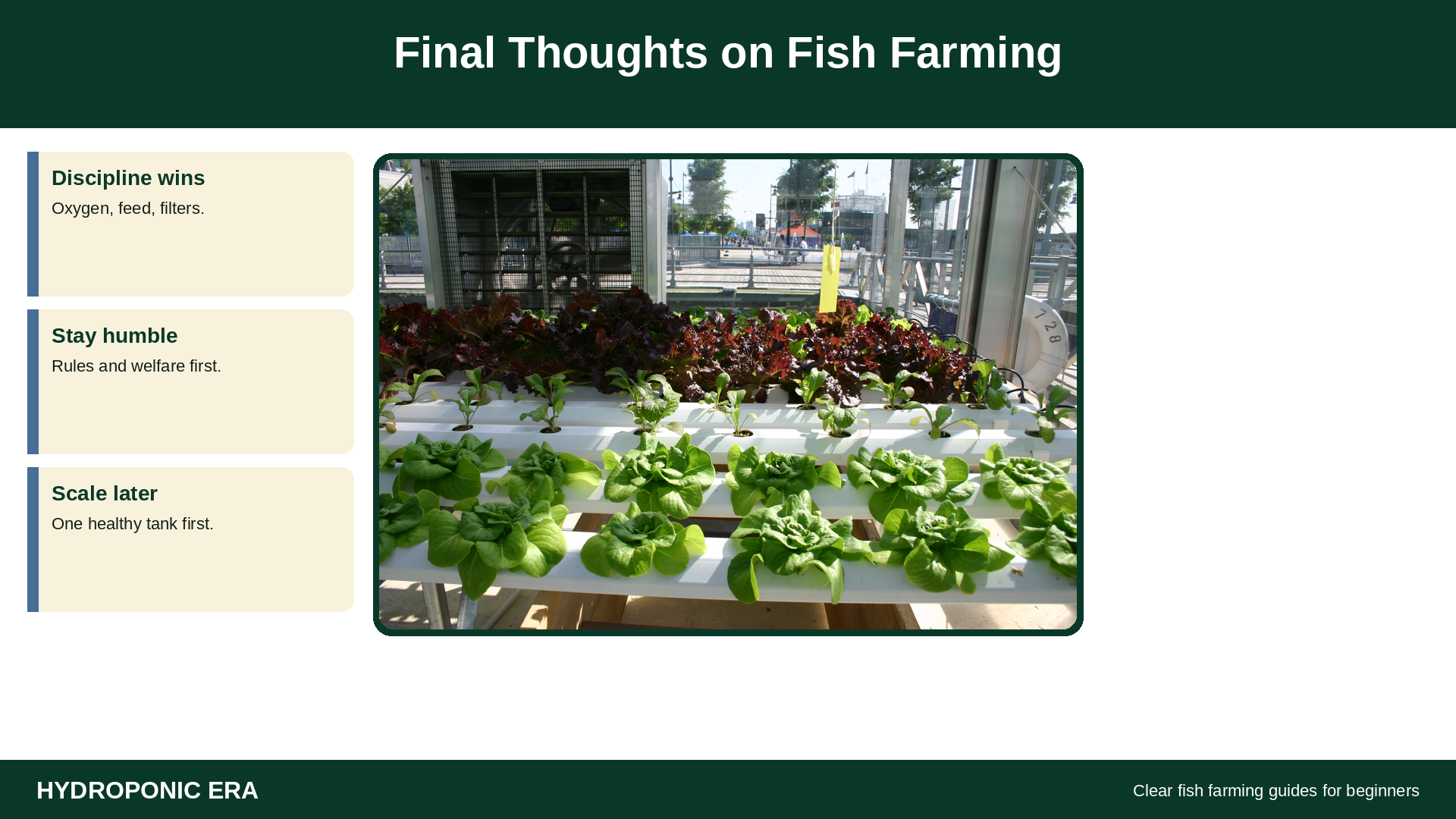
Fish farming at beginner scale is water discipline: oxygen, clean filters, light feeding, and honest stocking. Add plants later if you want aquaponics. Check rules early. Skip hype about overnight businesses.
Published by Hydroponic Era. External reading: NOAA Fisheries aquaculture topic page, USDA aquaponics overview, University of Maryland Extension small-scale aquaponics, and NMSU aquaponics water quality (CR-680) for overlapping water chemistry.
1 thought on “Fish Farming for Beginners: How Home and Small Systems Work”