buckwheat microgreens — Buckwheat Microgreens: How to Grow Tender Greens

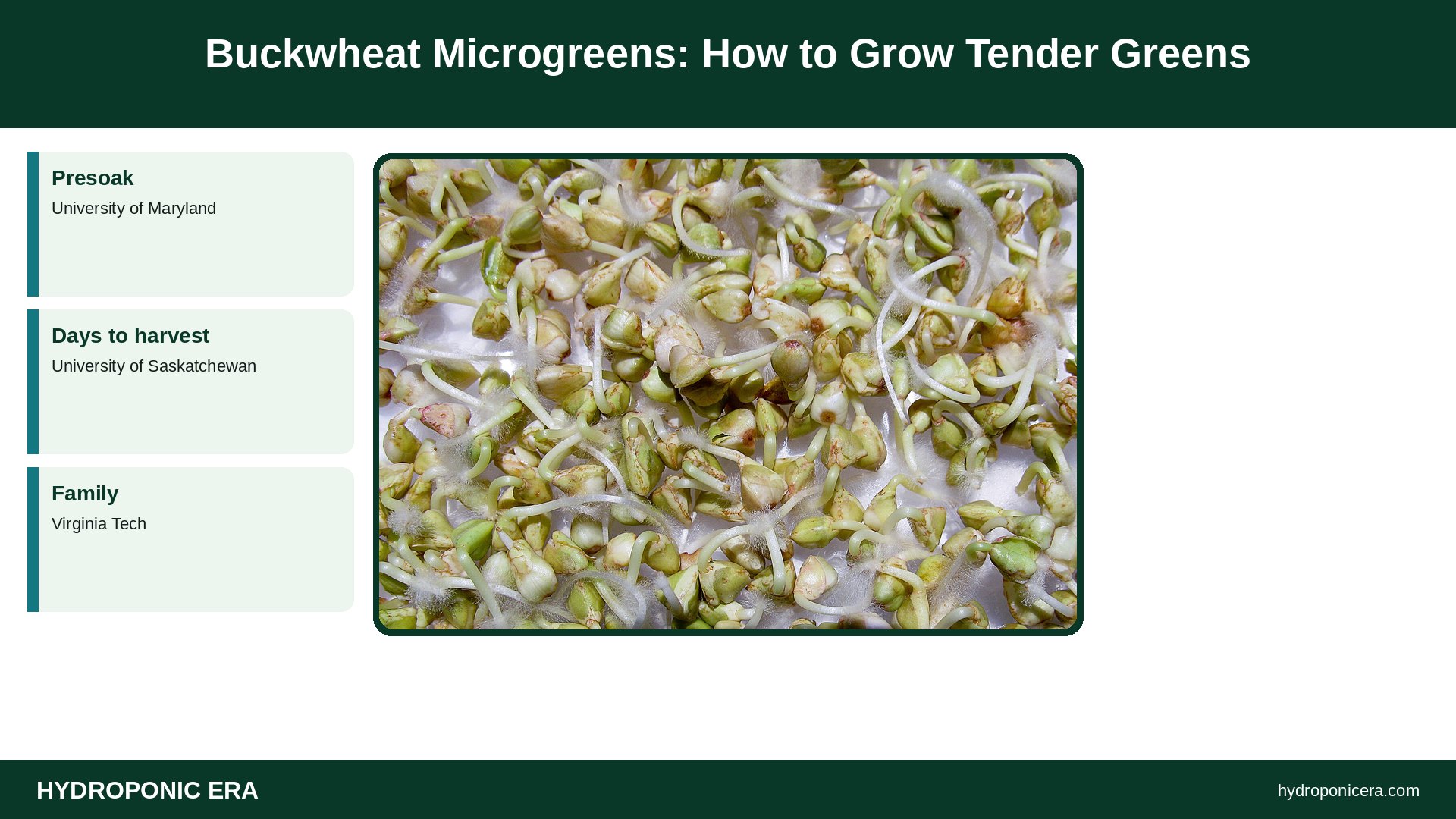
Buckwheat microgreens are tender, lemony-tasting greens with pink-red stems and broad, heart-shaped leaves. Soak the seed for 6–12 hours, sow it thickly on moist media, cover and weight it for a few days, then grow under light and harvest when the cotyledons open, often within about 1–2 weeks. Buy unhulled seed sold for sprouting or microgreens. One caution: buckwheat greens contain fagopyrin, a compound that can cause light sensitivity, so enjoy them in normal portions rather than by the bowlful.
chia microgreens — Chia Microgreens: Growing Mucilaginous Seeds

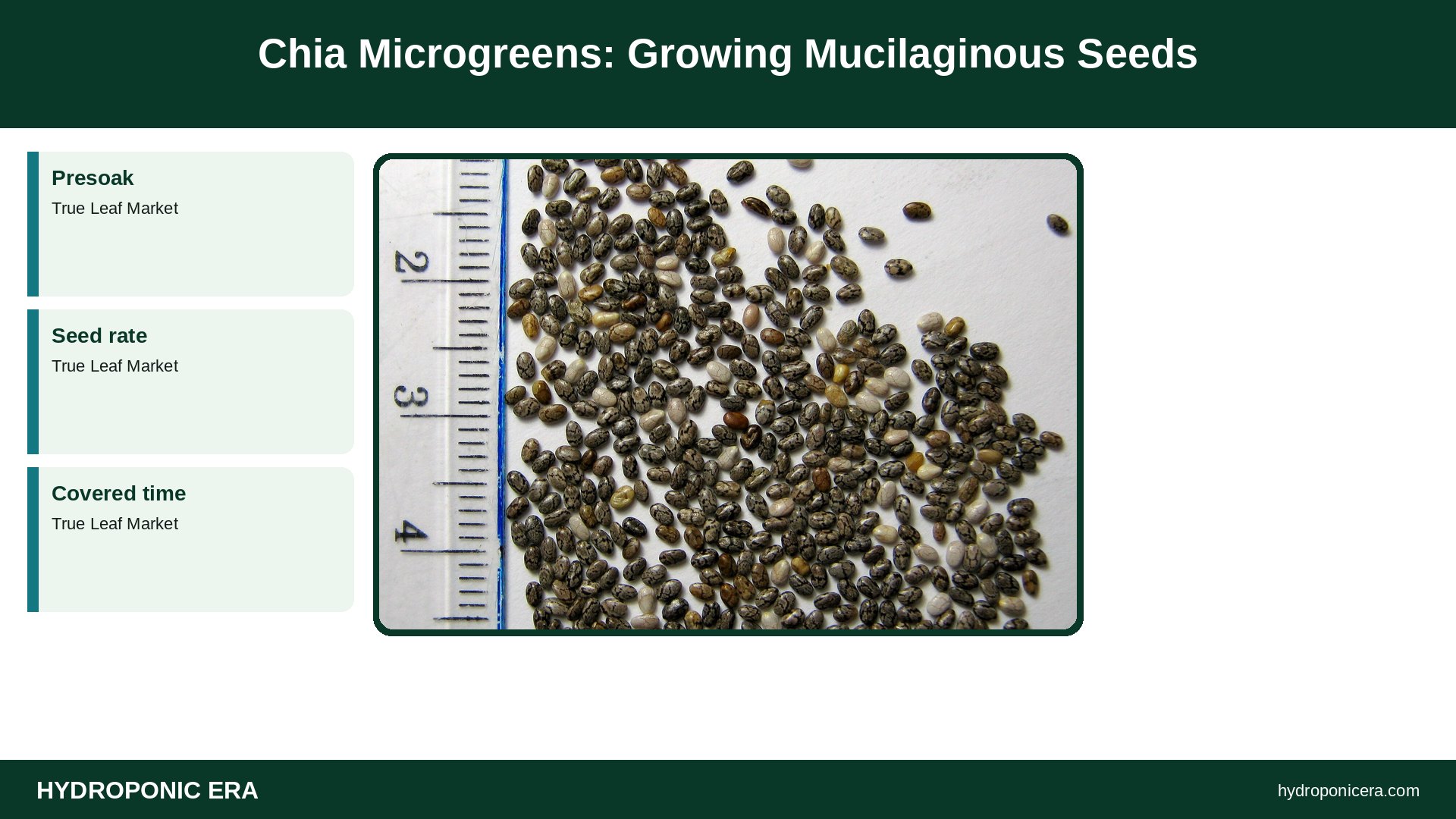
Chia microgreens are mild, fresh-tasting greens grown from the same chia seeds you eat. Don’t soak the seed: chia forms a gel within minutes of getting wet, so sprinkle it dry onto a fully saturated mat or fine media, mist it, and keep it covered and damp for about 4–5 days. Then give it light and harvest at about 7–14 days. The gel actually helps: University of Kentucky research found chia seeds with their mucilage germinated faster than seeds with it removed.

red cabbage microgreens — Red Cabbage Microgreens: How to Grow

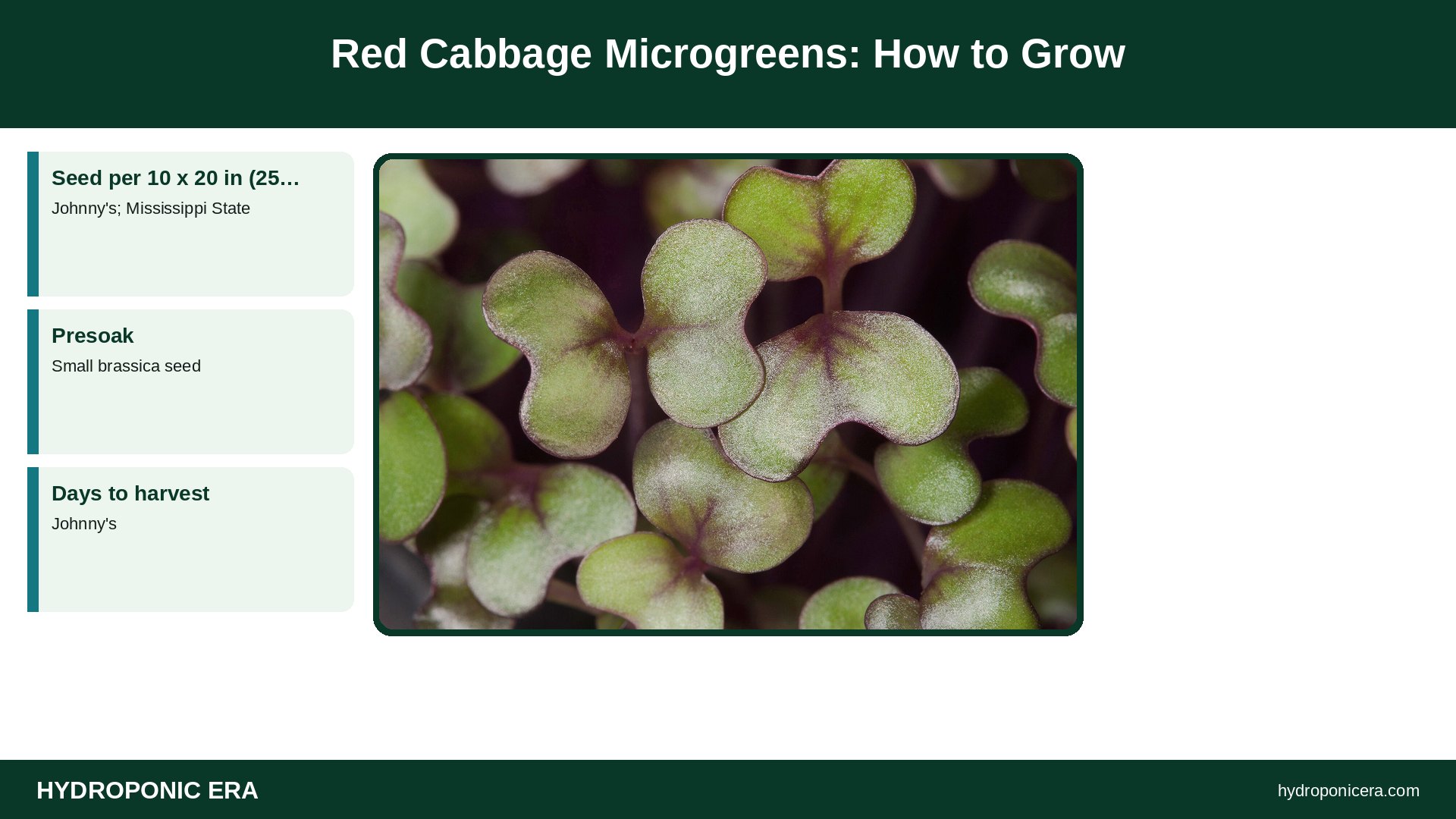
Red cabbage microgreens are easy, fast and colorful: sow about 10–15 grams of seed per 10 x 20 inch (25 x 51 cm) tray with no soaking, cover for 1–2 days, and harvest in about 10–14 days when the purple-stemmed seedlings show glossy cotyledons. They taste mild, like a sweet cabbage. Red cabbage also had the highest vitamin C of 25 microgreens in a USDA-led study, and in a separate USDA mouse study, red cabbage microgreens lowered LDL cholesterol in animals on a high-fat diet.

amaranth microgreens — Amaranth Microgreens: Growing Bright Red Greens

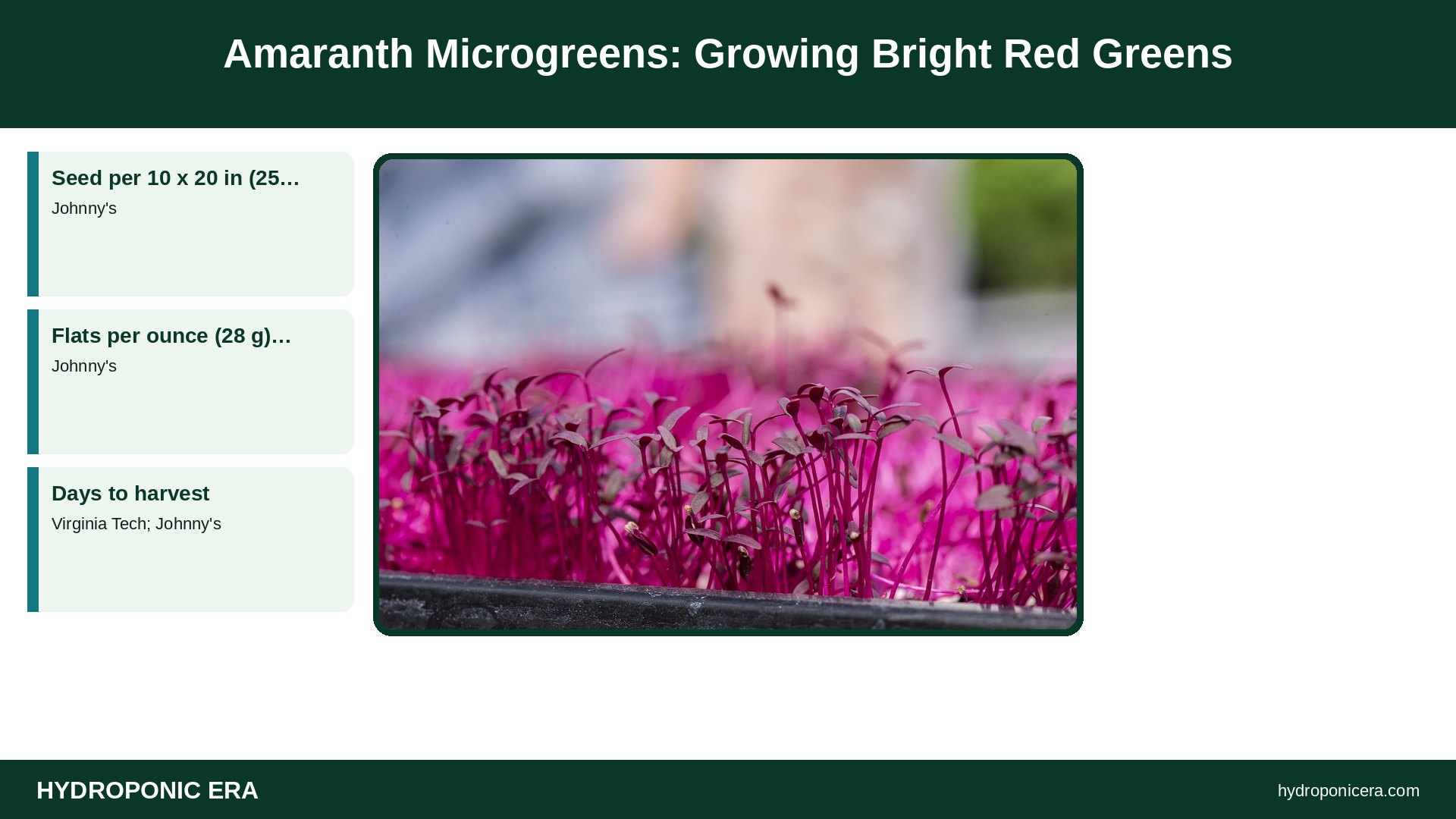
Amaranth microgreens are tiny, bright magenta seedlings with a mild, earthy flavor. Sow about 7–8 grams of seed per 10 x 20 inch (25 x 51 cm) tray on the surface of moist media, keep them warm and covered for a few days, and harvest at about 10–17 days. They’re delicate and slow to bulk up, but Garnet Red amaranth had the highest vitamin K of 25 microgreens in a USDA-led nutrient study, and few crops beat its color.

beet microgreens — Beet Microgreens: Growing Red-Stemmed Greens

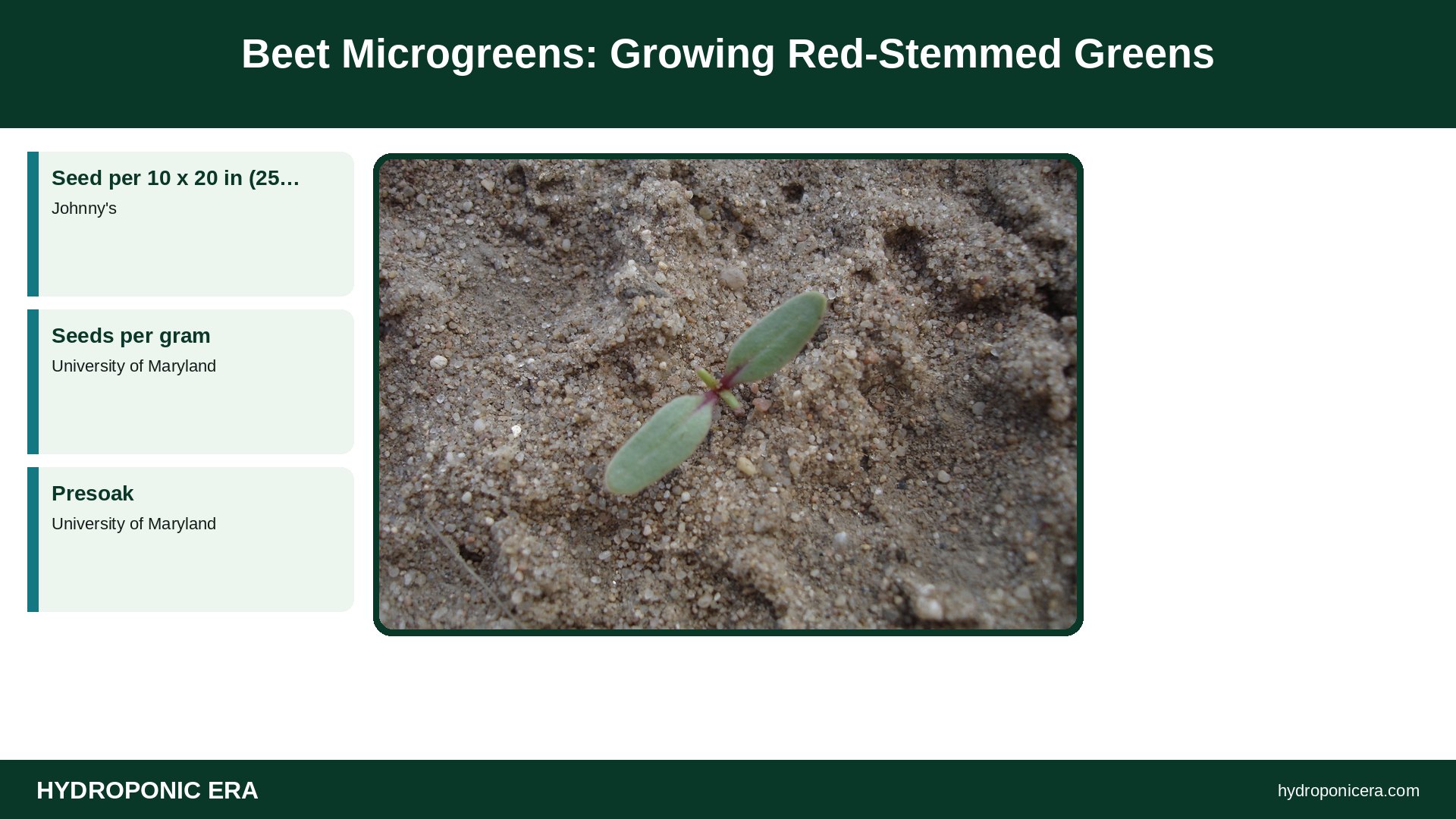
Beet microgreens are known for bright red stems and an earthy flavor. Soak the seed for 6–12 hours, sow about 20–25 grams per 10 x 20 inch (25 x 51 cm) tray, keep it covered until most seedlings emerge, then grow under light until harvest at about 12–23 days. Varieties like Bull’s Blood give red leaves and stems, while Early Wonder Tall Top gives green leaves with red stems. Beet seed is actually a cluster of seeds, so sowing is lighter than it looks and sprouting can be uneven.

mustard microgreens — Mustard Microgreens: Fast, Spicy and Easy

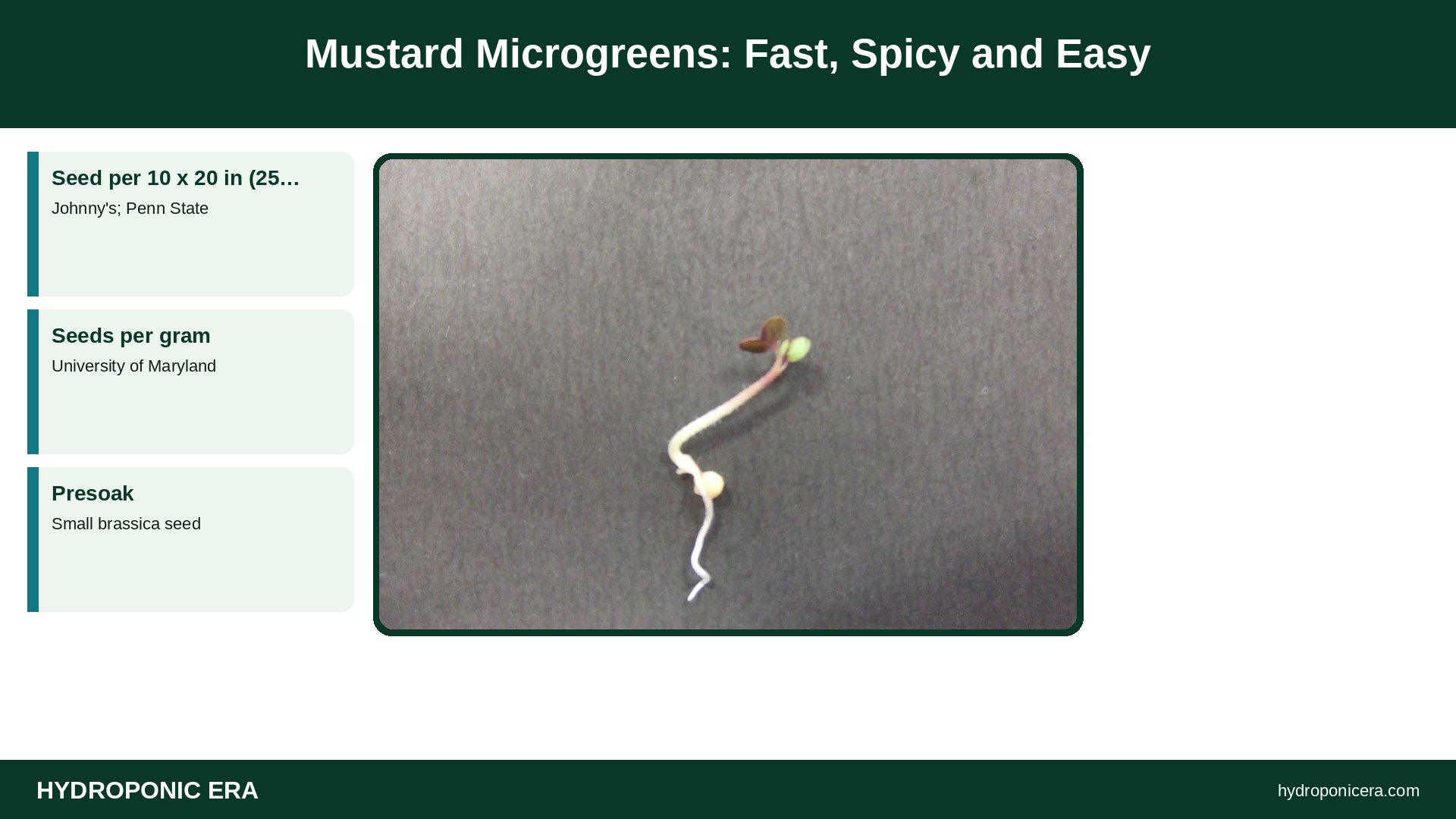
Mustard microgreens are among the fastest and most productive microgreens: sow about 8–15 grams of seed per 10 x 20 inch (25 x 51 cm) tray with no soaking, keep it covered 1–2 days, and harvest in about 10–14 days. They taste spicy, like a mild wasabi or horseradish, and come in green, red and frilly types. In Penn State’s trials, Red Rain mustard gave the highest yield of 18 microgreens tested, about 0.44 lb (201 g) per tray.

cilantro microgreens — Cilantro Microgreens: Slow Seeds, Big Flavor

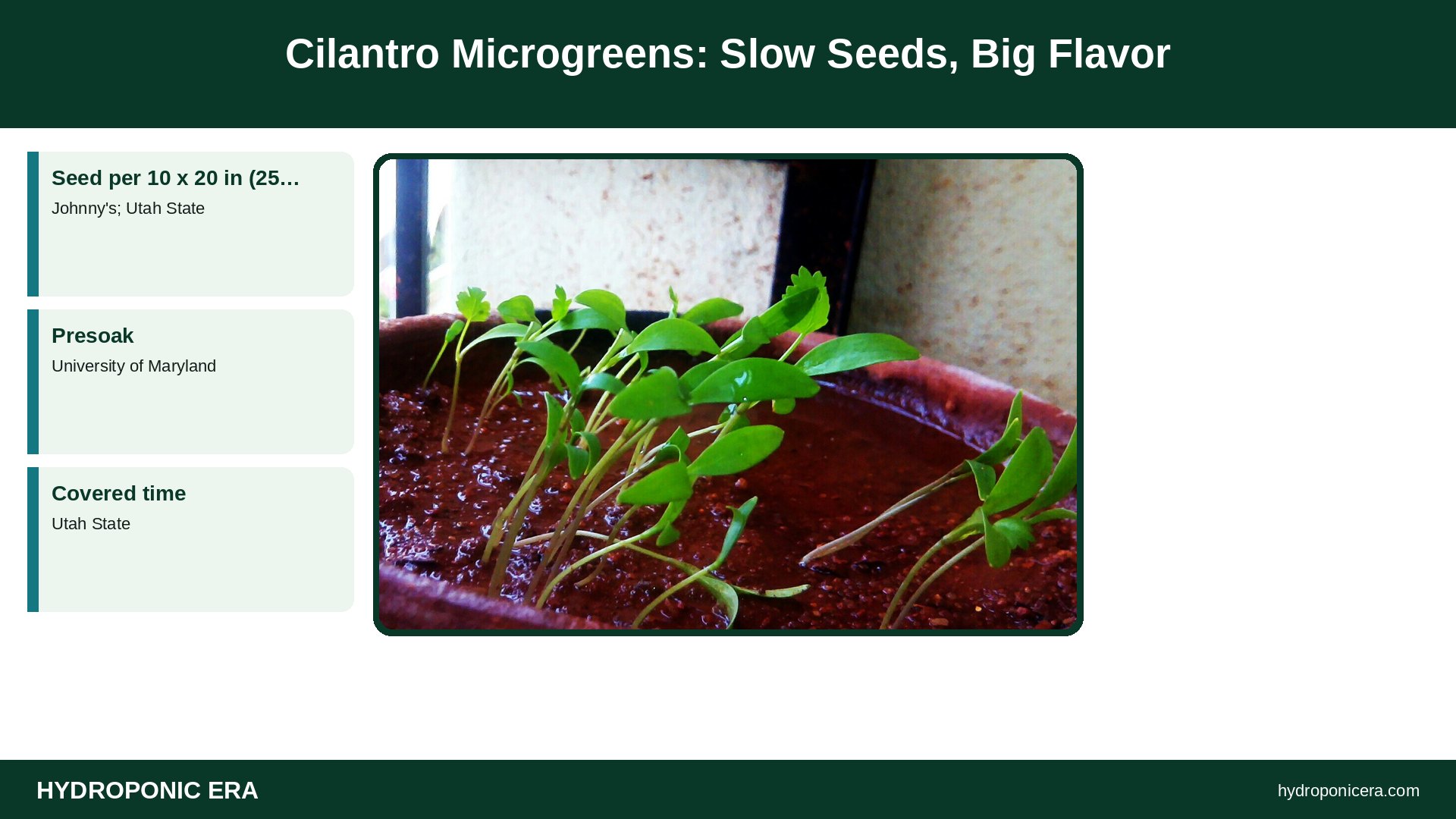
Cilantro microgreens are slow but worth it: expect about 16–28 days from sowing to harvest, with a long germination of up to 1–2 weeks. Sow about 26–28 grams of seed per 10 x 20 inch (25 x 51 cm) tray, ideally split or “monogerm” seed, which Johnny’s says germinates faster and sheds its seed coat more readily. Soaking whole seed for 6–12 hours can speed germination. Cilantro microgreens taste like mature cilantro and were the top source of carotenoids among 25 microgreens tested by USDA researchers.

arugula microgreens — Arugula Microgreens: How to Grow Spicy Greens

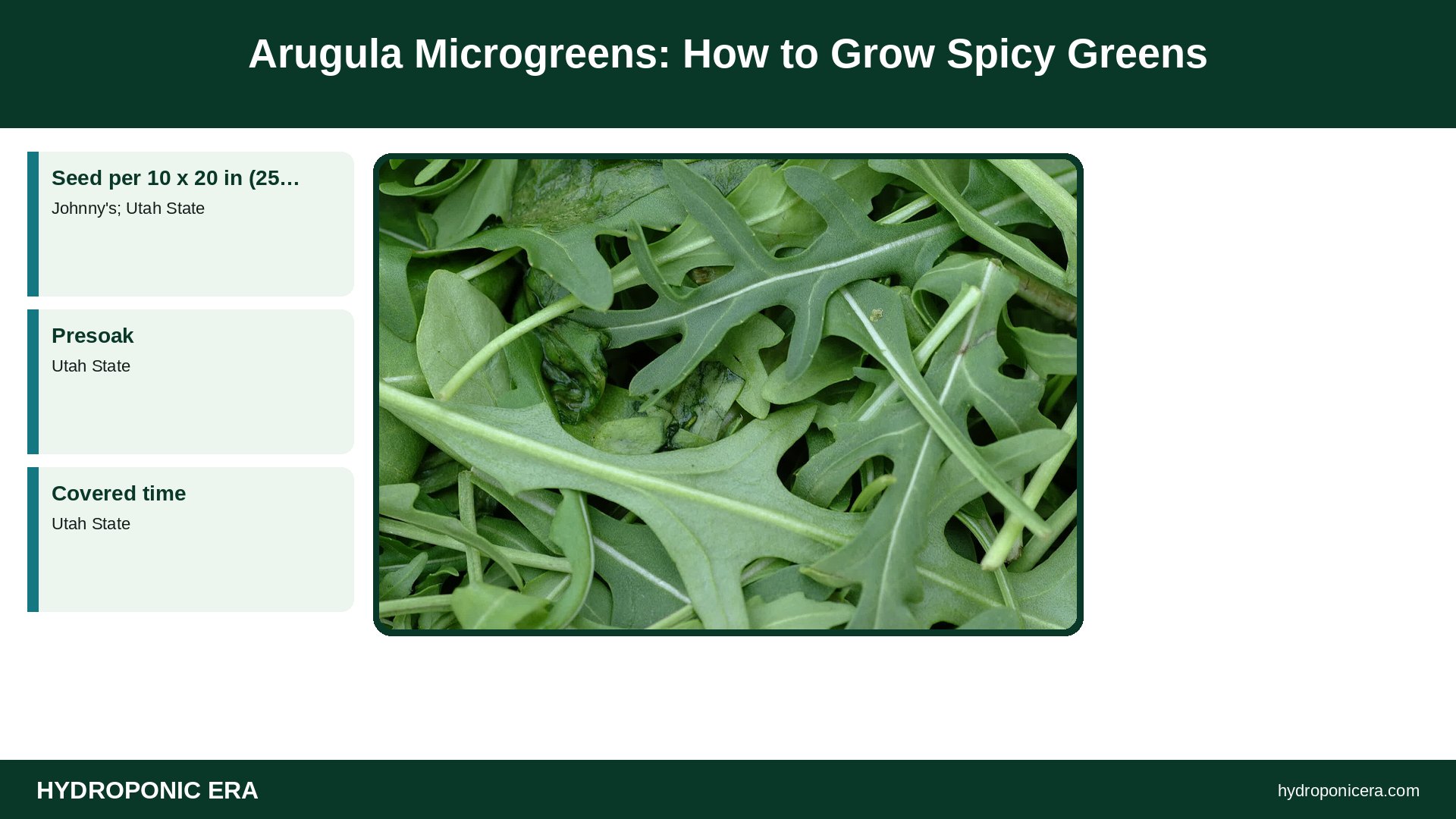
Arugula microgreens are fast, peppery greens you can harvest in about 6–14 days. Sow about 10 grams of seed per 10 x 20 inch (25 x 51 cm) tray with no soaking, keep it covered for 1–2 days, then grow under moderate light. Arugula is one of the cheapest microgreens to grow, at about $0.17 of seed per tray in Utah State’s bulk pricing, and it tolerates lower light than most crops.

kale microgreens — Kale Microgreens: How to Grow and Harvest

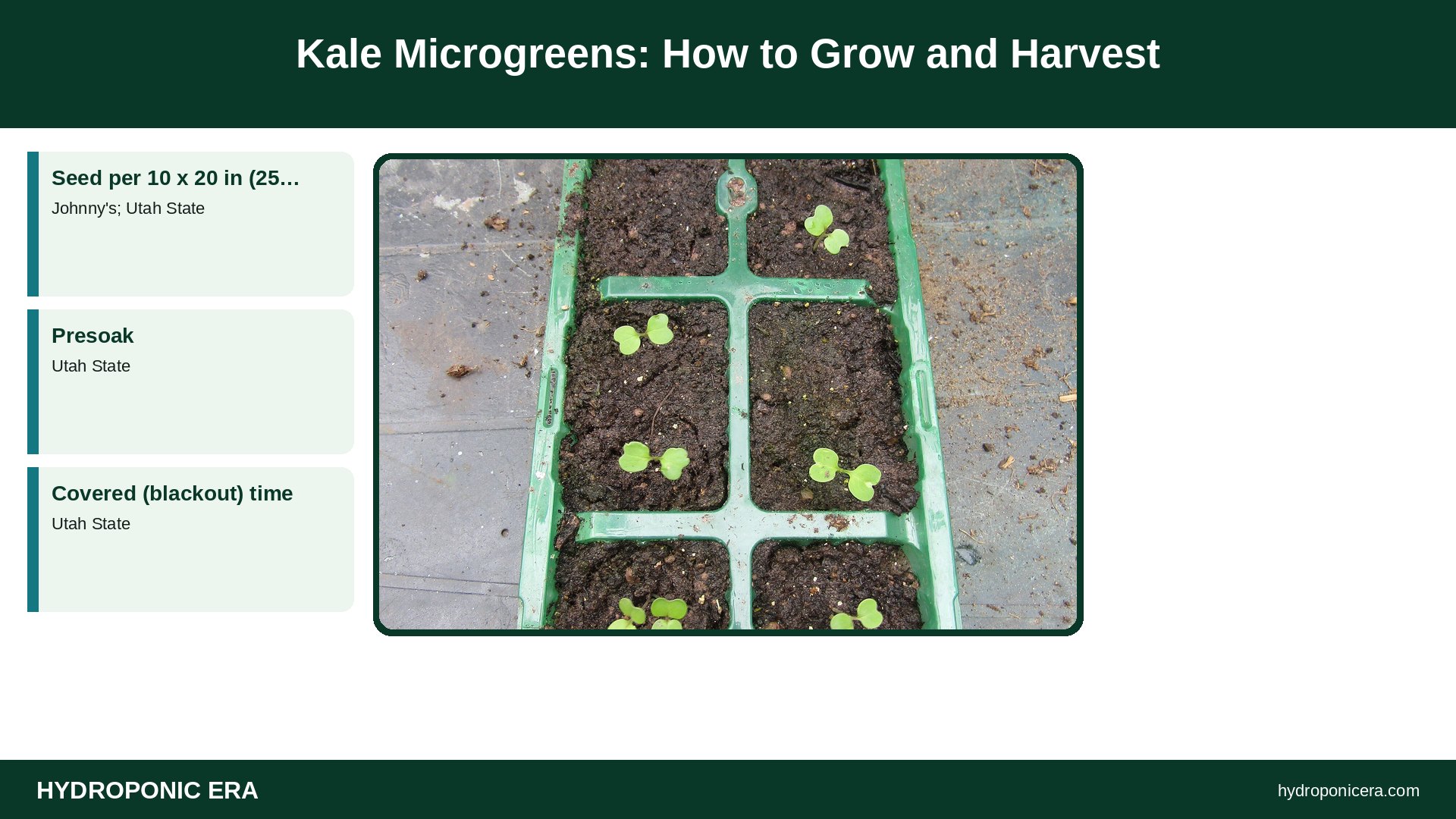
Kale microgreens are one of the easiest microgreens to grow: sow about 10–28 grams of seed per 10 x 20 inch (25 x 51 cm) tray, keep it covered for 1–2 days, then grow under strong light for about 8–14 days total until the first true leaves appear. No soaking is needed. They taste mild, slightly nutty and less bitter than mature kale, and come in green, red and purple types such as Red Russian, Toscano and Purple Reign.

microgreens on paper towels — Microgreens on Paper Towels: Does It Work?

Microgreens on paper towels do work for small, quick harvests. Line a shallow container with 2–4 layers of damp paper towel, scatter seeds evenly, cover them until they sprout, then move them to a bright window or grow light and keep the towels moist but not soggy. University of California Cooperative Extension and the University of Saskatchewan both describe this method. It suits fast crops like radish, broccoli, cress and mustard. For bigger yields, stronger roots and less mold, a hemp mat or coir works better.