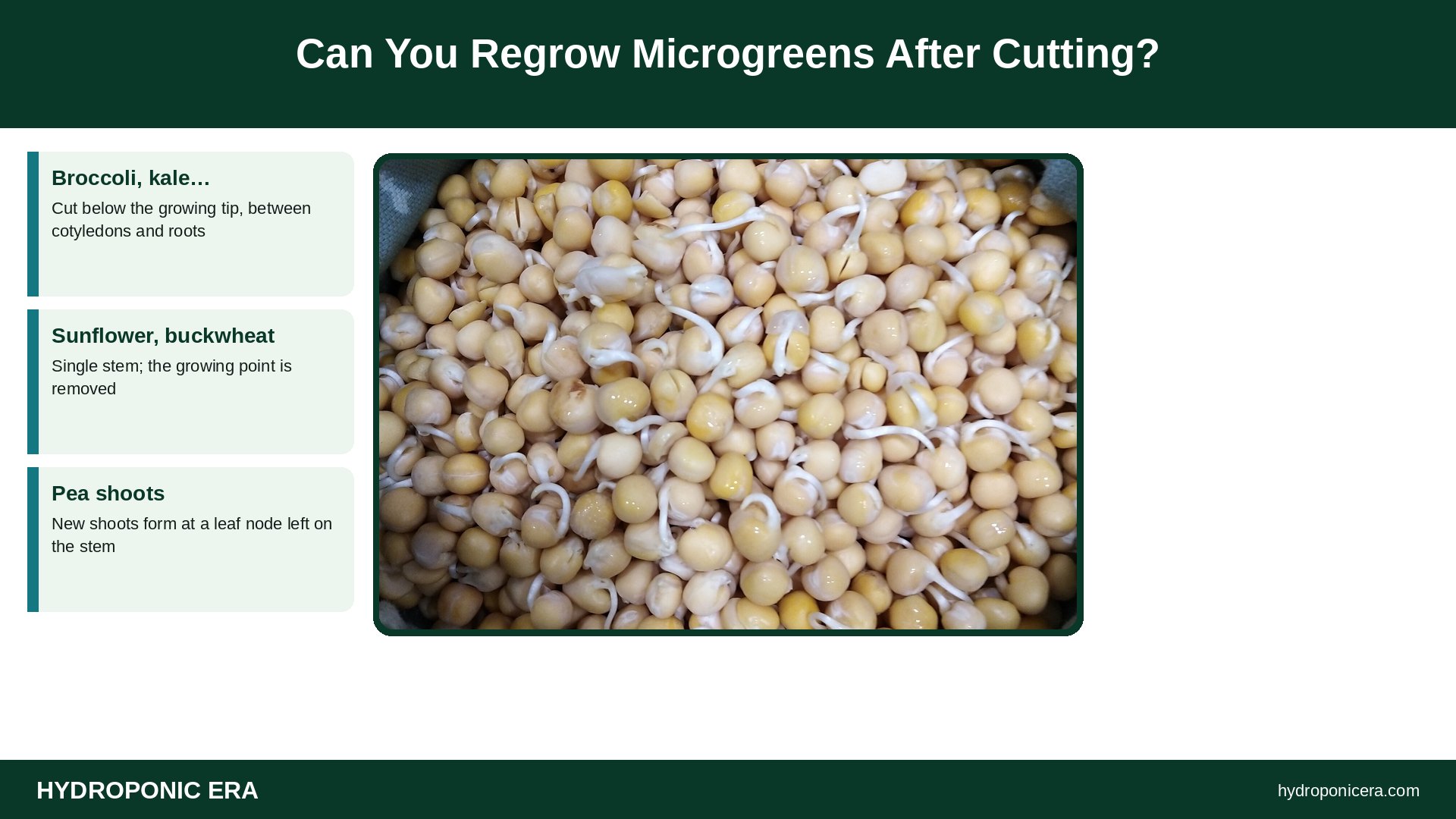
Can you regrow microgreens? Mostly no. Most microgreens, including broccoli, radish, kale, mustard, sunflower and amaranth, are cut below their growing point, so the stem can’t make new leaves. University of Maryland Extension states plainly that harvested microgreen seedlings will not regrow. The main exceptions are pea shoots and a few others cut above a leaf node, which can give a smaller second cut. For a steady supply, re-sow a fresh tray every few days instead of trying to regrow one.
How long do microgreens last? Freshly cut microgreens usually last about 5–10 days in the refrigerator, and up to 10–14 days when kept dry, sealed and cold at about 41°F (5°C) in the dark. At room temperature they last only about 2–4 days, according to Penn State Extension. To make them last, harvest when the leaves are dry, don’t wash until you’re ready to eat, store them in a sealed container in the fridge, and keep the temperature steady to avoid condensation.
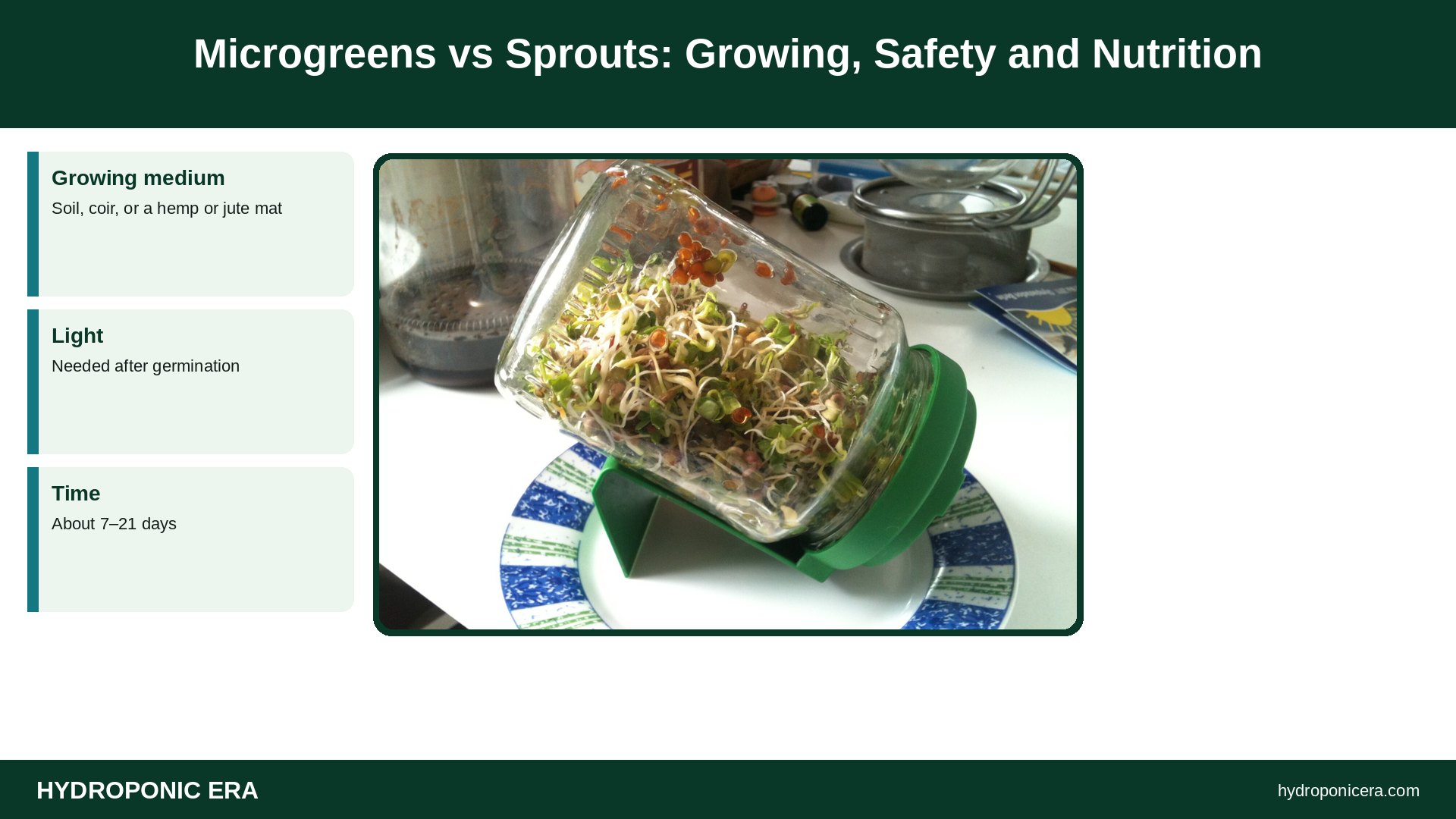
Microgreens vs sprouts comes down to how they’re grown and what you eat. Sprouts are germinated seeds grown in water, usually in a jar, for 2–7 days and eaten whole, roots and all. Microgreens are grown in soil, coir or a mat with light for about 7–21 days, and only the stems and leaves are cut and eaten. Microgreens have green leaves, more flavor and generally lower food safety risk, because sprouts grow in the warm, wet conditions that the FDA says are ideal for bacteria like Salmonella , Listeria and E. coli .
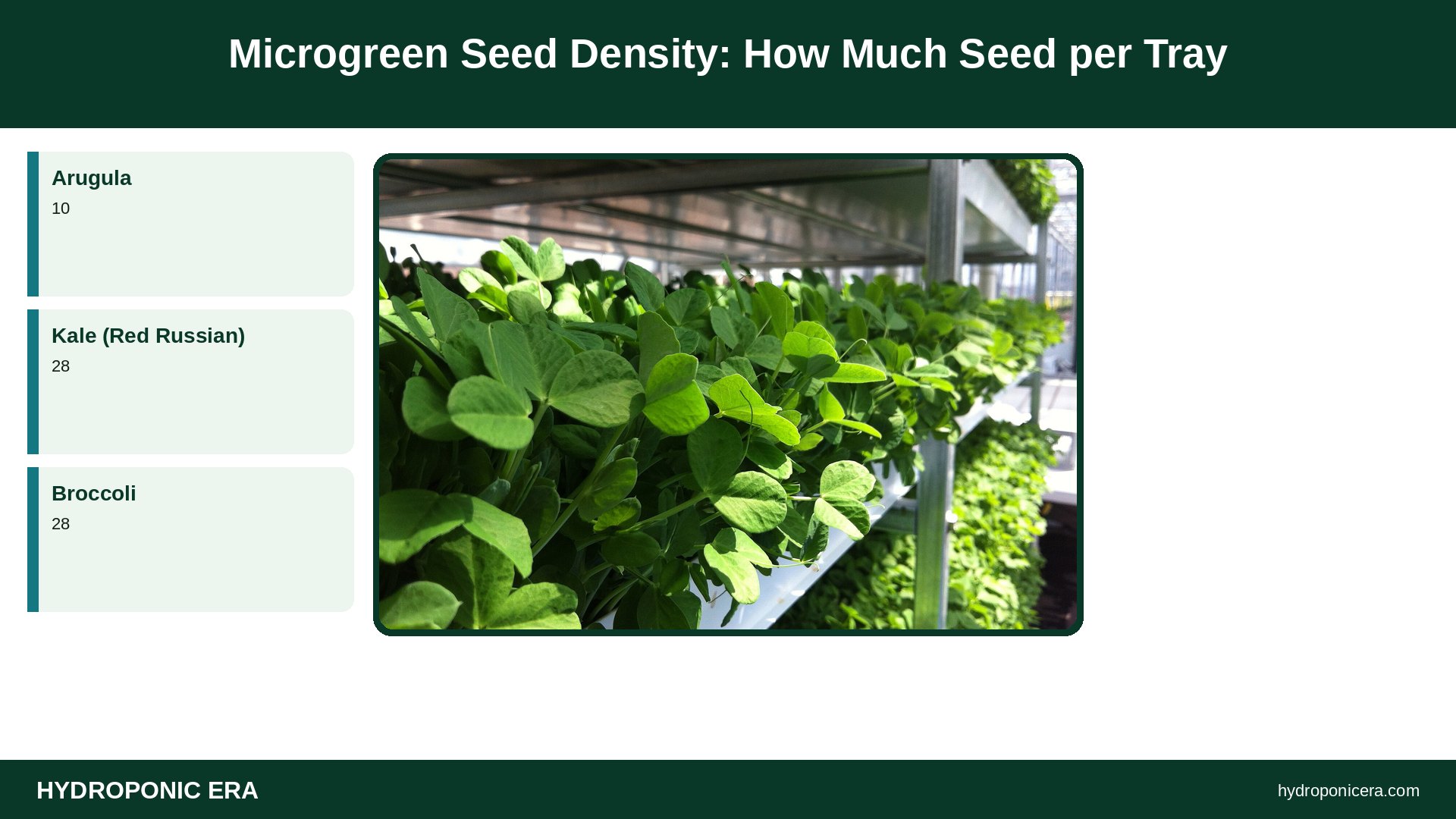
Microgreen seed density for a standard 10 x 20 inch (25 x 51 cm) tray is usually about 10–15 grams for small seeds like broccoli, kale, arugula and mustard, 20–30 grams for medium seeds like radish, beet and cilantro, and much more for large seeds, such as about 150 grams of pea or 48 grams of sunflower. Weigh seed instead of guessing, scale the amount by tray area, and adjust after each tray: sow thinner if you see mold or stretching, thicker if the tray looks patchy.
Microgreens light requirements are modest: most crops need a daily light integral (DLI) of about 9–16 mol/m²/day after germination, which you can reach with a grow light run 16–18 hours a day at roughly 150–250 µmol/m²/s (the math: 16–18 hours at those levels gives a DLI of about 9–16). Germinate seeds in the dark for 2–4 days (the “blackout period”), then move trays under light once most seeds have sprouted. A bright south-facing window can work, but a simple LED shop light 6–12 inches (15–30 cm) above the trays gives straighter, greener, more uniform greens.
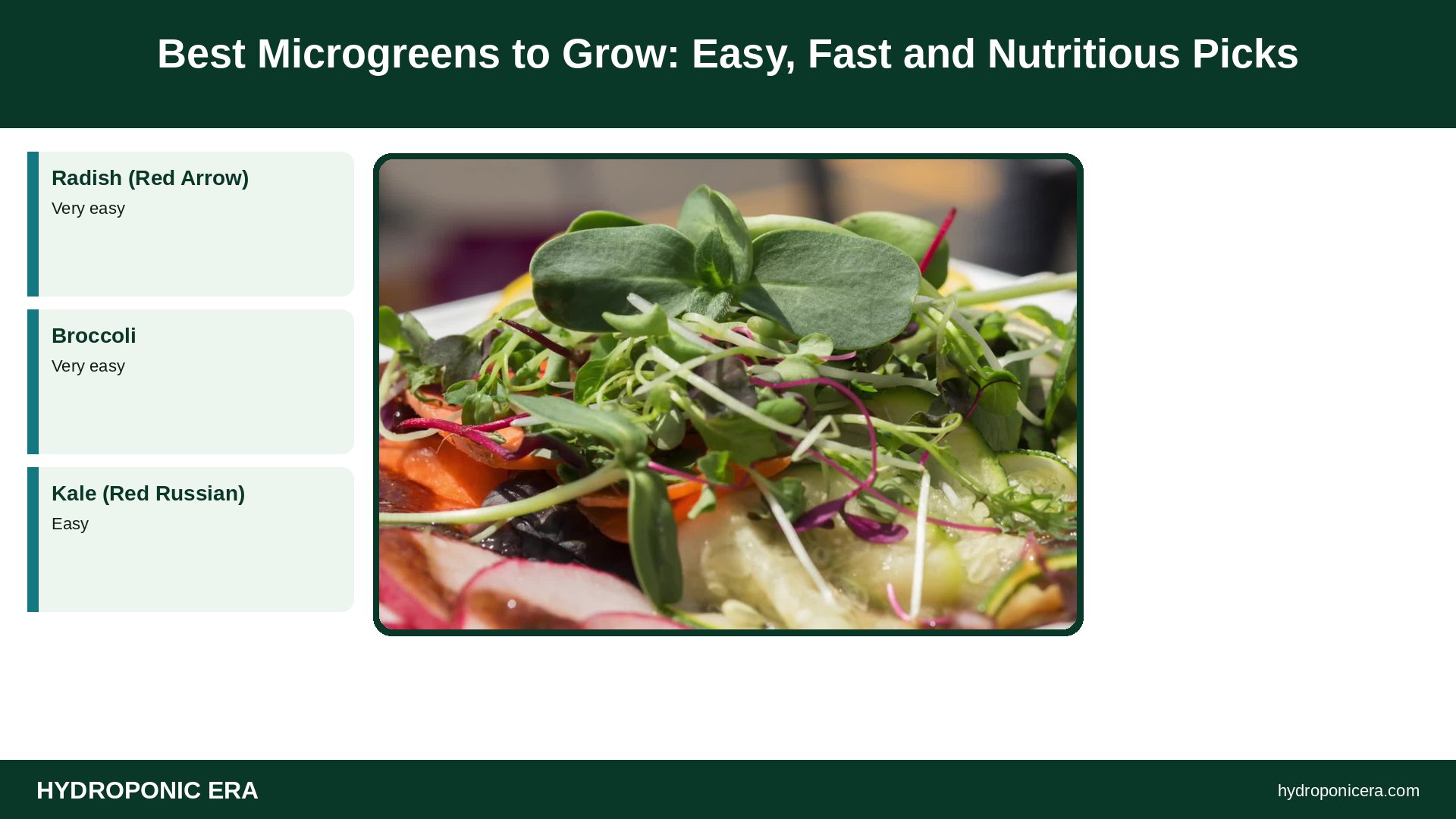
The best microgreens to grow for most beginners are radish, broccoli, kale, mustard, arugula, red cabbage, pea shoots and sunflower. They sprout reliably, need no soaking (except peas and sunflower), and are ready in about 8–14 days. If you want the most nutrition per bite, add red cabbage, cilantro and amaranth. If you want speed, start with radish and arugula. Save slow crops like basil, beet and cilantro for after you’ve had a few easy wins.
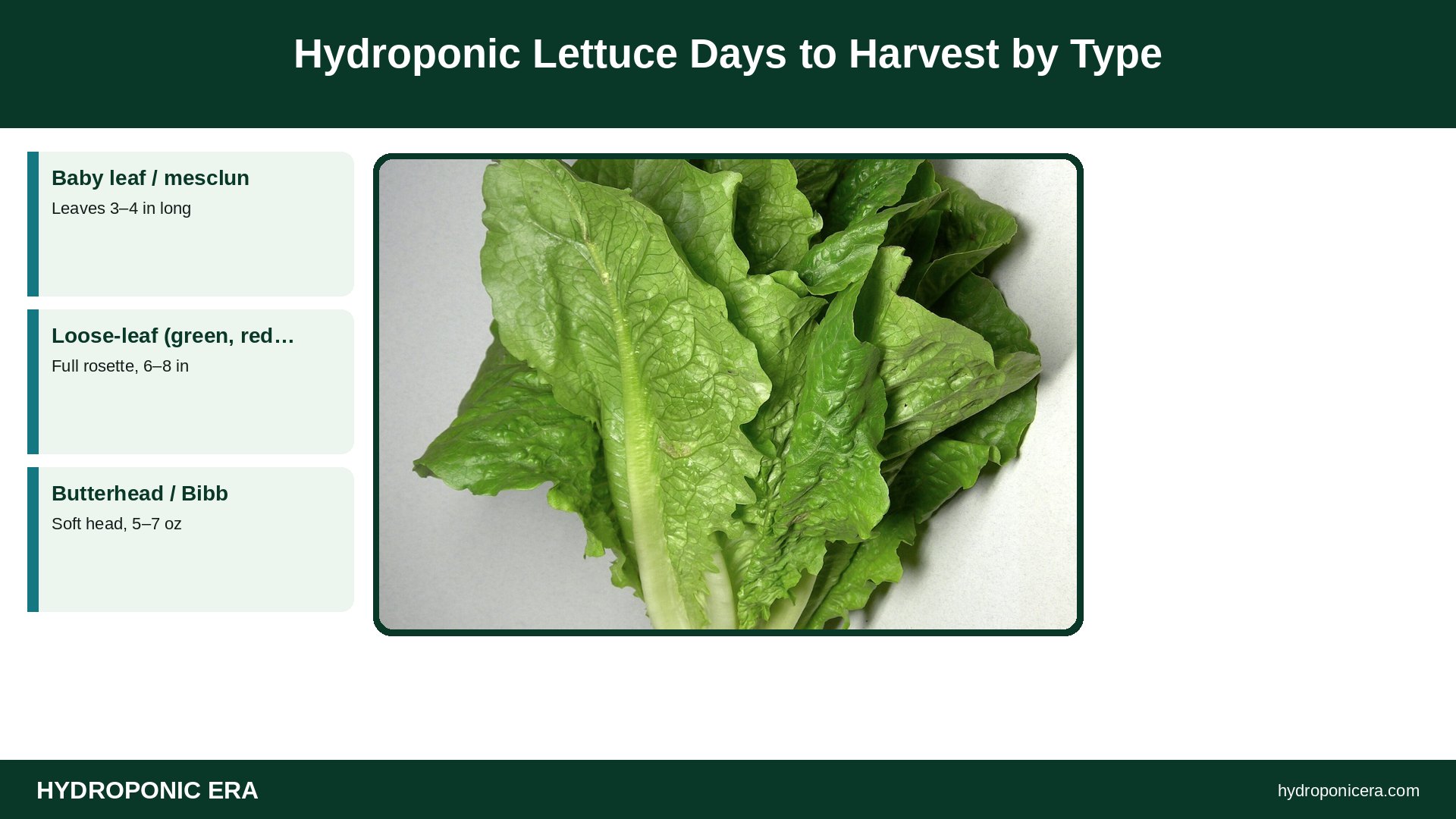
Typical hydroponic lettuce days to harvest are about 30–45 days from seeding for loose-leaf and baby lettuce, 40–55 days for butterhead and Bibb, and 50–70 days for romaine and crisphead types, under good light (about 12–17 mol/m²/day) and steady nutrients. That is usually 3–5 weeks after transplanting a 10–14 day old seedling. Cornell’s controlled-environment system harvests butterhead about 35 days after seeding at a DLI of 17, while home setups with weaker lights often take a week or two longer.
Hydroponic goji berries are possible, but expect a slow, long-term project rather than a quick crop. Goji (Lycium barbarum) is a woody, spiny shrub that grows best in a large container of free-draining substrate such as coco coir with perlite, fed by drip at a moderate EC around 1.0–1.8 mS/cm and pH near 6.5–7.0, under full sun or very strong light. Plants typically start fruiting in their second year and reach full production in years 3–5, according to extension guides. Water-only systems like DWC are a poor fit.
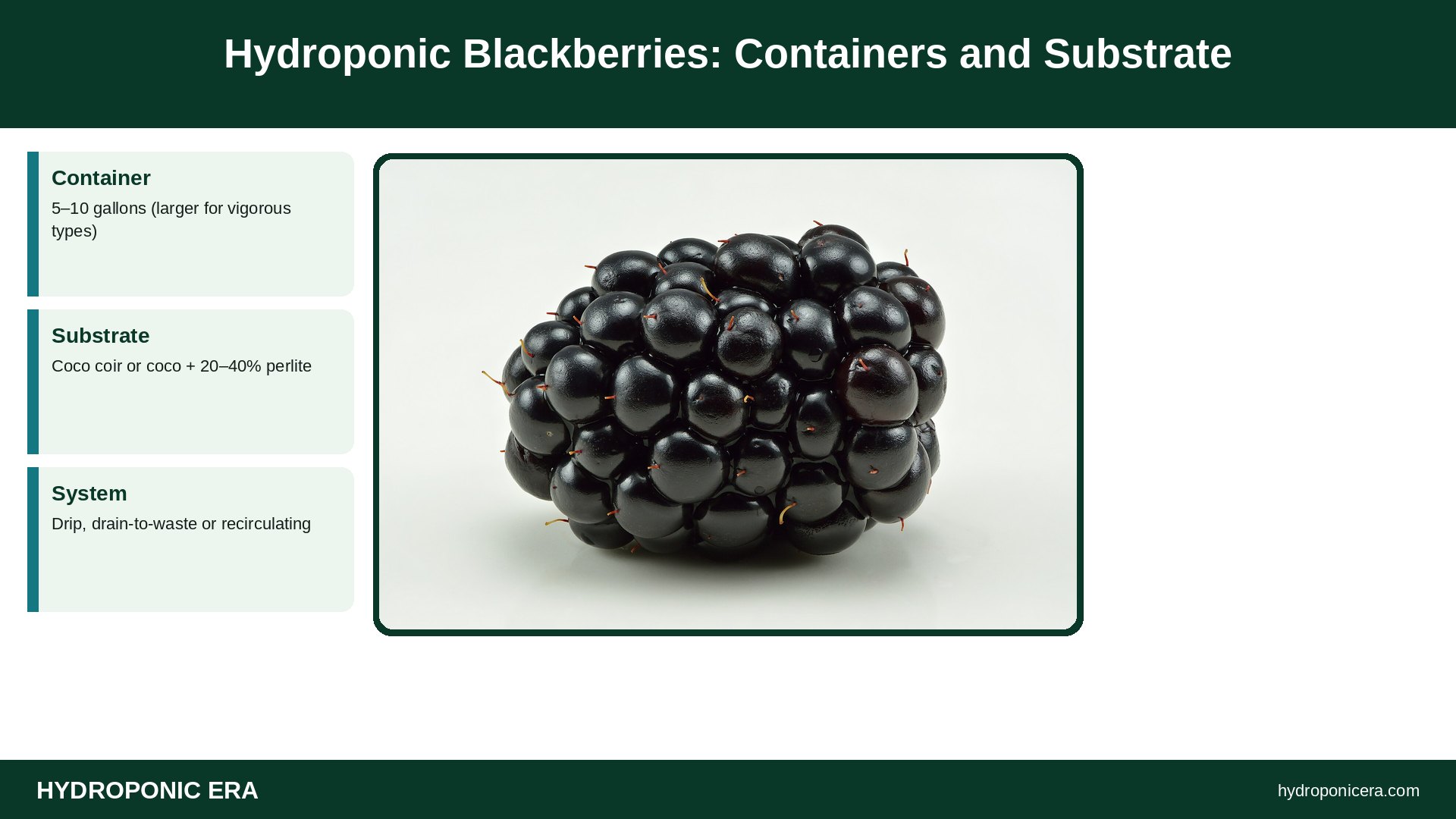
Hydroponic blackberries are best grown in large containers of soilless substrate, not in water-only systems. Use 5- to 10-gallon pots or grow bags filled with coco coir or a coco-perlite mix, feed through drip irrigation at EC 1.0–1.6 mS/cm and pH 5.5–6.2, and pick thornless cultivars. Primocane-fruiting varieties can fruit in the first year on new canes, while floricane types fruit on second-year canes. Blackberries need full sun or very strong light, a trellis, and yearly cane pruning, so they suit greenhouses, patios, and high tunnels better than small indoor tents.
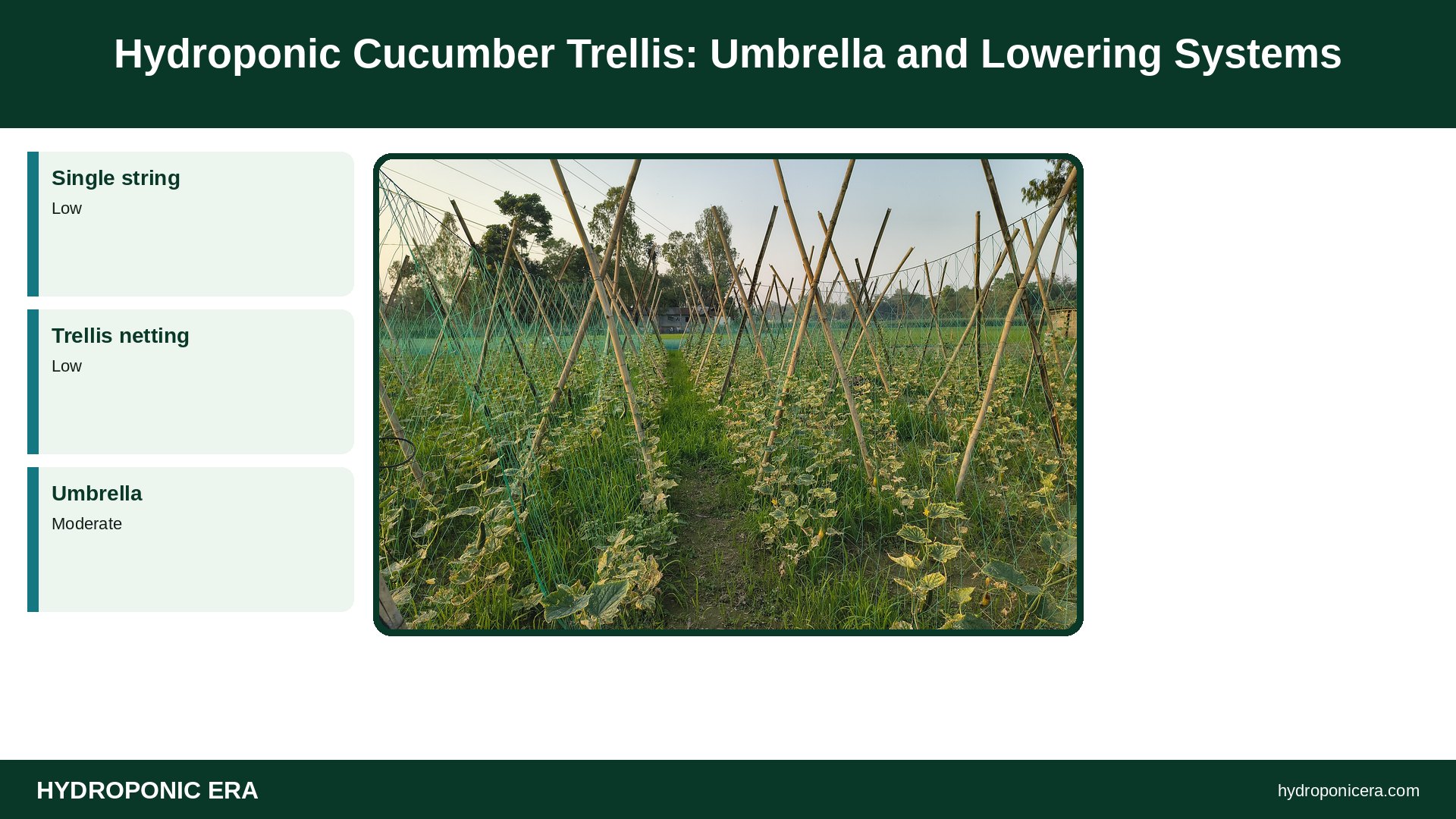
A hydroponic cucumber trellis usually means a vertical string or netting tied to a strong overhead wire 6–8 feet high, with each plant trained to a single main stem. The two common greenhouse systems are the umbrella system, where the stem is stopped at the wire and two side shoots hang down, and the lowering (high-wire) system, where the stem keeps growing and is lowered along the row. In tents and small spaces, a single string or a 6-inch-square trellis net works well for mini and Beit Alpha cucumbers.