aquaponics biofilter — Aquaponics Biofilter: Media, Sizing and DIY

An aquaponics biofilter is the component that houses the nitrifying bacteria that convert toxic ammonia and nitrite from fish waste into nitrate for plants. Media bed systems don’t need a separate one, because FAO’s aquaponics manual says the grow beds themselves are excellent biofilters. NFT and raft (DWC) systems do need one. FAO’s sizing rule is based on daily feed: about 1 liter of volcanic gravel or 0.5 liter of Bioballs per gram of fish feed per day, with the biofilter container at least one-sixth of the fish tank volume. Bigger is safer: FAO says an oversized biofilter can’t harm the system and has saved many from collapse.
aquaponics pump size — Aquaponics Pump Size Calculator: Flow and Head

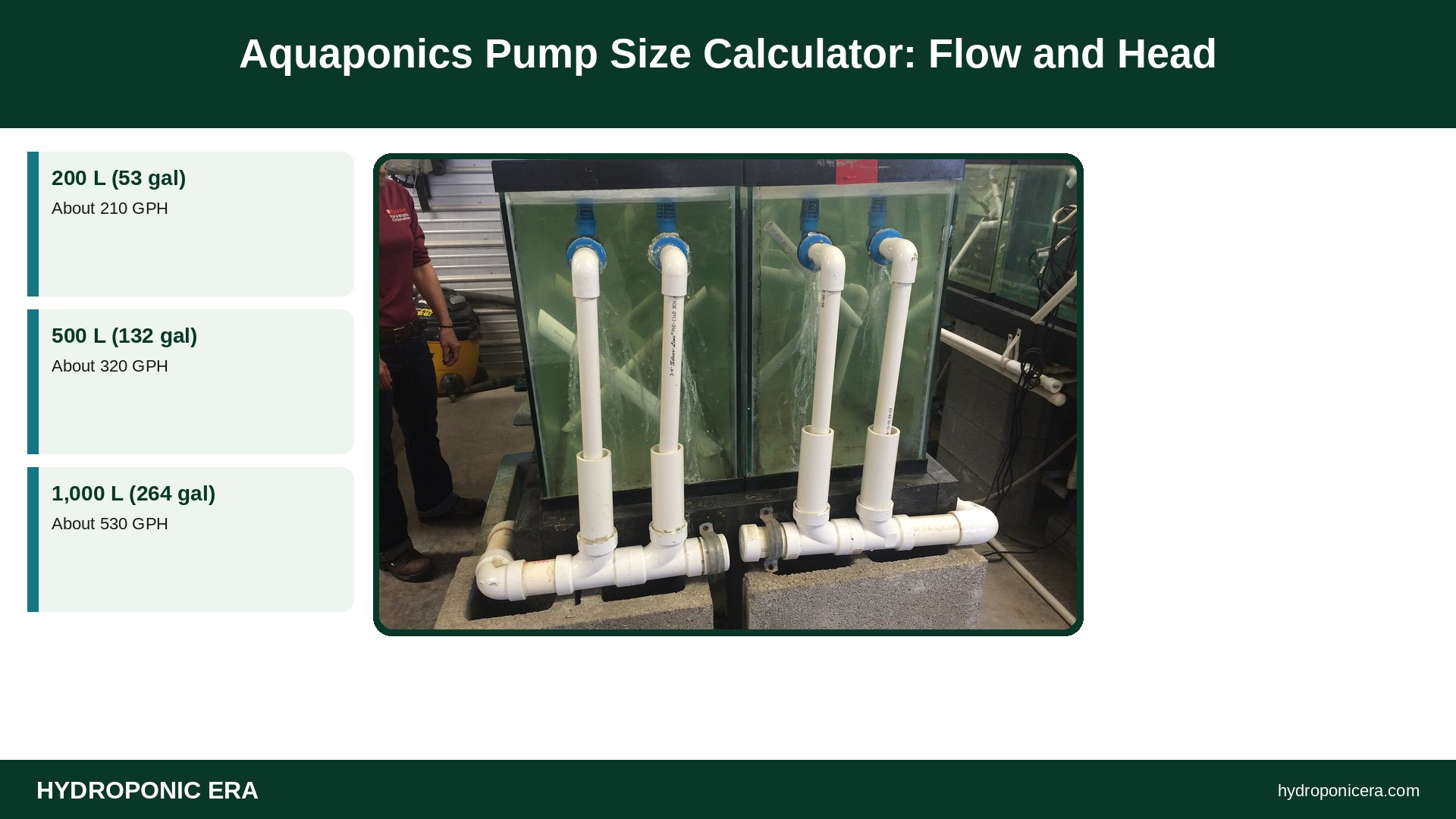
To choose an aquaponics pump size , start with turnover: FAO’s aquaponics manual says densely stocked systems should cycle the total water volume about twice per hour, while lightly stocked systems need only once per hour. So a system holding 264 gallons (1,000 liters) needs roughly 264–528 gallons per hour (GPH) of actual flow. Then check that the pump delivers that flow at your head height, the vertical lift from the pump to the highest outlet. FAO’s small-scale designs use about 2,000 liters/hour (about 530 GPH) at about 5 feet (1.5 m) of head, which takes a submersible pump drawing roughly 25–50 watts.

aquaponics greenhouse — Aquaponics Greenhouse: Design and Layout Basics

An aquaponics greenhouse lets you grow year-round in cold US climates by trapping solar heat and keeping water warmer and more stable. FAO’s aquaponics manual notes greenhouses aren’t essential for small systems but are especially useful in cooler regions, where they can keep water warm through the cold months. The trade-offs are cost, the need for fans and ventilation to prevent overheating and high humidity, and more pest pressure. A good layout puts fish tanks in shade or the north side, grow beds where light is best, and covers water surfaces to control humidity.

aquaponics winter — Aquaponics in Winter: Cold-Climate Fish and Crops

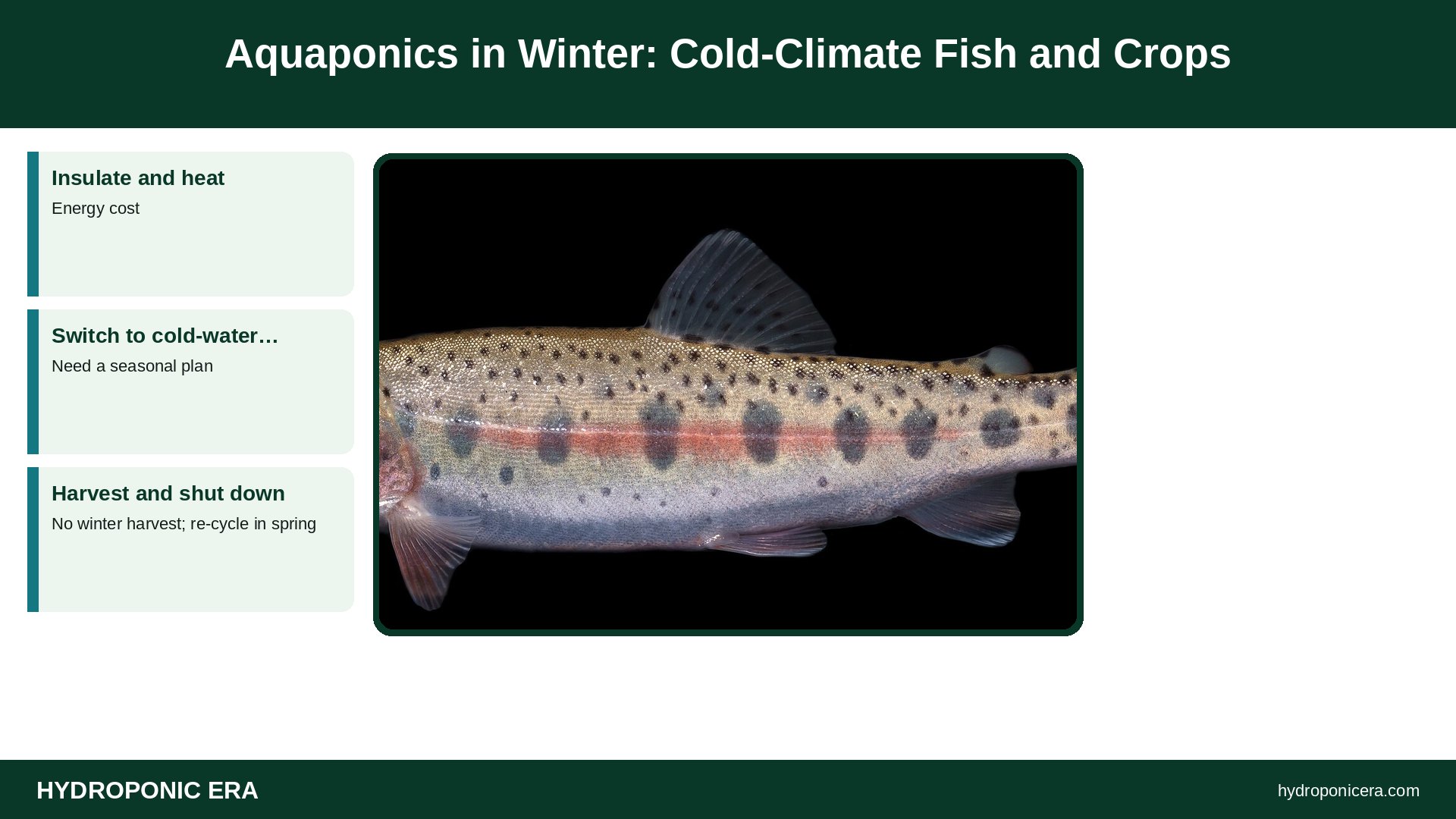
Aquaponics winter growing is possible in cold US climates if you either keep the water warm enough for your fish or switch to cold-tolerant fish and crops. FAO’s aquaponics manual lists three strategies: protect and heat the system (insulation, greenhouses, passive solar heating), switch to cold-water fish and winter vegetables when average temperatures stay below about 59°F (15°C) for more than three months, or harvest everything and shut down until spring. Nitrifying bacteria slow down below 63°F (17°C), so in winter you also need to feed less and watch ammonia and nitrite more closely.

aquaponics water temperature — Aquaponics Water Temperature by Fish and Crop

The best aquaponics water temperature for most systems is a compromise of about 64–86°F (18–30°C), the range FAO’s aquaponics manual gives for fish, plants, and bacteria together. Within that, match fish and crops to your climate. Warm-water fish such as tilapia, carp, and catfish, plus nitrifying bacteria, thrive at about 72–84°F (22–29°C), alongside crops like basil and okra. Lettuce, Swiss chard, and cucumbers prefer cooler 64–79°F (18–26°C) water, and trout won’t tolerate water above about 64°F (18°C). Bacteria slow down below 63°F (17°C), so cold water also means slower nitrification.

aquaponics iron deficiency — Iron Deficiency in Aquaponics: Chelated Iron Safely

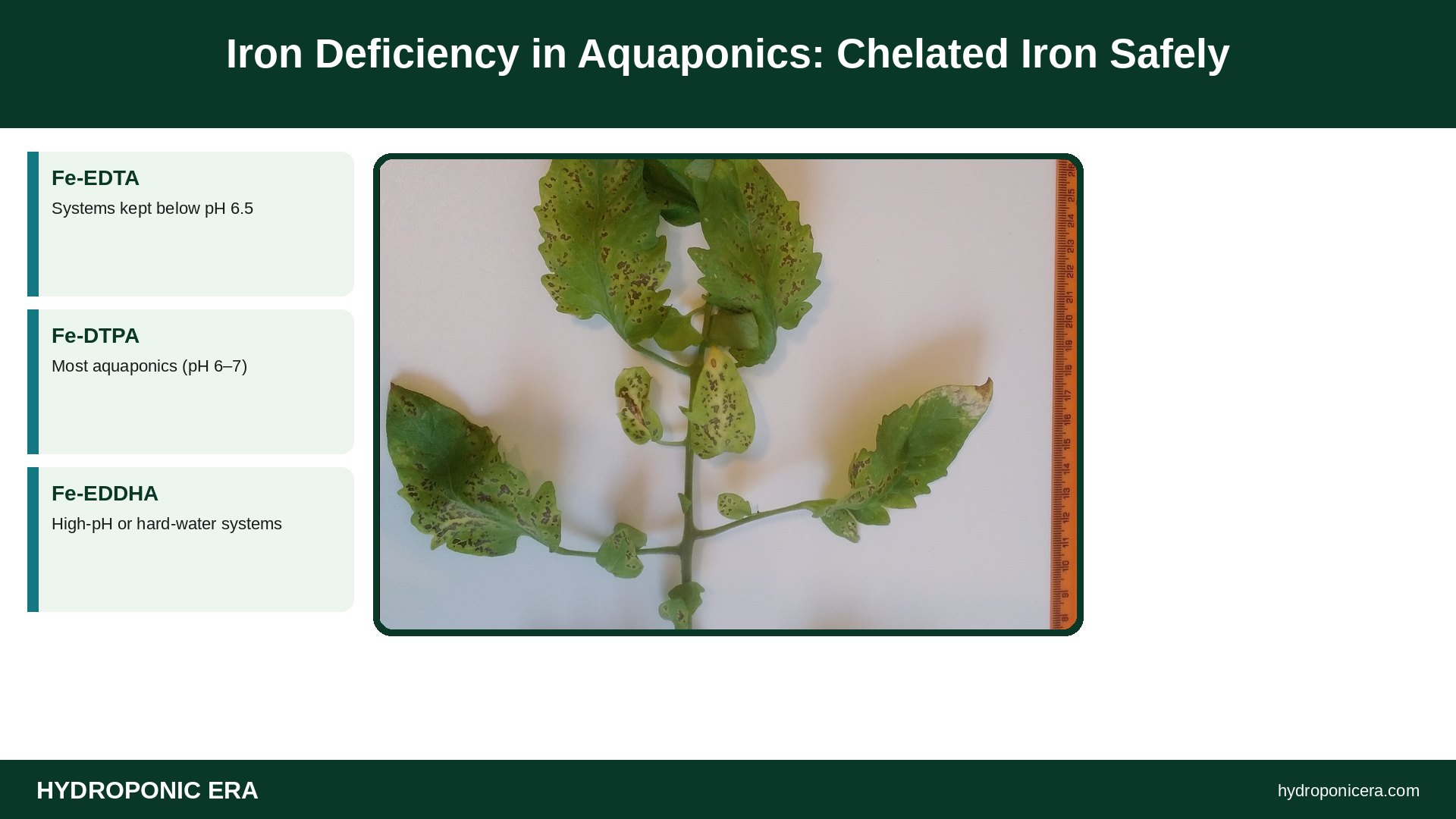
Aquaponics iron deficiency is the most common nutrient problem in aquaponics because fish feed contains less iron than plants need. It shows as yellow new leaves with green veins. The fix is chelated iron, not iron sulfate, because plain iron precipitates out of solution at the pH most aquaponics systems run. FAO’s aquaponics manual recommends adding chelated iron to about 2 mg/liter, and 1–2 mg/liter during the first three months of a new system. Match the chelate to pH: research in HortScience notes Fe-EDTA holds iron to about pH 6.5, Fe-DTPA to about 7.5, and Fe-EDDHA to about 9.

aquaponics plants turning yellow — Aquaponics Plants Turning Yellow: Causes and Fixes

Aquaponics plants turning yellow usually points to one of four causes: iron deficiency, pH drift, low nitrogen in a young or understocked system, or root problems. The location of the yellowing is the fastest clue. FAO’s aquaponics manual notes that nitrogen deficiency yellows older leaves first, because plants move nitrogen to new growth, while iron deficiency yellows new leaves first, because iron can’t move within the plant. If nitrate is high but new leaves are yellow, FAO recommends adding chelated iron and checking pH. Keep pH around 6–7, the compromise range FAO gives for fish, plants, and bacteria.

is tilapia legal — Is Tilapia Legal in Your State? US Rules for Aquaponics

Is tilapia legal in your state? Often yes, but with conditions. Tilapia aren’t native to the US, so many states treat them as exotic or restricted species. Some states allow hobby aquaponics with certain tilapia species and no permit, others require a permit, and some limit tilapia to specific areas or ban some species. Texas, Florida, and California, three of the most-asked-about states, each handle tilapia differently. Check with your state fish and wildlife agency before buying fingerlings.

aquaculture permit — Aquaculture Permits for Aquaponics: US State Basics

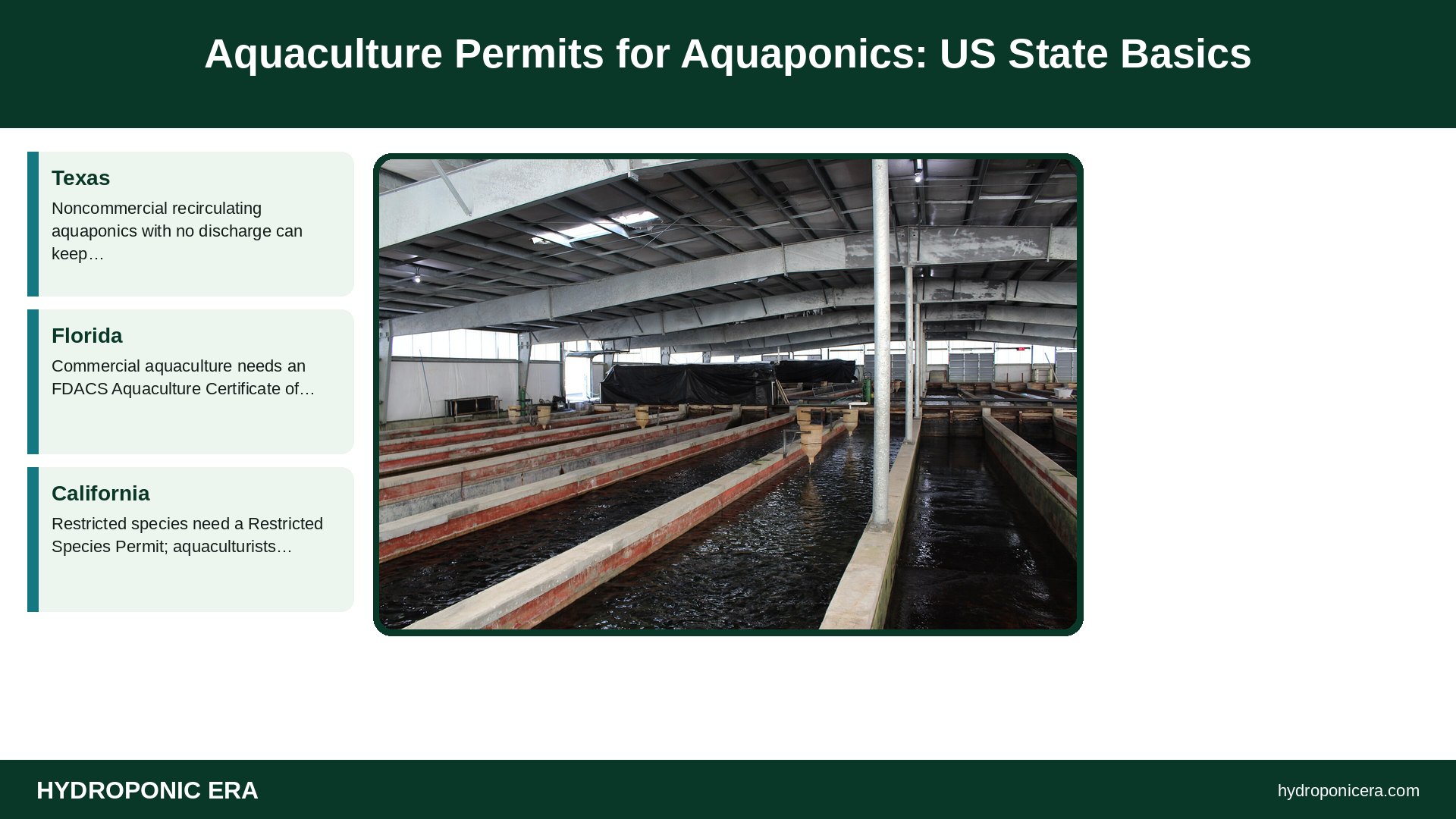
Whether you need an aquaculture permit for aquaponics depends on your state, the fish species, and whether you sell fish or discharge water. In most states, aquaculture is regulated by the state fish and wildlife agency, the department of agriculture, or both. Commercial growers generally need some form of registration or license. Hobby systems with native or approved species are often exempt, but exotic species like tilapia usually trigger extra rules. Texas, Florida, and California show how different the rules can be, so always check with your own state agency before you buy fish.

duckweed fish food — Duckweed as Fish Food for Aquaponics

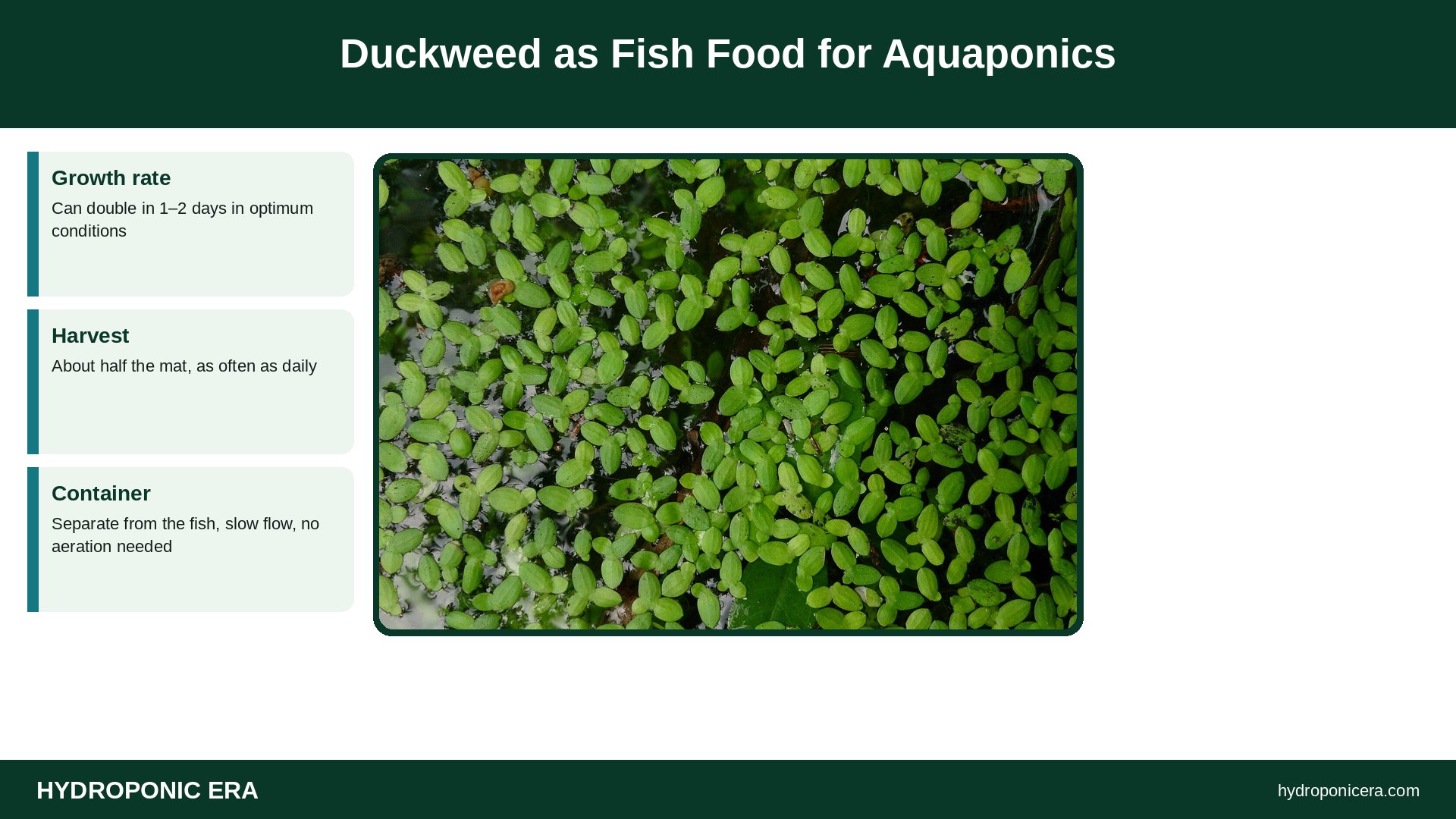
Duckweed fish food is a cheap, homegrown supplement for herbivorous and omnivorous fish such as tilapia, carp, koi, and goldfish. FAO’s aquaponics manual describes duckweed as a fast-growing floating plant rich in protein that can double its mass every 1–2 days in good conditions, so about half can be harvested daily. FAO advises growing it in a separate container, with slow water flow and no aeration, because fish would eat the whole stock if it grew in their tank. It’s a supplement to complete pellets, not a full replacement, and it works especially well placed on the return line, where it cleans up nutrients before water goes back to the fish.