fogponics — Fogponics Explained: Foggers vs Aeroponics

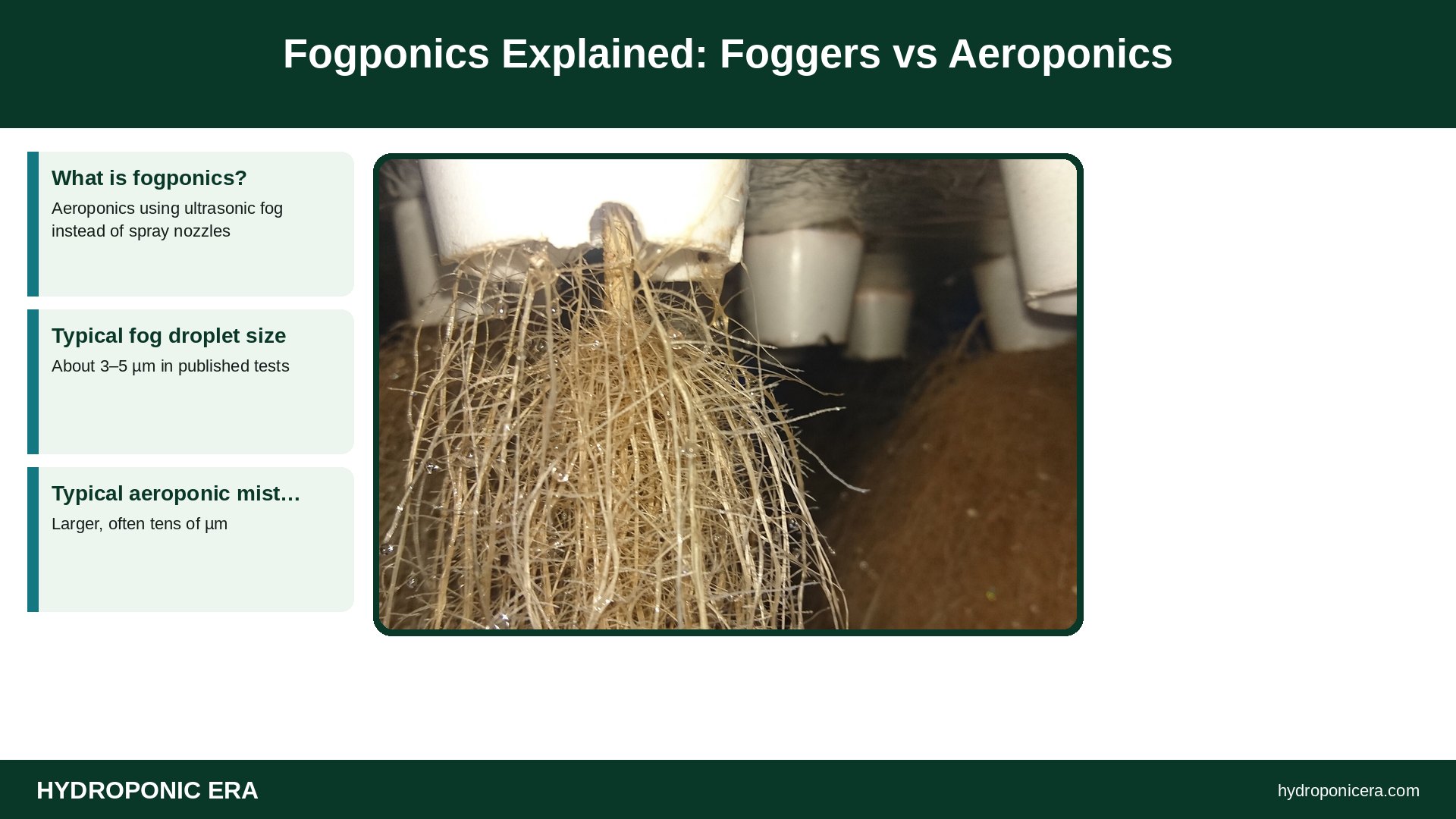
Fogponics is a form of aeroponics that uses ultrasonic foggers to turn nutrient solution into a very fine fog around plant roots, instead of spraying larger droplets from nozzles. It sounds like the ultimate root-zone upgrade, and it gets linked to NASA in marketing, but research on lettuce has not been kind to it. In a 2021 study, ultrasonic foggers produced droplets around 4.89 µm, and lettuce misted that way grew far less than lettuce misted by an air-assisted nozzle with roughly 11 µm droplets. For home growers, fogponics is best treated as an experiment, not an upgrade.
bluegill aquaponics — Bluegill Aquaponics: A Hardy Native Option

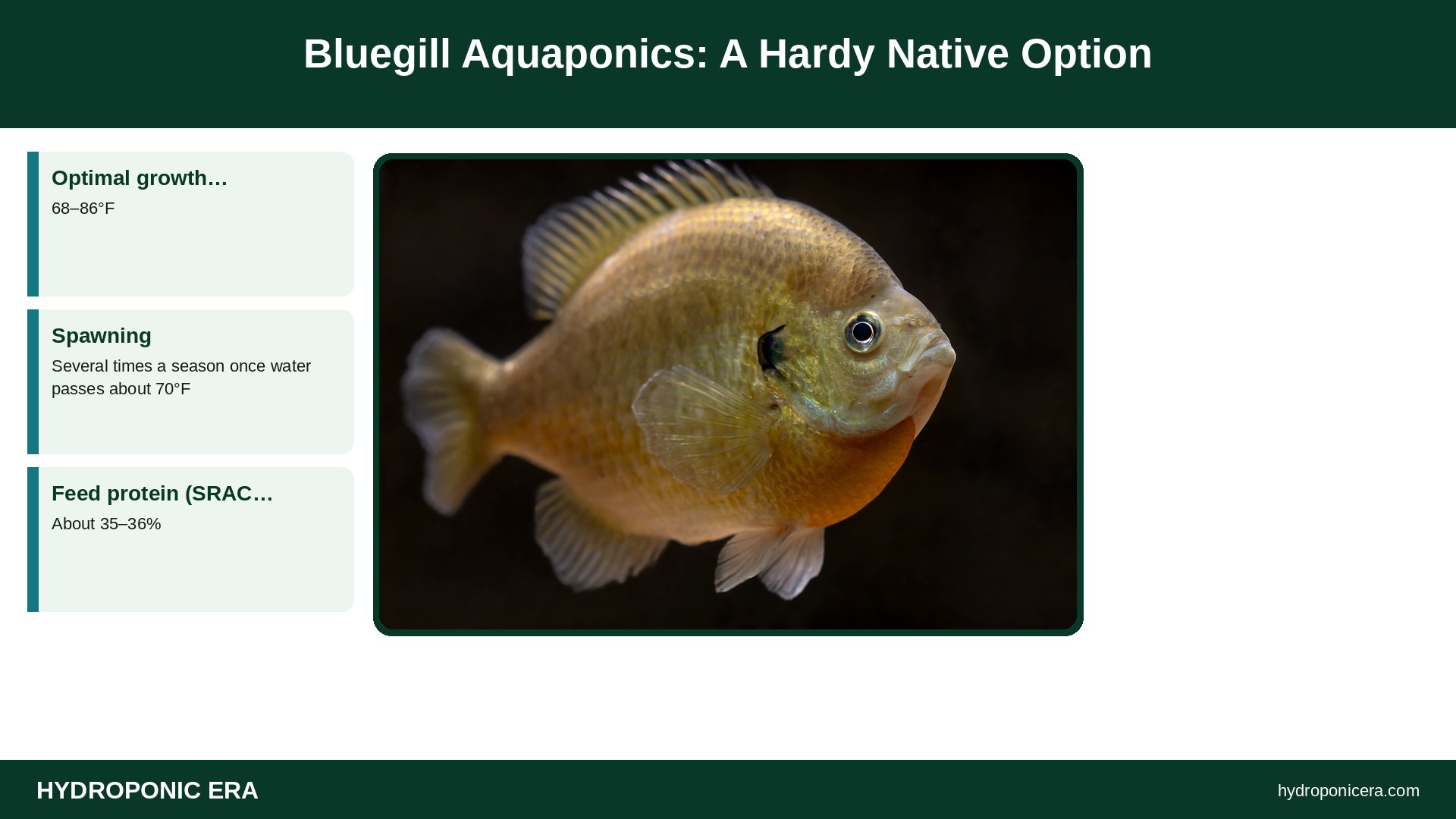
Bluegill aquaponics works well for growers who want a native, legal-almost-everywhere fish that tolerates cooler water than tilapia. The Southern Regional Aquaculture Center (SRAC) lists 68–86°F as the optimal range for sunfish growth, and notes growth keeps rising up to about 86°F. Bluegill are small, slow-growing panfish, so they’re best for hobby food production, mixed-species tanks, and beginners in states where tilapia is restricted. Hybrid sunfish (most often a male bluegill crossed with a female green sunfish) grow faster, accept pellets more readily, and handle cooler water better than pure bluegill.

trout aquaponics — Trout Aquaponics: Cold-Water Systems and Tank Size

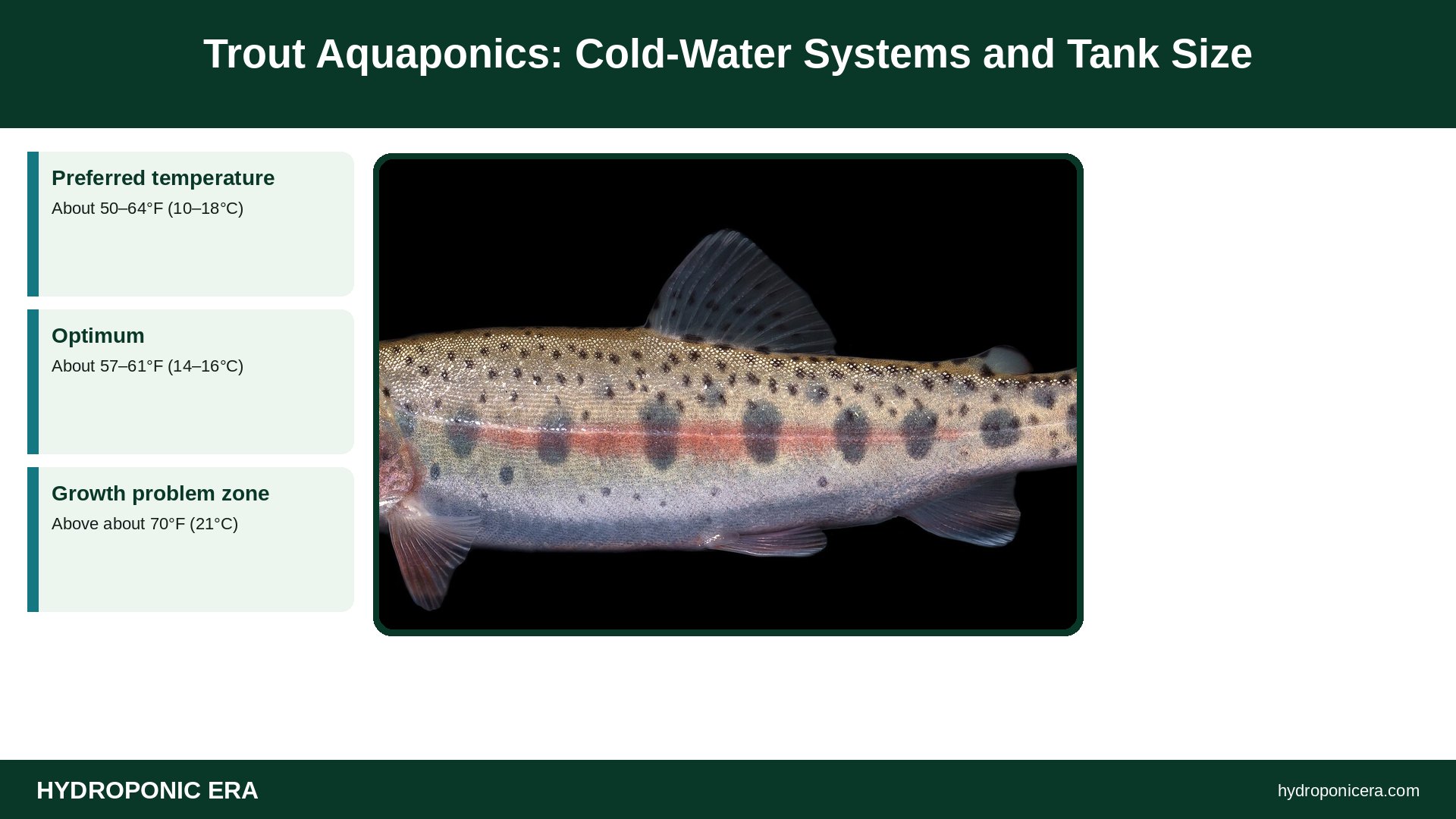
Trout aquaponics is the go-to option for cold climates, unheated basements, and winter systems, because rainbow trout prefer water around 50–64°F with an optimum near 59°F, according to FAO. Above about 70°F their growth drops sharply. Trout need cleaner water and more dissolved oxygen than tilapia or catfish, so a trout system must have strong aeration, reliable backups, good solids removal, and steady monitoring. In return, trout eat a high-protein diet that releases plenty of nitrogen for leafy greens, and they’re an excellent food fish.

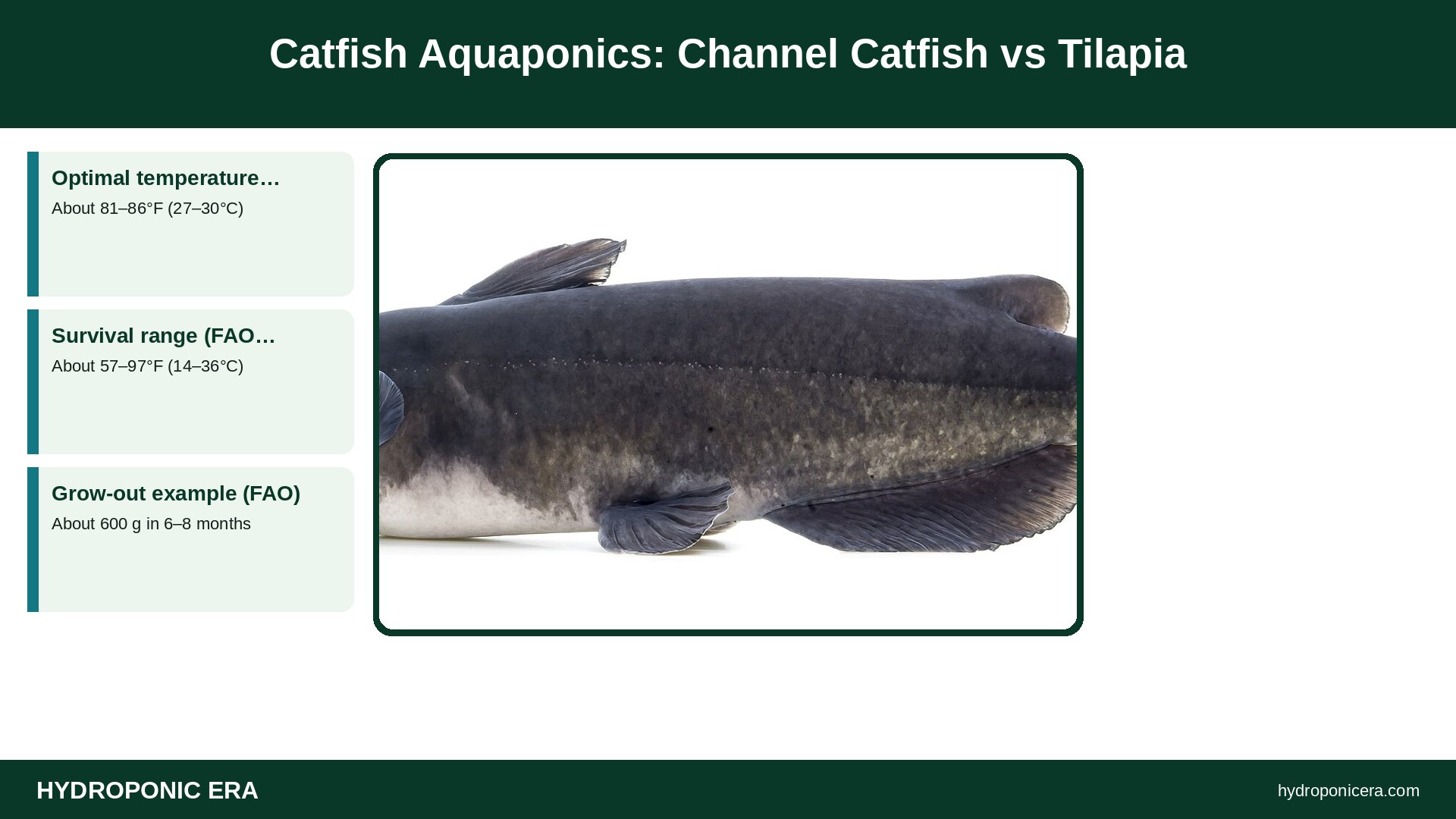
catfish aquaponics — Catfish Aquaponics: Channel Catfish vs Tilapia

Catfish aquaponics uses channel catfish, a hardy fish native to much of the central and eastern US, to feed plant beds. FAO lists an optimal water temperature of about 75–86°F for channel catfish, with survival across a much wider range, and describes catfish as one of the easiest groups for beginners because they tolerate swings in oxygen and temperature. Compared with tilapia, channel catfish handle cooler water better and are legal in more states, but they grow more slowly in tanks, live on the bottom, and need wide tanks rather than tall ones. In catfish aquaponics, many growers raise them alongside a mid-water fish like bluegill or tilapia.

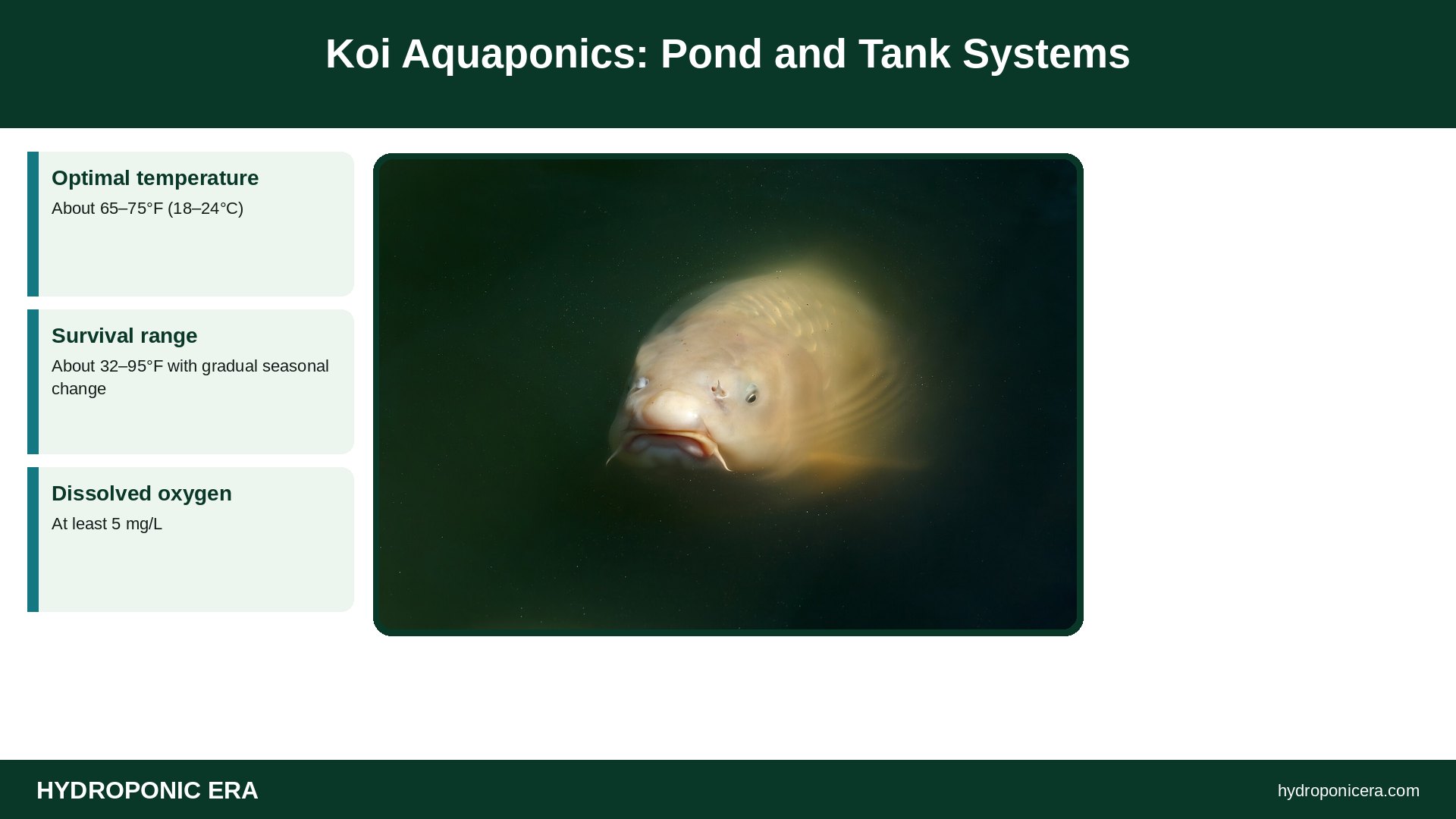
koi aquaponics — Koi Aquaponics: Pond and Tank Systems

Koi aquaponics connects a koi pond or large tank to plant beds so the fish waste feeds vegetables, herbs, or ornamental plants while the plants and bacteria help clean the water. It suits koi well because they’re hardy temperate fish: the Southern Regional Aquaculture Center lists an optimum of about 65–75°F and survival from near freezing to about 95°F with gradual change. The challenges are size and load. Koi can exceed two feet long, eat heavily, and produce a lot of solid waste, so you need a large volume of water, good solids filtration, strong aeration, and enough planted area to use the nutrients.

goldfish aquaponics — Goldfish Aquaponics: Are Goldfish Good for a Home System?

Goldfish aquaponics is one of the easiest ways to start, because goldfish are hardy, cheap, widely available, and tolerate the room temperatures most US homes already have. The Southern Regional Aquaculture Center puts their optimum at about 65–75°F, with survival from near freezing to about 95°F when changes are gradual. They produce plenty of waste for leafy greens and herbs. The catches: goldfish are ornamental rather than food fish, they grow bigger and messier than many people expect, and small tanks overload quickly. Give them enough water, strong filtration and aeration, and a planted area sized to how much you feed.

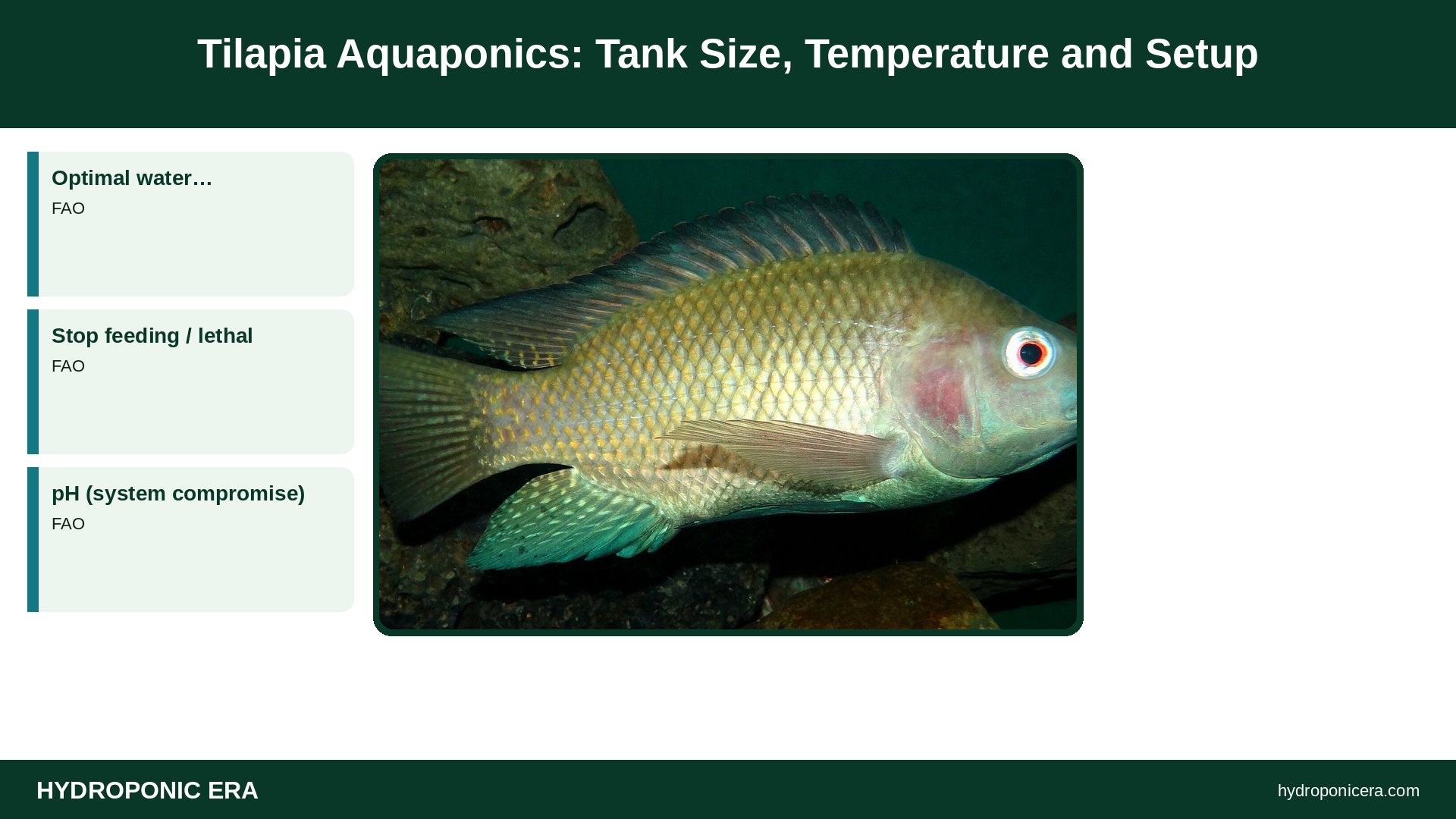
tilapia aquaponics — Tilapia Aquaponics: Tank Size, Temperature and Setup

Tilapia aquaponics works best when you can hold the fish tank at roughly 81–86°F, which is where tilapia grow fastest. They stop eating below about 63°F and die below about 54°F, so in most of the US you need a heated greenhouse, an indoor space, or a summer-only season. Stock no more than about 20 kg of fish per 1,000 liters of water (roughly 0.17 lb per gallon) in a small system, feed a pelleted diet with about 28–32% protein for grow-out, keep pH around 6–7 and dissolved oxygen above 5 mg/L, and confirm your state’s rules before buying fingerlings.

best fish for aquaponics — Best Fish for Aquaponics: US Species Compared

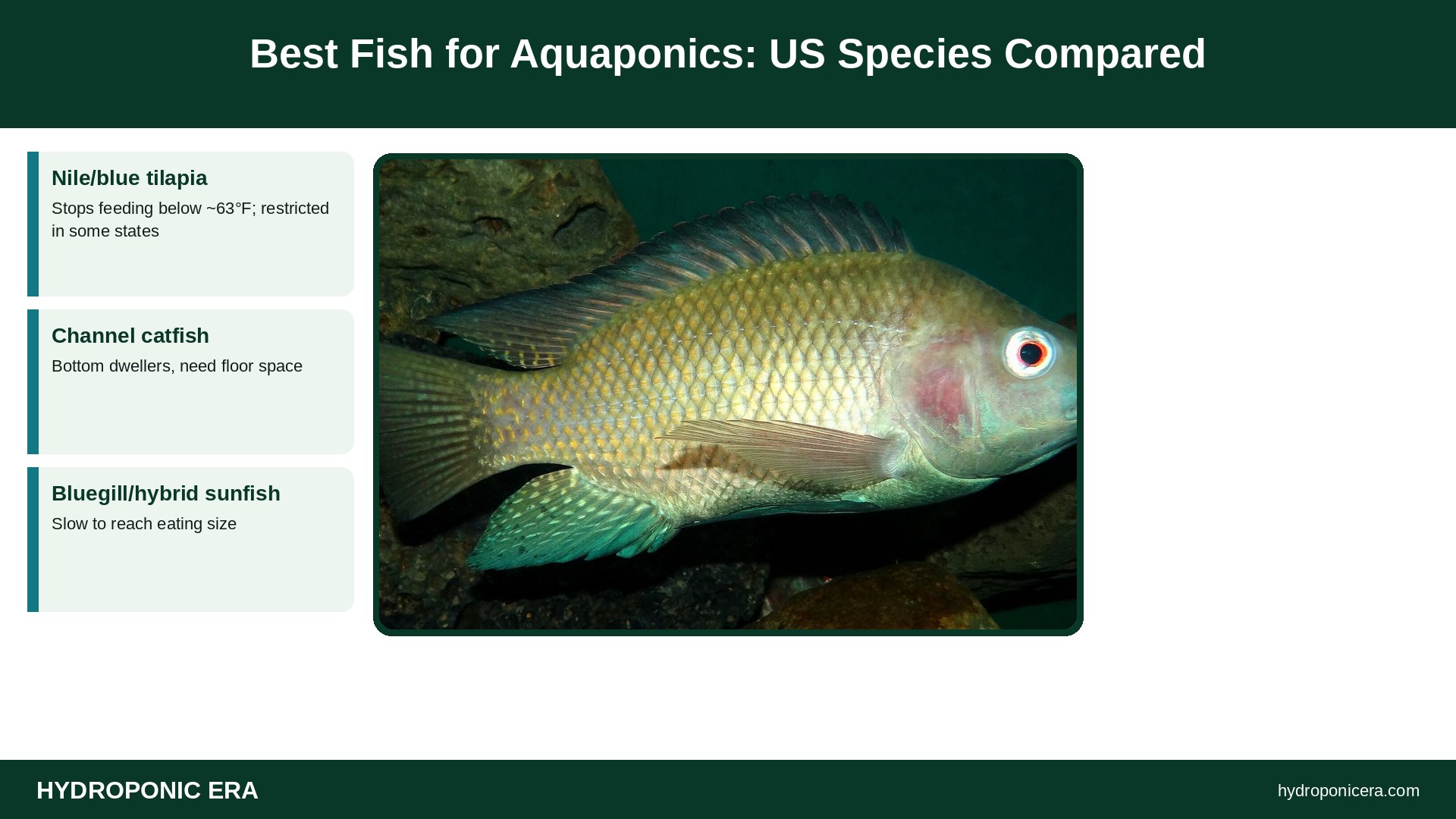
The best fish for aquaponics in most US home systems are tilapia (if you can keep the water warm and your state allows them), channel catfish, bluegill and other sunfish, yellow perch for cooler water, rainbow trout for cold water, and goldfish or koi if you want ornamental fish rather than food. The right choice depends on three things: your water temperature year-round, what your state allows you to keep, and whether you plan to eat the fish. Pick the species that suits the water you can hold without expensive heating or chilling, then size the plant beds to match how much you feed.

dosing pumps — Peristaltic Dosing Pumps for Hydroponics: Do You Need One?

Peristaltic dosing pumps automatically add small, measured amounts of nutrient concentrate or pH adjuster to a hydroponic reservoir, either on a schedule or when a controller reads EC or pH outside your target. For most home growers with one small reservoir, dosing pumps are a convenience, not a necessity; hand-dosing works fine. They earn their keep in larger reservoirs, multiple systems, or when you’re away often, as long as you calibrate them, use quality sensors, and set hard safety limits.

ikea hydroponics — IKEA Hydroponics: What Happened to VÄXER + Hacks

IKEA hydroponics today means DIY, not a kit. IKEA’s KRYDDA/VÄXER indoor growing line, launched in 2016, isn’t listed on IKEA’s US website: when we searched ikea.com/us on October 8, 2026, “VÄXER” and “KRYDDA” returned zero products. What IKEA US does sell is ODLA clay pellets, glass propagation sets and mini greenhouses. Pair them with a separate grow light and a simple passive method like Kratky.