
Quick Answer
Light Burn Photobleaching Hydroponics (light burn photobleaching hydroponics) is the practical focus of this guide for home growers.
Light burn and photobleaching in indoor hydroponics bleach or crisp the tops closest to the fixture while lower leaves may look fine. It is easy to confuse with nutrient burn (tip necrosis from high EC). Diagnose with PPFD, distance, and dimming—not by blindly flushing first.
See PPFD/DLI, grow lights, nutrient burn, and leggy seedlings.
Key Takeaways
- Virginia Cooperative Extension DLI materials support measuring light dose, not guessing from watt stickers.
- Bleached crowns under LED bars with green lower canopy strongly suggest excess intensity/distance issues.
- Nutrient burn typically shows tip margins across the plant, often with high EC—different pattern.
- Raise lights, dim, or increase photoperiod efficiency instead of only chopping nutrients.
- Seedlings need far less PPFD than fruiting canopies—leggy vs burned is a placement problem.
- White/yellow bleached tissue rarely “greens up”—judge recovery on new growth.
- Map PPFD at canopy with a meter when possible; phone apps are rough estimates only.
- Heat and light stress can co-occur under powerful diodes—check leaf temperature too.
Related HydroponicEra guides
Light Burn Photobleaching Hydroponics: Light Burn vs Nutrient Burn
Photobleaching shows pale, washed, or crispy tissue on the highest leaves and colas nearest the diodes. Nutrient burn more often scorches margins/tips more broadly and pairs with high EC readings—see nutrient burn. Virginia Extension’s DLI publication (SPES-720) helps you think in measured daily light integral rather than marketing watts.
If only the hotspot under the bar is damaged while EC is moderate, move light before rewriting fertilizers.
Light Burn Photobleaching Hydroponics: Diagnosis Table
| Clue | Light burn | Nutrient burn |
|---|---|---|
| Location | Closest to fixture | Margins/tips more global |
| EC | Often normal | Often high |
| Lower canopy | May look healthy/green | May also show tip burn |
| Fix test | Dim/raise → new growth OK | Lower EC → margins improve |
Light Burn Photobleaching Hydroponics: Step-by-Step Correction
- Photograph damage zone relative to the light footprint
- Read EC/pH to rule in/out fertilizer burn
- Raise fixture or dim 10–20% and reassess in 2–3 days
- Measure PPFD at canopy if you have a meter
- Increase distance for seedlings far below fruiting intensities
- Avoid stacking heat stress—check leaf temp and airflow
- Do not expect bleached leaves to re-green
- Track DLI so you don’t compensate by unsafe 24/0 extremes
Light Burn Photobleaching Hydroponics: Common Mistakes
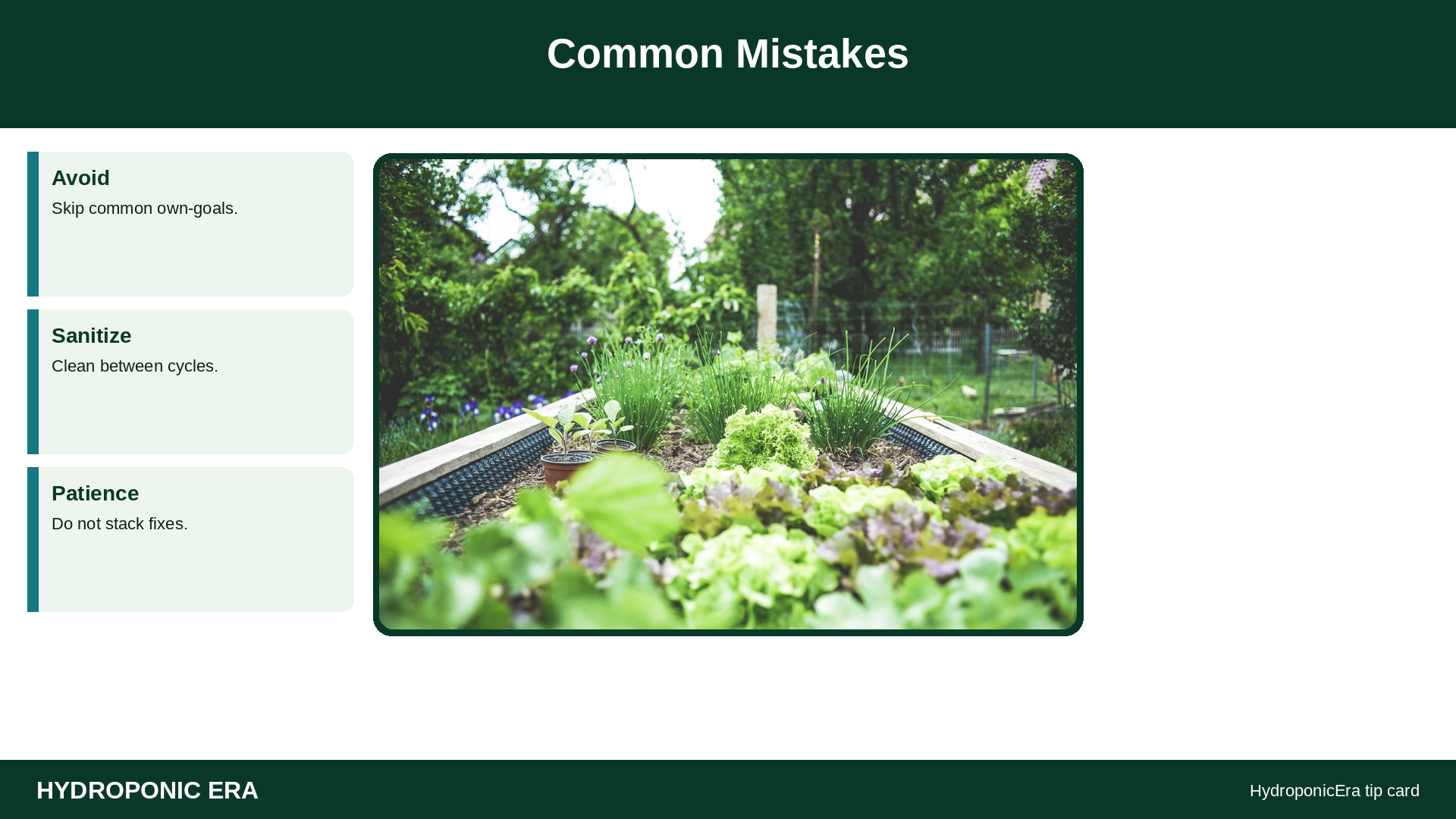
- Flushing nutrients when EC was already modest
- Running seedling PPFD at flowering intensity
- Ignoring manufacturer distance charts entirely
- Reading only wall thermostat, not canopy hotspots
- Confusing fade from deficiency with bleaching from excess light
Light Burn Photobleaching Hydroponics: Troubleshooting Table
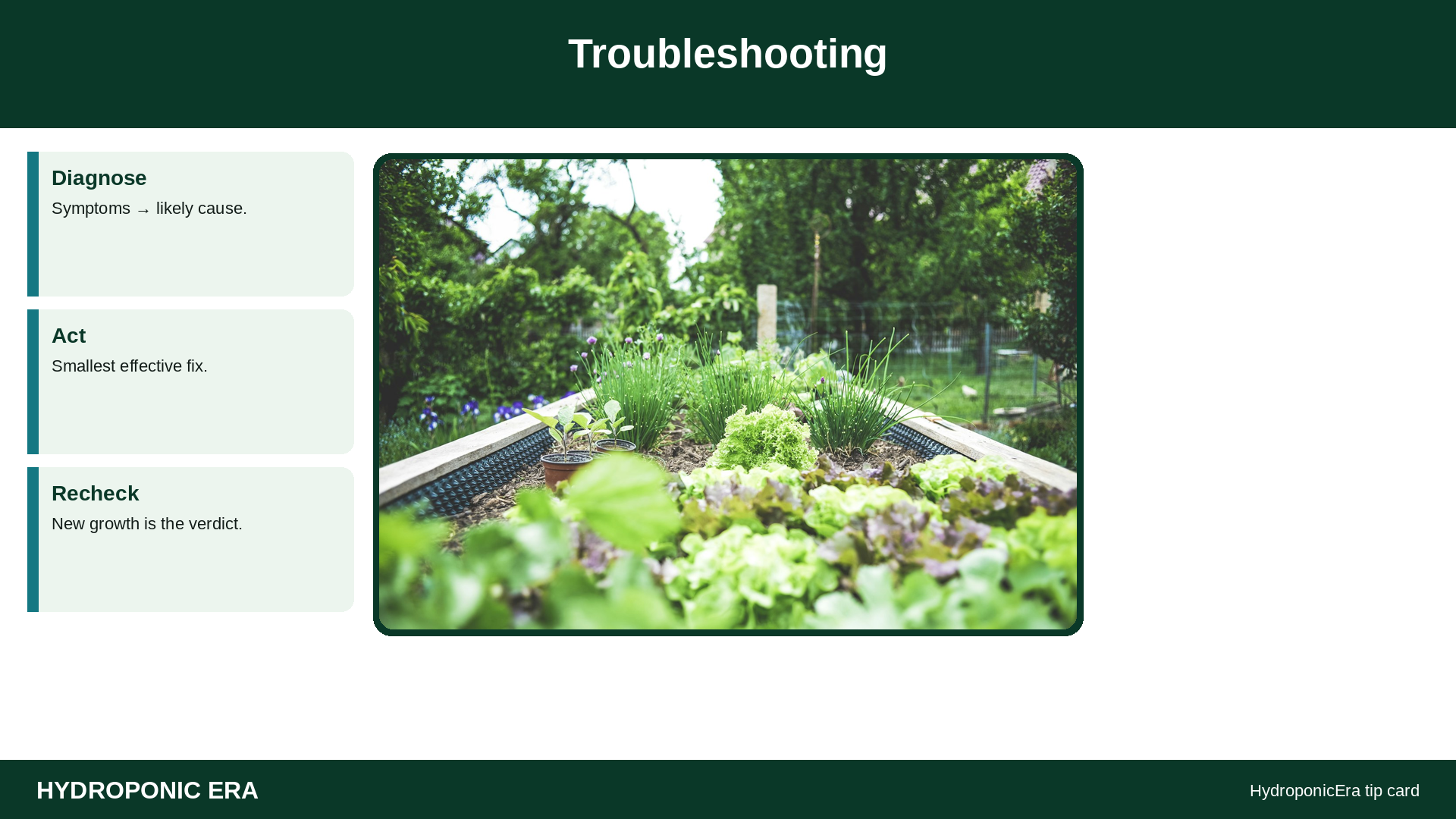
| Situation | Likely | Next |
|---|---|---|
| Bleached tops, green bottoms | Light burn | Dim/raise |
| Tip crunch + high EC | Nutrient burn | Nutrient burn guide |
| Stretch + pale | Too little light / wrong spectrum distance | Leggy seedlings guide |
| Bleach + hot leaves | Light + heat combo | Airflow + dim |
Prevention Framework
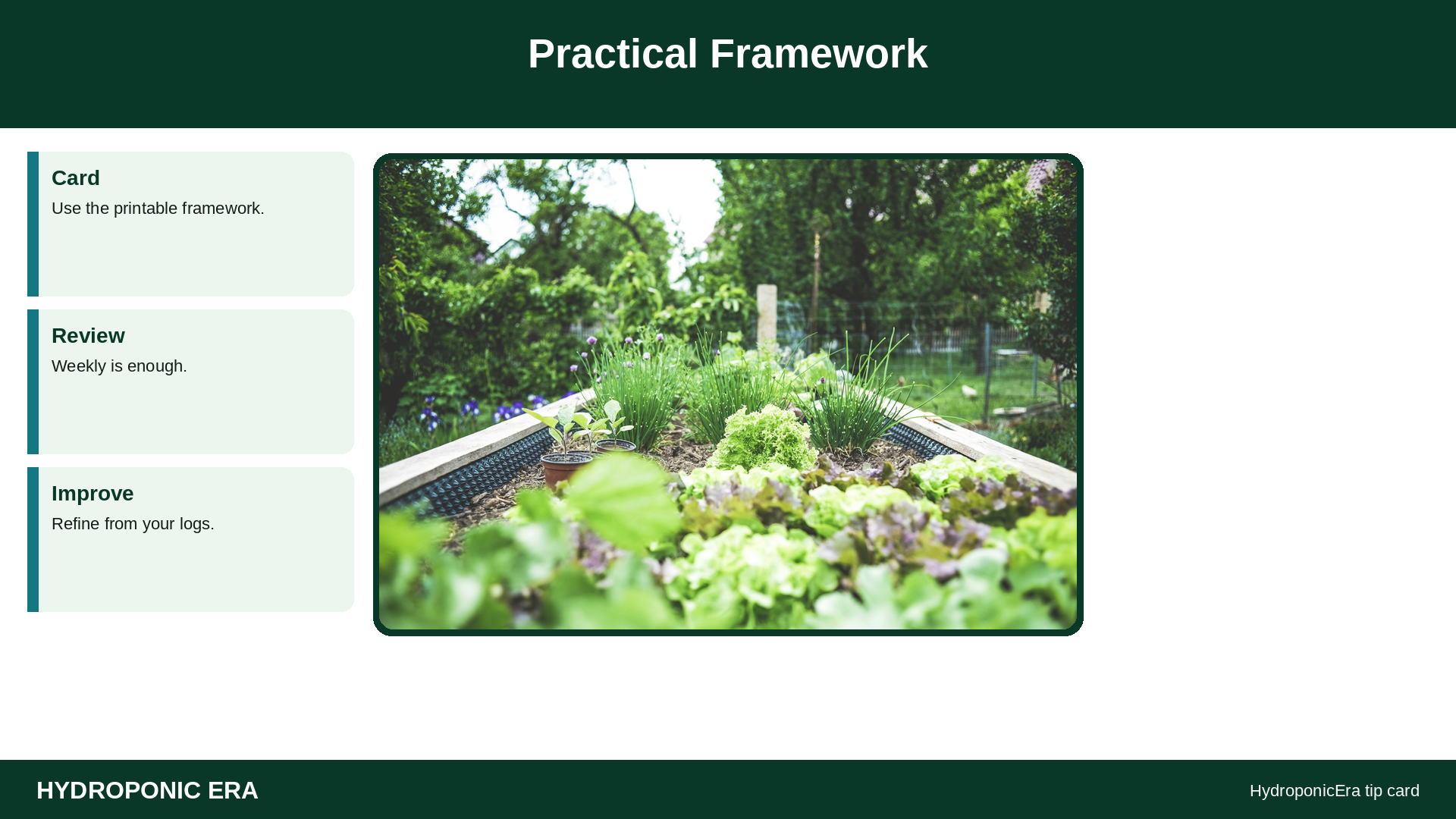
Prevention: match PPFD to growth stage → verify distance → watch hotspots → separate EC issues. Use PPFD/DLI and lights guides as the measurement backbone.
What to Check Before You Escalate
- Damage only under fixture?
- EC checked?
- Distance/dim tried?
- Seedling vs flower intensity appropriate?
- PPFD measured or estimated?
- Heat co-factor?
PPFD Mapping Habits for Tent Growers

If you own a PPFD meter, map a nine-point grid at canopy height: corners, edges, center. Hot centers under bars explain bleached crowns while edge lettuce stays dark green. Virginia Extension DLI materials (SPES-720) support thinking in measured light dose. If you lack a meter, dim 15% or raise the fixture and compare new growth for a week—still better than flushing nutrients on faith.
Original light vs feed test: record EC the day bleaching appears. If EC is already in your normal successful band, treat as light/heat first (nutrient burn is the alternate hypothesis when margins crisp globally with high EC).
Seedling stage discipline prevents both legginess and burn. Start farther/dimmer, then step intensity weekly (leggy seedlings, seedlings, photoperiod). Jumping clones straight under flower-level PPFD is a common tent mistake.
Watch co-stress: high PPFD plus poor airflow raises leaf temperature. A bleached, hot top may need dimming and fans together. Do not confuse photobleaching with variegation or genetic fade.
Manufacturer distance charts are starting points, not laws—canopy height changes as plants grow. Raise lights on a schedule or add dimming curves.
Practice closer: keep a “light change log” (date, height cm, dim %, noted PPFD if known). Pair with PPFD/DLI and grow lights guides. Judge recovery on new leaves only—bleached tissue rarely re-greens.
Field Notes: Stage-Based Intensity Ramps
Write three intensity targets on the driver: seedling, vegetative leafy, fruiting. Move between them on dates, not vibes. Virginia Extension DLI framing rewards planned daily light integrals (PPFD/DLI).
If tops bleach while EC is calm, dim/raise first and only then revisit fertilizers (nutrient burn). If seedlings stretch, you are under-lit or lights are too far—opposite problem (leggy seedlings).
Map hotspots after every major trellis or plant raise. Canopies creep into diodes faster than people remember. Pair light changes with leaf-temperature checks under high PPFD (airflow).
Original ramp card: date | height | dim % | notes on new growth color. Keep it taped inside the tent door with lights and photoperiod links mentally bookmarked.
FAQs

Will leaves un-bleach?
Usually no—rate new growth after you correct intensity.
Is dimming better than raising?
Either works; keep DLI in mind if you dim heavily.
Phone lux apps enough?
Better than nothing, worse than a calibrated PPFD meter.
Can light burn happen with LEDs?
Yes—high PPFD close to canopy burns and bleaches.
Same as fading from N deficiency?
Pattern and EC context differ—don’t guess from one pale leaf.
Sources?
VT DLI SPES-720, OSU hydro, lighting/nutrition extension materials.
Should I defoliate burned tops?
Remove only tissue that blocks airflow or invites rot; focus on correcting intensity.
Does UV from diodes cause this?
Photobleaching here means excess photosynthetic intensity/heat at the leaf—manage PPFD/distance.
Measurement and Logging Habits That Keep Advice Honest
Every troubleshooting or equipment claim on HydroponicEra should collapse to something you can measure or photograph. Write the date, the meter reading, and one photo when you change a variable. That habit prevents stacking five fixes overnight and then inventing a success story. Use calibrated pH/EC meters where nutrients are involved, and canopy-level climate sensors where humidity and heat are involved (humidity/VPD).
When you link outward to university extension pages in the Sources section, treat them as anchors—not as promises that your exact tent will match a greenhouse trial. Translate ranges into your room with logs. If a fix works, keep it; if not, revert one step and retest. That methodology is the expertise signal search and AI systems can trust without fabricated statistics.
Internal next reads stay in-cluster: problems pages cross-link to cleaning, airflow, and crop guides like tomatoes or lettuce when symptoms live on those plants. Equipment pages cross-link to reservoir setup, pumps, and grow tents so purchases match the system you already run.
Light Burn Photobleaching Hydroponics: Practical Checklist
Light Burn Photobleaching Hydroponics matters every week in a home system. Recheck light burn photobleaching hydroponics after transplants, heat spikes, and canopy fill-in. Strong light burn photobleaching hydroponics habits beat one-time guesses. When light burn photobleaching hydroponics drifts, leaves crowd, roots stress, or harvest quality drops. Write light burn photobleaching hydroponics targets into your log so you do not rely on memory. Teach helpers your light burn photobleaching hydroponics checklist before you leave town. Improve light burn photobleaching hydroponics in small steps—measure, adjust, then wait a day.
Sources
- Virginia Cooperative Extension — SPES-720: Calculating and Using Daily Light Integral (DLI)
- Oklahoma State University Extension — Hydroponics
- Oklahoma State University Extension — Electrical Conductivity and pH Guide for Hydroponics
- Penn State Extension — Hydroponics Systems and Principles of Plant Nutrition
- Michigan State University Extension — Hydroponics as an agricultural production system
- University of Florida IFAS — HS1421: Growing Herbs in Small Hydroponic Systems
1 thought on “Light Burn and Photobleaching in Indoor Hydroponics”