
Fluoride in water for plants is harmless for most crops, but a short list of sensitive plants can develop brown leaf tips and scorched margins from fluoridated tap water. Dracaena (corn plant), spider plant, Tahitian bridal veil, yucca, lilies, tulips and gladiolus are the classic victims. If you grow them, water with rainwater, distilled or reverse osmosis (RO) water, skip perlite and superphosphate, and keep the root zone pH from running low.
| Plant group | Fluoride sensitivity | What to do |
|---|---|---|
| Dracaena / corn plant | Very sensitive | RO, distilled or rainwater; perlite-free mix; pH 6.0–6.5 |
| Spider plant, Tahitian bridal veil | Sensitive | Low-fluoride water; avoid perlite |
| Lilies, tulips, gladiolus, yucca | Sensitive | Avoid fluoridated water and high-phosphate fertilizers |
| Blueberry, grape, peach, plum, apricot | Sensitive (per PNW Handbook) | Monitor leaf tips; test water |
| Lettuce, basil, most herbs and greens | Not on common sensitive lists | Normal tap water is usually fine |

How Fluoride in Water for Plants Causes Damage

The Pacific Northwest Plant Disease Management Handbook (Oregon State University) explains that fluoride “is an accumulative poison in plant foliage.” It travels with water through the plant and builds up in leaf margins and tips. Over time it inhibits photosynthesis, and the tissue dies.
The handbook notes that many municipal water systems add fluoride to prevent tooth decay, and that irrigating with that water “can result in toxicity symptoms on sensitive plants.” Most plants never show a problem. Sensitive species accumulate enough, given time, to show damage.
Symptoms of Fluoride in Water for Plants
Damage from fluoride in water for plants builds slowly, so you’ll usually notice it weeks or months after a plant arrives. Look for:
- Brown or tan leaf tips that spread inward along the margins.
- Yellow bands between dead tips and healthy green tissue.
- Dead, scorched areas on dracaena leaves (Clemson Extension).
- Damage on older leaves first, since fluoride accumulates over time.
These symptoms look a lot like overfertilizing, salt buildup and underwatering. University of Missouri Extension lists the three main causes of leaf tipburn as excess fertilizer, improper watering and fluoride toxicity. Rule out salts first; see our nutrient burn guide.
Which Plants Are Most Sensitive to Fluoride in Water for Plants?
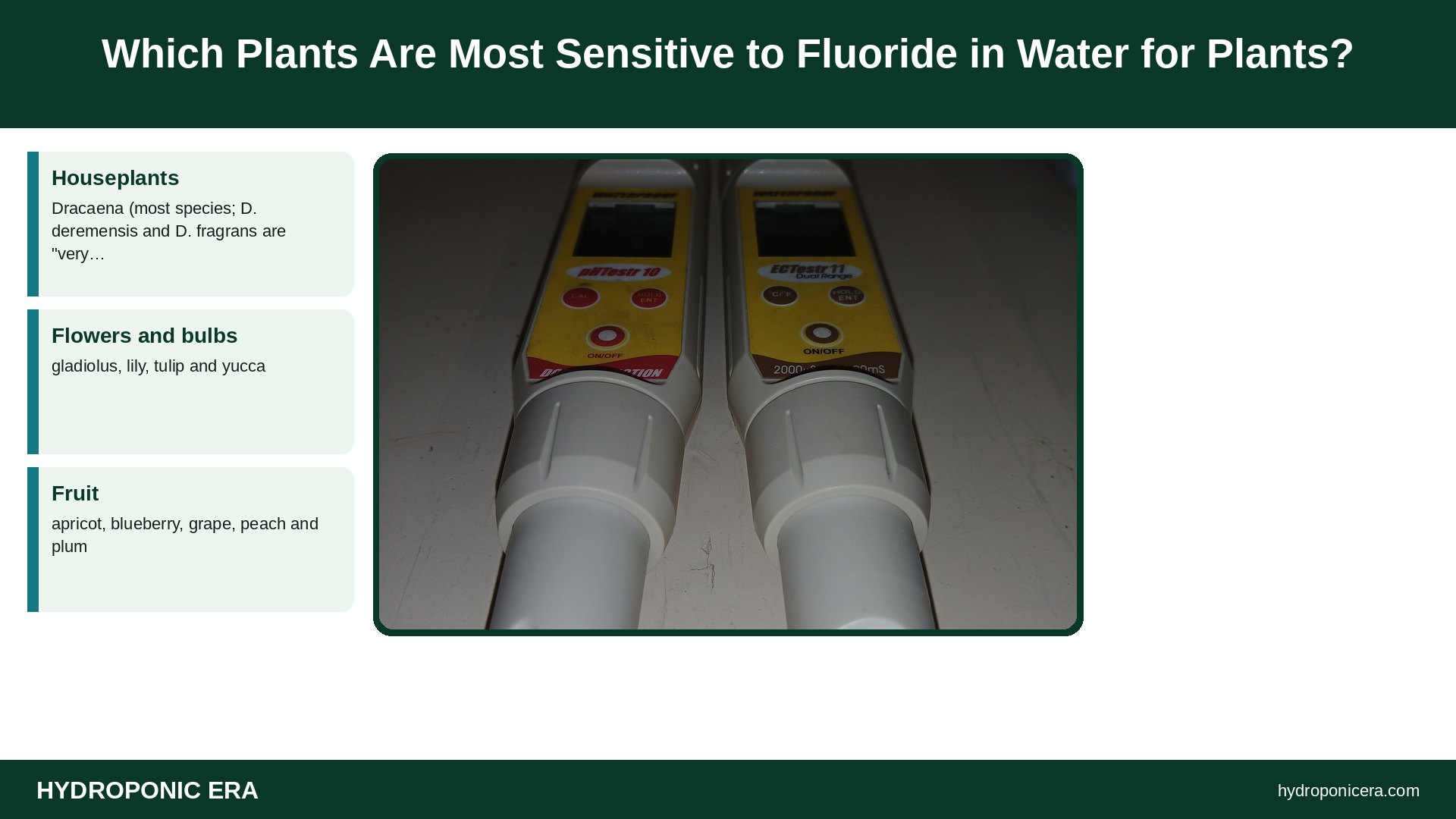
The PNW Handbook’s sensitive list includes:
- Houseplants: Dracaena (most species; D. deremensis and D. fragrans are “very sensitive”), spider plant (Chlorophytum comosum) and Tahitian bridal veil (Gibasis pellucida).
- Flowers and bulbs: gladiolus, lily, tulip and yucca.
- Fruit: apricot, blueberry, grape, peach and plum.
- Vegetables: sweet corn.
- Conifers: Douglas-fir, western larch, most pines and blue spruce.
Missouri Extension adds that members of the lily family are “especially sensitive,” which is why they often develop tipburn even with good watering and feeding.
How to Reduce Fluoride in Water for Plants: 7 Steps
- Check your water report. The EPA requires community water systems to send an annual Consumer Confidence Report by July 1. It lists fluoride levels.
- Use low-fluoride water for sensitive plants: rainwater, distilled water or RO water. The PNW Handbook says RO and distillation (condensation) reduce fluoride.
- Avoid perlite for sensitive species. Missouri Extension notes “perlite contains fluorides.”
- Skip superphosphate fertilizers. Clemson warns they often have high fluorine levels.
- Keep pH up. Clemson recommends keeping dracaena soil pH at 6.0–6.5; fluoride becomes less available as pH rises.
- Provide calcium. The PNW Handbook says high calcium in the root zone can tie up fluoride.
- Don’t rely on letting water sit. Leaving water out helps with chlorine, but it doesn’t remove fluoride.
A Simple Watering Plan for Sensitive Houseplants
You don’t need to change everything at once. Start with the plants that show tip burn, and leave the rest on tap water.
- Collect rainwater in a clean, covered container and use it within a week or two.
- Buy distilled water by the gallon for one or two small plants. It’s cheap at that scale.
- Use RO water if you already run an RO unit for drinking or hydroponics.
- Repot into a perlite-free mix at the next repotting, rather than disturbing a stressed plant now.
- Trim brown tips with clean scissors, following the leaf’s natural shape.
Judge progress on new leaves only. If fresh growth stays clean after a few months, fluoride in water for plants was likely the cause, and the new routine is working.
Fluoride in Water for Plants in Hydroponics

Most hydroponic crops, such as lettuce, herbs, tomatoes and peppers, aren’t on common fluoride-sensitive lists. Hydroponic growers more often worry about chlorine, chloramine, hardness and sodium. Our chlorine and chloramine guide covers those.
If you grow sensitive species in water or soilless media, such as hydroponic blueberries or a dracaena in a jar, consider RO water. Our RO sizing guide and rainwater guide explain the tradeoffs. RO strips calcium and magnesium too, so you’ll need a complete nutrient with Cal-Mag.
Media matters as well. Perlite is common in hydroponic mixes, so pick coco coir or other perlite-free options for sensitive plants. See our perlite and vermiculite guide.
US Fluoridation Status in 2026
Whether your tap water is fluoridated depends on your local water system. As of fall 2026, two states, Utah and Florida, have statewide laws ending community water fluoridation. Both were enacted in 2025, and Florida’s took effect July 1, 2025. CareQuest Institute reports that no additional statewide bans or restrictions were enacted in 2026, although bills were introduced in several states. Many communities elsewhere still fluoridate; Connecticut wrote a 0.7 mg/L level into state law in 2025.
The policy debate doesn’t change the plant science: fluoride in water for plants matters only for the sensitive species above. We cover this only for plant care and take no position on human-health policy. Your water report is the reliable answer for your address. Private well water isn’t fluoridated, but some wells contain natural fluoride, so test it.
Fluoride vs Salt Damage: Quick Diagnosis
Before blaming fluoride in water for plants, compare the clues. Salt damage is far more common in containers and hydroponic media.
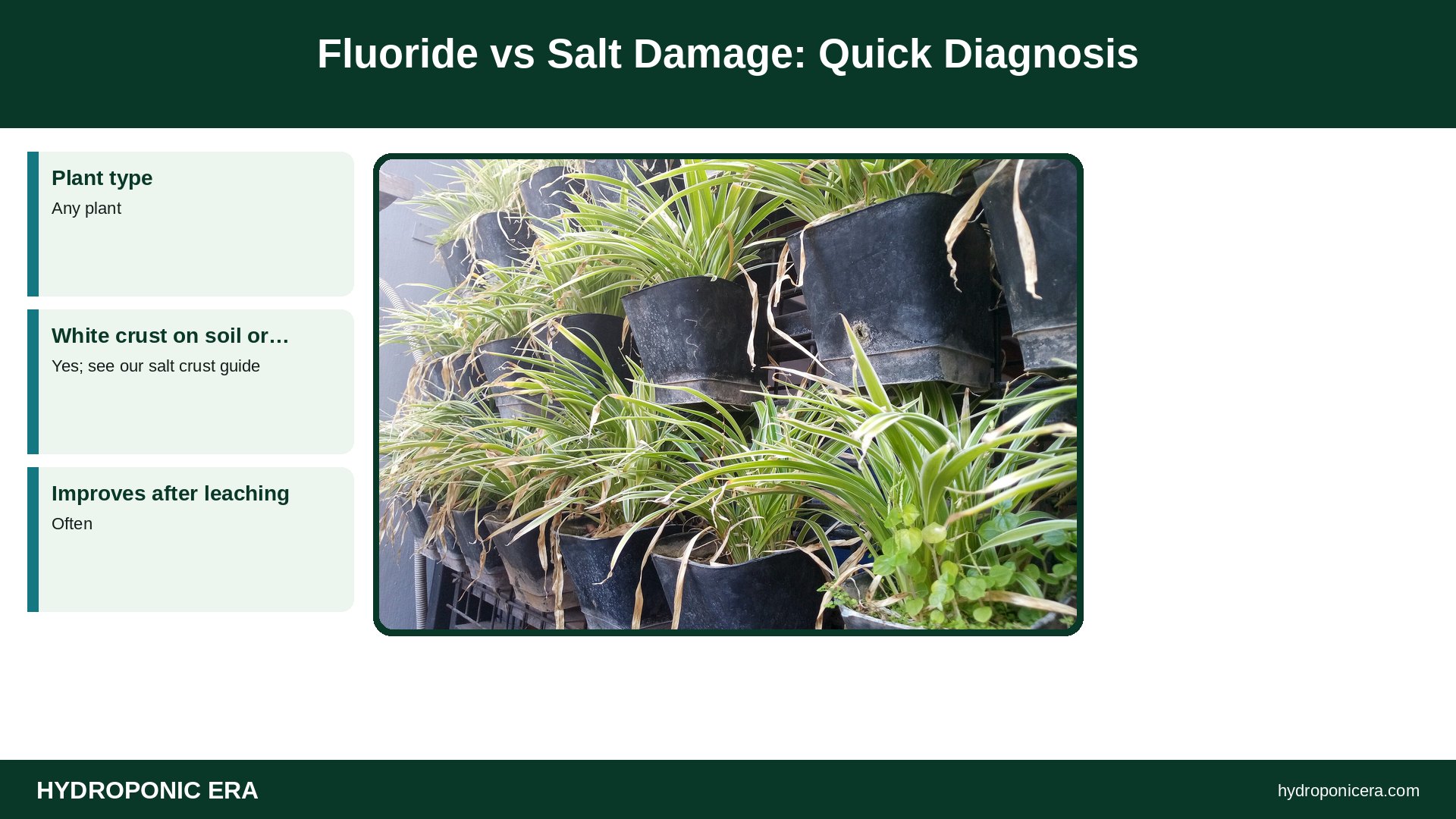
| Clue | Points to fluoride | Points to salts or overfeeding |
|---|---|---|
| Plant type | Dracaena, spider plant, lilies | Any plant |
| White crust on soil or pot | Not usually | Yes; see our salt crust guide |
| Improves after leaching | Partly | Often |
| Improves after switching to RO or rainwater | Yes, on new leaves | Only if salts came from water |
FAQs: Fluoride in Water for Plants
Is fluoride in water for plants harmful to vegetables?
Most vegetables aren’t sensitive at tap water levels. Sweet corn is on the PNW sensitive list.
Does boiling remove fluoride?
No. Boiling concentrates it as water evaporates. Use RO, distilled or rainwater instead.
Will brown tips turn green again?
No. Missouri Extension notes dead tips can’t recover; you can trim them and protect new growth.
Should I use a carbon filter for fluoride in water for plants?
Check that the filter is certified for fluoride reduction. Many common pitcher filters target chlorine and taste, not fluoride.
Related HydroponicEra Guides
- Hard water and RO in hydroponics
- Plants that grow in water
- Well water for hydroponics
- Testing your source water
Sources
- Pacific Northwest Plant Disease Management Handbook (OSU) — Fluorine Toxicity in Plants
- University of Missouri IPM — Leaf Tipburn on Houseplants
- Clemson Cooperative Extension HGIC — Dracaena
- US EPA — CCR Information for Consumers
- Florida Senate — SB 700 (2025), Chapter 2025-22
- CareQuest Institute — Fluoride Legislation in 2026 (state policy tracking)
- Photo credits (Wikimedia Commons, edited with titles): Dracaena fragrans (Leaves) by Filo gèn’ (CC BY-SA 4.0); Spider Plant (Chlorophytum Comosum) by S.samsamyang (CC BY 4.0); PH- und Leitfähigkeitsmessgeräte by Rotkaeppchen68 (CC0)
2 thoughts on “Fluoride in Water for Plants: Which Ones Get Hurt?”