
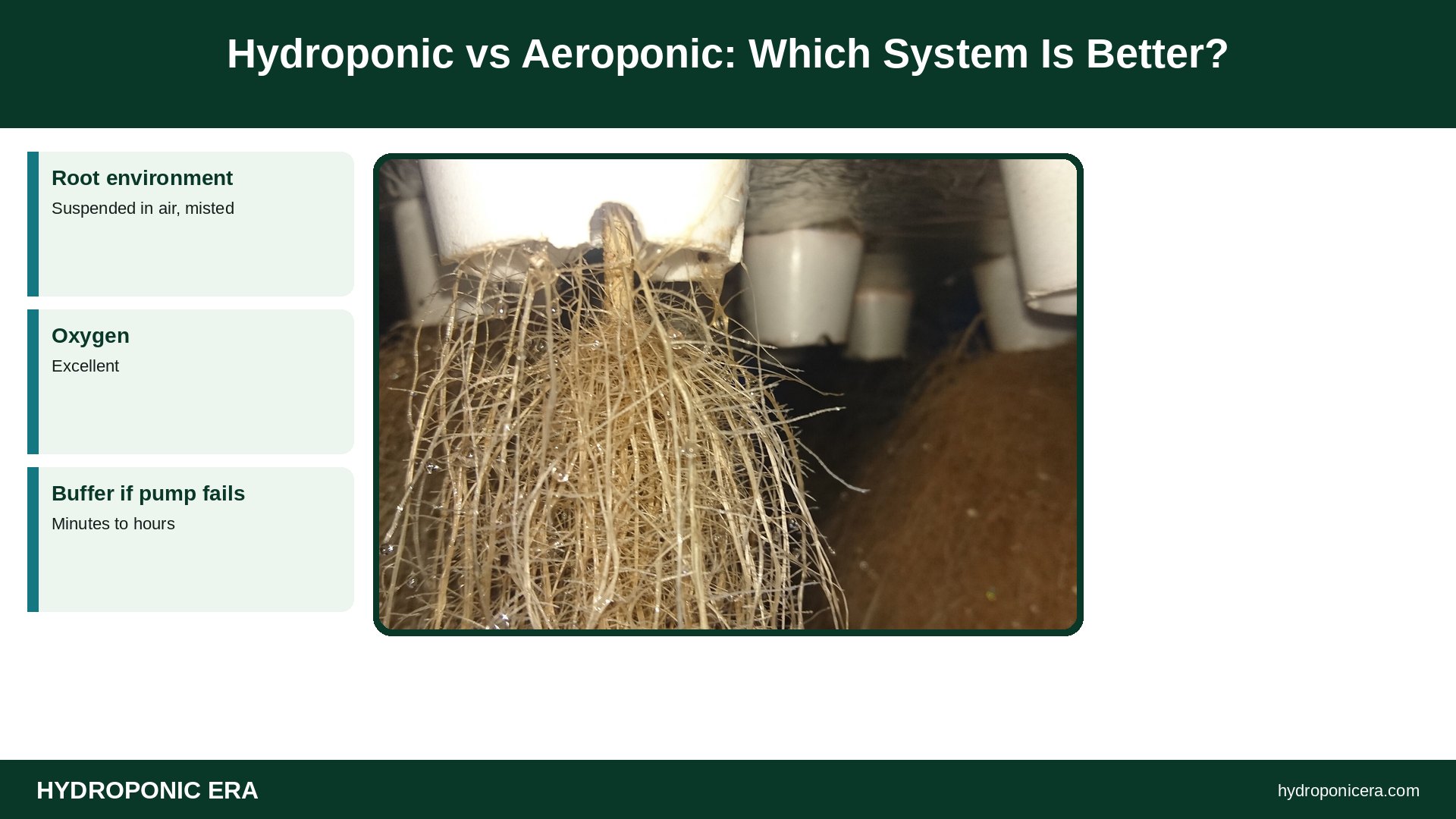
In the hydroponic vs aeroponic debate, aeroponics is technically a type of hydroponics: both grow plants without soil using nutrient solution. The difference is how roots get that solution. Most hydroponic systems bathe roots in water or a thin film, while the mist method hangs roots in air and sprays them with a fine mist. Aeroponics can deliver excellent root oxygen and fast growth, but it is more complex and less forgiving. For most home growers, standard hydroponics (DWC, NFT, Kratky, drip) is easier and more reliable.
Key takeaway: Misting trades a margin for error for maximum root oxygen. If a pump or nozzle fails, roots can dry within minutes to hours.
| Factor | Hydroponics (water-based) | Aeroponics (mist-based) |
|---|---|---|
| Root environment | In water, film, or moist media | Suspended in air, misted |
| Oxygen | Good with aeration | Excellent |
| Buffer if pump fails | Hours to days (DWC, Kratky) | Minutes to hours |
| Complexity | Low to moderate | Moderate to high |
| Maintenance | Reservoir and pH/EC checks | Plus nozzle cleaning and timer reliability |
| Best for | Beginners, most crops | Experienced growers, research, cloning |
How Each System Works
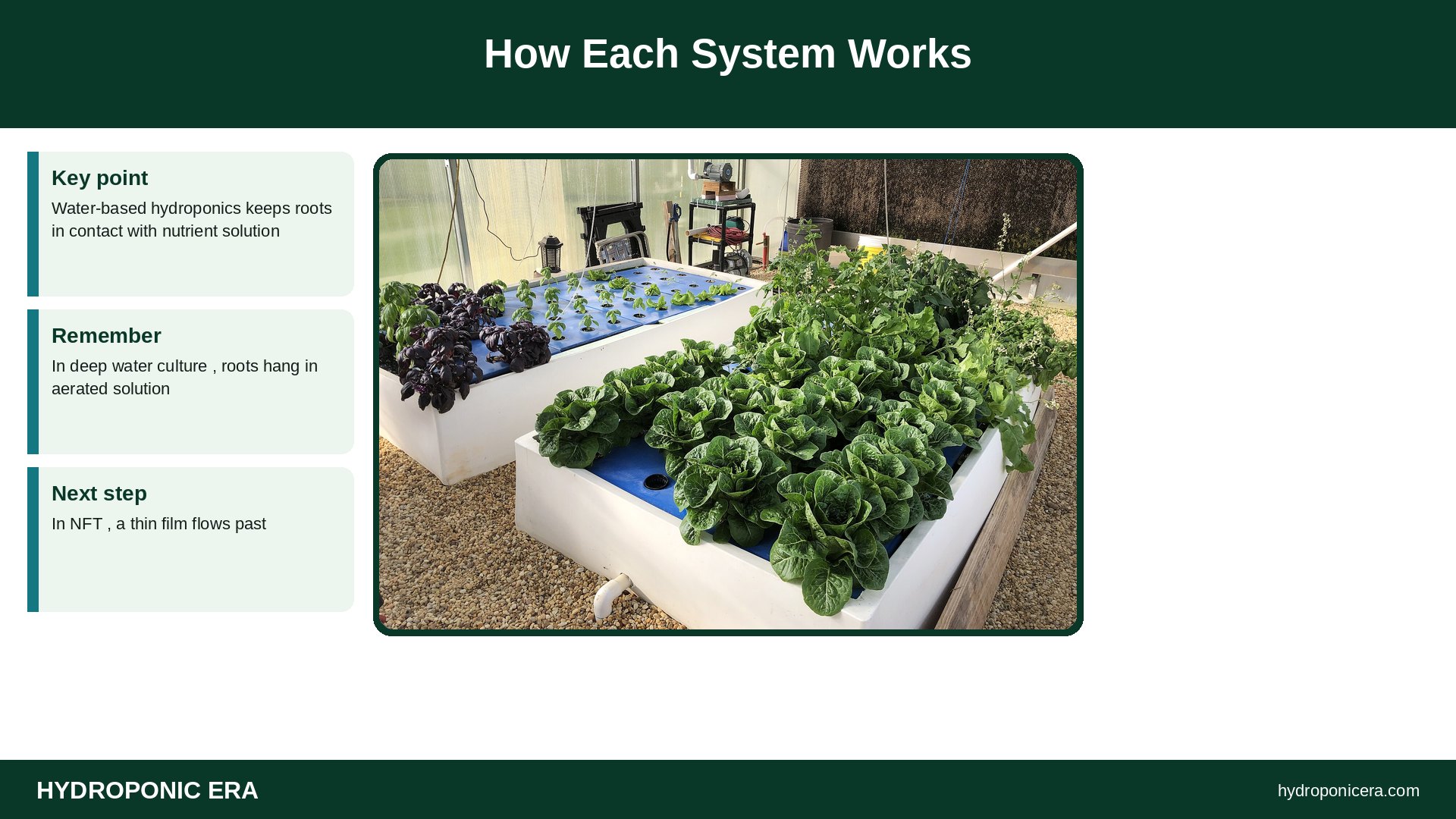
Water-based hydroponics keeps roots in contact with nutrient solution. In deep water culture, roots hang in aerated solution. In NFT, a thin film flows past. In drip and ebb and flow systems, media hold moisture between irrigations.
Aeroponics places roots in a dark chamber and sprays them with nutrient mist on a short cycle. Low-pressure systems use small sprinkler-style nozzles and a regular pump; high-pressure aeroponics uses a pressurized tank and fine misting nozzles to make very small droplets. NASA and university researchers have long studied aeroponics because it can be efficient with water and nutrients. See aeroponics for beginners and hydroponics in space.
Growth and Yield
Some studies report faster root growth in mist systems because roots get abundant oxygen. Results vary by crop, system design, and grower skill, and well-run water-based systems also produce excellent yields. For home growers, the difference in harvest is often smaller than the difference in how well the system is managed. A neglected mist system will usually do worse than a simple, well-kept DWC bucket.
Reliability and Risk
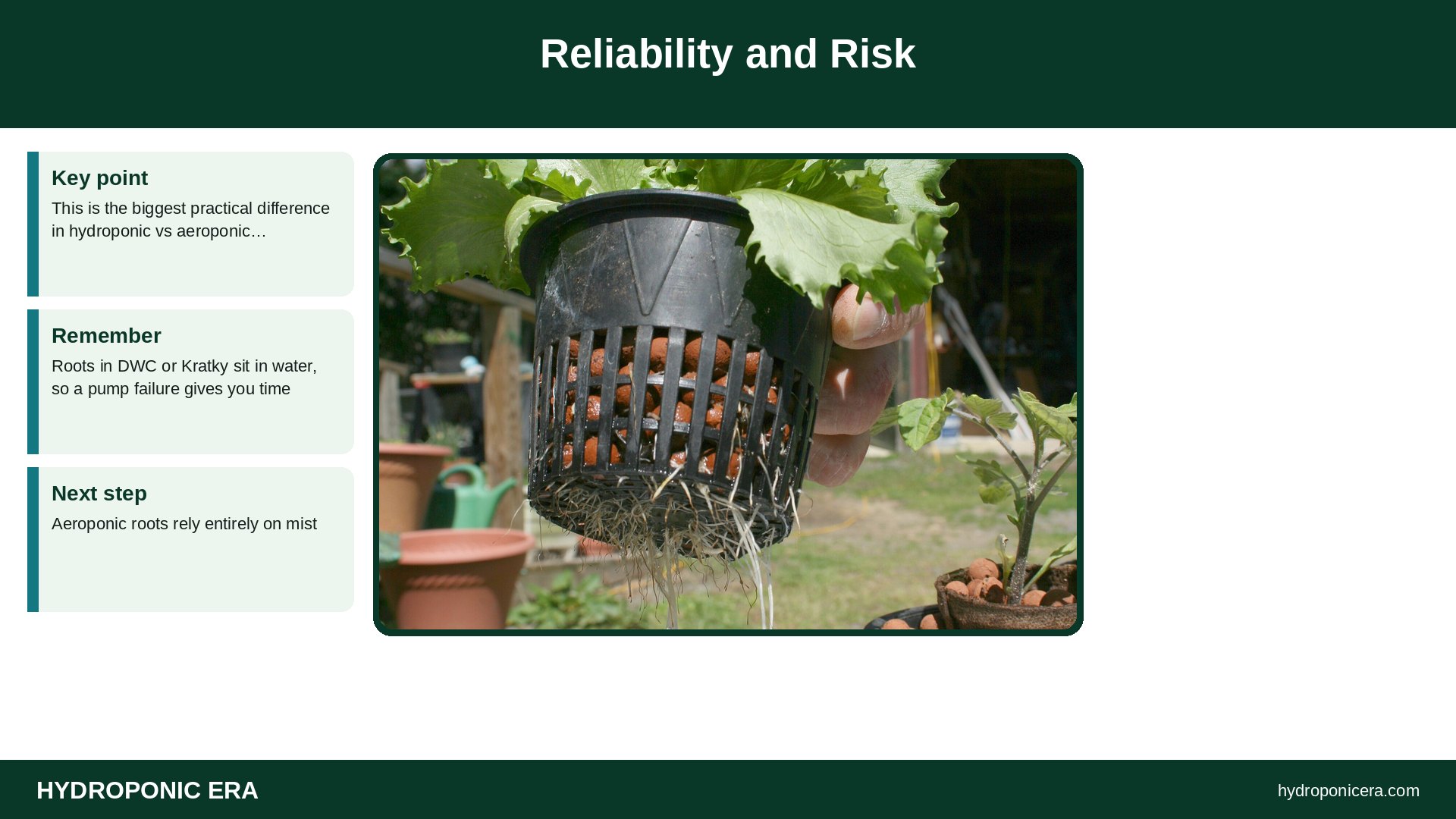
This is the biggest practical difference in hydroponic vs aeroponic setups. Roots in DWC or Kratky sit in water, so a pump failure gives you time. Misted roots rely entirely on spray. A clogged nozzle, failed timer, or power outage can dry roots quickly. Experienced growers use backup pumps, alarms, and battery backup. See timer fail-safes and backup power.
Maintenance Compared
- Both: check pH and EC, refresh solution, clean between crops.
- Misting adds: regular nozzle inspection and cleaning, filter checks, and monitoring of spray timers. Mineral deposits and root fragments clog nozzles.
- High-pressure misting adds: pressure tanks, solenoids, and accumulators. See solenoid valves.
Cost
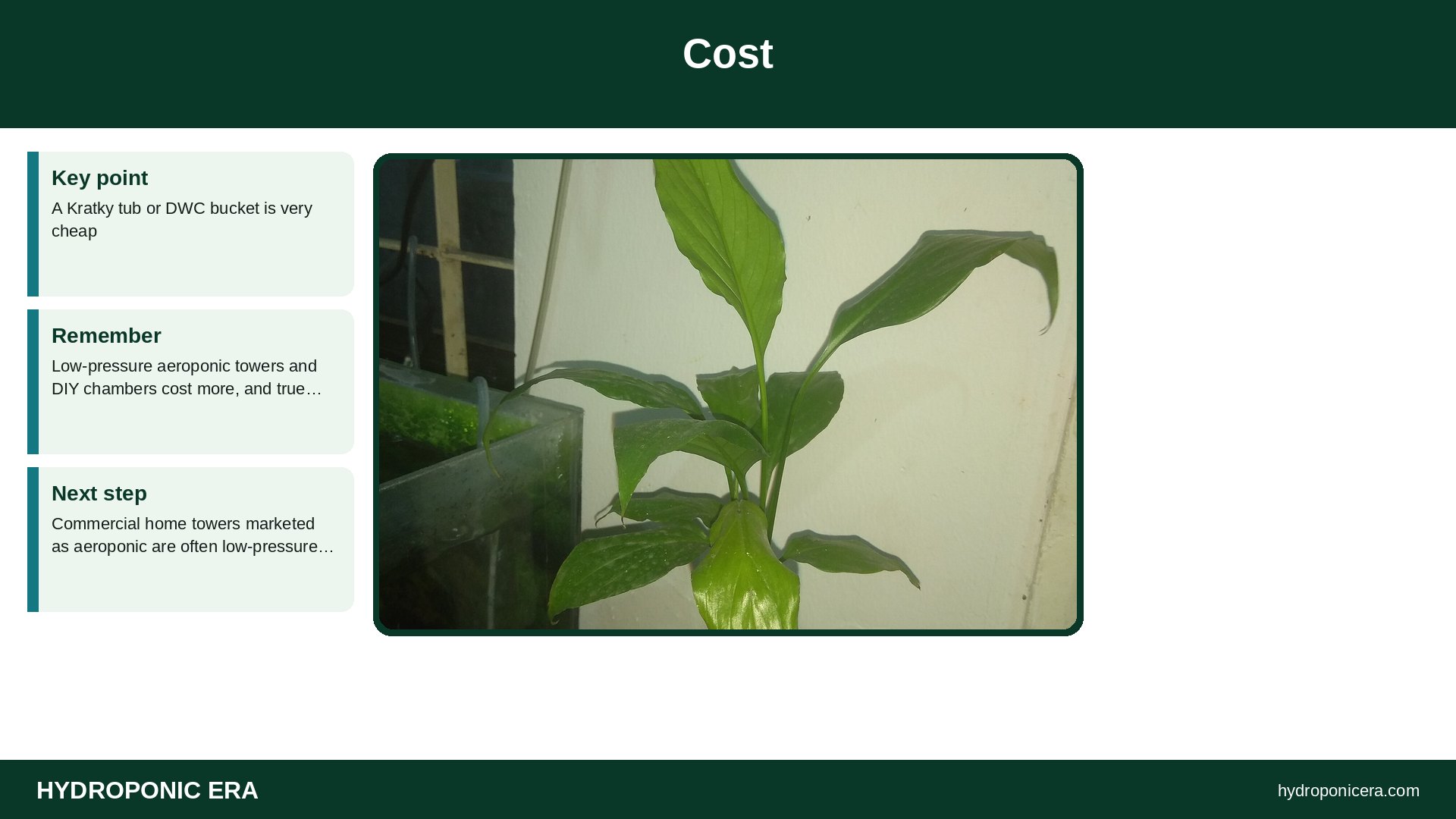
A Kratky tub or DWC bucket is very cheap. Low-pressure mist towers and DIY chambers cost more, and true high-pressure systems cost more still because of pumps, tanks, and precision nozzles. Commercial home towers marketed as aeroponic are often low-pressure or hybrid systems that spray or trickle water. See hydroponic tower gardens.
Which Crops Fit Each?
| Crop | Hydroponics | Aeroponics |
|---|---|---|
| Lettuce, herbs | Excellent | Excellent |
| Tomatoes, peppers | Excellent (DWC, Dutch bucket) | Possible; large roots can block nozzles |
| Cuttings and clones | Good | Excellent; aeroponic cloners are popular |
| Root crops | Limited | Researched for potato seed tubers; niche at home |
See hydroponic cloning for how aeroponic cloners work.
Water and Nutrient Use
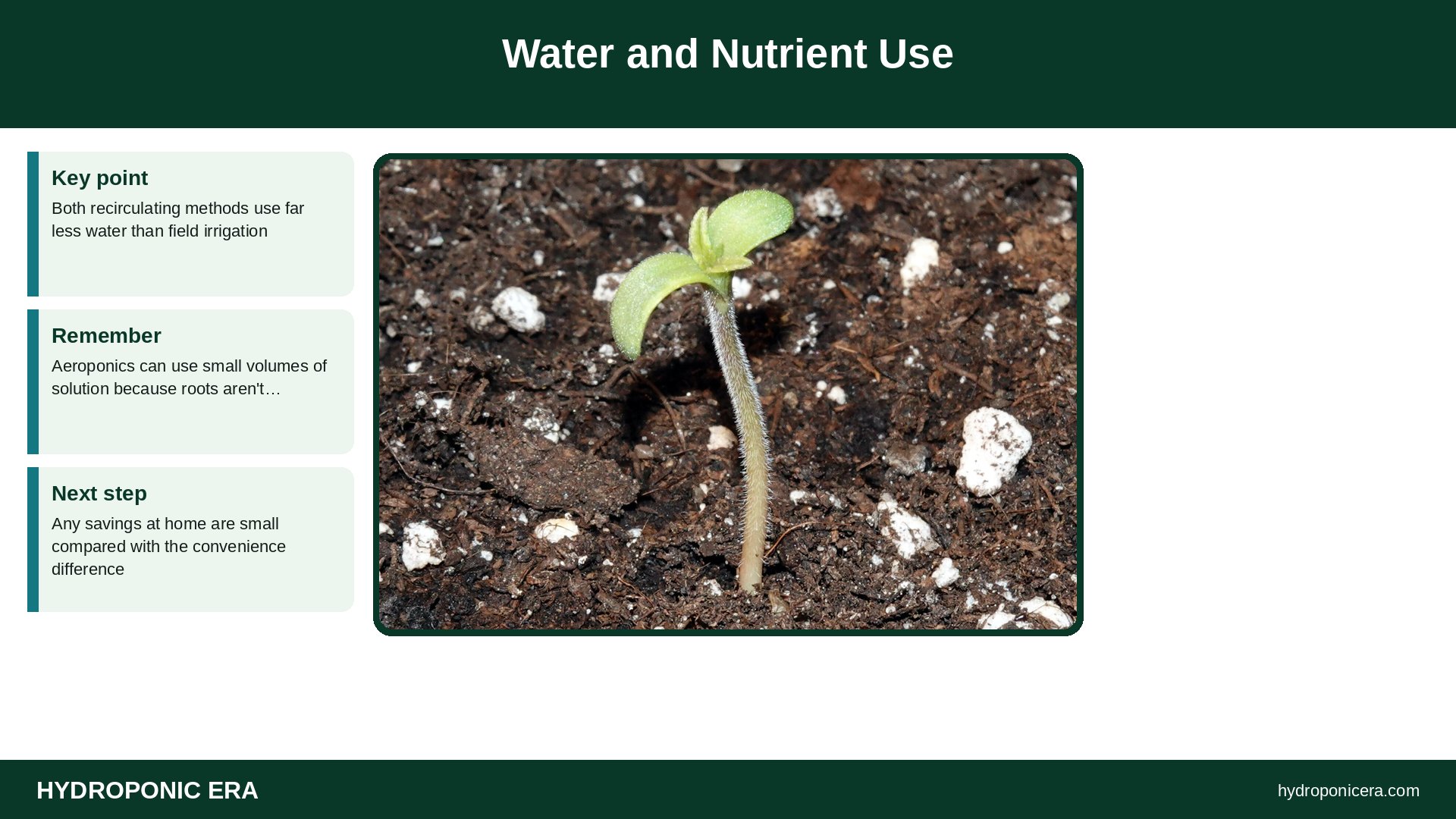
Both recirculating methods use far less water than field irrigation. Mist systems can use small volumes of solution because roots aren’t submerged, but it still needs a reservoir. Any savings at home are small compared with the convenience difference. See does hydroponics use less water.
Which Should You Choose?
- Choose water-based hydroponics if you’re a beginner, want a forgiving system, or grow fruiting crops.
- Choose a mist system if you enjoy tinkering, want fast cloning, or are experimenting with root-zone research.
Many growers start with Kratky or DWC, then try an aeroponic cloner as a second project. Compare more systems in DWC vs NFT vs Dutch bucket.
What About Fogponics?
Fogponics is a variant that uses ultrasonic foggers to create very fine droplets. It’s experimental for home use and has practical issues with heat and limited nutrient delivery. It’s an interesting curiosity, but standard hydroponics remains the practical choice for food crops.
Building a Simple Aeroponic Test Unit
If you’re curious, a small low-pressure mist box is an affordable experiment. Use an opaque storage tote with net cups in the lid, a small submersible pump, PVC or tubing manifold, and 360° spray nozzles pointed at the roots. Run the pump continuously at first, or on short on/off cycles with a cycle timer after testing. Keep the tote dark and the solution cool. Grow a few lettuce plants or cuttings and compare them with a DWC bucket nearby. This side-by-side shows the real trade-offs better than any chart.
Common Mist System Problems
- Clogged nozzles: filter the solution, clean nozzles weekly, and use clean nutrients.
- Dry root tips: check spray coverage and pump pressure.
- Warm chambers: pumps add heat; insulate and shade. See reservoir temperature.
- Root rot: even with mist, warm, dirty systems can grow pathogens. See Pythium root rot.
Costs and Skills Compared
Water-based systems ask you to learn pH, EC, and reservoir care. Mist systems ask for the same skills plus plumbing, timers, and nozzle maintenance. If you enjoy tinkering, that’s part of the fun. If you want food with minimal fuss, simpler hydroponic setups get you there faster.
Hybrid Systems
Some home towers and commercial units mix the two ideas: a pump sprays or trickles solution over roots that also sit near a shallow pool of water. These hybrids give some of the oxygen benefits of misting with a little more buffer if the pump stops. When comparing products, ask how the roots are watered and what happens during a power cut. See tower gardens.
FAQs: Hydroponic vs Aeroponic
Is aeroponics better than hydroponics?
Not universally. Aeroponics offers excellent root oxygen but less margin for error. Water-based hydroponics is easier for most people.
Is aeroponics a type of hydroponics?
Yes. Both are soilless methods using nutrient solution; aeroponics delivers it as mist.
Do aeroponic systems grow faster?
They can, especially for root development and cloning, but results depend heavily on system design and management.
Are tower gardens aeroponic?
Some are marketed that way, but many trickle or spray water rather than produce a true fine mist.
What happens if the aeroponic pump stops?
Roots can dry out quickly. Use alarms, backup power, and spare parts.
Sources
- NASA — Growing Plants in Space
- USDA National Agricultural Library — Hydroponics resources
- Photo credits (Wikimedia Commons, edited with titles): Aeroponic roots nepal by Makampanda (CC BY-SA 4.0); Deepwater Aquaponics Floating Rafts Growing Lettuce, Basil and Arugula by Alabama Extension (CC0); 2009-03-30 Lettuce roots by Ildar Sagdejev (Specious) (CC BY-SA 4.0); Spathiphyllum wallisii hydroponically grown by Kephalian (CC BY-SA 4.0); Hanfsämling mit Wurzelhaaren am Stamm – Hemp seedling with root hairs on the stem by Vschlothauer (CC0)