
Quick Answer: grow basil hydroponically
grow basil hydroponically is one of the friendliest beginner herb projects: basil grows quickly, loves light, and adapts well to DWC, NFT, and media-based systems. Success comes from strong light, a stable mild-to-moderate nutrient solution, pH in a plant-available band, warm-but-not-hot roots, and frequent harvesting that keeps plants bushy. Start from clean seed or cuttings, transplant only when roots are ready, and pinch flower buds if you want ongoing leaf production.
Basil pairs well with other herbs—see mint hydroponics—and with leafy system guides like lettuce hydroponics. For solution management, use the pH and nutrients guides.
Key Takeaways
- University of Florida IFAS notes basil as a short-season, shallow-rooted crop that grows well in high-moisture hydroponic root zones (including systems popular for lettuce and basil).
- University of Minnesota Extension describes basil as needing bright light and well-drained conditions in soil gardens; indoors/hydro, translate that to strong grow lighting and oxygenated roots—not soggy, stagnant pockets with no air.
- Keep solution pH in a hydroponic availability band (Oklahoma State discusses about 5.0–6.0 for soilless nutrient solutions).
- Harvest often: cut above a leaf node to encourage branching.
- Watch for iron-related yellowing on new growth if pH drifts high (Penn State shows hydroponic basil iron issues as a teaching example).
- Prevent algae and root slime with opaque reservoirs and steady aeration.
- Choose compact cultivars for small kits; larger genovese types need more vertical space.
Related HydroponicEra guides
- Best plants for hydroponics
- How to grow mint hydroponically
- Deep water culture for beginners
- NFT hydroponics for beginners
- Best grow lights for hydroponics
Why it is easy to grow basil hydroponically
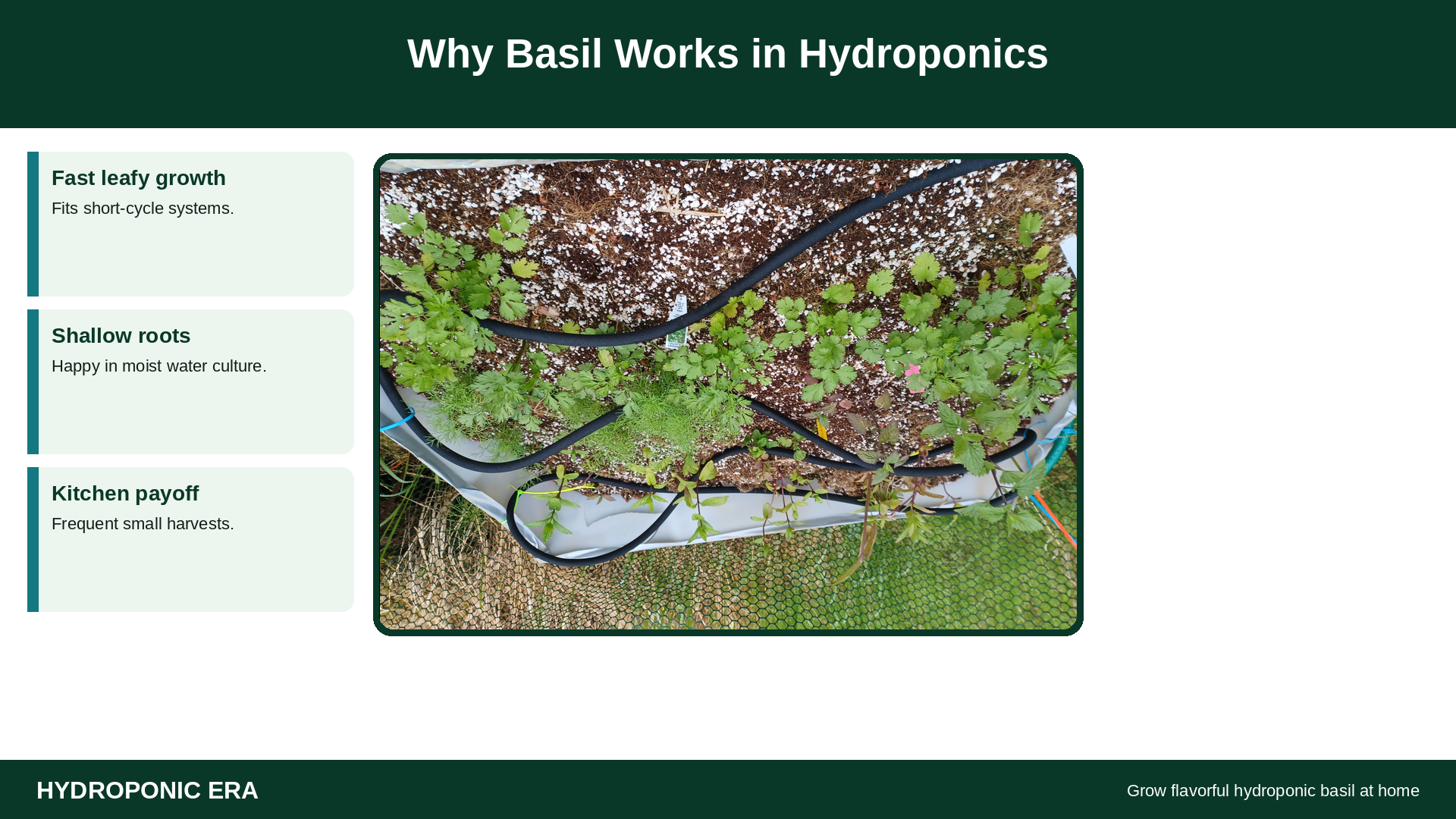
Basil (Ocimum basilicum and related types) is grown for aromatic leaves. Hydroponics supplies water and minerals continuously, which matches basil’s fast vegetative growth when light and temperature are adequate.
UF/IFAS hydroponic vegetable production materials describe floating and NFT-style approaches as popular for short-term crops such as lettuce and basil, including marketing plants with roots intact. That is a useful signal for home growers: basil does not need a giant fruiting system to succeed.
UF Gardening Solutions notes basil’s culinary range (Italian, Thai, and specialty scented types) and that plants are cold-sensitive—leaves can suffer when temperatures drop near the low 40s °F. Keep indoor basil in a warm room and away from cold window drafts at night.
Choose a system when you grow basil hydroponically
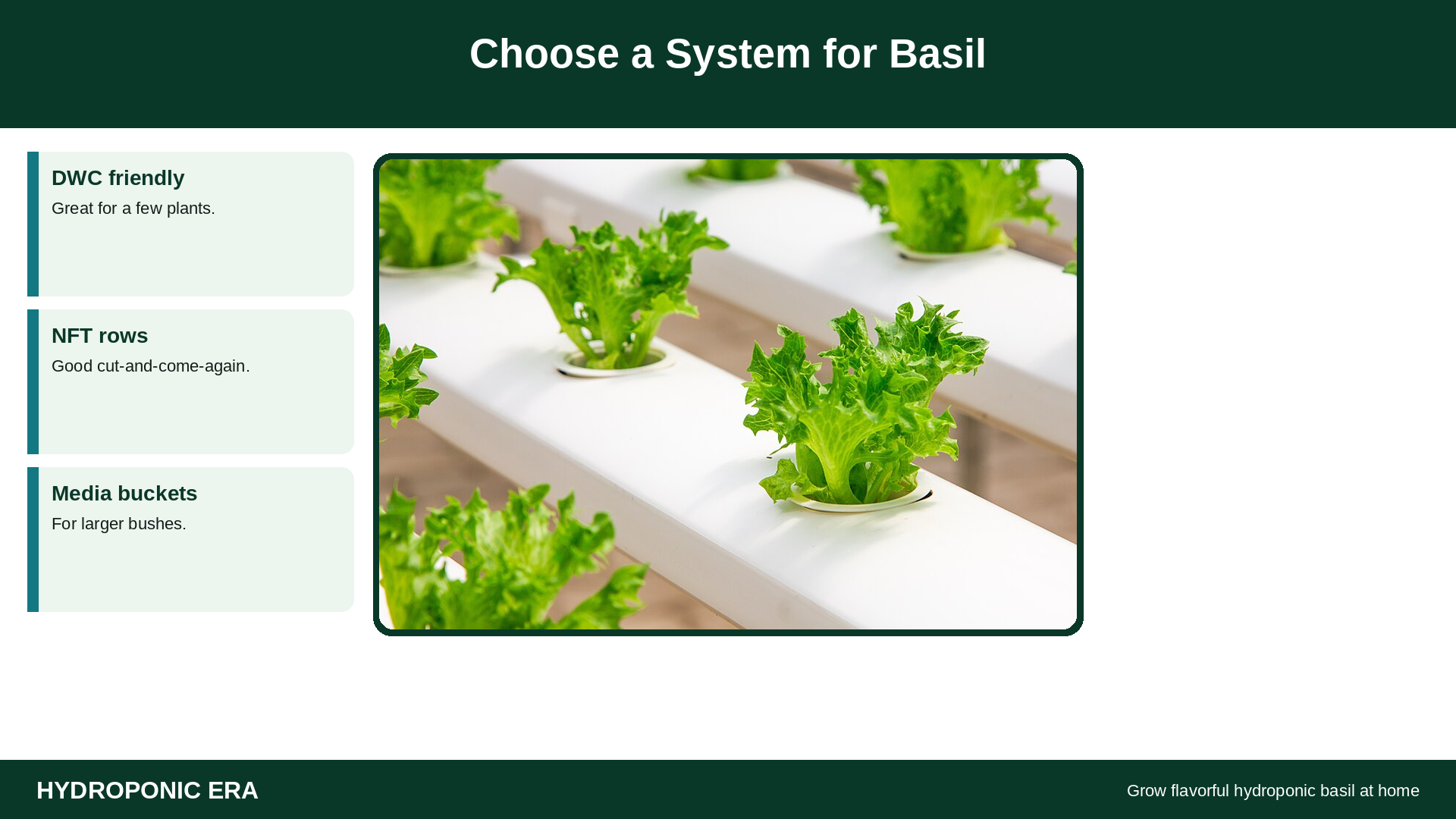
| System | Beginner fit for basil | Watch-outs |
|---|---|---|
| DWC / bubble bucket | Excellent for a few plants | Algae if tank is lit; keep air stone running |
| NFT | Great for cut-and-come-again rows | Pump failure dries roots quickly |
| Media drip / Dutch bucket | Good for larger bushes | More parts; avoid waterlogged media with no air |
| Kratky (no pump) | Possible for very small plants | Less forgiving on oxygen as plants enlarge |
If you are still choosing hardware, compare options in the system beginner guide and the dedicated DWC, NFT, and Dutch bucket articles.
Step-by-step: grow basil hydroponically
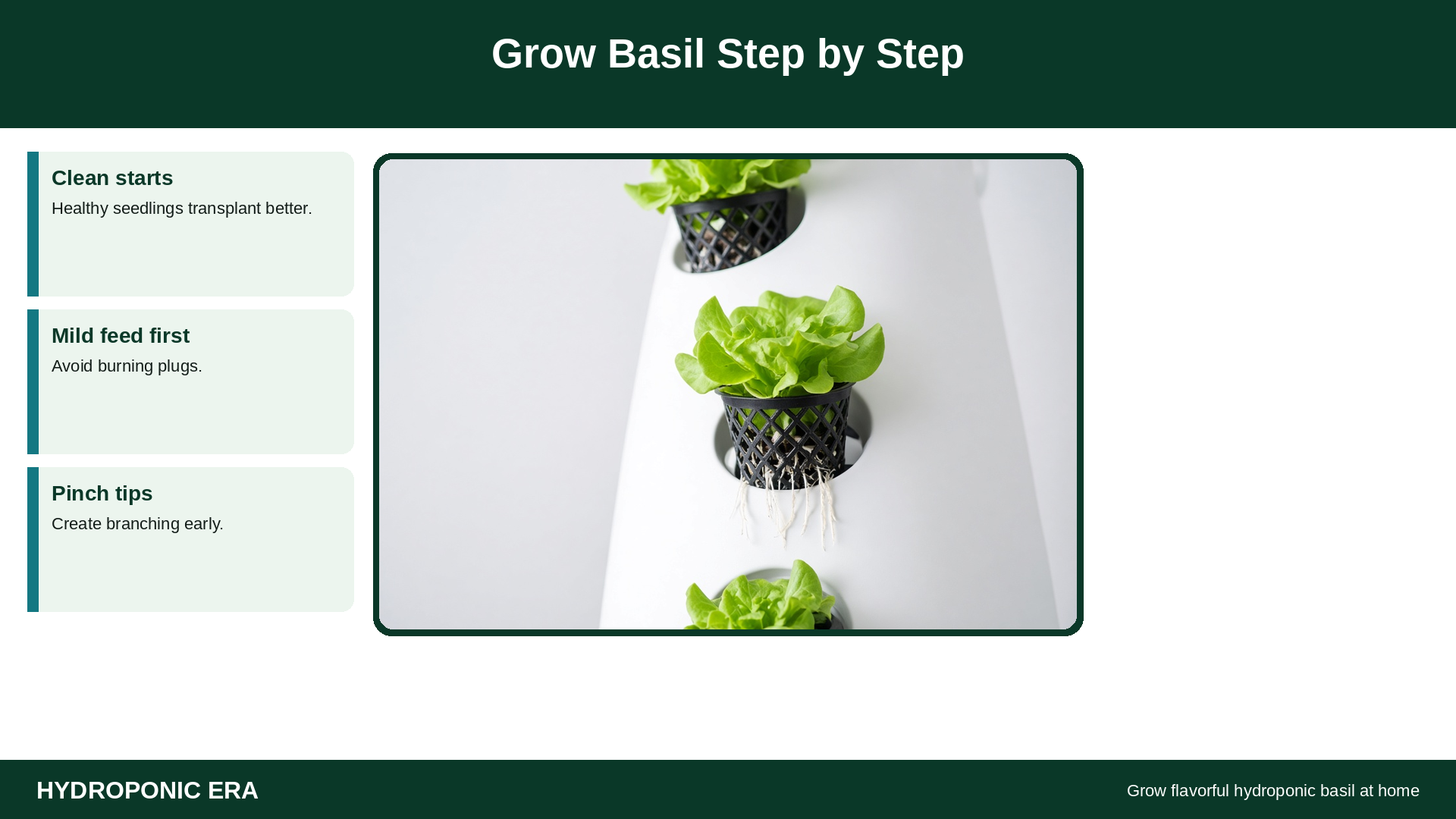
- Start seeds in a clean inert medium (rockwool, rapid rooter, or similar). Keep evenly moist—not drowning.
- Germinate warm and provide light as soon as sprouts emerge to avoid stretch.
- Transplant when roots show through the plug and plants have true leaves. Support with net pots and clay pebbles if needed.
- Mix a complete hydroponic nutrient at a mild vegetative strength. Set EC/strength for leafy herbs conservatively at first, then adjust with growth.
- Set pH after strength. Aim for a soilless hydroponic band near the extension guidance of about 5–6.
- Provide strong light — University of Minnesota Extension emphasizes bright light for basil in home gardens; indoors, that usually means a quality LED close enough for compact growth without bleaching.
- Maintain aeration and reservoir hygiene especially in DWC.
- Pinch and harvest regularly: cut stems above a node so two shoots replace one.
- Remove flower buds if your goal is continuous leaf harvest (flowering shifts energy and can change leaf flavor).
- Change nutrient solution on a schedule matched to reservoir size and plant demand.
Important Growing Variables
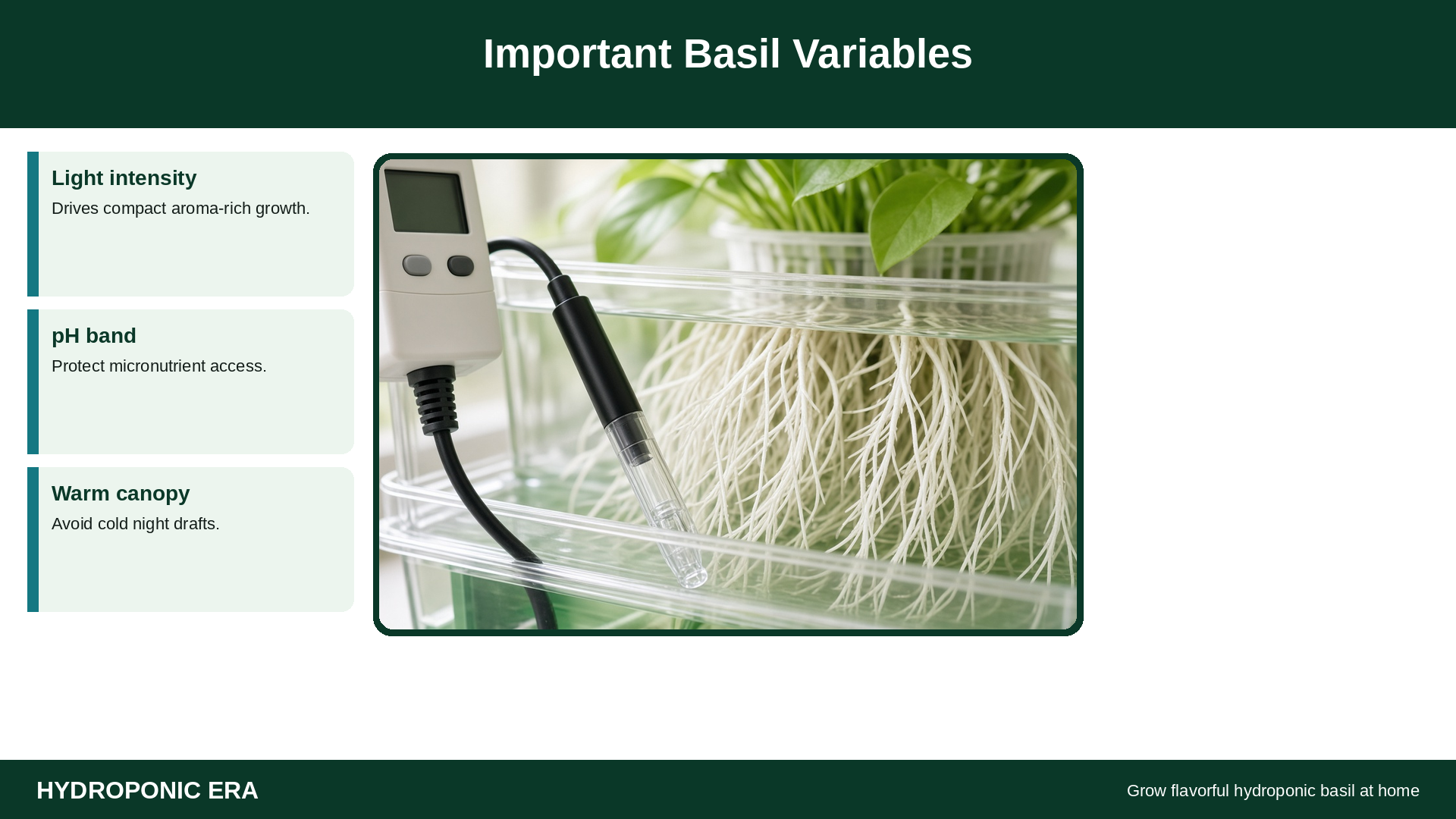
| Variable | Practical beginner guidance | Notes |
|---|---|---|
| Light | Bright, consistent daily light | Weak light = tall, sparse basil |
| pH | ~5.0–6.0 solution band (OSU soilless guidance) | High pH can show as micronutrient yellowing |
| Nutrient strength | Mild to moderate for leafy growth | Raise gradually as plants bulk up |
| Air / oxygen | Continuous aeration in DWC | Smelly roots need immediate attention |
| Temperature | Warm room; avoid cold shocks | UF notes chill damage risk for basil foliage |
| Harvest | Frequent pinching | Builds bushy plants |
Illinois Extension’s basil guidance (home garden context) and Penn State’s indoor herbs resources both reinforce the same theme: basil wants light, warmth, and attentive harvesting. Hydroponics changes the root zone delivery method, not those basic plant preferences.
Common Mistakes
- Starting with too-hot nutrient strength on tiny seedlings
- Letting pH drift high until new leaves yellow
- Insufficient light, then blaming nutrients
- Never harvesting, then wondering why plants get woody and flower-heavy
- Clear reservoirs growing algae under herb LEDs
- Cold windowsills overnight
- Crowding too many large genovese plants in a tiny kit
Troubleshooting Basil Problems
| Symptom | Likely causes | What to do |
|---|---|---|
| Leggy, weak stems | Low light | Lower light distance / increase intensity or duration |
| Yellow new leaves | pH lockout / iron availability | Check pH; reset solution if needed |
| Brown leaf edges | High EC / dry air / uneven watering in media | Measure strength; moderate environment |
| Wilting with wet roots | Low oxygen / root disease pressure | Increase aeration; check temperature; clean system |
| Sudden flower spikes | Age, stress, long days, missed pinching | Pinch buds; keep harvesting |
| Weak aroma | Low light or over-mild feeding after heavy harvest | Improve light; review nutrient strength |
What to Check in Your Own Basil System
- Is the plant compact or stretched?
- Are roots pale and firm?
- Is the reservoir opaque and cool enough?
- Are pH and strength logged at least several times per week in small tanks?
- Are you harvesting weekly once plants are established?
Suggested Beginner Schedule for Hydroponic Basil
| Stage | Focus | Actions |
|---|---|---|
| Seed / sprout | Moisture + warmth + early light | Keep plugs moist; avoid heavy fertilizer on day one |
| Seedling | Compact growth | Strong light; mild nutrients after first true leaves |
| Early vegetative | Root establishment | Stable pH/EC; continuous aeration in DWC |
| Harvest phase | Bushy canopy | Pinch weekly; remove flower buds; maintain solution quality |
| Between crops | Hygiene | Scrub reservoir, rinse pump parts, replace tired air stones |
Flavor and harvest tip: Harvest in the morning when plants are hydrated, and take stems with growing tips rather than only stripping bottom leaves. Leave enough foliage for photosynthesis. If a plant becomes woody or constantly flowers, start a fresh seedling—basil is fast enough that replacement is often smarter than fighting an exhausted bush.
Companion planning: Basil can share space with lettuce in some systems, but fruiting crops may want different strength and support. When learning, a dedicated basil tub reduces variables. For plant selection context, see best plants for hydroponics.
University of Minnesota Extension notes a soil pH range around 6.0–7.5 for garden basil and recommends fertilizing sparingly in soil. Hydroponics is different because roots sit in a designed solution: use complete hydroponic nutrients at controlled strength instead of occasional garden fertilizer, and manage solution pH in the soilless band recommended by hydroponic extension guides (commonly slightly acidic).
Nutrient, Light, and Harvest Details That Change Results
Nutrient notes: Use a complete hydroponic formula. Set a mild strength for seedlings, then increase as plants branch. If new leaves yellow while EC looks adequate, check pH for lockout before adding random supplements. Penn State’s hydroponic basil iron example is a useful mental model: availability problems can look like deficiencies.
Light notes: Basil grown soft and pale is usually light-limited. Raise intensity or lower the fixture carefully to avoid bleaching. Keep a consistent daily photoperiod; random on/off schedules produce stretchy plants.
Harvest math for home use: Once a plant has multiple side shoots, you can typically take a portion of tips each week while leaving enough leaf area to recover. If you need a large pesto batch, harvest heavier from older plants and keep younger plants coming in a second net pot so production never fully stops.
Seed vs cutting: Seeds offer many cultivars (Genovese, Thai, dwarf). Cuttings clone a flavor you already like and start faster, but still need clean water and light. Sanitize scissors between plants if disease shows up.
UF Gardening Solutions’ cold-sensitivity reminder matters indoors too: a basil canopy near a freezing window at night can look “diseased” the next morning when the real issue was chill.
Final Basil Success Checklist
- Strong daily light without chronic bleaching
- Opaque, aerated reservoir for DWC plants
- pH kept in a soilless availability band
- Mild-to-moderate nutrient strength matched to growth
- Weekly harvesting / pinching habit
- No cold-night drafts on the canopy
- Clean restart between dense crops
Weekly rhythm when you grow basil hydroponically
A simple weekly rhythm helps you grow basil hydroponically without letting plants stretch or flower before you want them to.
| Day focus | Actions | Notes |
|---|---|---|
| Light & canopy | Check stretch; raise/lower lamp; rotate plants if edges are dim | Basil wants strong light—weak light makes lanky stems |
| Solution | Measure pH and EC; top up; note reservoir smell/clarity | Pair with your pH and nutrients habits |
| Prune / harvest | Pinch above a node; remove flower buds if you want leaves | Frequent harvest keeps plants bushy |
| Roots / air | Confirm air stone in DWC; check NFT flow isn’t stalled | Warm stagnant roots stall basil fast |
| Sanitation | Wipe salt crust; remove dead leaves from channels | Debris feeds biofilm |
Harvest styles that keep plants productive
- Soft pinch: take tips regularly once plants have several nodes.
- Leaf-by-leaf: fine for kitchen snips; avoid stripping a small plant bare.
- Hard cut-back: when plants get woody, cut to a healthy node and resume feed/light discipline.
Companion notes (not a shared-tank requirement)
Basil often shares rooms with lettuce or mint, but shared reservoirs need similar pH/EC preferences and disease hygiene. If one crop is struggling with root slime, isolate problems before you blame the cultivar. When you grow basil hydroponically beside fruiting crops, watch for light competition—tall tomatoes can shade herbs at the edge of a tent.
Keep a one-line log: date, pH, EC, harvest notes, and any flower buds removed. That log teaches faster than swapping nutrient brands every week.
grow basil hydroponically: practical review sheet
Use this review sheet to keep grow basil hydroponically actionable after you finish the main guide.
- What did you measure today related to grow basil hydroponically?
- What did you change with your hands (not just what you bought)?
- What will you re-check in 24–48 hours about grow basil hydroponically?
- Which linked HydroponicEra guide should you reread next?
- What cleaning or logging step did you skip last cycle?
| Item | Today | Next check |
|---|---|---|
| Environment | ||
| Solution (pH/EC) | ||
| Roots / pests / biofilm | ||
| Plant response |
Print or duplicate this table in your notes app. The goal is not paperwork—it is fewer repeated mistakes around grow basil hydroponically.
When results are unclear, slow down and restate the problem in one sentence that includes grow basil hydroponically, then list the last three changes you made. Most home-system failures come from stacked changes without logs. Keep grow basil hydroponically paired with basic hygiene: clean reservoirs, honest meter calibration, and root inspection. If you cannot explain your last adjustment, do not add another product. Re-read the troubleshooting section and apply one change at a time while you watch how grow basil hydroponically interacts with pH, temperature, and oxygen.
When results are unclear, slow down and restate the problem in one sentence that includes grow basil hydroponically, then list the last three changes you made. Most home-system failures come from stacked changes without logs. Keep grow basil hydroponically paired with basic hygiene: clean reservoirs, honest meter calibration, and root inspection. If you cannot explain your last adjustment, do not add another product. Re-read the troubleshooting section and apply one change at a time while you watch how grow basil hydroponically interacts with pH, temperature, and oxygen.
grow basil hydroponically: habits that compound
These habits keep grow basil hydroponically practical between deep cleans and big changes.
- Keep notes when you work on grow basil hydroponically so small changes stay visible across weeks.
- Revisit grow basil hydroponically after any reservoir reset, media change, or heat wave.
grow basil hydroponically FAQs
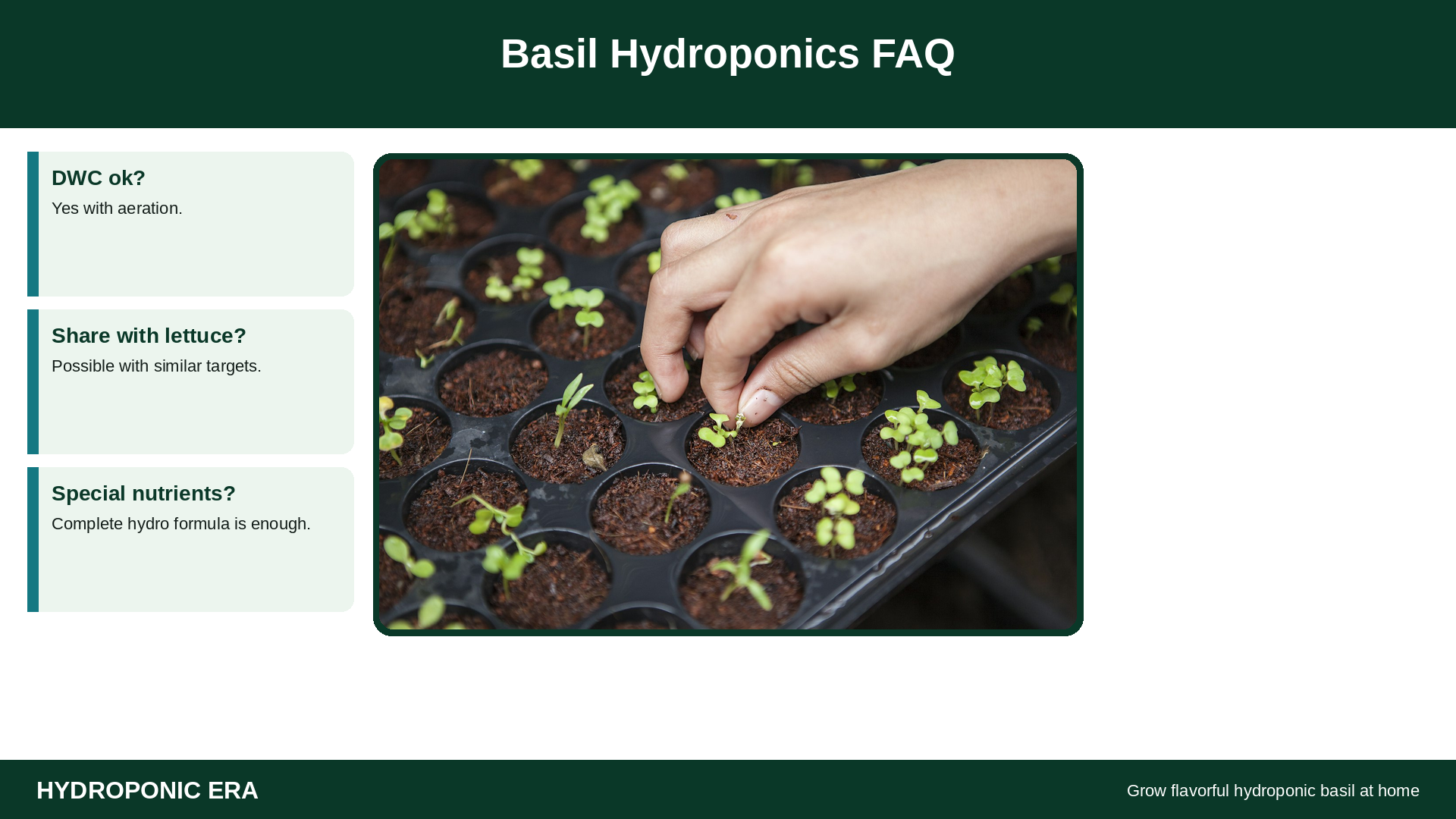
How long until I can harvest hydroponic basil?
Many home growers begin light harvesting once plants have several sets of true leaves and active branching. Exact timing depends on cultivar, light, and temperature—avoid stripping a tiny plant bare.
Can I grow basil in DWC?
Yes. Keep the water aerated, block light from the tank, and support the stem in a net pot.
Should basil share a reservoir with lettuce?
It can, if both tolerate similar strength and pH. Monitor whether one crop outpaces the other for nutrients.
Why did my hydroponic basil turn yellow on top?
Check pH first. High pH commonly reduces micronutrient availability; Penn State highlights iron-related hydroponic basil examples.
Do I need special “herb nutrients”?
A complete hydroponic formula used at a sensible vegetative strength is enough for most beginners. Follow the label and plant response.
Sources
- University of Florida IFAS — HS405: Hydroponic Vegetable Production in Florida
- University of Florida — Gardening Solutions: Basil
- University of Minnesota Extension — Growing basil in home gardens
- University of Illinois Extension — Basil
- Penn State Extension — Hydroponics Systems and Principles of Plant Nutrition
- Penn State Extension — Growing Herbs Indoors
- Oklahoma State University Extension — Hydroponics
4 thoughts on “How to Grow Basil Hydroponically: 7 Easy, Proven Tips”