
How to Grow Mint Hydroponically: Complete Guide to Fresh Mint Year-Round

Introduction
If you want an easy herb to start with, grow mint hydroponically is one of the best choices for hydroponic gardening. It grows quickly, handles a wide range of conditions, and responds well to regular harvesting. Once established, a single healthy plant can provide fresh leaves for tea, cooking, drinks, desserts, and garnishes for a long time.
When you grow mint hydroponically, you don’t need traditional garden soil. Instead, the roots receive water, oxygen, and dissolved nutrients directly from the hydroponic system. With proper lighting and a stable growing environment, mint can continue producing fresh foliage throughout the year.
Another advantage of growing mint indoors is that you have more control over the growing environment. You can manage light, water, nutrients, temperature, and airflow instead of depending entirely on outdoor weather. However, hydroponic growing doesn’t automatically make a plant pesticide-free. Good sanitation and pest prevention are still important.
Mint is also different from many other herbs because it grows aggressively. That can actually be an advantage for home growers because frequent harvesting encourages new shoots and keeps the plant producing.
In this guide, you’ll learn how to grow mint hydroponically from cuttings or runners, choose the right variety and hydroponic system, manage nutrients and lighting, control the growing environment, deal with common problems, and harvest fresh mint continuously.
Why Grow Mint Hydroponically?
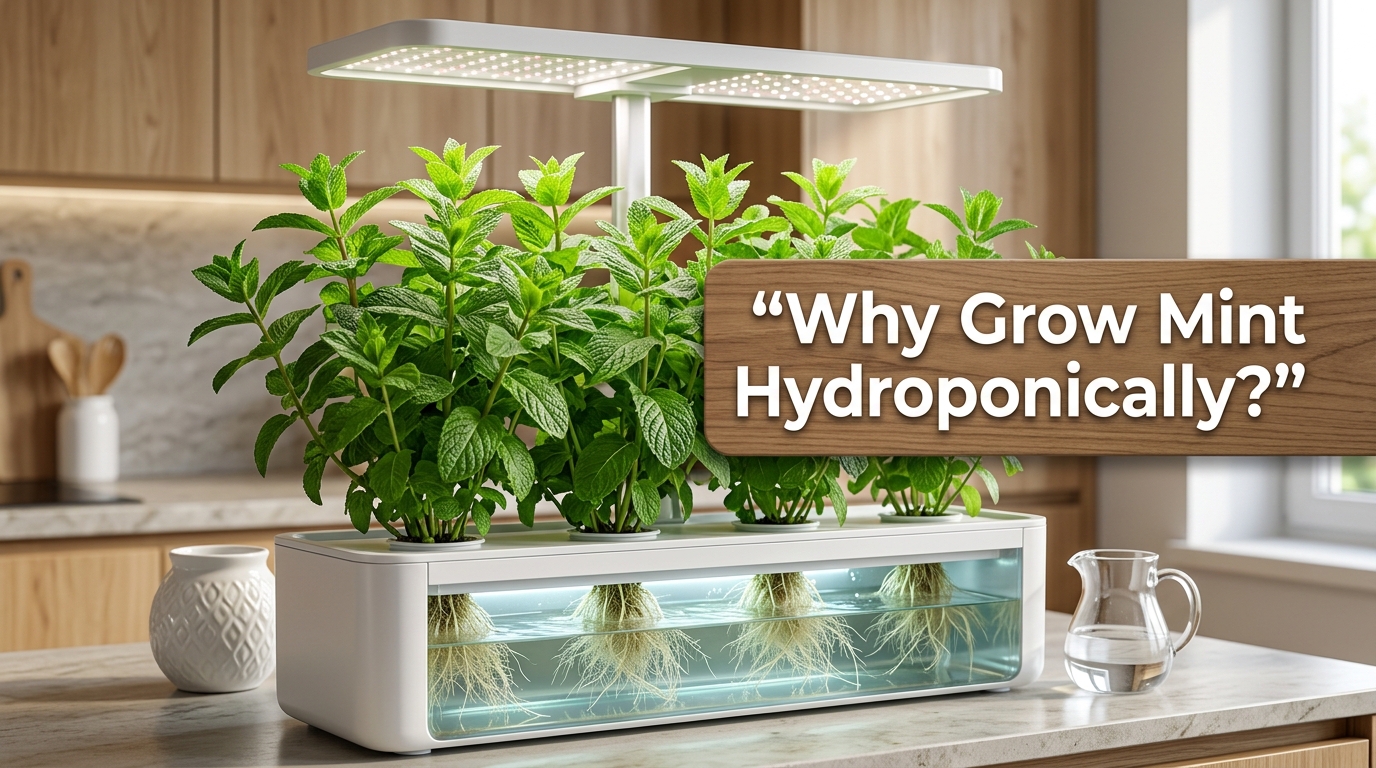
Before setting up your system, it helps to understand why mint is such a good hydroponic crop.
Fast and Vigorous Growth
Mint is naturally a fast-growing herb. Once its roots become established, new stems and leaves can develop quickly.
This means you don’t need a large number of plants to maintain a regular supply of fresh mint.
Year-Round Harvests
Outdoor mint growth can slow considerably during cold weather. An indoor hydroponic system gives you much greater control over the environment.
With adequate light, suitable temperatures, and proper nutrition, you can grow mint hydroponically throughout the year.
Easy Propagation
Mint is exceptionally easy to propagate from stem cuttings. You don’t necessarily need to buy new seeds or plants every time you want to expand your garden.
A healthy stem can develop roots in water and then be transferred into your hydroponic system.
Regular Harvesting Encourages New Growth
Mint responds well to pruning. Instead of damaging the plant by harvesting, regular cutting can encourage it to branch and become bushier.
This makes mint particularly useful for people who want an herb they can harvest frequently.
Suitable for Beginners
Mint is more forgiving than many fruiting hydroponic crops.
If you’re new to hydroponics, mint gives you an opportunity to learn about pH, EC, lighting, root health, and harvesting without dealing with the complicated flowering and pollination requirements of crops such as tomatoes and peppers.
Choosing the Best Mint Varieties
There are many types of mint, and each one has its own flavor and growth characteristics.
When you want to grow mint hydroponically, choose a variety based on how you plan to use the leaves and how much growing space you have.
Spearmint
Spearmint is one of the most popular choices for home growers.
It has a fresh, relatively mild mint flavor and produces plenty of green leaves.
Best for:
- Tea
- Drinks
- Cooking
- Garnishes
- Beginners
Spearmint is a particularly good starting point because it is vigorous and easy to manage.
Peppermint
Peppermint has a stronger, cooler flavor than spearmint.
It is especially popular for teas, desserts, and drinks.
Peppermint can also grow vigorously, although growth speed varies depending on the specific cultivar and growing conditions.
Moroccan Mint
Moroccan mint has a pleasant flavor and is commonly associated with mint tea.
It can be an excellent choice if you’re particularly interested in using fresh mint for beverages and culinary purposes.
Apple Mint
Apple mint has a softer, slightly fruity aroma and distinctive leaves.
Its appearance and flavor make it interesting for both culinary and ornamental growing.
Chocolate Mint
Chocolate mint is popular among home gardeners because of its unusual aroma.
The plant still has the familiar mint character but may have a subtle chocolate-like scent.
Best Variety for Beginners
If you’re just starting to grow mint hydroponically, spearmint is an excellent choice. It grows vigorously, is easy to propagate, and has many culinary uses.
Choosing a Hydroponic System for Mint

Mint doesn’t require a complicated hydroponic system.
Because it grows rapidly and can develop a substantial root mass, the most important thing is to provide enough root space, oxygen, water, and nutrients.
Deep Water Culture (DWC)
DWC is one of the simplest systems for mint.
The plant sits in a net pot while its roots grow into an aerated nutrient solution.
Advantages:
- Simple setup
- Low equipment requirements
- Excellent root access to water
- Easy to monitor
- Good choice for beginners
An air pump and air stone help keep the nutrient solution oxygenated.
Nutrient Film Technique (NFT)
NFT circulates a thin layer of nutrient solution through growing channels.
Advantages:
- Efficient use of space
- Good oxygen availability
- Suitable for multiple plants
The main issue is that mint roots can become quite dense. Regular maintenance may be necessary to prevent roots from interfering with water flow.
Kratky Method
The Kratky method is a passive hydroponic technique that doesn’t require a water pump.
It can work well for a small mint plant, particularly when you’re looking for a simple setup.
However, larger mint plants may eventually require more water and root space than a small container can provide.
Drip Hydroponics
Drip systems deliver nutrient solution directly to the growing medium.
They are useful if you’re growing several mint plants or combining mint with other herbs.
Best Hydroponic System for Mint
For beginners, DWC is one of the easiest ways to grow mint hydroponically. A reasonably sized container with good aeration gives mint plenty of access to water and oxygen.
How to Start Mint From Cuttings
One of the easiest ways to grow mint hydroponically is to start with a healthy stem cutting.
You don’t need to wait for seeds to germinate.
Step 1: Choose a Healthy Stem
Select a healthy mint stem with several leaves and no obvious signs of disease or insect damage.
A cutting with approximately 3–4 nodes is useful.
Step 2: Remove the Lower Leaves
Remove leaves from the lower portion of the stem.
Keep several leaves toward the top.
The portion placed in water should have no leaves because submerged leaves can decay.
Step 3: Place the Cutting in Water
Place the lower part of the stem in clean water.
Keep the leaves above the water line.
You can use a small glass, propagation container, or another suitable vessel.
Step 4: Provide Light
Place the cutting somewhere with bright, indirect light.
Avoid intense heat or harsh direct sunlight while the cutting is developing roots.
Step 5: Watch for Roots
Mint cuttings can develop roots relatively quickly.
Depending on temperature, plant health, and conditions, roots may begin appearing within approximately 5–10 days.
Once the roots are sufficiently developed, the cutting can be transferred to your hydroponic system.
Starting Mint From Runners
Mint can also spread through runners, sometimes called stolons.
If you already have an established mint plant, these can be useful for propagation.
Allow a healthy runner to develop roots at a node. Once the new plantlet has a good root system, separate it carefully and transfer it to your hydroponic setup.
This method is especially useful when you want to create several new plants from an established mother plant.
Transplanting Mint Into Your Hydroponic System
Once your cutting has developed healthy roots, it’s time to move it into the hydroponic system.
For DWC
- Place the rooted cutting into a net pot.
- Add clay pebbles or another suitable growing medium around the stem.
- Position the net pot in the reservoir lid.
- Make sure the developing roots can access moisture.
- Turn on the air pump and air stone.
- Start with a relatively mild nutrient concentration.
- Gradually increase nutrient strength as the plant becomes established.
Don’t bury the entire stem in the growing medium.
Mint stems need good airflow around the upper portion of the plant.
Nutrient Requirements for Hydroponic Mint

Good nutrition is important when you grow mint hydroponically, but mint generally doesn’t require extremely strong nutrient concentrations.
A balanced hydroponic nutrient solution is usually sufficient.
EC
A practical starting range is approximately:
0.8–1.2 mS/cm
The exact EC should depend on your nutrient formulation, water quality, plant size, and environmental conditions.
Young plants can usually start toward the lower end.
pH
A practical hydroponic pH range is approximately:
5.5–6.5
Keeping pH reasonably stable helps the plant access essential nutrients.
Nitrogen
Mint produces a large amount of foliage, so adequate nitrogen is important for healthy green growth.
However, adding excessive nitrogen is not necessarily better.
Too much fertilizer can cause nutrient stress or unnecessarily lush, weak growth.
How Often Should You Check EC and pH?
For a small home system, checking pH and EC regularly is more useful than trying to make constant adjustments.
As the plant becomes larger and consumes more water and nutrients, monitoring should become more frequent.
Changing the Nutrient Solution
If you’re using a reservoir system, periodically replace the nutrient solution rather than allowing the same solution to remain indefinitely.
A complete change every few weeks can be a useful routine, depending on reservoir size, plant demand, water quality, and your monitoring practices.
Between full changes, top up with appropriate water or nutrient solution according to your EC readings and system requirements.
Avoid making large nutrient adjustments simply because the plant appears to be growing quickly.
Lighting Requirements for Mint
Mint doesn’t require the extremely intense lighting used by many fruiting crops, but adequate light is still essential for compact, healthy growth.
How Many Hours of Light Does Mint Need?
A practical indoor schedule is:
12–16 hours of light per day
followed by a consistent dark period.
A longer photoperiod can encourage faster growth when the light intensity and environment are suitable.
LED Grow Lights
LED grow lights are an excellent choice for indoor mint.
A full-spectrum LED can provide the light needed for healthy foliage while using relatively little electricity.
Light Position
The ideal distance depends on the specific grow light.
As a general starting point, many indoor growers position lights approximately 12–18 inches above the plant and then adjust according to plant response and the manufacturer’s recommendations.
Signs of Too Little Light
Mint receiving insufficient light may become:
- Tall
- Thin
- Leggy
- Sparse
- Less compact
If the plant stretches toward the light, increase light intensity or move the light closer within a safe range.
Temperature Requirements for Mint

One reason mint is so beginner-friendly is that it generally prefers cooler conditions than many warm-season hydroponic crops.
Recommended Temperature
Day: 65–75°F
Night: 55–65°F
Mint can tolerate a wider range, but stable temperatures usually produce more predictable growth.
Avoid extreme heat whenever possible.
High temperatures can increase water consumption and place additional stress on the plant.
Humidity and Air Circulation
Mint can tolerate a fairly broad humidity range, but maintaining moderate humidity is generally easier for indoor growers.
Recommended Humidity
Approximately:
50–70%
Good airflow is also important.
A small oscillating fan can move air around the foliage and reduce stagnant pockets of humid air.
You don’t need to blast the plant with a powerful fan.
Gentle movement is enough.
Managing Mint’s Fast Growth
If there’s one thing you’ll quickly discover when you grow mint hydroponically, it’s that the plant can become large surprisingly quickly.
Instead of treating this as a problem, use the plant’s natural growth habit to your advantage.
Regular Pruning
Cutting the growing tips encourages branching.
A plant that is regularly pruned can become bushier and easier to manage.
Don’t Let Mint Become Too Crowded
If multiple plants are growing in the same system, their stems and leaves can quickly become tangled.
Give each plant enough space for air movement and light penetration.
Managing Runners
Mint naturally produces runners.
If you don’t want additional plants, remove unwanted runners.
If you want to expand your garden, allow selected runners to develop roots and create new plants.
How to Harvest Mint
Harvesting is one of the easiest parts of growing mint.
You don’t have to wait for the plant to reach a particular fruiting stage.
Once the plant is established and producing healthy shoots, you can begin taking small harvests.
Light Harvesting
For small amounts, simply pinch individual leaves or growing tips.
This is ideal when you need mint for:
- Tea
- Water
- Cocktails and other drinks
- Cooking
- Garnishes
Larger Harvests
If you need a larger amount, cut entire stems.
Leave several healthy nodes on the plant so new shoots can develop.
Avoid removing too much foliage at one time.
As a general rule, harvesting a portion of the plant rather than cutting everything back at once helps maintain steady growth.
Best Time to Harvest Mint
Many growers prefer harvesting mint in the morning.
The leaves are often fresh and aromatic at this time.
However, you can harvest whenever you need it.
For home use, the difference in timing is generally less important than harvesting healthy, fresh growth.
Common Problems When Growing Mint Hydroponically
Mint is forgiving, but it isn’t completely problem-free.
Knowing what to look for can help you solve issues before they become serious.
Yellow Leaves
Yellow leaves can have several causes.
Possible reasons include:
- Nutrient deficiency
- Incorrect pH
- Root problems
- Excessive moisture
- Aging leaves
- Environmental stress
Don’t immediately assume that the plant needs more fertilizer.
Check the pH, EC, root condition, and growing environment first.
Brown or Black Roots
Healthy hydroponic roots are generally light-colored and should not have a foul smell.
Dark, slimy, or foul-smelling roots may indicate poor oxygenation or root disease.
What to Check
- Water temperature
- Air pump operation
- Air stone performance
- Reservoir cleanliness
- Root crowding
- Water level
- Overall system sanitation
In DWC systems, adequate oxygenation is particularly important.
Leggy Mint
If your mint becomes tall and sparse instead of short and bushy, insufficient light is one possible cause.
Solution
Increase the amount or intensity of light while maintaining an appropriate distance from the plant.
Regularly pruning the growing tips can also encourage branching.
Brown Spots on Leaves
Brown spots can have several causes, including fungal problems, leaf damage, nutrient stress, or water sitting on foliage.
Improve airflow and avoid unnecessarily wetting the leaves.
Inspect the plant closely to determine whether insects or disease are involved.
Slow Growth
Mint should generally grow actively when conditions are suitable.
Slow growth may indicate:
- Low light
- Poor root health
- Nutrient imbalance
- Incorrect pH
- Very low temperatures
- Excessive heat
- Insufficient water
Check the growing environment systematically rather than changing everything at once.
Pest Prevention for Hydroponic Mint
Growing indoors can reduce some pest problems, but it doesn’t guarantee a pest-free garden.
Common pests that may affect mint include:
- Aphids
- Spider mites
- Whiteflies
- Fungus gnats
- Thrips
How to Reduce Pest Problems
Start with clean plants and equipment.
Inspect new plants before introducing them into your hydroponic area.
Keep the growing space clean and remove dead leaves regularly.
Good airflow and appropriate humidity can also make the growing environment less favorable for certain pests.
If you notice insects, identify the pest before choosing a treatment.
How to Keep Mint Bushy
If your goal is to grow mint hydroponically for maximum leaf production, pruning is one of your most useful tools.
When a stem grows tall, pinch or cut the tip just above a healthy node.
New shoots can then develop from the nodes below the cut.
Repeat this process as the plant grows.
Instead of allowing one long stem to dominate, you’ll gradually develop a fuller, bushier plant with many harvestable shoots.
Can Mint Grow With Other Hydroponic Herbs?
Yes, mint can grow alongside other herbs, but there is an important consideration: mint is vigorous.
If you place mint in the same system as slower-growing herbs, it may eventually occupy more space and shade neighboring plants.
Mint can therefore be easier to manage in its own container or system.
If you do combine herbs, choose plants with reasonably similar nutrient and environmental requirements and provide enough space between them.
Continuous Mint Production
One of the biggest advantages of choosing mint is its ability to remain productive for a long time.
Unlike crops that complete their productive life after one harvest, established mint can continue producing new stems after repeated pruning.
With proper care, a healthy plant can remain productive for many months and potentially much longer.
Replace or Propagate?
Eventually, an older plant may become crowded, woody, or less attractive.
At that point, you don’t necessarily have to start over.
Take healthy cuttings from the best new growth and use them to establish fresh plants.
This allows you to maintain a continuous supply of young, productive mint plants.
Tips for Growing Mint Hydroponically Successfully
If you’re a beginner, keep your setup simple.
1. Start With Spearmint
Spearmint is easy to find, vigorous, and useful for many purposes.
2. Use Cuttings
Propagation from cuttings is usually easier and faster than starting from seed.
3. Don’t Overfeed
Mint grows quickly, but that doesn’t mean it needs extremely strong nutrients.
4. Provide Adequate Light
Use approximately 12–16 hours of suitable light each day.
5. Keep Roots Oxygenated
This is particularly important in DWC systems.
6. Prune Frequently
Regular harvesting keeps the plant compact and encourages branching.
7. Watch the pH
Keep the nutrient solution within an appropriate hydroponic range.
8. Give Mint Enough Space
A single healthy plant can become surprisingly large.
9. Check for Pests
Inspect leaves and stems regularly, particularly when bringing new plants indoors.
10. Propagate New Plants
Keep a few healthy cuttings available so you can replace older plants when necessary.
Frequently Asked Questions
How long does it take to grow mint hydroponically?
Mint cuttings can begin developing roots within approximately 5–10 days under suitable conditions. Once established in the hydroponic system, you can begin taking light harvests as new growth develops.
Can I grow mint hydroponically from a cutting?
Yes. Mint is one of the easiest herbs to propagate from stem cuttings. Place a healthy cutting in water until roots develop, then transfer it into your hydroponic system.
What is the best hydroponic system for mint?
DWC is a simple option for beginners. NFT, Kratky, and drip systems can also work, provided the plant receives adequate root space, oxygen, water, and nutrients.
What pH does hydroponic mint need?
A practical target is approximately 5.5–6.5. Avoid making constant large adjustments; monitor the solution and correct gradual drift as needed.
What EC does mint need?
A general starting range is around 0.8–1.2 mS/cm. Actual requirements depend on the nutrient product, water quality, plant size, and environmental conditions.
How much light does hydroponic mint need?
Mint generally performs well with approximately 12–16 hours of light per day. Provide enough intensity to prevent weak, stretched growth.
Does mint need a lot of nutrients?
Mint is not considered an extremely heavy feeder. A balanced hydroponic nutrient solution at a moderate concentration is generally sufficient for healthy foliage production.
How often should I harvest hydroponic mint?
You can harvest whenever you need it. Regular light harvesting every few days can help maintain a compact, bushy plant and encourage new growth.
Can I grow mint hydroponically all year?
Yes. With suitable lighting, temperature, nutrients, water, and airflow, mint can be maintained indoors throughout the year.
Why is my hydroponic mint turning yellow?
Yellow leaves can result from nutrient problems, incorrect pH, root stress, excessive moisture, aging foliage, or environmental conditions. Check the complete growing environment before adding more fertilizer.
Why is my mint growing tall and thin?
Insufficient light is a common reason for leggy growth. Increase suitable light intensity or improve the plant’s position relative to the grow light. Regular pruning can also encourage bushier growth.
Can I grow mint and basil together hydroponically?
Yes, but mint can grow much more aggressively than some other herbs. If they share a system, provide enough space and monitor the plants so the mint doesn’t shade or crowd the basil.
How long can a hydroponic mint plant live?
Mint can remain productive for many months and potentially much longer with good care. Rather than waiting for an old plant to decline completely, you can propagate healthy cuttings and maintain a continuous cycle of younger plants.
Final Thoughts: Grow Mint Hydroponically
Mint is an excellent crop for anyone who wants to start producing fresh herbs indoors. It grows quickly, responds well to pruning, and can be propagated from simple stem cuttings without complicated equipment.
To grow mint hydroponically successfully, focus on the basics: healthy roots, adequate light, moderate nutrients, suitable pH, good airflow, and regular harvesting. You don’t need an expensive system to get started. A simple DWC container can produce impressive results when properly maintained.
The most important thing to remember is that mint grows aggressively. Instead of fighting that growth, use regular pruning and harvesting to keep the plant compact and productive. If you have more mint than you need, take healthy cuttings and start additional plants.
With the right routine, growing mint hydroponically can give you a reliable supply of fresh leaves for tea, cooking, drinks, and garnishes throughout the year. It is forgiving enough for beginners while still giving experienced hydroponic growers plenty of opportunities to optimize production.
Internal Links
Why Are Hydroponic Leaves Turning Yellow? 7 Common Problems and Easy Solutions
How to Grow Microgreens Hydroponically: 16 Proven Complete Beginner’s Guide
How to Grow Peppers Hydroponically: Complete Guide to Fruiting, Pollination & High Yields
How to Grow Strawberries Hydroponically: 10 Easy Steps for Beginners
Related reading
2 thoughts on “How to Grow Mint Hydroponically: 10 Best Tips for Fresh, Pest-Free Mint Year-Round”