
Quick Answer
Hydroponic trellising and pruning train vines and manage canopy so light, airflow, and fruit support stay under control. Install support before plants need it, prune with sanitation, and match method to crop (tomato, cucumber, beans, melons).
Use with tomatoes, cucumbers, pollination, PPFD/DLI, humidity, and cleaning.
Key Takeaways
- Trellis early—repairing a collapsed vine damages stems and fruit.
- Prune to open airflow and light penetration; do not strip plants bald.
- Sanitize tools between plants to reduce disease spread.
- Fruiting cucurbits and tomatoes need different training styles.
- Support fruit weight with slings when needed (melons).
- Airflow + pruning helps mildew pressure management alongside RH control.
- Indoor vertical space is finite—plan height vs light distance.
- Never invent yield gains from pruning; track your own results.
- Combine training with pollination plans indoors.
- Cluster equipment pages (Dutch bucket, drip, tents) with crop guides.
Related HydroponicEra guides
Why Training Matters Indoors

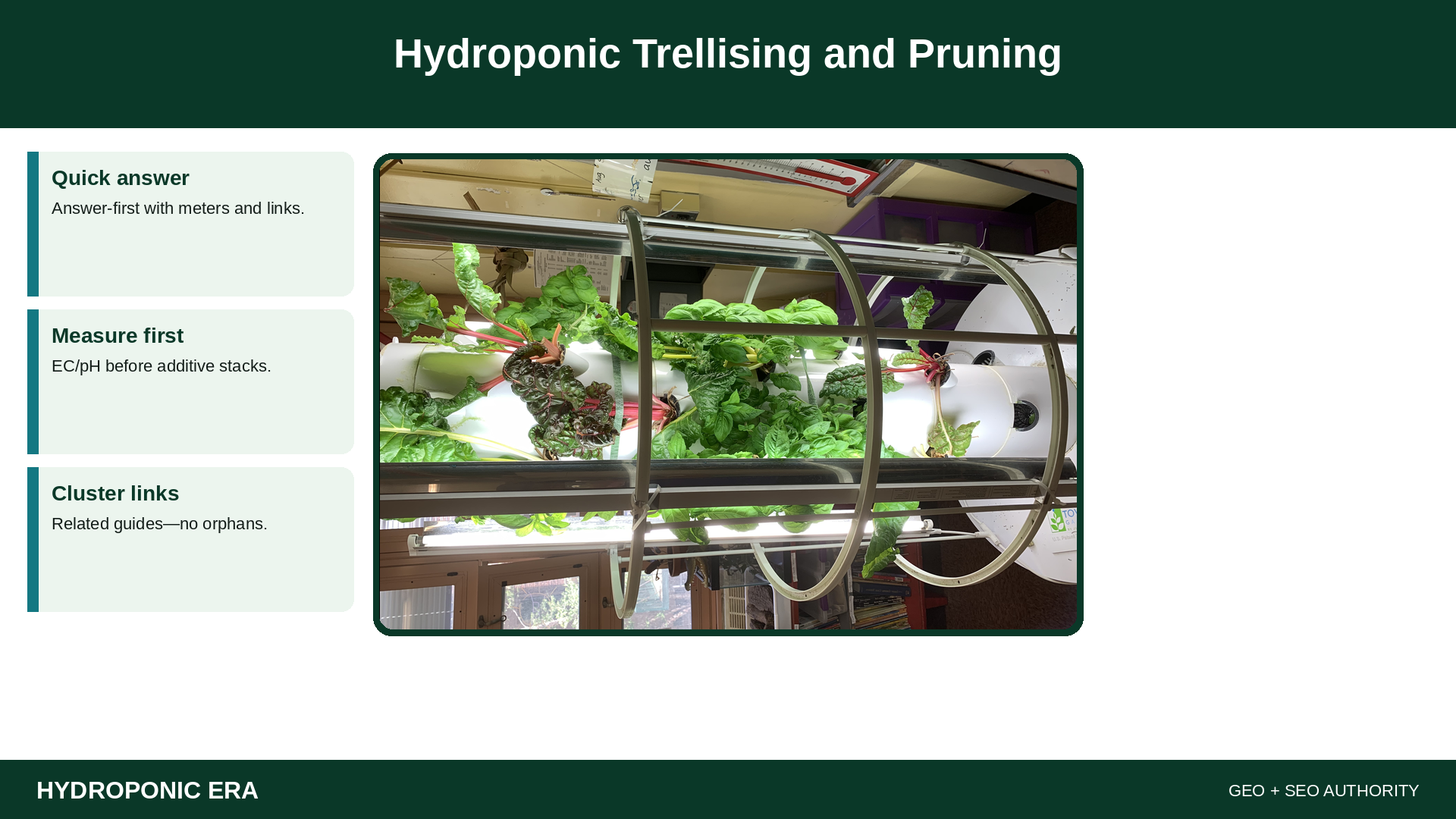
Indoor hydroponic vines compete for PPFD and create humid microclimates if left as jungles. Trellising organizes stems for light (PPFD) and scouting. Pruning removes unproductive shade leaves and improves access for pests and mildew (pests, PM).
Extension vegetable culture for tomatoes and cucurbits emphasizes support outdoors—indoors the same biology applies with tighter space. See tomatoes, cucumbers, and the melons guide in this batch.
Trellis Types and Crop Fit

| Method | Fits | Notes |
|---|---|---|
| Vertical string / lean-and-lower | Indeterminate tomatoes | Plan ceiling height |
| Netting | Cucumbers, peas, beans | Secure firmly |
| Cages | Compact tomatoes/peppers | Still prune lightly |
| Slings | Melons/heavy fruit | Protect peduncle |
Step-by-Step
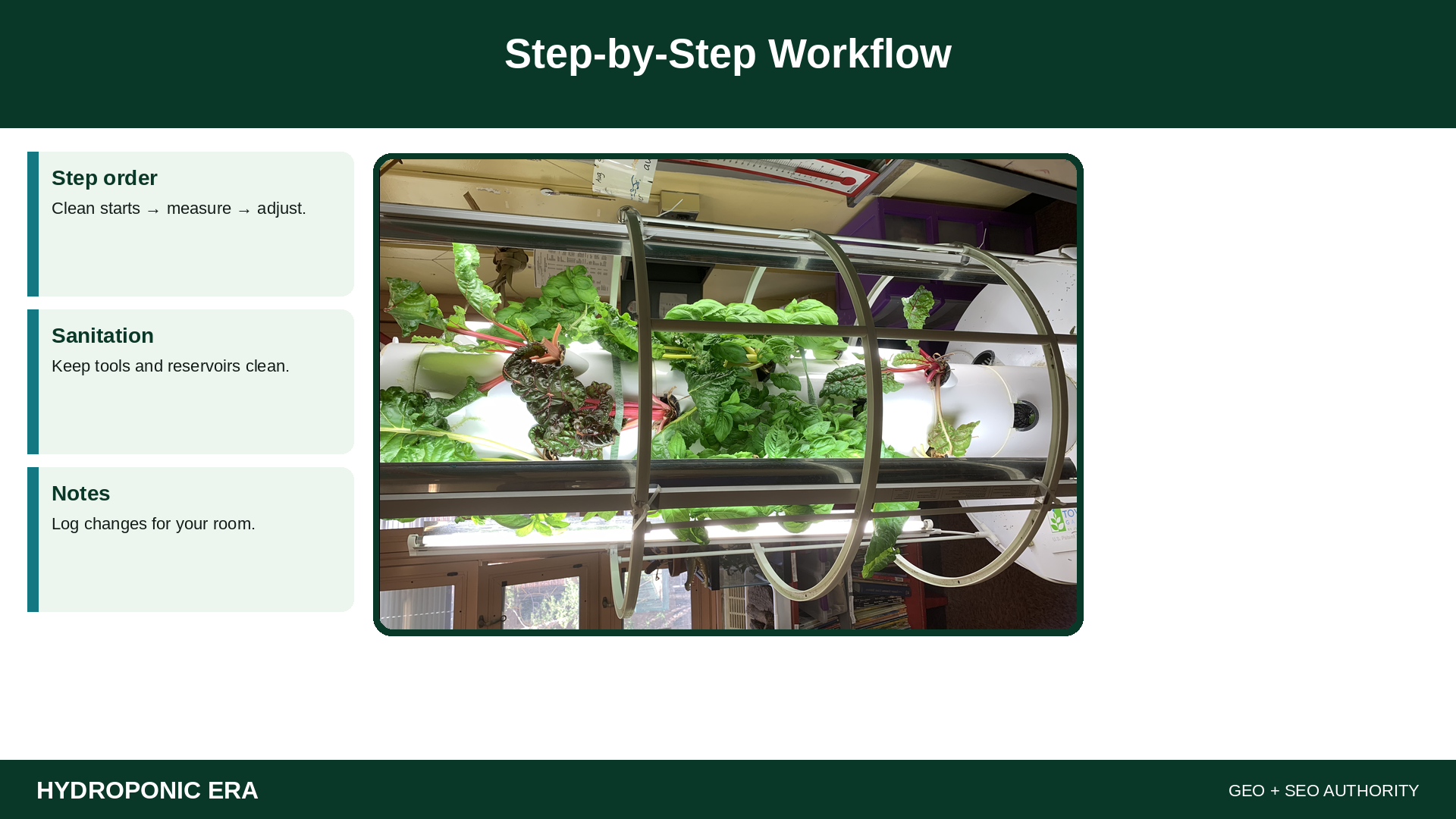
- Install anchors rated for wet plant weight
- Train main stem(s) weekly while soft
- Prune suckers/side shoots per crop goal
- Remove yellow diseased leaves into bags
- Sanitize shears between plants
- Maintain airflow lanes
- Support fruit before they swell heavy
- Coordinate with pollination tasks
- Log canopy density vs mildew/pest finds
- Lower or tip vines when they reach lights
Variables

| Variable | Guidance | Link |
|---|---|---|
| Light distance | Do not let tops burn | lights |
| Humidity | Dense canopies raise risk | humidity |
| Tool hygiene | Disease vectors | cleaning |
| Crop type | Different pruning rules | Crop guides |
Mistakes
- Trellising after the flop
- Pruning half the plant in one day
- Dirty shears
- Ignoring fruit support
- Blocking airflow to chase more leaves
Troubleshooting

| Issue | Cause | Fix |
|---|---|---|
| Stem kink/wilt | Late training stress | Support gently; reduce light briefly |
| Mildew inside canopy | Still humid air | Prune lanes; airflow; RH |
| Fruit drop | Stress/pollination | pollination |
| Light burn on tops | Too close | Lower intensity/raise fixtures |
Training Framework

Original weekly training card: ties added, shoots removed, diseased leaves bagged, fruit supported, airflow lane clear y/n, pests found y/n. Pair with crop-specific guides for tomatoes/cucumbers and the airflow article in this batch.
What to Check Before You Change Course
- Supports installed early?
- Tools sanitized?
- Airflow lanes open?
- Fruit supported?
- Light distance safe?
- Pollination plan active?
FAQs

Should beginners prune aggressively?
Start mild—learn crop response; do not strip plants.
String vs net?
Tomatoes often string; cucumbers/peas often net—match crop.
Does pruning increase yield guaranteed?
No guarantees—training improves management; measure your results.
When to remove leaves?
Yellow/diseased/heavily shading leaves first; keep enough canopy to feed fruit.
Related pests?
Open canopies improve scouting for mites/whiteflies/thrips.
Melons?
Plan slings early—see the melons hydroponics guide.
Crop-Specific Training Notes

Indeterminate tomatoes indoors usually need a single-leader or limited-leader string method with regular sucker removal. Determinates need less aggressive suckering but still benefit from cages or stakes. Cucumbers often climb netting; remove diseased leaves and keep a clear main leader if your cultivar supports it. Beans and peas need netting before tendrils search for lamps. Melons need both vertical planning and fruit slings once fruit sets—unsupported fruit can kink stems.
Always sanitize shears between plants, especially after removing diseased tissue. Pathogens travel on blades faster than on Instagram tips. Bag removed leaves; do not leave them under the reservoir as a humidity and pest nest (cleaning, powdery mildew, pests).
Light geometry matters: as you lean-and-lower tomatoes, maintain safe fixture distance (lights, PPFD/DLI). Burned tops are a training-plus-light problem, not a fertilizer brand problem.
Airflow lanes: leave gaps so fans move air through the canopy. Dense walls of leaves create mildew hotels and hide mites. Pair this page with the airflow article and humidity/VPD.
Pollination days are good training days—while you vibrate tomato flowers or hand-pollinate cucurbits (pollination), you can retie stems and spot pests in blooms (thrips).
Original weekly scorecard fields: ties added | suckers removed | leaves bagged | fruit supported | lane clear | pests found | light burn y/n | notes. Track four weeks and you will know whether your canopy density is helping or hurting.
Putting This Guide Into Practice
Make a one-page card: observation, meter readings, single change, recheck date. Keep related HydroponicEra cluster URLs linked so this page is not an orphan. Prefer extension literacy over invented statistics.
Recheck after environment changes. New growth is the verdict; damaged old tissue may not fully recover. Keep sanitation, light, and oxygen in the differential whenever progress stalls.
Additional field note: photograph roots or canopy beside dated notes. That evidence trail is honest expertise without fabricated farm claims.
Closing checklist: calibrated tools? canopy or roots checked? one change only? notes written? cluster links reviewed? If yes, you are using the HydroponicEra method.
Extra practice line for hydroponic trellising pruning: keep expectations humble, measure twice, change once, and document outcomes for your own room rather than copying unverifiable internet yield claims.
Second pass note: verify extension sources still resolve, keep author attribution as admin on publish, and ensure Rank Math focus phrasing appears naturally in the first paragraph without stuffing.
If a vine collapses overnight, stabilize it first, reduce light intensity briefly, check for kinked stems interrupting flow, and only then resume aggressive pruning. Collapses are often late trellising plus fruit weight—not a mysterious nutrient curse. Keep wilting, tomatoes, and cucumbers open while you recover the plant.
For Rank Math and readers alike: the focus phrase hydroponic trellising pruning belongs in practical H2s and the first answer, not stuffed into every sentence. Clarity beats density.
Bottom line: trellis early, prune sanely, sanitize tools, support fruit, and keep airflow lanes—then measure results in your own room.
Sources
- Oklahoma State University Extension — Hydroponics
- Michigan State University Extension — Hydroponics as an agricultural production system
- Virginia Cooperative Extension — SPES-720: Calculating and Using Daily Light Integral (DLI)
- University of Florida IFAS — CV265: Fertilizer Management for Greenhouse Vegetables
- Penn State Extension — Hydroponics Systems and Principles of Plant Nutrition
- Ohio State University Extension — HYG-1263
- University of Florida IFAS — HS1421: Growing Herbs in Small Hydroponic Systems
- University of Georgia Extension — B1314: Soilless Growing Media
2 thoughts on “Hydroponic Trellising and Pruning: Canopy Control”