
Introduction
A hydroponic tower garden lets you grow a lot of food in a small footprint. Instead of spreading plants across a bed, the tower stacks them vertically and sends nutrient solution past the roots.
This beginner guide explains what a hydroponic tower garden is, how it works, what to grow first, and how to set one up without overcomplicating the system.
What Is a Hydroponic Tower Garden?
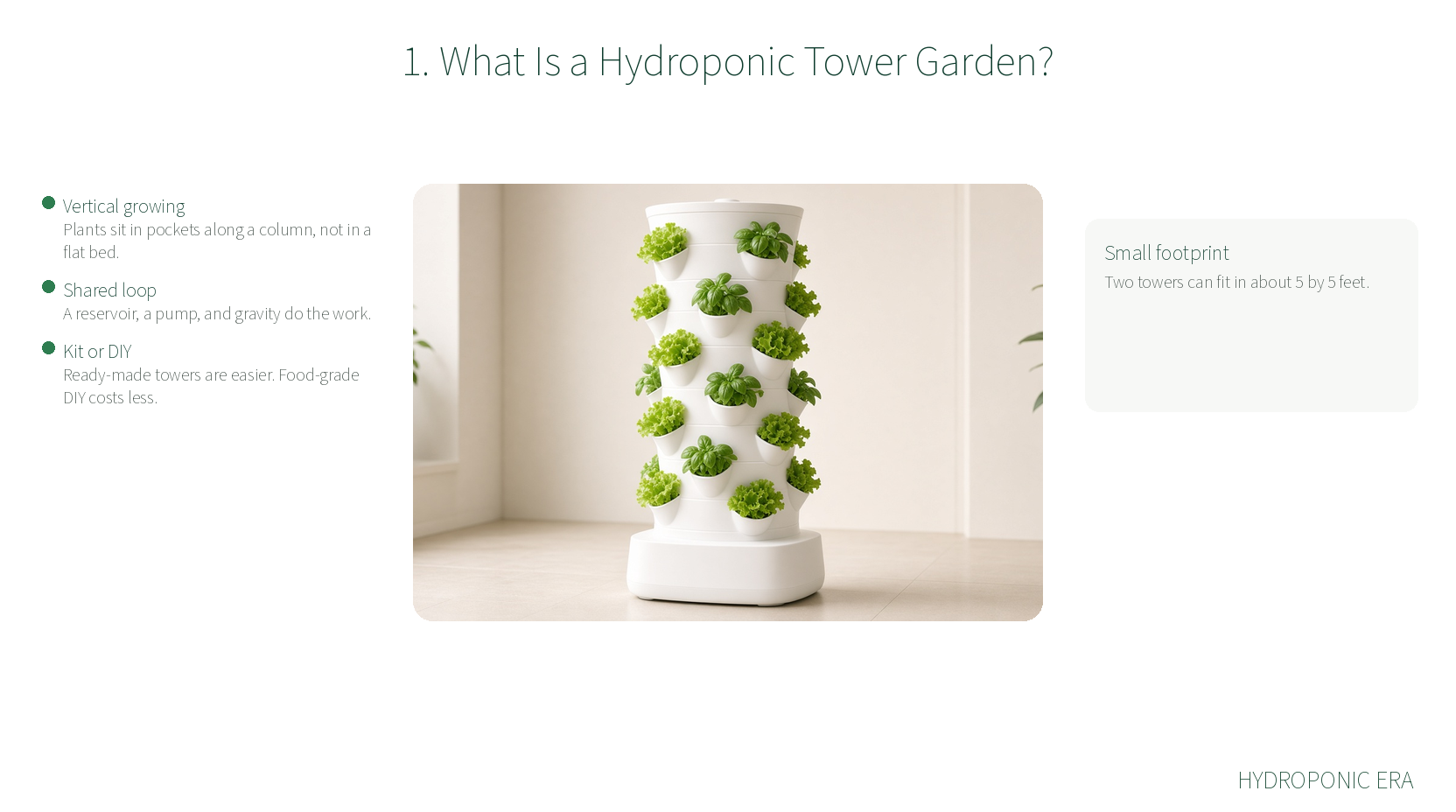
A hydroponic tower garden is a vertical growing system. Plants sit in pockets or net pots along a column. Water and nutrients move from a reservoir at the base to the top, then drain back down over the roots.
Oklahoma State University describes a tower garden as a form of vertical hydroponics. The same idea covers A-frame systems, hydroponic walls, and stacked columns. The shared trait is gravity: nutrient solution is fed from the top and collected at the bottom.
You can buy a ready-made hydroponic tower garden or build one. OSU notes that commercial towers can cost around $500 or more, while a DIY food-grade tower can be built for less. University of New Hampshire Extension says home units range from tabletop pods to free-standing towers and are simpler to start than a custom system.
If you are new to soilless growing, our hydroponic garden beginner’s guide covers the basics that every system shares.
How Does a Hydroponic Tower Garden Work?

The loop is simple.
- A reservoir holds water and hydroponic nutrients.
- A pump lifts the solution to the top of the tower.
- The solution trickles down through each planting site.
- Roots take up water, nutrients, and oxygen.
- Leftover solution returns to the reservoir and circulates again.
That is why a hydroponic tower garden is often called a gravity-fed vertical system. OSU’s tower design holds 28 plants. Two towers in a 5-foot by 5-foot space can grow 56 plants at once. University of Georgia Extension describes office towers that hold about 27 plants over a 20-gallon reservoir.
Light still matters. A tower does not replace the sun. Indoors you need a grow light above the column so the top and sides get enough light. See our guide to the best grow lights for hydroponics.
What Can You Grow in a Hydroponic Tower Garden?

Start with compact crops. Leafy greens and herbs are the easiest first plants in a hydroponic tower garden.
OSU lists lettuce, Swiss chard, herbs, spinach, kale, broccoli, strawberry, and even flowering petunia. Strawberries and larger fruiting crops need more light, more support, and a stricter watering schedule.
Good beginner choices:
- Lettuce and other leafy greens
- Basil, mint, parsley, and cilantro
- Spinach and kale
- Strawberries once the system is stable
Skip large tomatoes and sprawling cucumbers in a first tower. They shade lower pockets and outgrow the column.
For crop-specific help, see how to grow lettuce hydroponically and how to grow mint hydroponically.
How to Set Up a Hydroponic Tower Garden

You do not need a perfect build. You need a stable tower, clean water, and a pump that actually reaches the top.
- Choose the location. Pick a level spot with power, a water-safe floor, and enough height for the tower plus light. Keep it out of walking paths.
- Assemble the tower. Follow the kit instructions, or use food-grade materials if you build. OSU stresses food-grade parts if you change the design.
- Fill the reservoir. Use clean water. Add hydroponic nutrients to the label rate. Do not guess.
- Set EC, then pH. Mix first. Then bring pH into about 5.5 to 6.5 for most greens. Our guide on how to control pH in hydroponics walks through that step.
- Add a timer. OSU says watering intervals depend on the crop. Lettuce can run continuously. Strawberries may need seven to 10 one-hour cycles a day. UGA’s demo towers run about 15 minutes on and 45 minutes off.
- Start plants as seedlings. UGA starts seeds in trays and moves them at 3 to 4 inches. Barely rooted seeds often fail in a fast flow.
- Check for splash. OSU warns that water hitting leaves can invite fungal disease. Shield the flow if it sprays.
If the tower is indoors, add the light before you transplant. A bright room is rarely enough for a full column. Our indoor hydroponic garden guide covers placement and daily checks.
How to Care for a Hydroponic Tower Garden

A hydroponic tower garden is not hands-off. It is a short daily habit.
Daily: look at leaves, check the water level, and confirm the pump is running. Top up with water as the level drops.
A few times a week: check pH and EC. If pH keeps drifting or EC climbs, investigate before you dump more fertilizer.
About every two weeks: replace the nutrient solution in recirculating systems so ratios do not drift. See how often to change hydroponic water.
Keep light off the reservoir. Algae loves a clear, lit tank. Remove dead leaves so they do not fall into the column. Watch roots. If they turn brown or slimy, check oxygenation, temperature, and cleanliness. Our guide to brown hydroponic roots lists the usual causes.
UGA keeps grow lights on 12 to 14 hours a day for indoor towers. Use a timer so the schedule stays consistent.
Indoor vs Outdoor Hydroponic Tower Garden
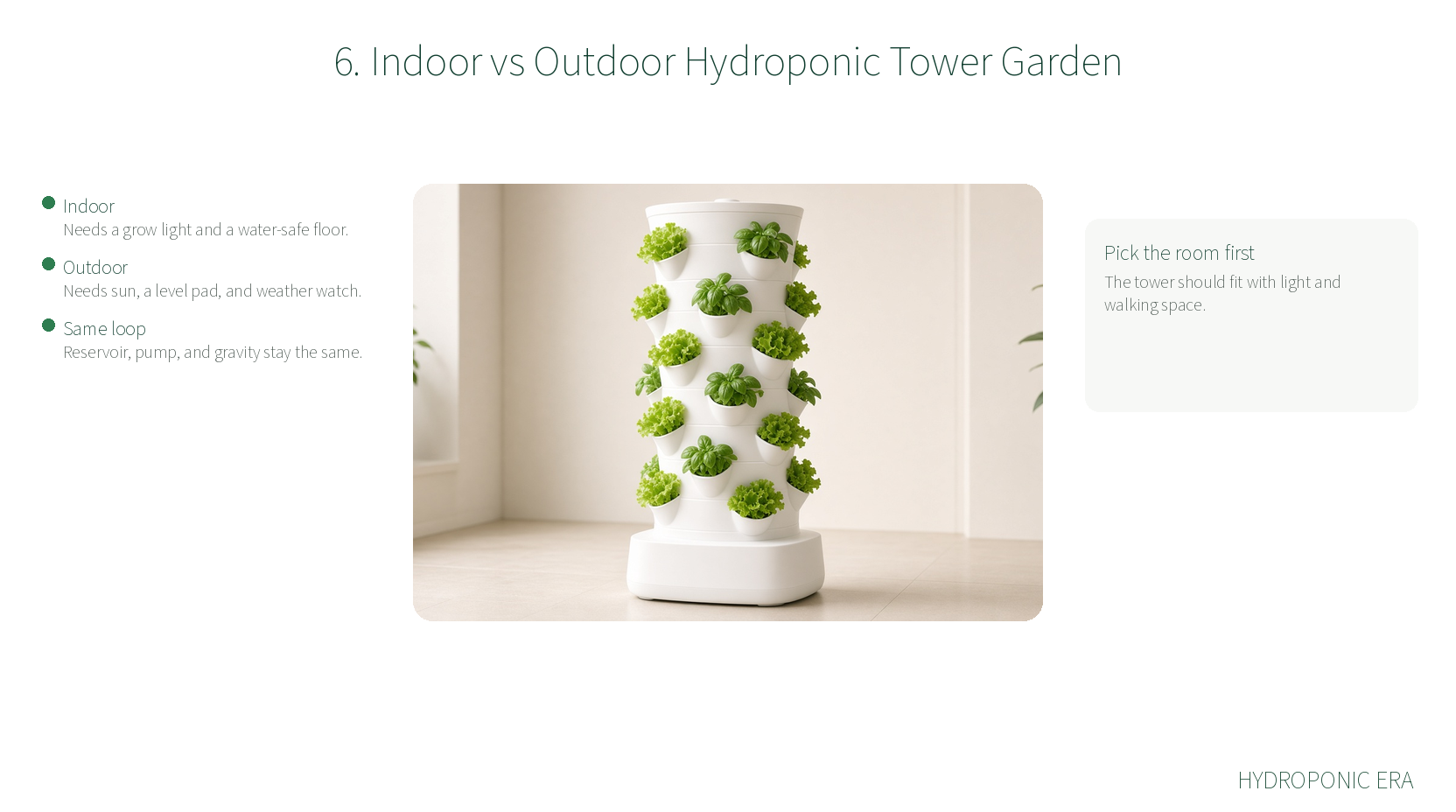
Both work. The environment is the difference.
| Factor | Indoor tower | Outdoor tower |
|---|---|---|
| Light | Usually needs a grow light | Sun, if the column is not shaded |
| Weather | More control | Heat, rain, and wind matter |
| Space | Fits a corner or balcony nook | Needs a level, sunny pad |
| Season | Year-round if the room is stable | Depends on climate |
OSU notes that indoor towers are popular in urban homes with little garden space, as long as lights sit above the column. Outdoors, give the hydroponic tower garden full sun for greens and extra intensity for fruiting crops.
Common Hydroponic Tower Garden Mistakes
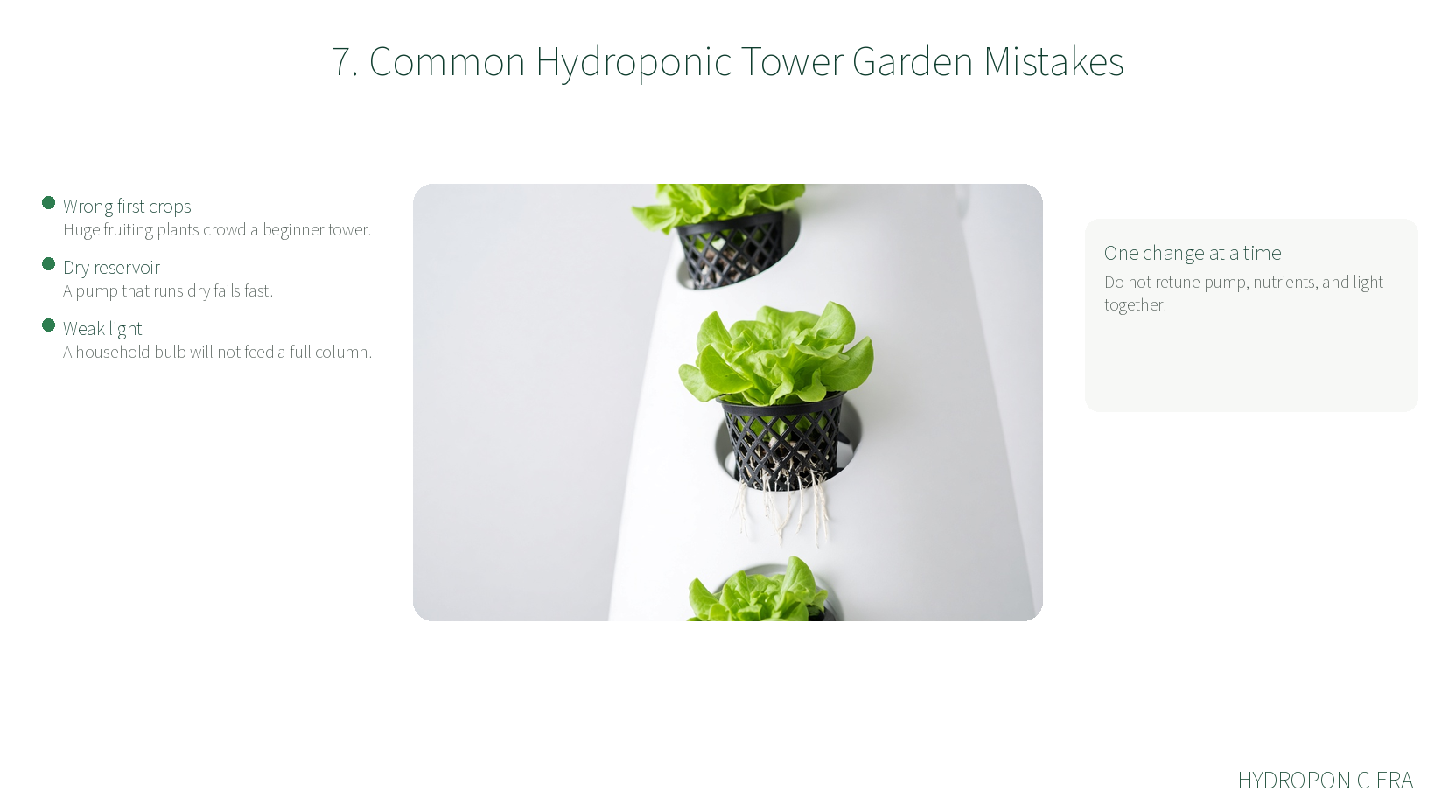
- Starting with huge fruiting plants
- Skipping a timer and flooding the roots
- Ignoring pH after mixing nutrients
- Letting the reservoir run dry
- Putting a tall tower under a weak household bulb
- Changing nutrients, light, and the pump schedule on the same day
- Using non-food-grade pipe or tanks
Yellow leaves are not always a call for more fertilizer. Measure first. Our guide to hydroponic leaves turning yellow covers the other common causes.
Towers keep a thin film of solution on the roots. If you want the same idea with timed mist instead of a continuous trickle, see aeroponics for beginners.
Frequently Asked Questions
Is a hydroponic tower garden good for beginners?
Yes, if you start with greens and a simple kit. A ready-made hydroponic tower garden is easier than a custom build. Learn the pump, the reservoir, and pH before you add strawberries or peppers.
How many plants can a hydroponic tower garden hold?
It depends on the design. OSU’s example holds 28 plants per tower. UGA’s demo towers hold about 27. Small home kits hold fewer. Do not fill every pocket with a large plant.
Do I need a grow light?
Outdoors, maybe not. Indoors, almost always. A tower is tall, so the lower pockets get less light unless you plan for it.
How often should I water a hydroponic tower garden?
There is no single schedule. OSU uses continuous flow for lettuce and several one-hour cycles a day for strawberries. UGA uses a 15-on, 45-off cycle. Watch the media. If it dries out, water more often. If it stays soggy and roots brown, water less.
Can I build a hydroponic tower garden myself?
Yes. OSU publishes a full materials list and build steps. Use food-grade materials, a covered reservoir, and a pump sized for the height of the column.
Related reading
- How to Grow Peppers Hydroponically
- Hydroponic Tower Garden
- How to Grow Microgreens Hydroponically
- How to Grow Strawberries Hydroponically
Final Thoughts
A hydroponic tower garden is a space-saving way to grow greens and herbs at home. The system is a loop: reservoir, pump, gravity, and roots.
Start small. Use a kit or a proven DIY plan. Grow lettuce and herbs first. Check water, pH, and the pump every day. Add light if the tower lives indoors.
You do not need a perfect tower. You need a stable one you understand well enough to keep the plants green.
Internal Related Articles For Hydroponicera
- Hydroponic Garden: Complete Beginner’s Guide to Growing Plants Without Soil
- Indoor Hydroponic Garden: Complete Beginner’s Guide to Growing Plants Indoors
- Best Grow Lights for Hydroponics: Complete Beginner’s Guide
- How to Control pH in Hydroponics for Beginners
- How to Grow Lettuce Hydroponically: Proven Secrets for a Successful Harvest
7 thoughts on “Hydroponic Tower Garden: Complete Beginner’s Guide”