
A hydroponic farm grows crops in a measured nutrient solution instead of a soil field. For a beginner, that can mean a spare room, garage bay, or small greenhouse—not a warehouse of aisles.
This guide shows how to start a small hydroponic farm in the United States, United Kingdom, Australia, or Canada. You will choose crops and a system, size space and power, buy practical gear, and set daily nutrient and pH habits.
You do not need a packing line on day one. One reliable loop, a few meters, and a crop you can eat or sell will teach the rhythm of a hydroponic farm before you add another row.
Table of contents
- What a Small Hydroponic Farm Is
- Choose Crops and a System for a Hydroponic Farm
- Space, Water, and Power You Need
- Gear List for a First Hydroponic Farm
- Nutrients, pH, and Daily Farm Habits
- Costs and a Calm First-Year Plan
- Common Hydroponic Farm Mistakes
- Frequently Asked Questions
- Final Thoughts
What a Small Hydroponic Farm Is

A small hydroponic farm is a planned soilless production space with a repeating harvest, not a single jar on a windowsill. The USDA National Agricultural Library describes hydroponics as growing plants in a water-based nutrient solution rather than soil, used by hobbyists, small farmers, and commercial growers.
At this scale, “small” usually means you can walk the whole crop in a few minutes. Think tens to a few hundred plants, or one compact greenhouse bay. The point is a cycle you can repeat: seed, transplant, feed, harvest, clean, and start again.
A home hydroponic garden without soil becomes a farm when you treat it as production. Write down pH, track what you harvested, and keep one crop type simple until the numbers feel honest.
Cornell’s Controlled Environment Agriculture program designed a hydroponic lettuce system for small operations that can run year-round when light and water stay consistent. You do not need that full pond layout. Pick a crop, lock the environment, and make harvest dates predictable.
If you already grow indoors, the habits in the indoor hydroponic garden beginner guide still apply. The farm step is consistency and matching plant count to the hours you have.
Choose Crops and a System for a Hydroponic Farm

Start with crops that finish quickly and tolerate small mistakes. Lettuce, basil, mint, pak choi, and other leafy greens are the usual first harvest on a hydroponic farm. They do not need pollination, and they teach solution care in weeks, not months.
A walkthrough of how to grow lettuce hydroponically will save early trial and error. Fruiting crops can wait until lights and feed feel routine. When you are ready, use the pepper hydroponic guide rather than guessing at bloom and fruit set.
System choice should follow the crop. Deep water culture or raft beds stay calm for lettuce and herbs if air reaches the roots. NFT suits long rows of greens if channels stay level. Dutch buckets fit fruiting crops later. Towers help when floor space is tight; see the hydroponic tower garden guide if that is your only room.
Oklahoma State University’s hydroponics fact sheet reminds growers that closed liquid systems need active nutrient management. Pick one method for the first season.
Keep one shared nutrient strength if plants share a tank. Do not run delicate lettuce and heavy fruiting tomatoes on the same recipe until you have a year of notes.
Space, Water, and Power You Need
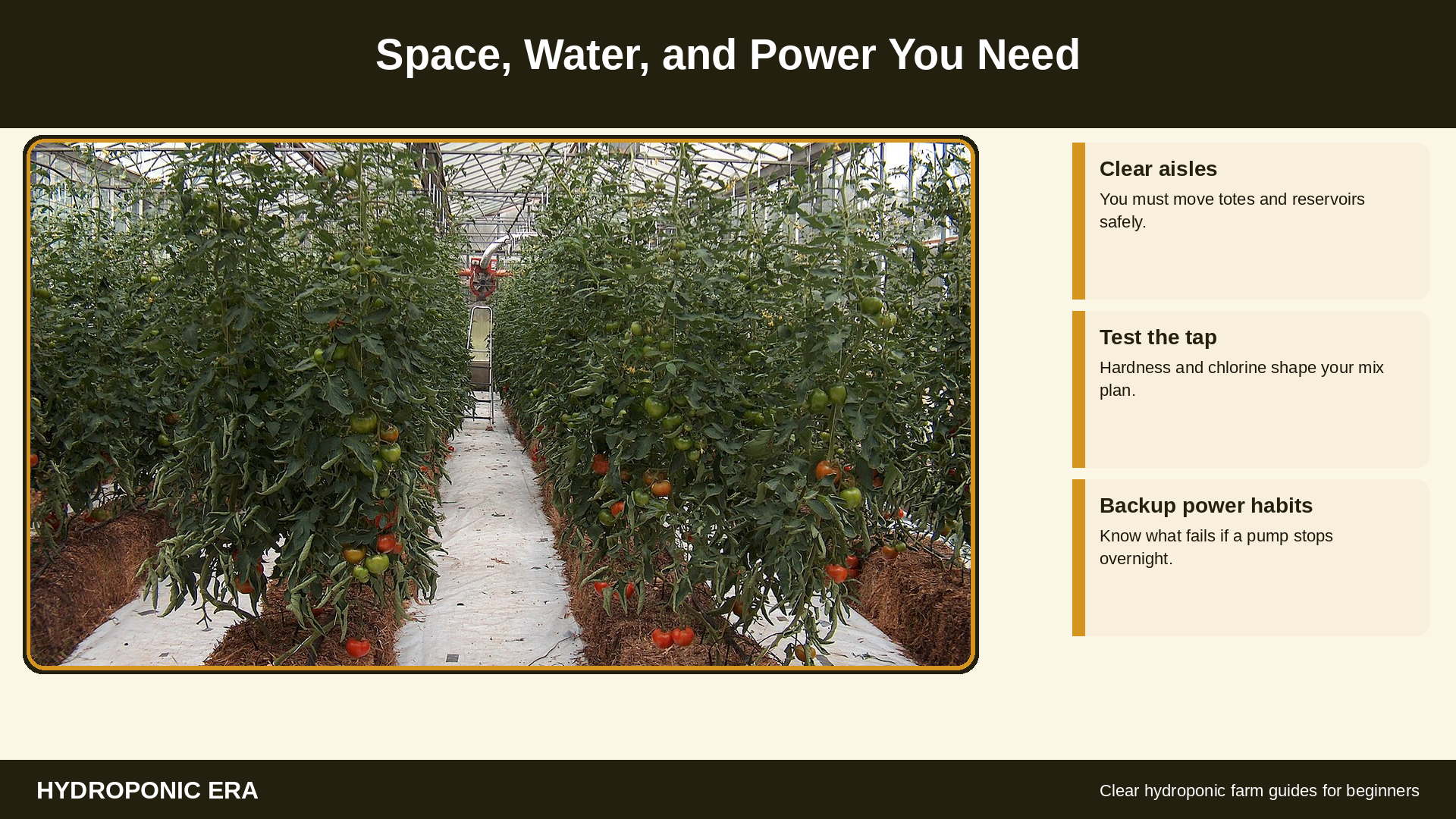
A first production bay can live in a spare bedroom, a shed, a lean-to greenhouse, or a single polytunnel. Measure the floor, then measure the door. You must move reservoirs, harvest totes, and yourself without climbing over channels.
Light is the hidden size limit. A bright greenhouse can carry more plants than a dim garage. If you grow indoors, size lamps to the canopy, not the empty room. The best grow lights for hydroponics guide helps you match height and intensity to leafy greens first.
Water quality matters more than water volume. Start with a tap test: hardness, chlorine or chloramine, and a baseline EC. Many small growers use a simple filter. You also need a drain plan that keeps spills away from electricals.
Power is unglamorous and essential. List every pump, air stone, heater, fan, and lamp, then add a margin. A hydroponic farm that loses air or flow overnight can lose a crop. Use grounded outlets, drip loops on cords, and a plan for what fails first if power drops overnight.
Ventilation sits beside power. Leafy greens prefer cool, steady air. If you use a greenhouse, shade cloth and airflow are part of the setup, not extras.
Gear List for a First Hydroponic Farm
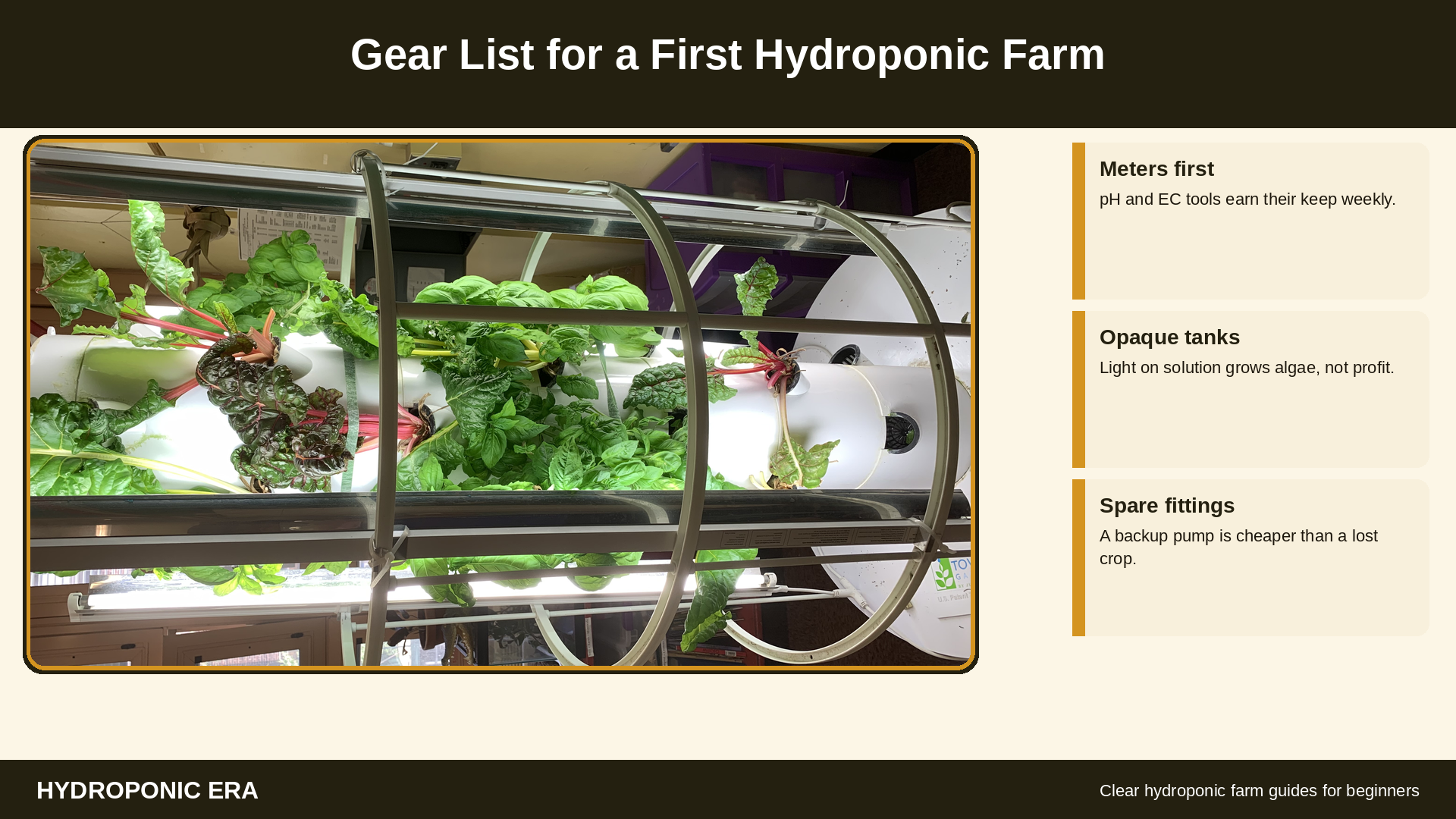
Buy tools you will use weekly. A first hydroponic farm needs fewer gadgets than ads suggest.
- System hardware: reservoirs, lids, net pots, channels or buckets, and inert media
- Circulation: water pump, air pump and stones for deep water culture, tubing, and extra fittings
- Meters: pH meter, EC or TDS meter, and fresh calibration solution
- Nutrients: a complete hydroponic formula plus pH up and pH down
- Environment: grow lights and timers, or greenhouse shade and fans
- Hygiene: food-safe cleaner, brushes, spare lids, labels, and a notebook
- Harvest: clean knives, totes, and a simple wash-and-pack surface if you sell
Optional later: a backup pump or second reservoir. Ohio State University’s hydroponic nutrient fact sheet (Ohioline HYG-1437) makes the beginner lesson clear: meters and a written recipe beat random scooping.
Skip soil fertilizer, unsafe hose timers, and clear reservoirs that grow algae. Opaque tanks and a spare air stone will do more for a small hydroponic farm than a second unused gadget shelf.
Nutrients, pH, and Daily Farm Habits

Nutrients, pH, and a short daily walk are the operating system of a hydroponic farm.
Use a complete hydroponic fertilizer, not a general garden feed. Leafy greens often sit near pH 5.5 to 6.5 and a modest EC. Fruiting crops usually want a stronger feed later. Ohio State’s nutrient work stresses that every essential element must come from the solution.
Cornell’s lettuce handbook treats pH and EC as near-daily checks. On a small setup, start with a ten-minute morning look:
- Are pumps and air stones running?
- Is the reservoir at a safe level?
- Any wilt, tipburn, or odd color on new leaves?
- Twice a week, or daily if the tank is small: pH and EC, then a short note
Top up with water when volume drops. Adjust nutrients when EC drifts. For step-by-step meter work, use how to control pH in hydroponics for beginners. For refresh timing, use how often to change hydroponic water.
Daily habits stay short on purpose. Ten quiet minutes prevent the weekend rescue that wipes a crop.
Costs and a Calm First-Year Plan
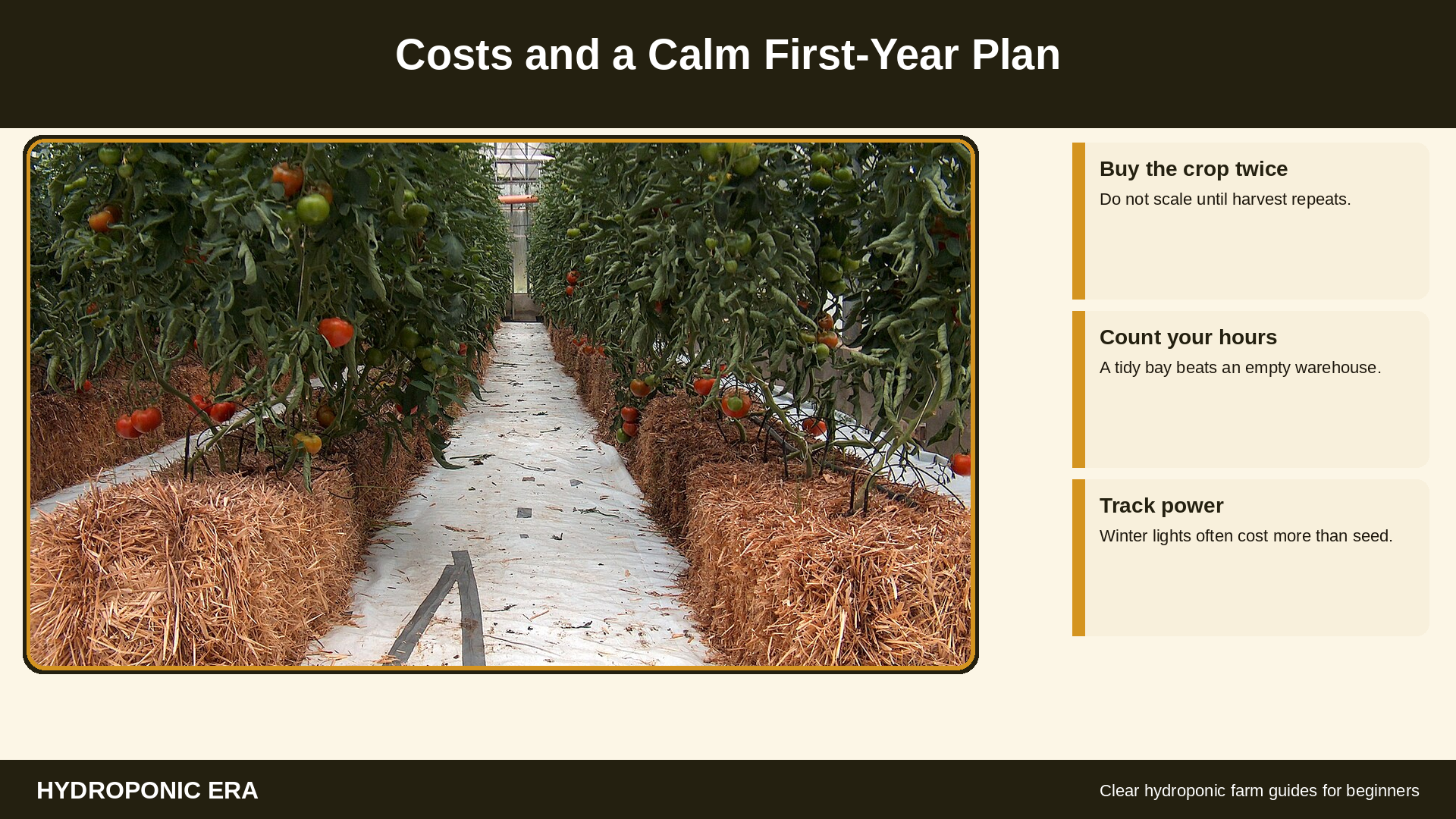
Costs vary by country and by whether you already have a greenhouse. A modest indoor or tunnel hydroponic farm often starts with a few hundred to a few thousand dollars in hardware, plus electricity. The expensive mistake is buying warehouse benches for a crop you have never harvested twice.
A calm first-year plan looks like this. In months one and two, run one system and one leafy crop, keep meters calibrated, and eat or give away the first harvest. In months three to six, repeat the same crop and test a neighbor or market stall. Later, add a second channel only if the first crop is boringly reliable.
Write a simple weekly hour budget. If you cannot spare 30 to 45 minutes most days plus a longer clean-out, shrink the plant count. A small hydroponic farm that fits your week will outlast a large one that you dread opening.
Seed costs are usually smaller than power and your time. Do not forecast supermarket prices as income. Local salad mixes sell when they are fresher than the shop and available on a known day.
Common Hydroponic Farm Mistakes
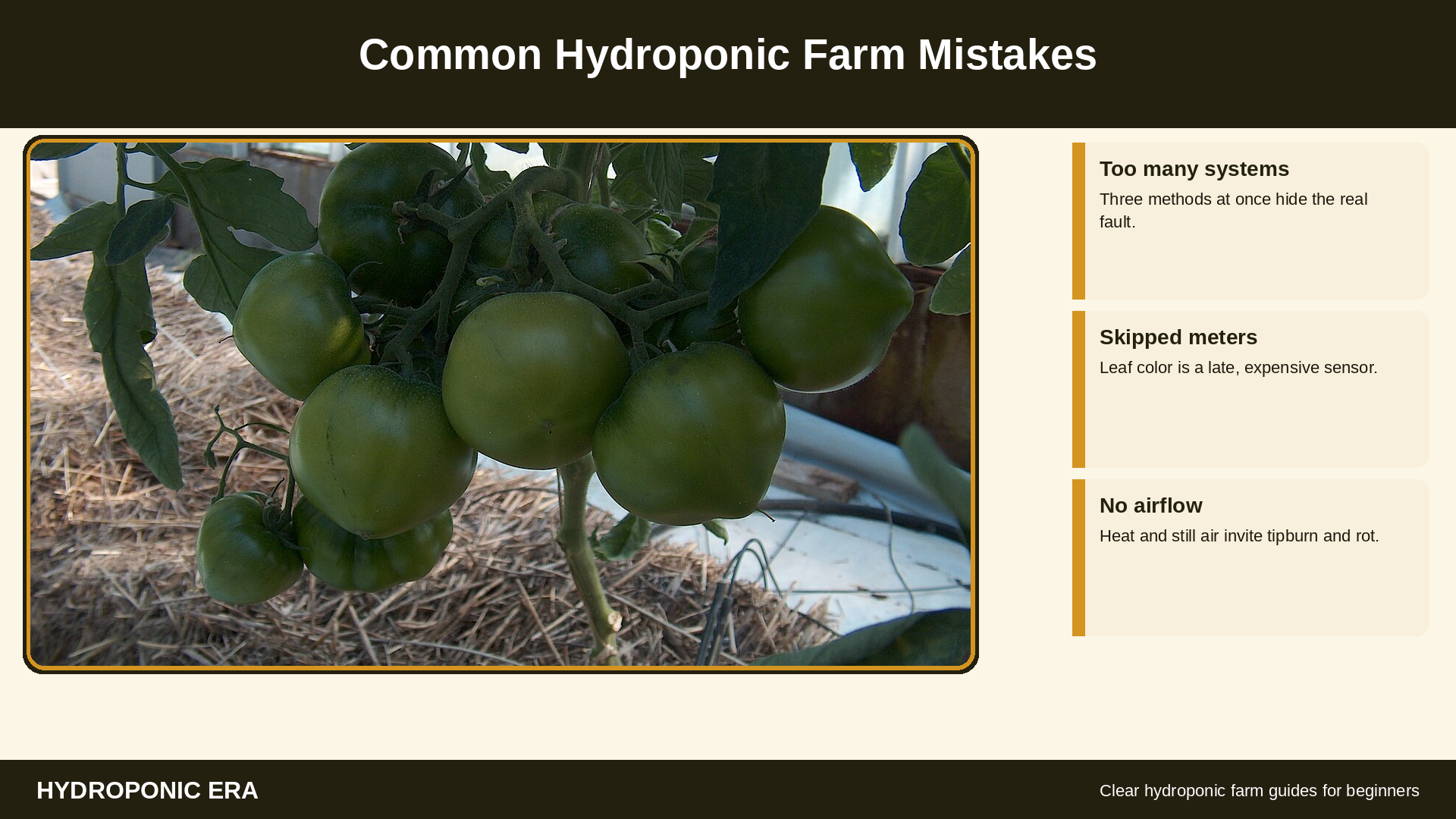
Most early losses on a hydroponic farm are ordinary. They come from haste, skipped meters, and heat—not a missing additive.
Scaling before one crop is repeatable. Adding a second room before you can pack lettuce on time creates two messy rooms. Harvest the same sowing three times before you buy more channels.
Skipping meters. Guessing pH from leaf color is slower and costlier than a two-minute reading. Calibration solution is cheaper than a lost tank of greens.
Sharing one tank across mismatched crops. Lettuce and heavy tomatoes fight over the same EC. Split the systems or wait a season.
Light leaks, algae, and poor airflow. Clear lids steal nutrients and clog fittings. Warm stagnant rooms invite tipburn. Shade and fans are farm tools.
No backup for air or flow. A dead air pump in deep water culture is an emergency. Keep one spare pump on the shelf.
Dirty harvest habits and warehouse envy. If you sell food, treat the pack table like a kitchen. Keep the first space tidy. Complexity can wait.
If you want a high-oxygen system later, start with the home guide to aeroponics for beginners before you scale a mist-heavy bay.
Frequently Asked Questions
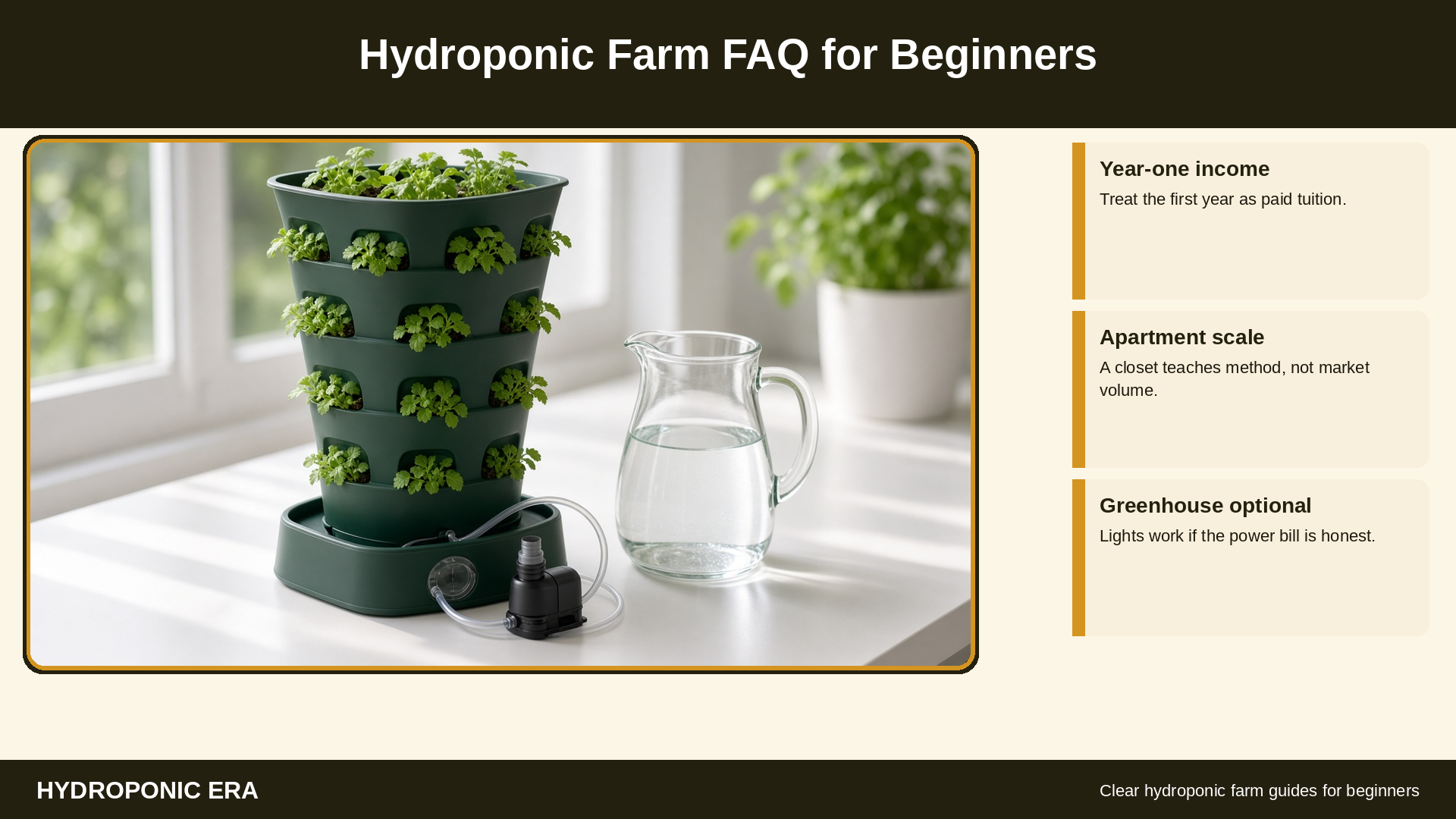
Is a small hydroponic farm profitable in year one?
Sometimes on a market table. Often not after you count your hours. Treat year one as tuition with edible homework, then decide.
How much space do I need to start a hydroponic farm?
A closet can teach the method. Weekly sales usually need a dedicated room, shed, or greenhouse bay you can keep clean.
What crop should I grow first?
Lettuce and herbs. They finish fast, match many home systems, and show nutrient mistakes quickly.
Do I need a greenhouse?
No. A greenhouse helps with sun and winter, but indoor lights work if the power cost is acceptable.
How many hours per week will this take?
Plan a short daily check and a longer weekly clean. If that feels heavy, grow fewer plants.
Can I start in an apartment?
Yes at garden scale. Check leases, humidity, and electrical load first.
Related reading
- Why Hydroponic Leaves Turn Yellow
- Why Hydroponic Roots Turn Brown
- How to Grow Mint Hydroponically
- How to Grow Microgreens Hydroponically
- How to Grow Strawberries Hydroponically
Final Thoughts
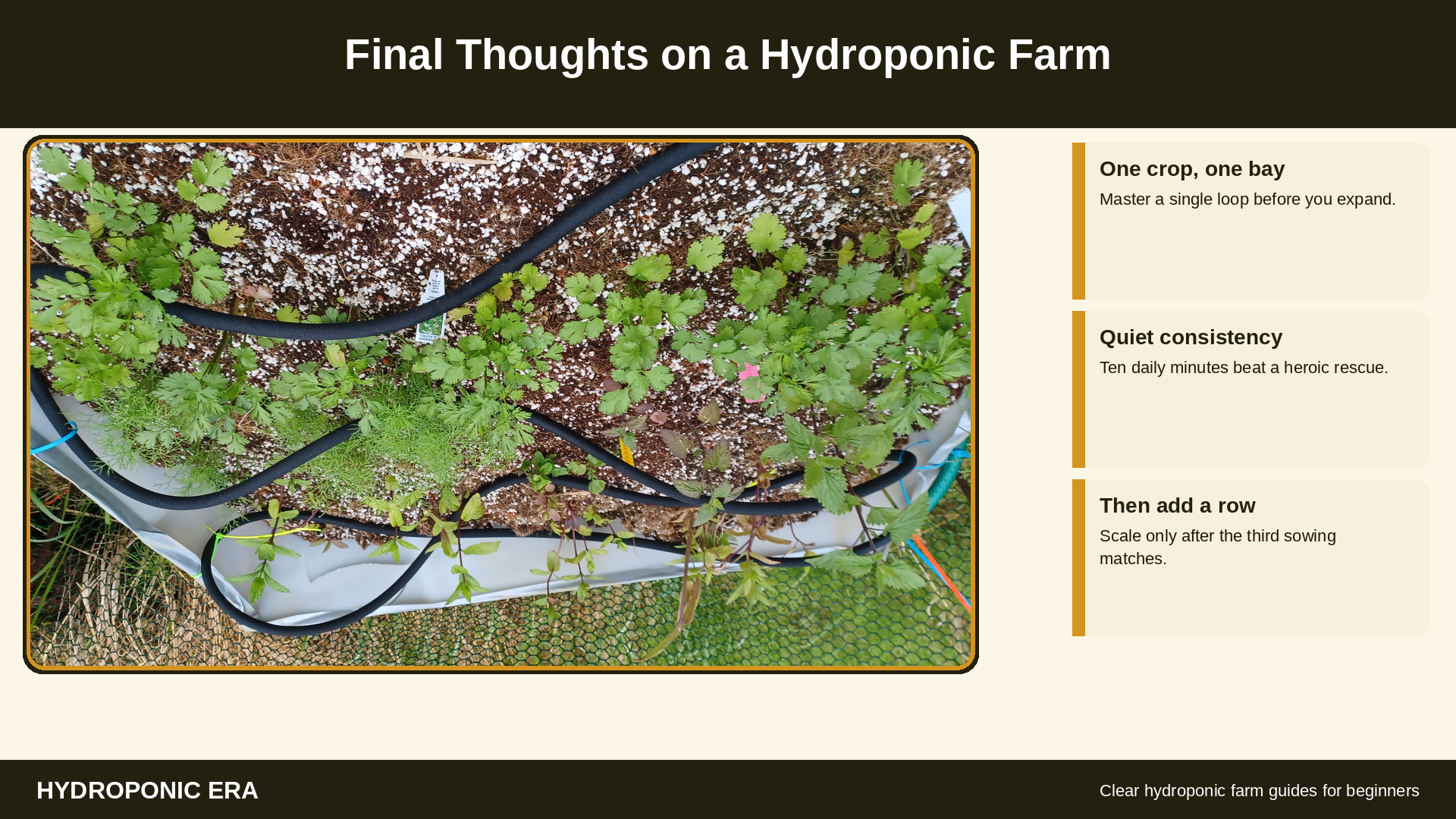
A hydroponic farm rewards quiet repetition more than dramatic hardware. Choose one crop, one system, and a space you can manage on a weeknight. Keep pH and EC in a notebook, protect the reservoir from light, and harvest on a schedule you can explain.
When the third sowing looks like the first, you will know the method. Then you can add a row, a pepper trial, or a Saturday stall without guessing. That is a fair, calm way to grow a small hydroponic farm in a real home, shed, or greenhouse.
External reading for deeper detail: the USDA National Agricultural Library hydroponics overview, Ohio State University’s hydroponic nutrient solution fact sheet (HYG-1437), Cornell Controlled Environment Agriculture (including the small-operation lettuce handbook), and Oklahoma State University’s hydroponics fact sheet for system types and closed-loop nutrient care.
5 thoughts on “How to Start a Small Hydroponic Farm”