
A hydroponic greenhouse lets you grow plants in a nutrient solution under glass or plastic instead of in garden soil. For beginners in the United States, United Kingdom, Australia, or Canada, that usually means a lean-to, hoop house, or small backyard greenhouse—not a commercial warehouse.
This guide walks through what a hydroponic greenhouse is, why it helps, what to buy, how to set up a small bay, and how to manage climate, light, airflow, nutrients, and pH. The tone is practical: short daily checks, one crop at a time, and notes you can trust.
You do not need a packing house or a research pond. A walkable bay, one recirculating loop, and a notebook teach the method. If you already keep a small indoor system, the greenhouse step mainly adds sun, shade, and outdoor-rated power as daily partners.
Table of contents
- What a Hydroponic Greenhouse Is
- Why Grow in a Hydroponic Greenhouse
- What You Need to Start a Hydroponic Greenhouse
- How to Set Up a Small Hydroponic Greenhouse
- Climate, Light, and Airflow
- Nutrients, pH, and Water in a Greenhouse
- Common Hydroponic Greenhouse Mistakes
- Frequently Asked Questions
- Final Thoughts
What a Hydroponic Greenhouse Is
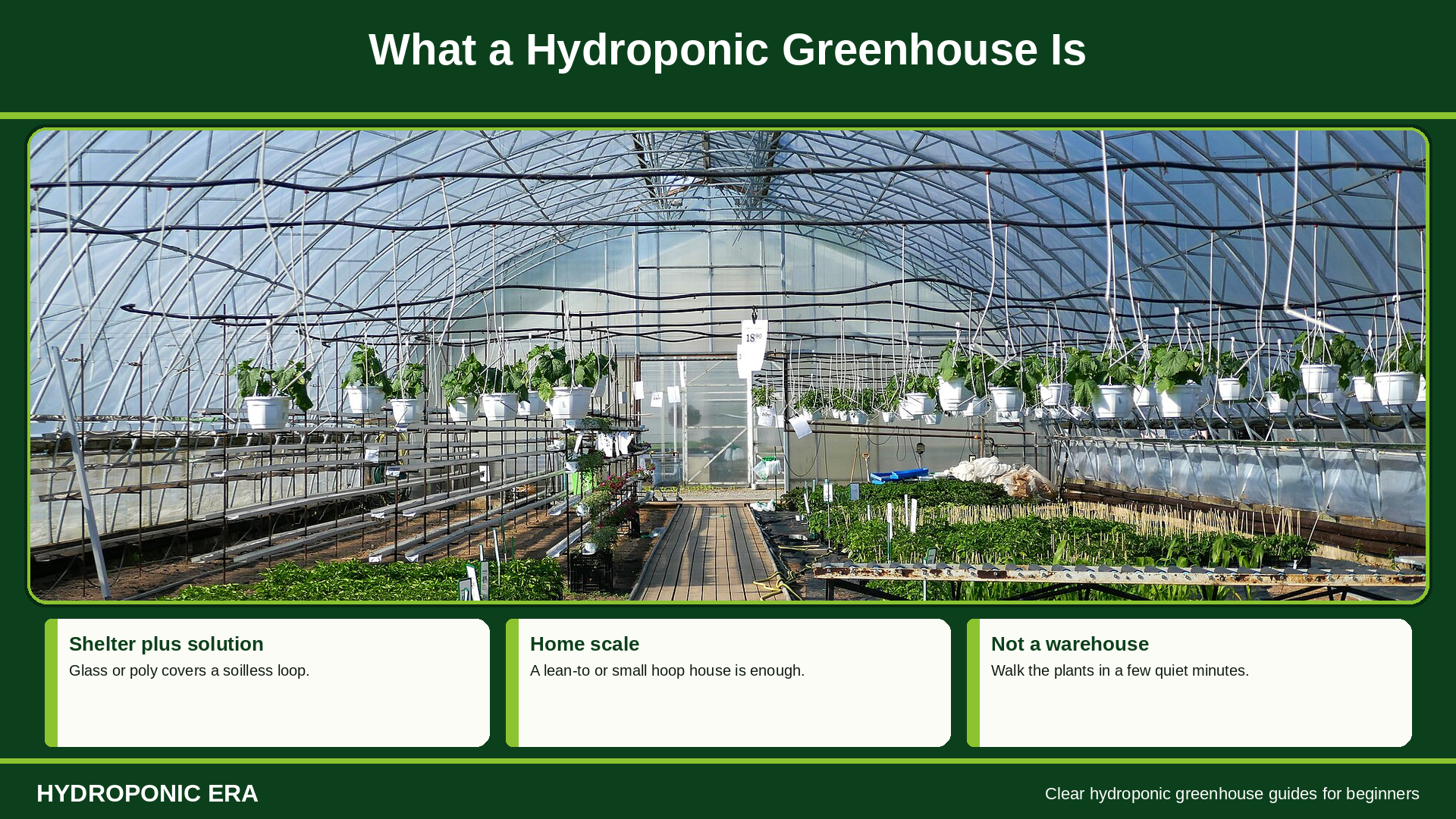
A hydroponic greenhouse is a covered growing space where plants take water and fertilizer from a measured solution rather than from soil. The structure shelters the crop from rain and wind. The hydroponic loop—reservoir, pump, channels or pots, and return—feeds the roots on a schedule you control.
At home scale, think of a walkable bay you can check in a few minutes. Cornell’s Controlled Environment Agriculture program has long treated greenhouse and indoor systems as tools for predictable harvests when light, temperature, and water stay consistent. You do not need a research pond. You need a clear path, a level floor, and one system you understand.
A backyard hydroponic greenhouse is closer to a serious hydroponic garden without soil than to a packing warehouse. The goal is a repeating cycle: seed, transplant, feed, harvest, clean, and start again.
If you already grow indoors, the habits in the indoor hydroponic garden beginner guide still apply. The greenhouse step adds sun, shade, and airflow as daily partners. The same notebook, the same opaque tank, and the same calm meter checks still matter under glass or poly.
Home structures vary. A lean-to against a south-facing wall, a small polycarbonate kit, or a single hoop bay can all host a first loop. What they share is enclosure: wind stays outside, rain stays off the leaves, and you decide how much heat and shade enter the crop.
Why Grow in a Hydroponic Greenhouse

A hydroponic greenhouse buys you weather buffer and cleaner leaves. Rain stays outside. Soil splash stays out of salad. In cool seasons, a modest heater or thermal mass can keep leafy greens moving when outdoor beds stall.
Virginia Tech Extension’s hydroponic management basics (SPES-462) stress that greenhouse success starts with matching the environment to the crop, not with buying every gadget first. Leafy greens and herbs are popular in small houses because they finish quickly and suit many recirculating systems.
You also gain schedule control. Harvest dates become easier to plan when storms do not flatten beds. That matters if you share produce with neighbors or keep a weekly kitchen habit. A short morning walk replaces the weekend rescue that outdoor beds often demand after a hard rain.
Space stays modest on purpose. A lean-to against a south-facing wall, a small polycarbonate kit, or a single hoop bay can teach more than an empty half-acre you cannot heat or vent. Start where you can walk every plant without ladders.
Compared with a fully indoor room, a sunny hydroponic greenhouse often cuts lighting cost for much of the year. You still pay for shade cloth, vents, and honest winter heat if your climate needs it. Count both power and propane or electric heat before you claim a free harvest from the sun.
Another quiet benefit is learning pace. In a hydroponic greenhouse, you see the effect of shade, a stuck vent, or a warm tank within a day or two. That feedback loop teaches faster than a large outdoor bed that changes only with the weather.
What You Need to Start a Hydroponic Greenhouse
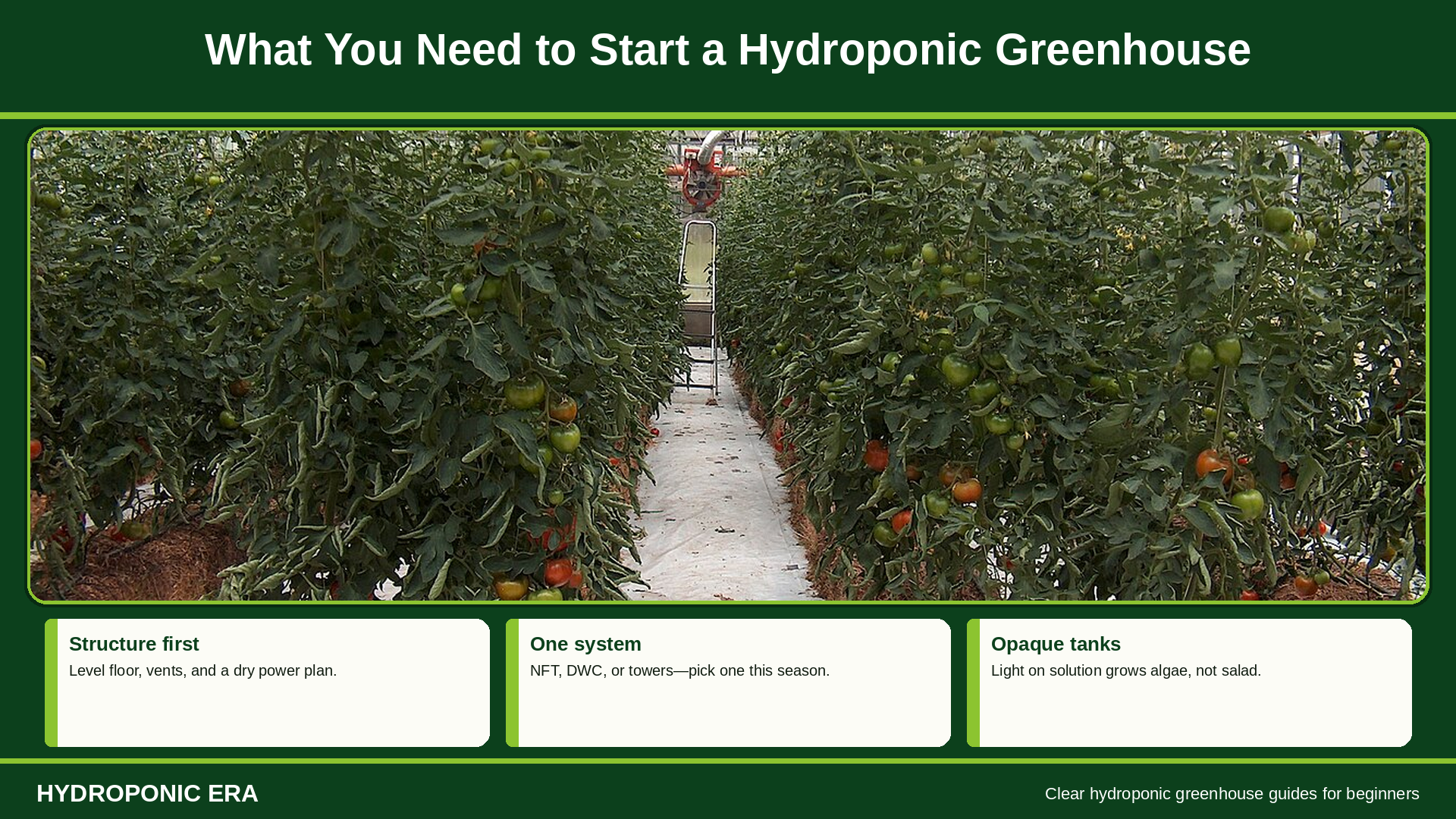
Begin with the structure, then the loop, then the meters. A calm shopping list beats a cart full of unused gadgets.
Structure and safety
- A level pad, secure glazing or poly, and working vents or roll-up sides
- Shade cloth for bright summers
- Grounded outdoor-rated power with drip loops on cords
- A dry place for nutrients, meters, and notebooks
- A hose bib or fill path that does not flood the aisle
Hydroponic hardware
- Opaque reservoir with a lid
- Water pump (and air pump for deep water culture)
- Channels, raft beds, Dutch-style buckets, or a tower—pick one
- Net pots, inert media, tubing, and spare fittings
- A simple overflow path that keeps electrics dry
Measurement and feed
- pH meter, EC or TDS meter, calibration solution
- Complete hydroponic nutrients plus pH up and pH down
- Labels and a simple logbook
Oklahoma State University’s hydroponics fact sheet reminds growers that closed liquid systems need active nutrient management. Meters are not optional decoration; they are how you see what the roots drink.
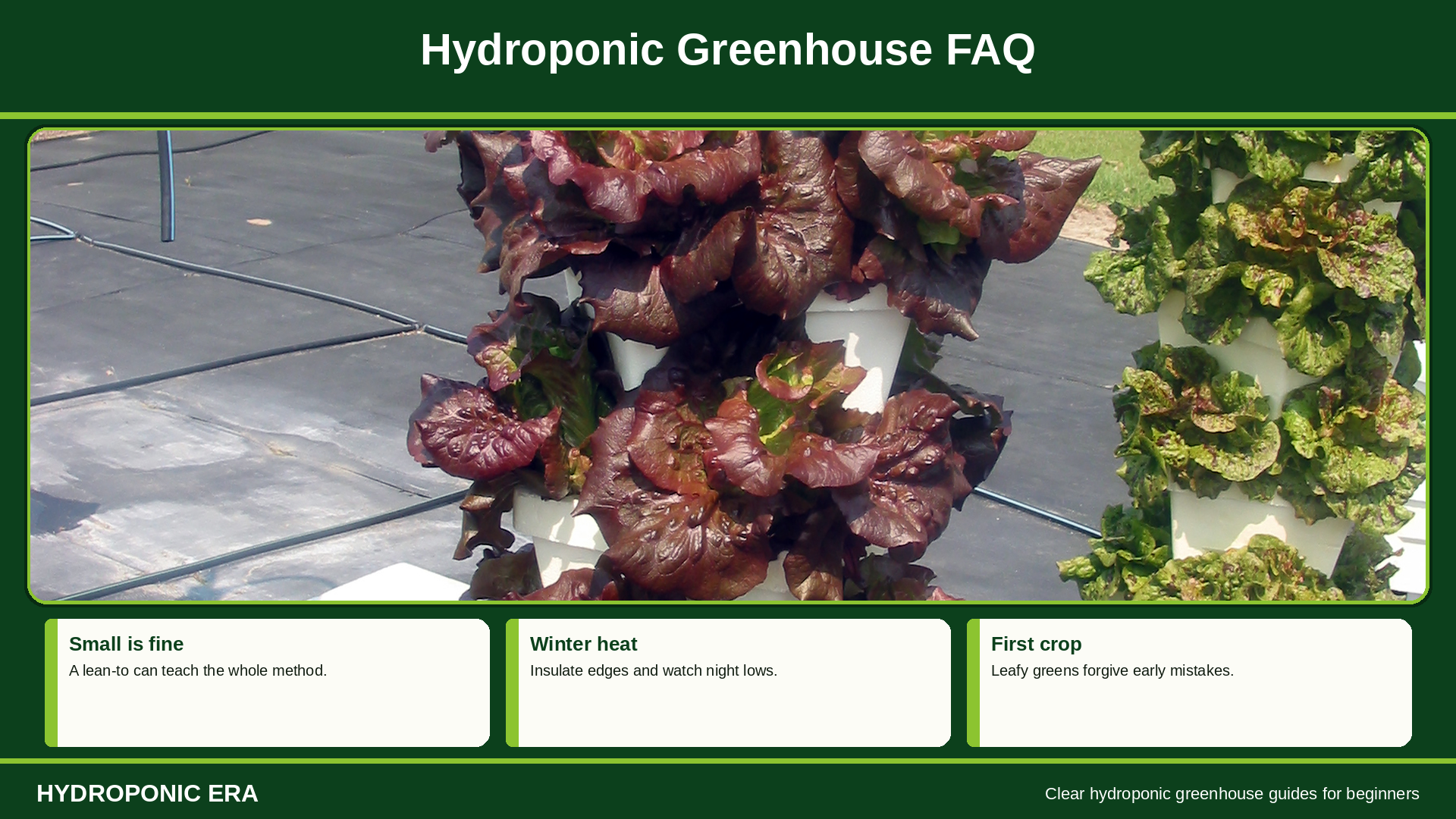
Choose one method for season one. NFT and raft beds suit greens. Towers help when floor space is tight—see the hydroponic tower garden guide if vertical is your only option. Fruiting crops can wait until climate and feed feel ordinary. If you later want misting roots rather than channels, read aeroponics for beginners after this house is steady.
Skip clear tanks, soil fertilizer bags, and unsafe timers. Opaque lids and a spare air stone will do more for a first hydroponic greenhouse than a second unused shelf of gadgets. Buy one spare pump if your climate is hot; a quiet backup beats a wilted weekend.
How to Set Up a Small Hydroponic Greenhouse

Follow a calm order so leaks show up before seedlings do. This eight-step path is enough for a first bay.
- Clear and level the floor. Mark aisles so you can carry a tote without stepping on channels. Sweep grit that could scratch poly or clog drains.
- Place the reservoir low and shaded. Keep it off direct sun so solution stays cooler and darker. Leave lid clearance so you can meter without climbing.
- Set channels or pots level. NFT needs a gentle, even slope; raft beds need a stable raft surface; towers need a firm base that will not tip in a gust.
- Plumb the loop. Pump to the high end, return to the tank, and add a simple overflow path that does not soak electrics. Use drip loops on cords.
- Run water only for a day. Check leaks, splash, and noise before any seedlings arrive. Fix puddles now; salt crust later is harder to read on a wet floor.
- Add nutrients and set pH. Mix to the label for leafy greens, then confirm with meters. Write the starting volume, pH, and EC on day one.
- Transplant sturdy seedlings. Start with lettuce or herbs; a walkthrough of how to grow lettuce hydroponically saves early trial and error.
- Write the first week’s notes. Record volume, pH, EC, and any wilt or tipburn. One line a day is enough.
Keep plant count low until the third sowing looks like the first. A calm hydroponic greenhouse rewards boring reliability more than a dramatic first week. If something fails, shrink the crop before you buy another shelf of parts.
Label the pump switch, the fill hose, and the pH bottles on day one. Future-you will thank present-you when a guest helps water and every bottle looks the same. A tidy first hydroponic greenhouse is mostly labels and clear aisles.
Between sowings, empty and rinse the tank, wipe algae from lids, and check fittings for grit. A clean restart is faster than chasing slime from the last crop while new seedlings sit waiting.
Climate, Light, and Airflow
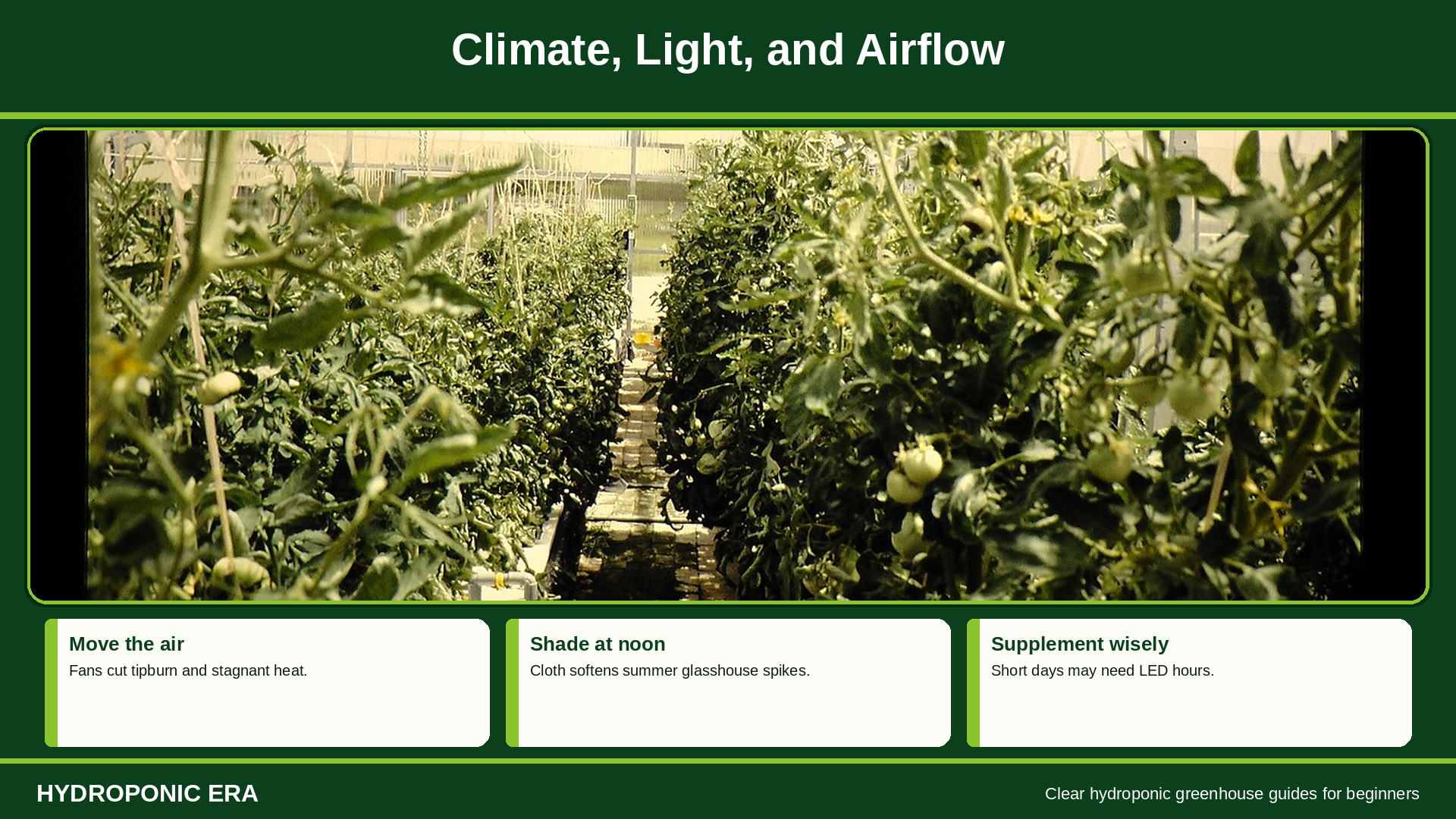
Climate is the part soil gardeners sometimes forget until leaves burn. In a hydroponic greenhouse, heat rises fast under glass or poly. Leafy greens prefer cool, steady air. Move air with circulating fans so leaves dry gently and temperatures even out from end to end.
Shade cloth softens midday spikes in summer. Roof vents, side vents, or roll-up walls let hot air escape. In winter, seal drafts at the base, watch night lows, and avoid cold solution sitting in an uninsulated tank against an outside wall. A tank that freezes at the edge can shock roots even when the air still feels mild at noon.
Natural light does much of the work in a sunny house. On short winter days in northern latitudes, a modest LED bank can stretch photoperiod for greens. Size lamps to the canopy, not the empty air. The best grow lights for hydroponics guide helps match height and intensity without guesswork.
Humidity matters too. Still, wet air invites disease on soft leaves. Fresh air exchanges and gentle leaf movement are part of crop care, not extras you add after trouble starts. If leaves stay wet after dusk, raise airflow before you reach for a spray.
Virginia Tech’s management guidance frames the greenhouse itself as the first production system: optimize temperature, ventilation, and light for the crop you chose, then let the hydroponic hardware do its quieter job. Thermometers at plant height beat a single gauge at the door.
Place a cheap max-min thermometer at canopy height and another near the reservoir. Numbers at the door can lie. If the ridge is hot while roots sit cold, adjust vents and tank insulation before you change the nutrient recipe.
In hot climates, open early and shade before the sun peaks. In cool climates, close vents before night and protect the reservoir. Either way, treat climate as a daily habit inside your hydroponic greenhouse, not a seasonal surprise.
Nutrients, pH, and Water in a Greenhouse
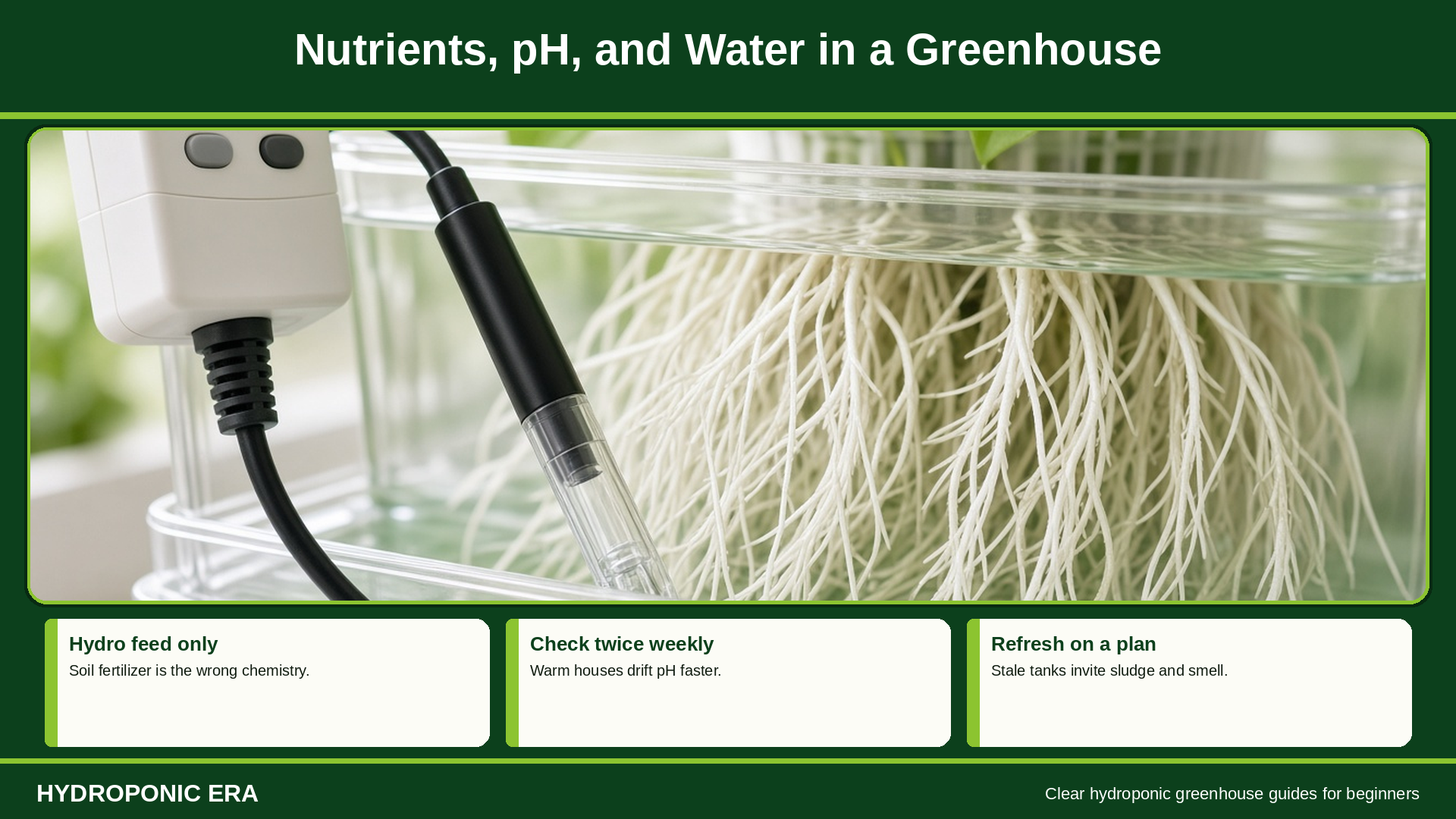
Nutrients, pH, and water are the operating system of any hydroponic greenhouse. Use a complete hydroponic formula. Every essential element must come from the solution; soil blends are the wrong chemistry.
Ohio State University’s hydroponic nutrient fact sheet (Ohioline HYG-1437) makes the beginner lesson plain: follow a written recipe and trust meters over leaf-color guesses. Leafy greens often sit near pH 5.5–6.5 with a modest EC. Warm greenhouse days can push pH around faster than a cool basement tank, so check more often in summer.
A short morning walk works well:
- Are pumps and air stones running?
- Is the reservoir at a safe level?
- Any new tipburn, wilt, or odd color?
- Twice a week (daily in small hot tanks): pH and EC, then a short note
Top up with water when volume drops. Adjust nutrients when EC drifts. For step-by-step meter work, use how to control pH in hydroponics for beginners. For refresh timing, use how often to change hydroponic water.
Test your tap once. Hardness, chlorine or chloramine, and a baseline EC shape how you mix. Keep reservoirs opaque. Light on solution grows algae that clogs fittings and competes with roots. If EC climbs while volume falls, add water first; the plants drank, they did not necessarily ask for a stronger feed.
Once a week, calibrate the pH meter if the reading looks stuck, wipe the lid, and glance at return lines. Small hot tanks in a hydroponic greenhouse drift faster than large cool ones. Shorter checks beat long rescue weekends.
Keep a small spare of calibration solution and a spare air stone. Parts fail on hot Fridays. Having them on the shelf keeps your hydroponic greenhouse on schedule instead of paused for a store run.
Common Hydroponic Greenhouse Mistakes

Most early losses are ordinary. They come from heat, skipped meters, and haste—not a missing additive. Fix habits before you buy another kit.
Too hot and too still. Adding plants before shade and fans is ready invites tipburn. Fix airflow first. A quiet fan at plant height often does more than a second shelf of seedlings.
Clear lids and sunlit tanks. Algae is a plumbing problem waiting to happen. Opaque covers are cheaper than a clogged weekend. Paint or wrap any translucent tote that sits in the bay.
Scaling before one crop repeats. A second bay before you can harvest lettuce on time creates two messy bays. Repeat the same sowing three times. Reliability is the signal that you may expand.
One tank for mismatched crops. Delicate lettuce and heavy tomatoes fight over the same EC. Split systems or wait a season. Keep salad on its own loop until fruiting feels ordinary.
Ignoring night cold. A hydroponic greenhouse that soars by day and crashes by night stresses roots. Insulate tanks and watch forecasts. A warm noon reading does not protect an uninsulated tote on a clear night.
Dirty harvest habits. Treat the cutting board like a kitchen. Rinse tools. Keep soil shoes off the aisle if you sell or share food. Clean scissors between crops reduce carry-over of soft rot.
Warehouse envy. Complexity can wait. A tidy small loop outlasts an empty commercial shell you cannot vent. Borrow ideas from larger farms, but size the hardware to the hours you actually have.
Skipping the empty water test. Seedlings on a leaking return line teach panic, not hydroponics. Run plain water a full day before the first transplant.
Frequently Asked Questions
Do I need a commercial greenhouse to start?
No. A hobby kit, lean-to, or small hoop house is enough to learn a hydroponic greenhouse rhythm. Walkable space and working vents matter more than floor area.
What should I grow first?
Lettuce and herbs. They finish fast and show nutrient mistakes quickly. Save heavy fruiting crops until climate and meters feel boring.
Can I run hydroponics in a cold climate greenhouse?
Yes with insulation, careful night heat, and realistic winter crop choices. Greens tolerate cool better than tropical fruiting plants. Protect the reservoir from freezing edges.
How much time does a small setup take?
Plan a short daily check and a longer weekly clean. If that feels heavy, grow fewer plants. Ten calm minutes beat a monthly rescue.
Is a hydroponic greenhouse cheaper than grow lights indoors?
Often the sun cuts lighting cost, but heating, glazing, and shade add their own bills. Count both power and propane or electric heat honestly for your climate.
Can I convert an existing soil greenhouse?
Yes. Clear beds or benches, level the floor, add an opaque reservoir, and start with one soilless system rather than mixing soil and solution in the same tray.
Do I need grow lights in summer?
Many sunny houses need shade more than lamps in midsummer. Short winter days are when a modest LED bank earns its keep for greens.
How often should I change the nutrient solution?
Follow plant load, tank size, and meter drift rather than a single calendar myth. Use the water-change guide linked above, and refresh sooner if the tank smells or roots look slimy.
Related reading
- Why Hydroponic Roots Turn Brown
- How to Grow Peppers Hydroponically
- Why Hydroponic Leaves Turn Yellow
- How to Grow Mint Hydroponically
- How to Grow Microgreens Hydroponically
Final Thoughts
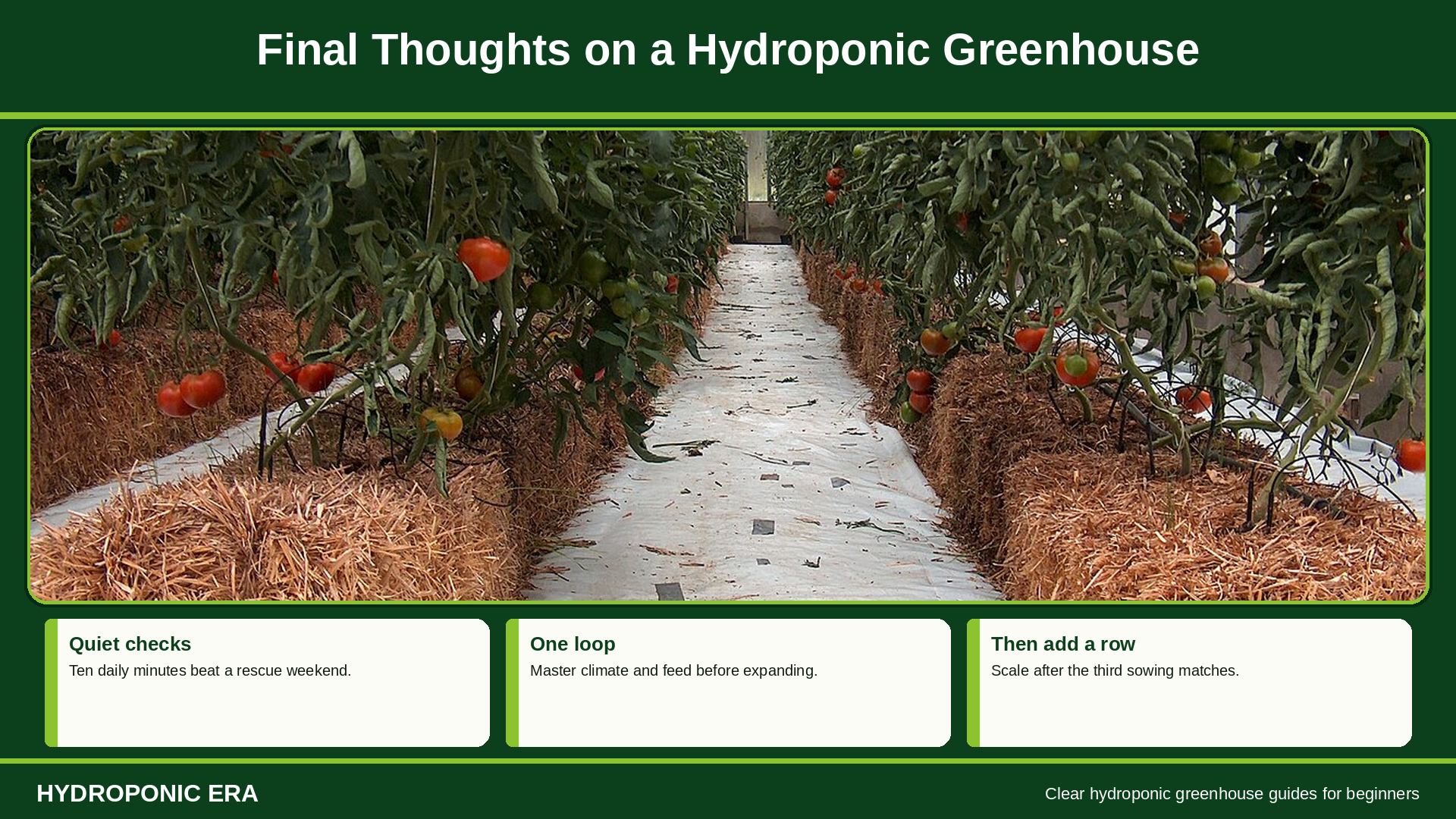
A hydroponic greenhouse rewards quiet repetition. Choose one leafy crop, one system, and a bay you can manage on a weeknight. Keep pH and EC in a notebook, move the air, protect the reservoir from light, and harvest on a schedule you can explain.
When the third sowing looks like the first, you will know the method. Then you can add a row, a pepper trial, or a winter LED bank without guessing. That is a fair, calm way to grow in a real home hydroponic greenhouse in the US, UK, Australia, or Canada.
Start small, write the numbers, and let climate become a habit. The hardware is simple; the win is a harvest you can repeat without weekend drama.
External reading: Ohio State University HYG-1437 hydroponic nutrient solutions, Virginia Tech Extension hydroponic management basics (SPES-462), Cornell Controlled Environment Agriculture, and Oklahoma State University hydroponics fact sheet.
1 thought on “Hydroponic Greenhouse for Beginners”