
Quick Answer: hydroponic pests aphids mites
hydroponic pests aphids mites still happen indoors—especially aphids, fungus gnats, and spider mites. Spot them early with scheduled scouting, sticky cards, and underside leaf checks. Fix the environment that favors each pest (tender soft growth for aphids, constantly wet media surfaces for fungus gnats, hot/dry canopies for spider mites), then use the least disruptive IPM steps that match the pest. Hydroponics reduces some soil insects but does not create a sterile force field.
Related plant-problem guides: yellow leaves, algae (draft sibling), and system cleaning (draft sibling).
Key Takeaways
- University of Minnesota Extension aphid pages describe aphids as soft-bodied sap feeders that multiply quickly and produce honeydew—scout new growth and leaf undersides.
- UC IPM Pest Notes on aphids (PN7404) emphasize monitoring and cultural/biological options within an IPM framework rather than panic spraying alone.
- UMN and UC IPM spider mite resources (PN7405) highlight fine webbing, stippling, and hot/dry conditions that favor outbreaks.
- Wisconsin Horticulture and UC IPM fungus gnat materials link gnats to moist organic media and describe larvae that feed on fungi/roots in the root zone—sticky cards help monitor adults.
- UMass Extension fungus gnat/shore fly fact sheets reinforce sanitation and moisture management in greenhouse settings.
- UF/IFAS insect publications (e.g., IN1258 family materials when relevant) support identifying pests before treatment—misidentification wastes time.
Related HydroponicEra guides
- Indoor hydroponic garden
- Start hydroponics at home
- Seedlings and transplanting (draft sibling)
- Growing media (draft sibling)
- Nutrient lockout (draft sibling)

IPM mindset for hydroponic pests aphids mites

Integrated Pest Management (IPM) starts with identification, prevention, monitoring, and thresholds—not a favorite bottle. UC IPM pest notes for aphids and mites are built that way. In a hydroponic tent, prevention means: inspect new plants, quarantine arrivals, keep weeds/houseplant hitchhikers away from the reservoir, clean between crops, and avoid the environmental extremes each pest loves.
Hydroponic pests aphids mites identification table

| Pest | What you see | Favored conditions | First cultural moves |
|---|---|---|---|
| Aphids | Clusters on soft tips; sticky honeydew; sometimes ants | Lush tender growth | Blast with water where safe; prune hotspots; quarantine |
| Fungus gnats | Tiny dark flies around media; larvae in wet plugs | Chronically wet organic surfaces | Dry media surface; remove algae/debris; sticky cards |
| Spider mites | Stippling, fine webbing, dusty undersides | Hot, dry canopies | Increase humidity moderately; hose undersides; isolate plants |
Aphids in Hydroponics

UMN Extension describes aphids as prolific sap feeders. They distort new leaves, excrete honeydew, and can move virus issues in some crop systems. In hydroponic herbs and greens, check crown growth points daily during warm spells.
Practical response ladder:
- Confirm identity (aphids vs other soft insects).
- Remove heavily infested shoots into a bag—do not compost next to the tent.
- Use a strong water spray on sturdy plants where runoff will not flood electrical gear.
- Yellow sticky cards help monitor flying forms and other insects (not a complete cure).
- If using insecticidal soaps or other products, choose labels that include your crop and indoor use situation; spot-test; never invent rates.
- Re-scout every 2–3 days—aphid populations rebound.
UC IPM PN7404 is a solid deeper read for management options and natural enemies in broader settings.
Fungus Gnats in Hydroponics
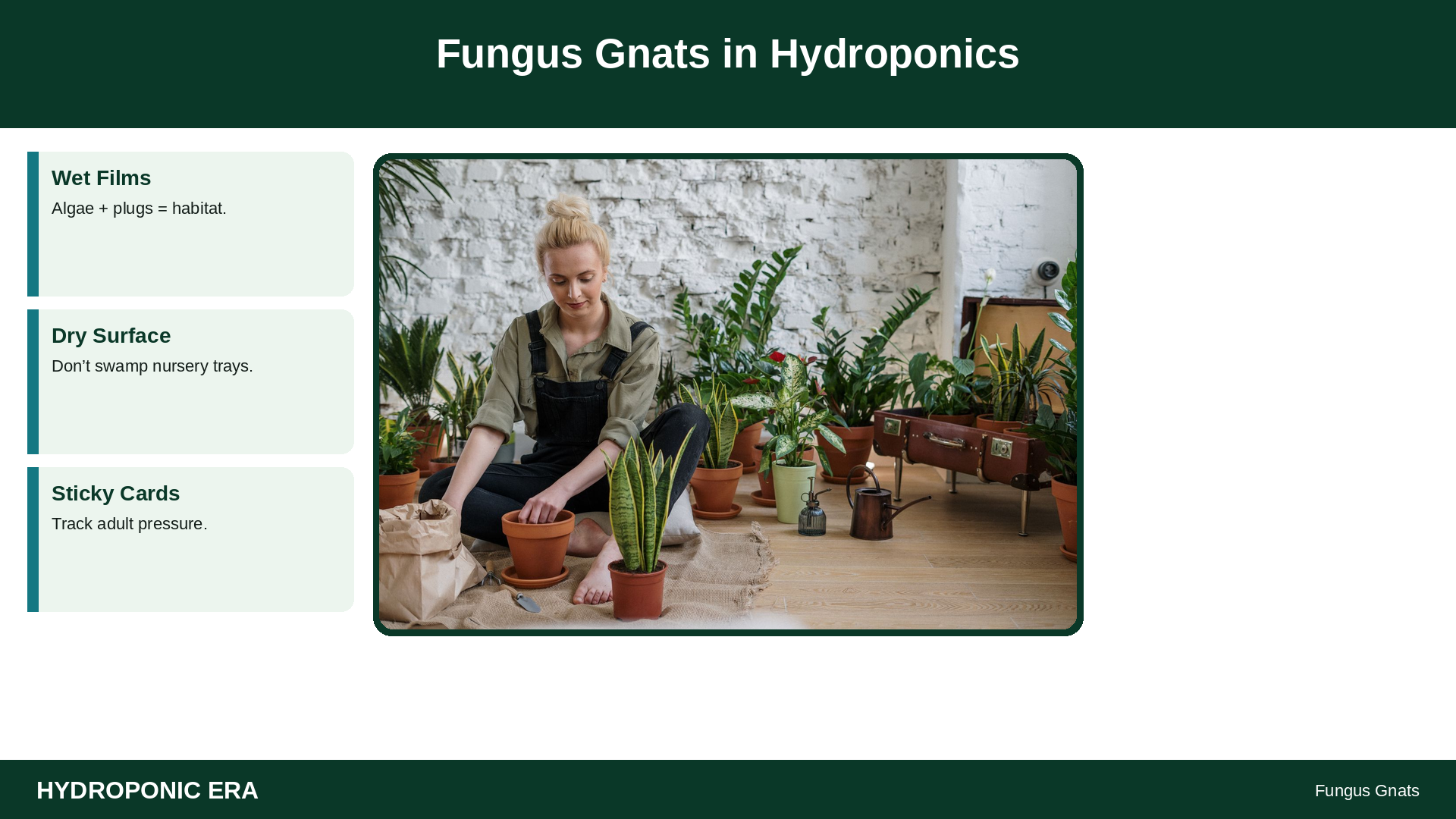
Fungus gnats thrive where media stays wet and organic films flourish. Wisconsin Horticulture and UC IPM fungus gnat notes describe adults as weak fliers around pots and larvae in the root zone. Hydroponic twists:
- Wet rockwool tops + algae = gnat habitat
- Nursery trays are often the source that “suddenly” appears in the main room
- Adult sticky-card counts warn you before larvae hammer seedlings
Cultural fixes first: reduce surface wetness, remove dead roots and algae, avoid overwatering plugs, and clean trays between batches. UMass greenhouse guidance pairs moisture management with sanitation. Biological options (for example Bacillus thuringiensis israelensis products labeled for fungus gnat larvae) exist for some situations—only use labeled products as directed.
Spider Mites in Hydroponics

Spider mites are tiny arachnids, not insects. UMN and UC IPM PN7405 describe stippling and webbing under hot, dry conditions. Indoor LED rooms with strong light and low humidity can explode mite populations on tomatoes, peppers, and strawberries.
Response ladder:
- Inspect with a flashlight and white paper tap test.
- Isolate the worst plants if possible.
- Prune the most damaged leaves into sealed bags.
- Syringe leaf undersides with water where practical.
- Moderate extreme dryness (without creating a fungus-gnat swamp).
- Consider labeled miticide/soap options only with correct identification and label compliance—mites and products are easy to mismatch.
- Re-scout obsessively; eggs hatch in waves.
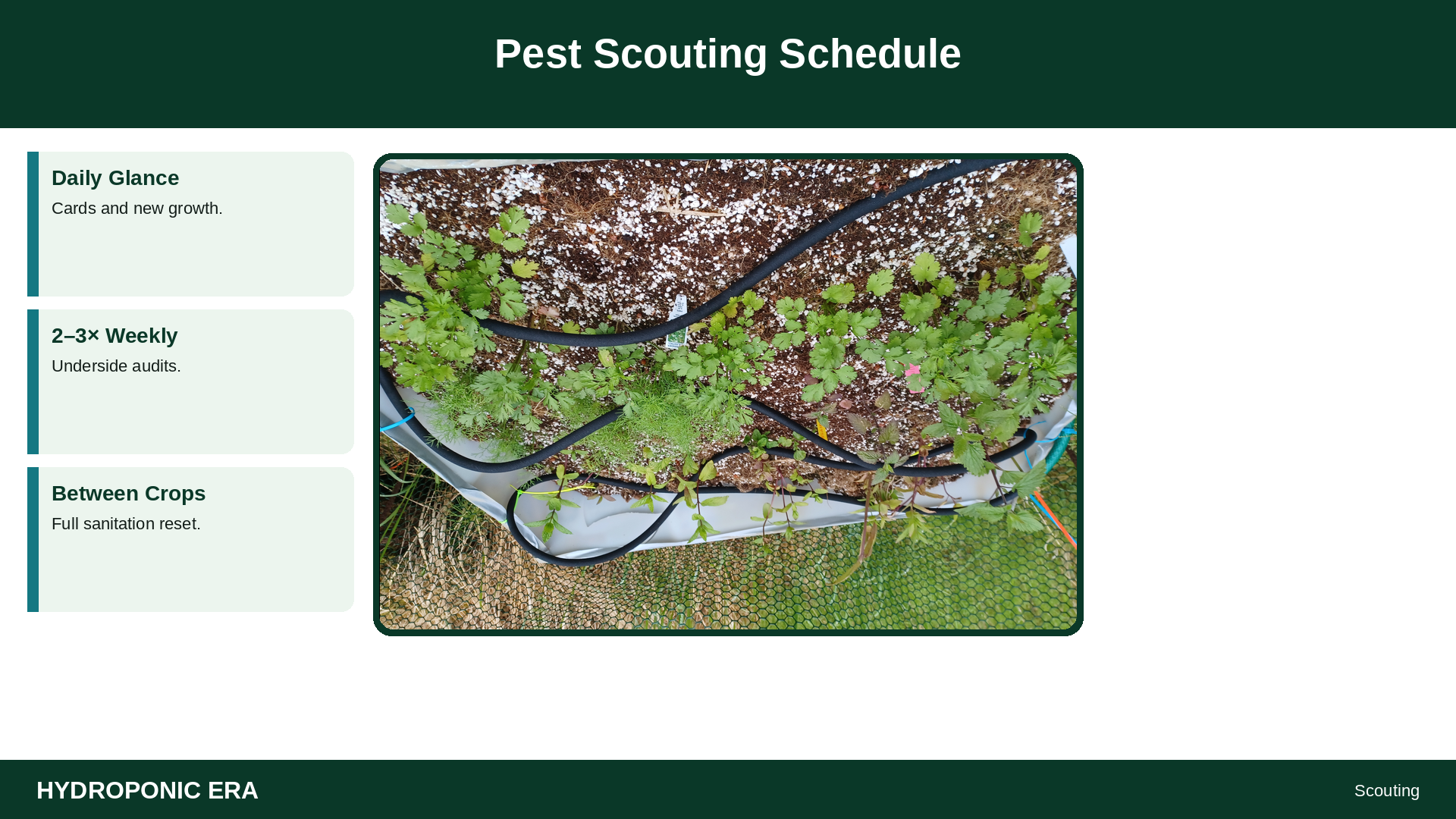
Scouting Schedule (Framework)
| Frequency | Action |
|---|---|
| Daily (quick) | Glance sticky cards; check newest leaves on fruiting crops |
| 2–3× weekly | Underside leaf audit on 5–10 random sites |
| Weekly | Nursery tray inspection; lid/media algae check |
| Between crops | Full clean/sanitize; discard infested media |
Prevention checklist for hydroponic pests aphids mites
- Quarantine new plants for several days away from the main system
- Do not carry outdoor garden clothes straight into the tent
- Keep ornamental houseplants that chronically host mites away from food systems
- Clean between crops
- Avoid luxury nitrogen soft growth if aphids are already present
- Balance humidity: mites like desert canopies; gnats like swamps—steer the middle for your crop
Common Mistakes

- Spraying first, identifying never
- Ignoring sticky cards until adults are a cloud
- Treating mites with the wrong product class
- Leaving wet algae mats on plugs “because plants look fine”
- Reintroducing pests via a bargain soil plant stuffed into a net pot
- Stopping scouting the day after treatment
Troubleshooting Look-Alikes
| Symptom | Could be pests | Could be culture |
|---|---|---|
| Stippling | Spider mites | Spray damage / hard water spots |
| Sticky leaves | Aphid honeydew | Nutrient residue splash |
| Wilting seedlings | Gnat larvae + root damage | Low oxygen / heat / EC burn |
| Yellow mottling | Virus vectors (aphids) possible in some cases | Nutrient lockout / light stress |
When culture is the cause, jump to lockout, burn, and oxygen drafts rather than stacking insecticides.
What to Check in Your Own Room
- Where do new plants enter from?
- Are sticky cards dated and replaced?
- Is media surface permanently wet?
- Is the canopy hot and dusty-dry?
- Do you inspect undersides or only tops?
- Is there a written treatment log with product names and dates?
Biological Controls and Predators (High-Level)
Greenhouses sometimes release predatory mites, parasitic wasps, or other biocontrol agents as part of IPM. UC IPM materials discuss natural enemies in broader management contexts. For a sealed hobby tent, biocontrol can work but requires correct species matching, release timing, and avoiding incompatible sprays. Treat biocontrol as a planned program, not a miracle packet poured on a crisis Friday night.
If you sell produce, confirm any biocontrol or pesticide use against market and regulatory expectations. This site does not certify applicator credentials—follow local rules.
Crop-by-Crop Hotspots
- Lettuce and greens: aphids love soft heads; fungus gnats love wet nursery plugs.
- Herbs (basil, mint, cilantro): aphids on tips; mites less common than on fruiting crops but possible.
- Tomatoes/peppers/cucumbers/strawberries: spider mites escalate under heat; inspect undersides weekly at minimum.
Crop guides: lettuce, basil, tomatoes, strawberries, cilantro (draft sibling).
Electrical and Water Safety While Treating Pests
Water sprays near ballasts, drivers, and outlets are a shock hazard. Move portable fixtures if needed, protect connections, and never create puddles around power strips. Keep runoff out of reservoirs if the runoff contains soap or pesticide residues not intended for root zones.
When to Remove an Entire Plant
If a plant is a mite factory with heavy webbing, or a seedling tray is seething with gnat larvae and collapse, removal can save the room. One heroic plant is not worth a system-wide infestation. Clean the site afterward.
Building a Mini Scout Kit
- LED flashlight or headlamp
- 10× loupe if you have one
- White paper for tap tests
- Yellow and blue sticky cards
- Sealable bags for infested material
- Notebook with dates and pest counts (even rough: low/med/high)
Consistency beats fancy gear. Five minutes of underside checks three times weekly outperforms a monthly deep panic.
Pesticides and Edible Crops: Hard Rules
Only use products labeled for your crop and setting. Greenhouse ornamental labels are not automatically legal or appropriate on food crops. Observe pre-harvest intervals. Keep products away from children and pets. If you cannot find a labeled option you are comfortable with, lean harder on cultural controls and plant removal.
HydroponicEra does not sell pesticides and does not provide applicator certification. When in doubt, contact local extension IPM resources.
Re-Entry After Treatment
After any spray, ventilate according to the label and keep people out for the required period. Do not pollinate wet flowers with pesticide residue. Coordinate pest sprays with the pollination schedule so you do not sabotage fruit set.
Case Walkthroughs
Aphids on basil tips: Bag-prune the worst tips, inspect neighboring plants, water-spray undersides away from electrics, hang sticky cards, re-scout in two days. Avoid doubling nitrogen “to help it recover” while aphids remain.
Fungus gnats in nursery: Let plug surfaces dry slightly between moistening, scrub algae, replace the wettest trays, add sticky cards at media level, discard collapsed seedlings. Do not carry the worst tray into the NFT room.
Spider mites on tomato: Confirm stippling/webbing, isolate if possible, remove heavily webbed leaves into sealed bags, syringe undersides, moderate desert-dry air, re-scout every other day for two weeks because eggs hatch in waves.
Scout card: hydroponic pests aphids mites and fungus gnats
Print a mental scout card for hydroponic pests aphids mites (and fungus gnats) every time you enter the room.
| Pest | Where to look | Early clue |
|---|---|---|
| Aphids | New growth, stems, leaf undersides | Sticky honeydew; clustered soft-bodied insects |
| Fungus gnats | Media surface, sticky cards near pots | Adults flying when you water/disturb media |
| Spider mites | Leaf undersides, dry hot corners | Speckled leaves; fine webbing when advanced |
- Fix the environment that favors each pest while you treat—tender overfed growth, constantly wet surfaces, hot dry mite corners.
- Yellow sticky cards help monitoring; they are not a complete control plan for hydroponic pests aphids mites problems.
- On edibles, respect label rules; “kitchen safe” folklore is not a pesticide label.
hydroponic pests aphids mites: practical review sheet
Use this review sheet to keep hydroponic pests aphids mites actionable after you finish the main guide.
- What did you measure today related to hydroponic pests aphids mites?
- What did you change with your hands (not just what you bought)?
- What will you re-check in 24–48 hours about hydroponic pests aphids mites?
- Which linked HydroponicEra guide should you reread next?
- What cleaning or logging step did you skip last cycle?
| Item | Today | Next check |
|---|---|---|
| Environment | ||
| Solution (pH/EC) | ||
| Roots / pests / biofilm | ||
| Plant response |
Print or duplicate this table in your notes app. The goal is not paperwork—it is fewer repeated mistakes around hydroponic pests aphids mites.
When results are unclear, slow down and restate the problem in one sentence that includes hydroponic pests aphids mites, then list the last three changes you made. Most home-system failures come from stacked changes without logs. Keep hydroponic pests aphids mites paired with basic hygiene: clean reservoirs, honest meter calibration, and root inspection. If you cannot explain your last adjustment, do not add another product. Re-read the troubleshooting section and apply one change at a time while you watch how hydroponic pests aphids mites interacts with pH, temperature, and oxygen.
When results are unclear, slow down and restate the problem in one sentence that includes hydroponic pests aphids mites, then list the last three changes you made. Most home-system failures come from stacked changes without logs. Keep hydroponic pests aphids mites paired with basic hygiene: clean reservoirs, honest meter calibration, and root inspection. If you cannot explain your last adjustment, do not add another product. Re-read the troubleshooting section and apply one change at a time while you watch how hydroponic pests aphids mites interacts with pH, temperature, and oxygen.
When results are unclear, slow down and restate the problem in one sentence that includes hydroponic pests aphids mites, then list the last three changes you made. Most home-system failures come from stacked changes without logs. Keep hydroponic pests aphids mites paired with basic hygiene: clean reservoirs, honest meter calibration, and root inspection. If you cannot explain your last adjustment, do not add another product. Re-read the troubleshooting section and apply one change at a time while you watch how hydroponic pests aphids mites interacts with pH, temperature, and oxygen.
hydroponic pests aphids mites FAQs
Can hydroponic systems get aphids without soil?
Yes. Aphids arrive on plants, clothes, or through open windows. Soil is not required.
Do fungus gnats mean my roots are rotting?
Not always—but wet organic films and weak roots often travel together. Fix moisture and sanitation, then inspect roots.
Why are spider mites worse under grow lights?
Hot, dry microclimates favor mites. Strong light rooms often run dry unless you manage humidity and airflow thoughtfully.
Are yellow sticky cards enough?
They are monitoring tools and partial adult traps—not a complete IPM program.
Should I use systemic pesticides in a kitchen tent?
Prefer least-risk, label-compliant options and strict isolation of food crops. If you cannot match a label to your crop and setting, do not improvise chemistry—use cultural controls and ask extension resources.
How fast can aphids explode?
Quickly—UMN notes rapid reproduction. That is why 2–3 day re-scouting matters.
Sources
- University of Minnesota Extension — Aphids
- University of Minnesota Extension — Spider Mites
- UC IPM — Aphids (Pest Notes 7404)
- UC IPM — Spider Mites (Pest Notes 7405)
- UC IPM — Fungus Gnats (Pest Notes 7448)
- Wisconsin Horticulture — Fungus Gnats
- UMass Extension — Fungus Gnats and Shore Flies
- UF/IFAS EDIS — IN1258
14 thoughts on “Hydroponic Pests: Aphids, Fungus Gnats, and Spider Mites”