
Deep water culture is one of the calmest ways to start growing without soil. Roots hang in a nutrient solution while an air pump keeps oxygen moving, so you manage a reservoir instead of watering pots every day.
This beginner guide walks through a simple home setup for DWC, what gear you need, how air and reservoir care work, and how to keep pH and EC steady. You will also see which plants fit first and how to avoid root rot and algae.
You do not need a commercial raft pond on day one. One opaque bucket, a lid with net pots, and a reliable air stone teach the whole routine of DWC hydroponics before you scale.
Table of contents
- What Deep Water Culture Is
- What You Need for Deep Water Culture
- How to Build a Simple Home Deep Water Culture System
- Air and Reservoir Care for DWC
- Nutrients, pH, and EC for Deep Water Culture
- Best Plants for Deep Water Culture
- Common Mistakes: Root Rot and Algae in DWC
- Frequently Asked Questions
- Final Thoughts
What Deep Water Culture Is
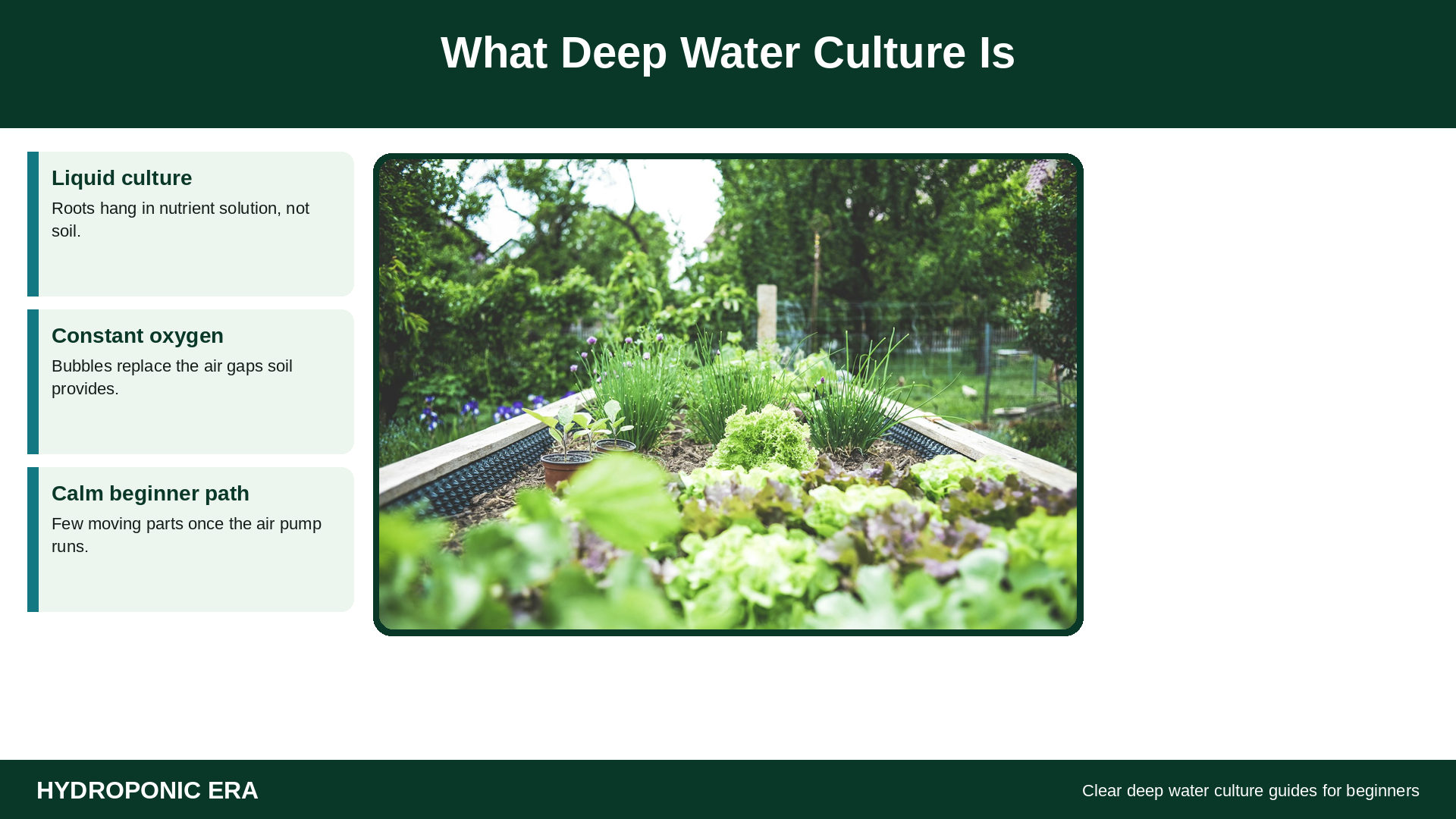
Deep water culture (often shortened to DWC) is a hydroponic method where plant roots grow directly into a reservoir of aerated nutrient solution. Net pots or a floating raft hold the stem above the water line while the roots stay wet.
Unlike soil, there are no air pockets between particles. Dissolved oxygen must come from bubbles or strong water movement. That is why an air pump and air stone sit at the center of beginner DWC hydroponics.
Oregon State University’s Hydro hints publication on DWC describes the same idea for home and small greenhouse growers: opaque covers, steady aeration, and enough water volume to buffer temperature swings. Virginia Tech’s DWC fact sheet (SPES-464) frames raft and pond systems as scalable versions of the same liquid culture.
For beginners, the practical version is often a single 5-gallon (about 19 L) bucket with a light-proof lid. It is quieter than many pumps used in towers, and it teaches reservoir habits you will reuse in any system, including a hydroponic tower garden.
What You Need for Deep Water Culture

Keep the shopping list short. A working deep water culture setup needs a few reliable parts, not a wall of gadgets.
- Opaque reservoir or bucket with a snug lid (dark plastic preferred)
- Net pots that fit the holes you cut
- Inert media such as clay pebbles or starter plugs (no garden soil)
- Air pump, tubing, and air stone sized for the water volume
- Hydroponic nutrients made for soilless growing
- pH meter and EC/TDS meter plus pH up/down
- Grow light if the room is dim, plus a simple timer
Optional later: a water chiller, dual air stones, or a larger raft table. Those upgrades help after one harvest succeeds. On day one, focus on light-proofing, air, and meters.
If you already own a small kit, confirm it can hold a real air stone under the roots. Decorative jars without aeration are closer to Kratky culture than classic DWC, and they need different expectations.
How to Build a Simple Home Deep Water Culture System
Building a home DWC bucket is mostly careful cutting and a clean first fill.
1. Prepare the lid. Mark holes for your net pots. Cut them cleanly so pots sit level and gaps stay small. Tape or foam around loose edges so light cannot reach the water.
2. Place the air stone. Drop the stone near the bottom under where roots will hang. Route tubing through a small lid hole or grommet so the line does not leak light. Connect the outdoor-rated air pump and confirm strong bubbles before you add plants.
3. Mix the reservoir. Fill with water, add hydroponic nutrients per the label, then check EC and pH. Aim the water line so net-pot bottoms just touch or sit slightly above the solution—roots will grow down into it. Leave the stem collar dry.
4. Transplant. Rinse media if dusty. Set seedlings so roots can reach the water quickly. Start with one or two plants if this is your first DWC hydroponics run.
5. Power and place. Run the air pump continuously. Set the bucket where spills are easy to wipe and where a light can cover the canopy evenly.
That is the whole skeleton of a beginner deep water culture system. The rest of success is monitoring, not more hardware.
Air and Reservoir Care for DWC

Air and reservoir habits decide whether the system stays healthy. Roots that sit still in warm, stagnant water fail long before leaves show dramatic stress.
Run aeration twenty-four hours a day. A brief outage on a hot afternoon can soften roots. Keep spare tubing and a second stone if you rely on one large plant. Oregon State’s DWC notes stress aeration because liquid culture has little natural water exchange compared with drip or NFT.
Temperature matters in deep water culture. Cooler solution holds more dissolved oxygen. Many home growers try to keep reservoirs near the upper teens to low twenties Celsius (roughly mid-60s to low-70s °F). If the room runs hot, move the bucket off warm floors, add more air, or reduce light hours slightly until you stabilize.
Keep the reservoir opaque and filled enough to buffer swings, but not so full that the stem stays soaked. Top up with plain water as levels drop from uptake and evaporation. For a fuller water-change routine, see how often to change hydroponic water.
Clean slime from stones if bubbles weaken. A quiet stone is an early warning in DWC, not a minor inconvenience.
Nutrients, pH, and EC for Deep Water Culture

Use a complete hydroponic formula, not soil fertilizer. In DWC, every ion the plant sees comes from that reservoir, so labels meant for soilless systems matter.
Practical beginner targets for leafy greens often land near:
- pH: about 5.5 to 6.5 (many lettuce recipes sit near 5.8 to 6.2)
- EC: about 1.0 to 1.8 mS/cm for salad greens, rising carefully for heavier feeders
Virginia Tech’s DWC guidance for edible crops emphasizes regular EC and pH checks and reminds growers that dissolved oxygen is especially important in liquid culture. Oklahoma State University’s hydroponics overview also describes water-culture systems that rely on an air pump and stone to oxygenate roots while plants float or sit above the solution.
Check meters at least twice a week. When water evaporates, EC climbs. Top up with plain water first, then adjust nutrients if the reading stays high or the plants look pale. For adjustment habits, use how to control pH in hydroponics for beginners.
Steady numbers beat dramatic daily swings. Calm metering is the quiet skill behind successful DWC hydroponics.
Best Plants for Deep Water Culture

Leafy crops forgive small mistakes and finish quickly, which makes them ideal teachers for this method.
Strong beginner choices include lettuce, basil, mint, pak choi, and other soft herbs. They enjoy constant moisture and do not need pollination or heavy trellis work. If you want a lettuce-focused walkthrough, see how to grow lettuce hydroponically.
Fruiting plants can grow in deep water culture, but they ask for more light, support, and a larger root volume. One tomato in a dedicated 5-gallon bucket is a fair second project after greens. Do not crowd a fruiting vine into a shared lid with delicate lettuce—the feed strength and canopy will fight each other.
Match plant count to reservoir size. A small tote can hold several lettuce heads. A single tall plant deserves its own bucket so roots and nutrients stay easy to manage. That matching habit keeps a home DWC predictable.
Common Mistakes: Root Rot and Algae in DWC

Most beginner failures in DWC trace back to oxygen, light leaks, or neglected solution—not mysterious disease.
Root rot and brown roots. Healthy roots stay pale and firm. Brown, slimy, or foul-smelling roots often mean low dissolved oxygen, warm water, or a failed air stone. Increase aeration, cool the reservoir if you can, remove dead tissue carefully, and refresh the solution. For a deeper checklist, read why hydroponic roots turn brown.
Algae. Green slime on walls, lids, or stones means light is reaching nutrient-rich water. Algae compete for oxygen and clog air stones. Use opaque buckets, cover clear walls, tape lid gaps, and scrub between crops. Oregon State’s DWC guidance stresses covering the water surface and minimizing gaps for exactly this reason.
Other quiet mistakes. Skipping meters, using soil fertilizer, overfilling until stems stay wet, and packing too many plants into one small tank. Fix the environment before you buy another additive. Prevention is cheaper than rescue in DWC hydroponics.
Frequently Asked Questions
Is this method good for absolute beginners?
Yes, if you commit to continuous air and basic metering. The parts list is short, and problems show up clearly in root color and smell.
How is DWC different from Kratky?
Classic deep water culture uses active aeration. Kratky relies on an air gap and no pump. Both can work; they are not identical methods.
How often should I change the water?
Many home growers refresh every one to two weeks, or sooner if EC drifts wildly or the tank smells off. Top-ups with plain water happen more often.
Do I need a huge raft table?
No. A single opaque bucket teaches the same deep water culture principles as larger DWC ponds used in university trials.
Can I run the air pump only at night?
Avoid that habit. Roots need oxygen around the clock in liquid culture.
What plants should I avoid first?
Skip large, long-season fruiting vines until lights, support, and reservoir cooling feel routine.
Related reading
- Aeroponics for Beginners
- Indoor Hydroponic Garden
- Hydroponic Garden: Beginner’s Guide
- Best Grow Lights for Hydroponics
- Why Hydroponic Leaves Turn Yellow
Final Thoughts
Deep water culture rewards quiet consistency more than fancy hardware. Build one light-proof reservoir, keep the air stone working, and read pH and EC on a calm schedule.
Start with leafy greens, protect the water from light, and treat brown roots as an oxygen and temperature problem first in any deep water culture bucket. When that first harvest tastes clean, you will understand DWC hydroponics well enough to add sites with confidence.
External reading for deeper detail: Oregon State University’s Hydro hints: Deep water culture (EM 9455), Virginia Tech’s Deep Water Culture systems guide (SPES-464), and Oklahoma State University’s hydroponics fact sheet.
17 thoughts on “Deep Water Culture for Beginners: Simple DWC Setup Guide”