
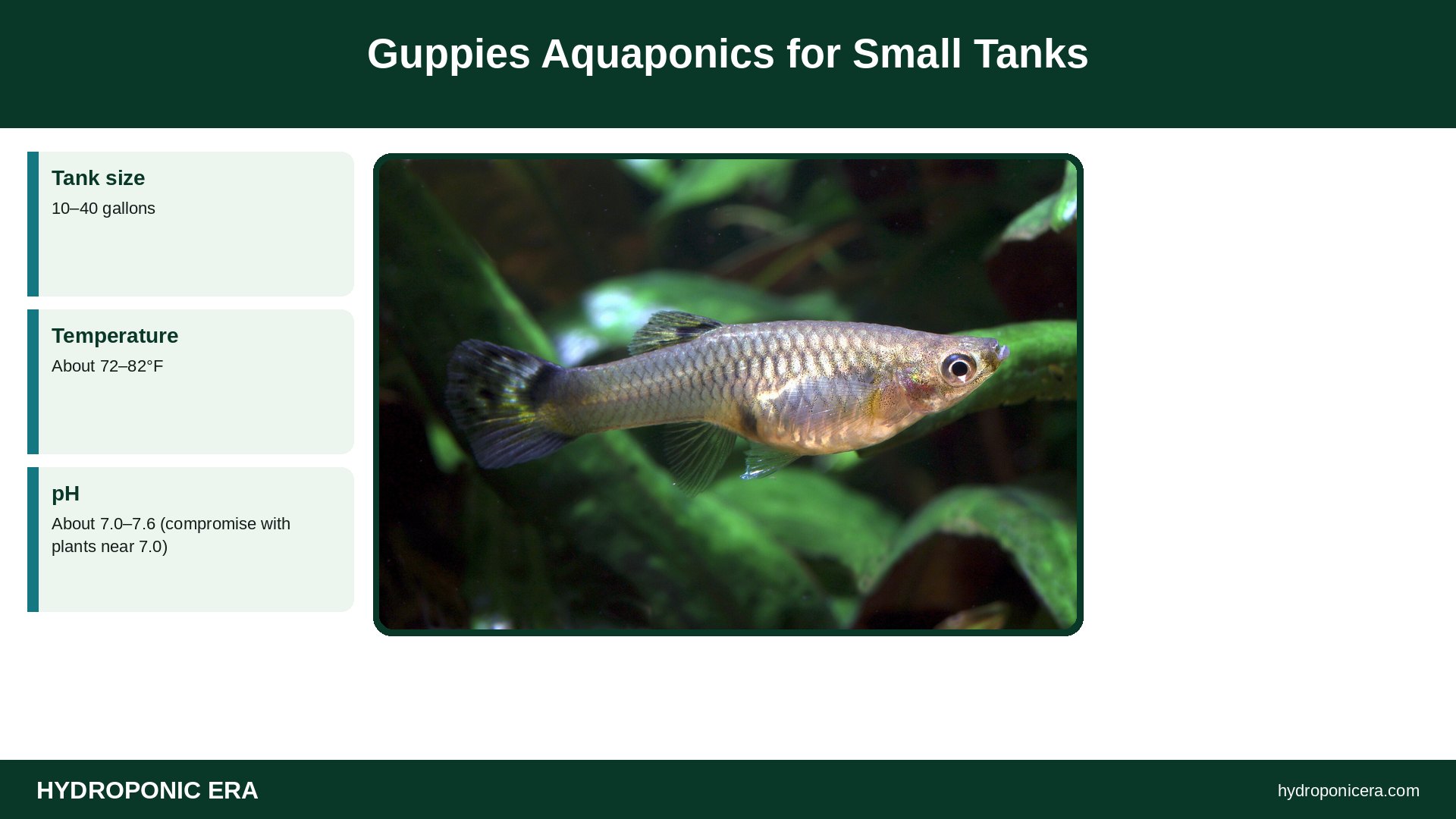
Guppies are a good choice for small, ornamental aquaponics systems such as desktop units and aquarium setups of 10–40 gallons. A guppies aquaponics system needs warm water (about 72–82°F), gentle flow, a pH around 7.0–7.6, and enough fish to feed a few herbs or lettuce plants. Guppies breed constantly and produce little waste per fish, so they’re forgiving for beginners, but they can’t support a large vegetable bed and aren’t food fish. Never release them outdoors.
Key takeaway: Use guppies for learning, decoration and small herb gardens; switch to larger fish if you want to feed big grow beds or eat your fish.
| Factor | Guppies aquaponics target |
|---|---|
| Tank size | 10–40 gallons |
| Temperature | About 72–82°F |
| pH | About 7.0–7.6 (compromise with plants near 7.0) |
| Stocking | Start with 1 small fish per 2 gallons; numbers grow fast |
| Best plants | Herbs, lettuce, pothos, small greens |
| Feed | Small flakes or micro-pellets, 1–2 times daily |
Why Guppies Work for Small Systems
Guppies (Poecilia reticulata) are livebearers. University of Florida IFAS describes livebearers as the “bread-and-butter” species of the ornamental fish industry. Females are fertilized internally, carry eggs inside, and give birth to live young. They’re small, hardy, colorful and tolerate a range of water conditions. In a guppies aquaponics setup, those traits mean a stable population that keeps producing waste for plants even as individual fish age.
Setting Up a Guppies Aquaponics Tank
- A 10–40 gallon aquarium with a grow bed or raft on top. See aquarium aquaponics.
- A small submersible pump; guppies prefer gentle flow.
- A sponge pre-filter on the pump intake so fry aren’t sucked in.
- An aquarium heater with thermostat for cool rooms.
- Expanded clay or gravel media in the grow bed as biofilter.
- A light for the plants if natural light is weak.
Cycle the tank before adding fish. See aquaponics cycling and DIY indoor aquaponics system.
How Many Fish for Guppies Aquaponics
Start with a modest group: for example, 6–10 guppies in a 20-gallon tank, with about two or three females per male. Within a couple of months there will be fry. The bioload grows with the population, so increase plant numbers or remove extra fish. Guppy waste alone supports only a small plant area; think herbs and a few heads of lettuce. See aquaponics fish to plant ratio.
Best Plants
Low-nutrient plants do best: basil, mint, parsley, lettuce, watercress, pothos and other houseplants. Fruiting crops such as tomatoes need much more nutrients than guppies supply. See aquaponics vs hydroponics.
Feeding in Guppies Aquaponics
Feed small amounts once or twice a day, only what they eat in about 2 minutes. Use quality flake or micro-pellet food, and occasional live or frozen foods for color and breeding. UF IFAS notes poeciliids naturally eat algae, insects and crustaceans. Overfeeding fouls small tanks quickly. See aquaponics fish food.
Breeding
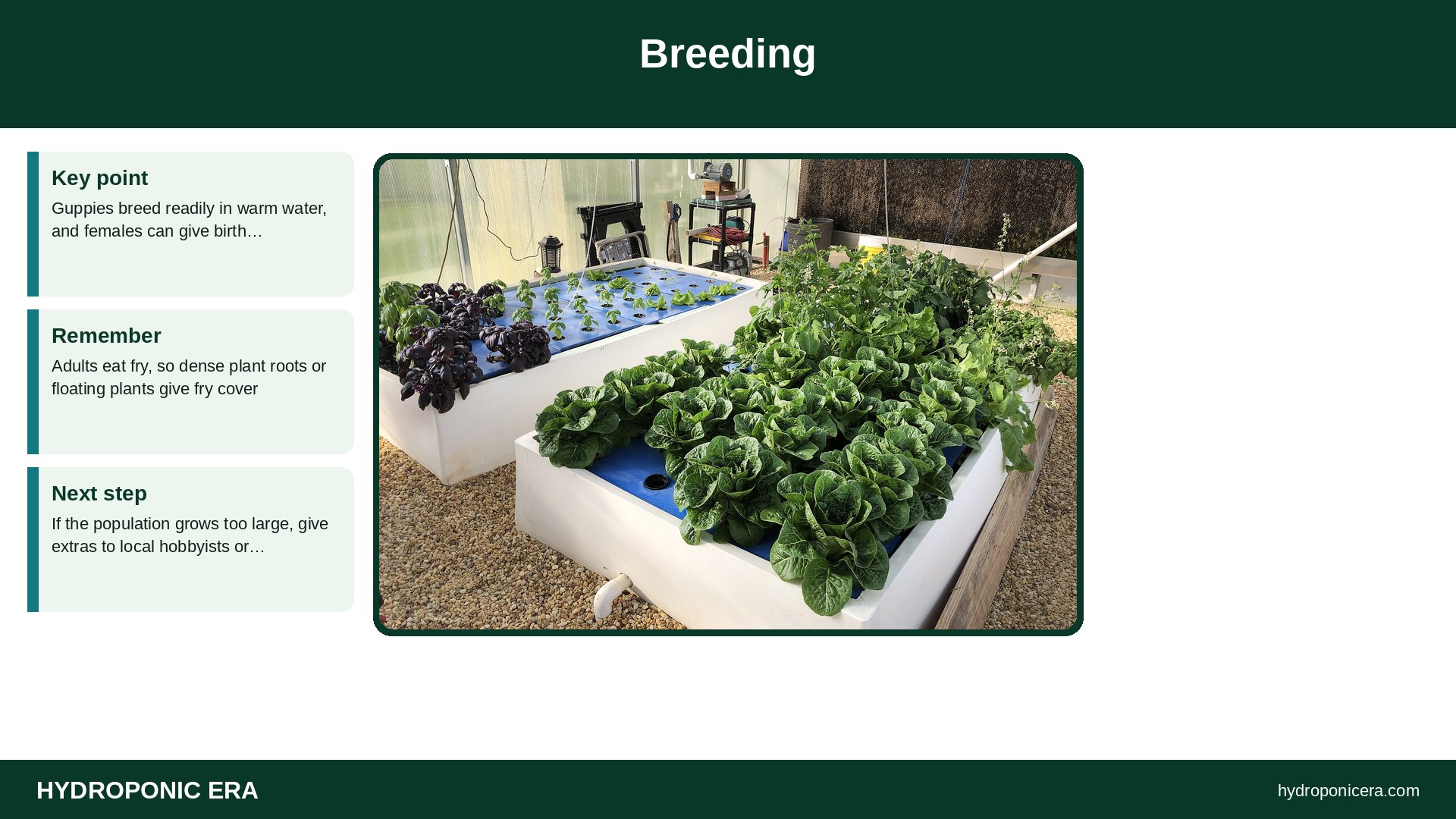
Guppies breed readily in warm water, and females can give birth roughly once a month. Adults eat fry, so dense plant roots or floating plants give fry cover. If the population grows too large, give extras to local hobbyists or a fish store. Don’t release them into ponds or streams; guppies are established as non-native species in some US waters.
Water Quality
Test ammonia, nitrite, nitrate and pH weekly once cycled, and more often at first. Guppies like slightly hard, alkaline water, while plants prefer slightly acidic. Aim for about 7.0. Top off with dechlorinated water. See aquaponics pH and dechlorinate water for aquaponics.
Limits of Guppies Aquaponics
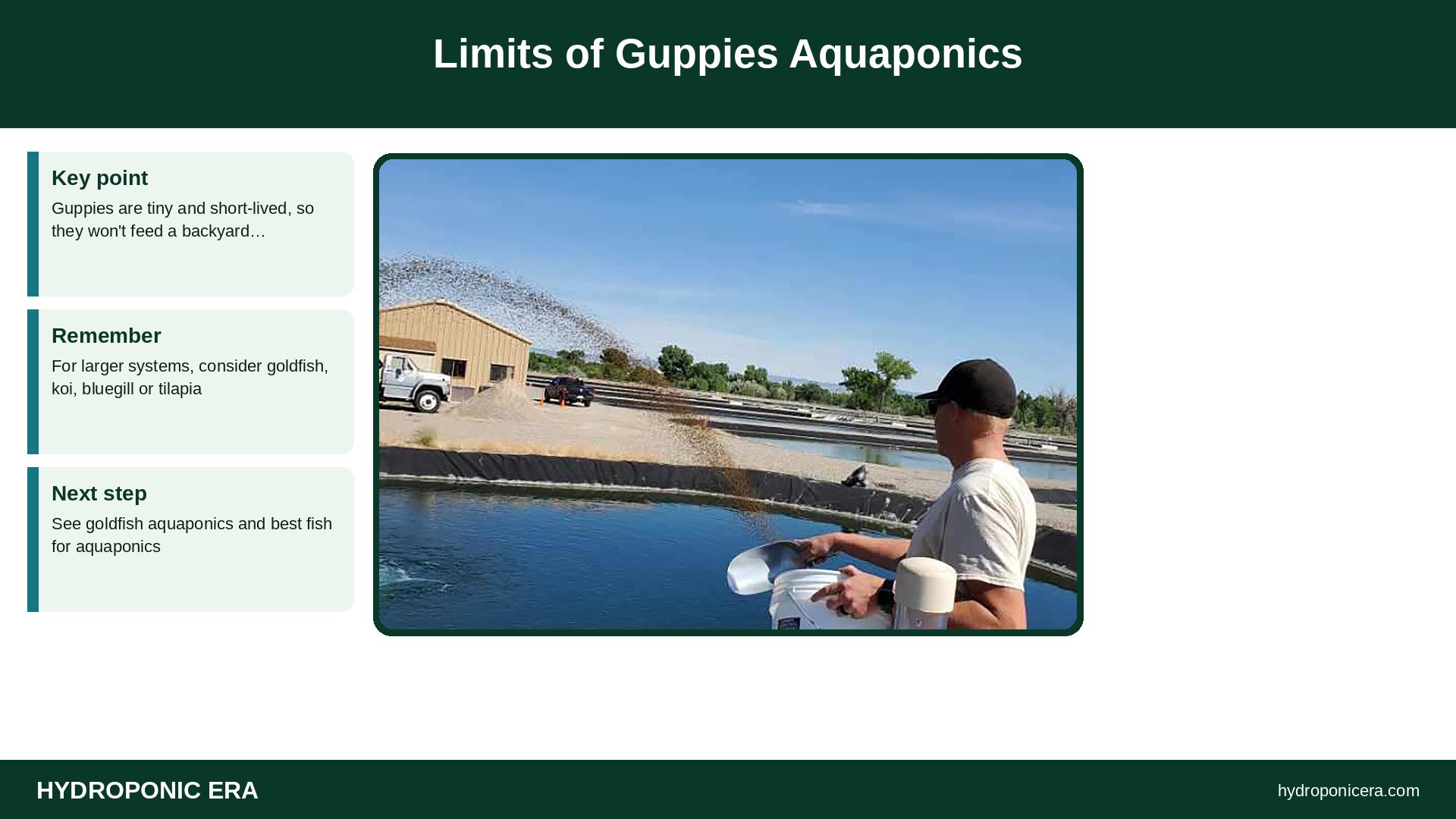
Guppies are tiny and short-lived, so they won’t feed a backyard vegetable bed, and they’re not raised for eating. For larger systems, consider goldfish, koi, bluegill or tilapia. See goldfish aquaponics and best fish for aquaponics.
Step-by-Step Guppies Aquaponics Build
- Pick the tank. A 20-gallon long aquarium is a good size: big enough to stay stable, small enough for a desk or shelf.
- Add a grow tray. A shallow plastic tray 3–6 inches deep sits across the top. Drill a drain and add a standpipe so water returns to the tank.
- Fill with media. Rinsed expanded clay works well. It holds bacteria and supports plant roots.
- Install the pump. A small pump of about 50–100 gallons per hour, with a sponge over the intake, lifts water to the tray.
- Cycle. Add a small ammonia source and wait until ammonia and nitrite read zero and nitrate appears, often 3–6 weeks.
- Plant and stock. Add seedlings and a few guppy fish, then increase fish numbers slowly.
Run the pump continuously or on a timer with short off periods. Keep the tray from flooding over the tank rim, and check that the drain can’t clog with roots.
Lighting a Guppy Tank
Most indoor spaces don’t have enough light for leafy plants. A small LED grow light over the tray, on for 12–16 hours a day, makes a big difference. Keep strong light off the open water surface where possible to limit algae. See aquaponics algae control.
Common Guppies Aquaponics Problems
- Plants turning pale: too few fish or too little feed. Small systems often run low on iron and potassium. See aquaponics iron deficiency.
- Cloudy water: overfeeding or a new system; feed less and test ammonia.
- Fry disappearing: adults eating them, or the pump intake taking them; add cover and a sponge.
- Fish gasping: warm water holds less oxygen; add an air stone.
- Disease after adding new fish: quarantine new guppies for a few weeks. See quarantine new fish.
Guppy Tank Mates
Guppies can share a tank with other small, peaceful fish such as platies, mollies, corydoras catfish or small tetras, and with freshwater shrimp. Avoid fin-nippers and anything large enough to eat them. Mixing species adds interest but makes it harder to judge waste output, so stock gradually and watch plants and water tests.
Costs
A basic 20-gallon setup with tank, tray, pump, heater, media and a small light often costs $100–$250, less if you reuse an old aquarium. Guppies themselves are inexpensive, and after the first batch you’ll rarely need to buy more. Power use is low: a small pump, heater and LED together typically draw well under 100 watts.
Maintenance Routine
Each day, feed and check that the pump runs and the fish look active. Each week, test water, top off with treated water, and trim plants. Each month, rinse the pump sponge in tank water and remove some fry if numbers rise. This short routine keeps a small guppies aquaponics system healthy for years.
FAQs
Is guppies aquaponics a good idea?
Yes, for small ornamental systems with herbs and greens.
How many guppies per gallon?
Start with about 1 small fish per 2 gallons.
Do guppies need a heater?
Usually, unless the room stays above about 72°F.
Can guppies live with other fish?
Yes, with peaceful small species.
Can I eat guppies?
They aren’t raised as food fish.
Will guppies overpopulate?
Yes, without population control.
Sources
- University of Florida IFAS — Freshwater Ornamental Fish Commonly Cultured in Florida
- FAO — Small-scale aquaponic food production
- New Mexico State University — Important Water Quality Parameters in Aquaponics Systems
- Photo credits (Wikimedia Commons, edited with titles): Guppy Poecilia reticulata by Holger Krisp (CC BY 3.0); Fish farming on Øksfjorden in Loppa, Troms og Finnmark, Norway, 2022 August by Ximonic (Simo Räsänen) (CC BY-SA 4.0); Fountain with goldfish in Jardí del Bisbe 03 by Kritzolina (CC BY-SA 4.0); Deepwater Aquaponics Floating Rafts Growing Lettuce, Basil and Arugula by Alabama Extension (CC0); Feeding fish (51250565367) by USFWS Mountain Prairie (Public domain)