
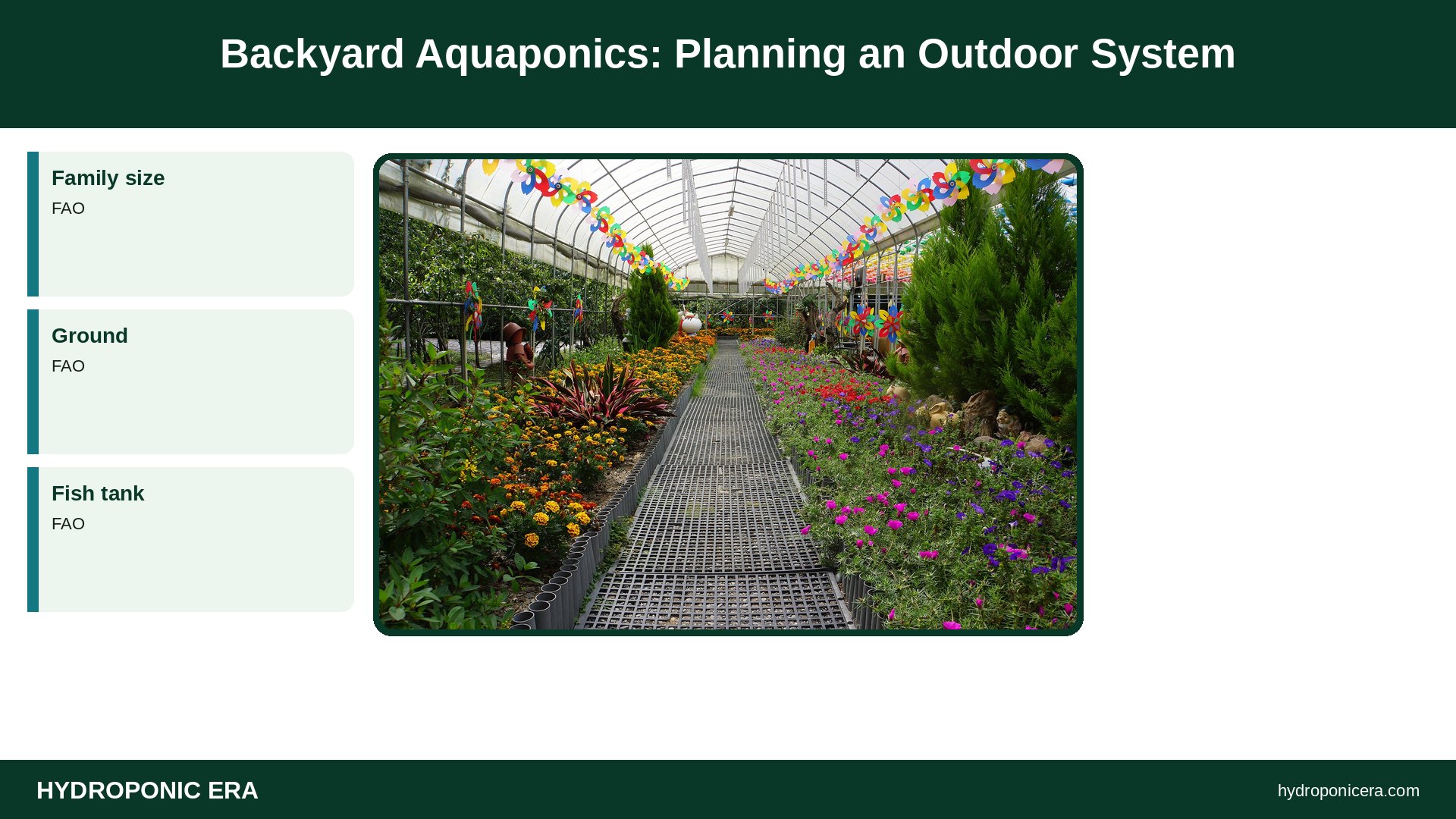
Backyard aquaponics works best on a level, solid, wind-protected spot that gets plenty of sun on the grow beds but keeps the fish tank shaded. Start with a system the FAO calls small-scale and family-sized: about a 264-gallon (1,000 L) fish tank and roughly 32 square feet (3 m²) of grow beds.
Plan for a GFCI-protected outlet for the pumps, an overflow so heavy rain can’t flood the system, netting to keep out predators, and a way to keep the water between 64 and 86°F (18–30°C). In cold-winter states that usually means a greenhouse, hoop house or a winter shutdown. Check your state’s rules on fish species before you buy fish.
Key takeaway: The site matters as much as the design. Sun for the plants, shade for the fish, and protection from weather and animals prevent most outdoor problems.
| Factor | Recommendation | Source |
|---|---|---|
| Family size | About 264 gal (1,000 L) tank and 32 sq ft (3 m²) of beds | FAO |
| Ground | Stable and level; blocks under bed legs | FAO |
| Fish tank | Shaded and covered | FAO |
| Grow beds | Full sun; long side on a north–south axis | FAO |
| Water temperature | 64–86°F (18–30°C) for most systems | FAO |
| Electrical | Weather-shielded outlets with shock protection | FAO |
Choosing a Spot for Backyard Aquaponics
The FAO’s site-selection advice for backyard aquaponics is practical and worth following closely:
- Stable, level ground. Tanks and beds are heavy. The FAO warns that legs can sink into soft soil and cause flooding or even collapse. A concrete slab works, or grade the soil and set bed legs on concrete blocks.
- Wind protection. Strong winds damage stems and flowers. A fence, hedge or wall on the windy side helps.
- Sun for plants. Most aquaponic crops grow well in full sun. Arrange beds with the long side running north to south to use the sun best.
- Shade for fish. Fish don’t need sunlight. A shaded, covered tank prevents algae and keeps water temperature steady.
- No overhanging trees. Falling leaves stain water and clog pipes.
- Easy access to water, power and a place to drain filter rinse water.
Which System Type Suits Backyard Aquaponics?
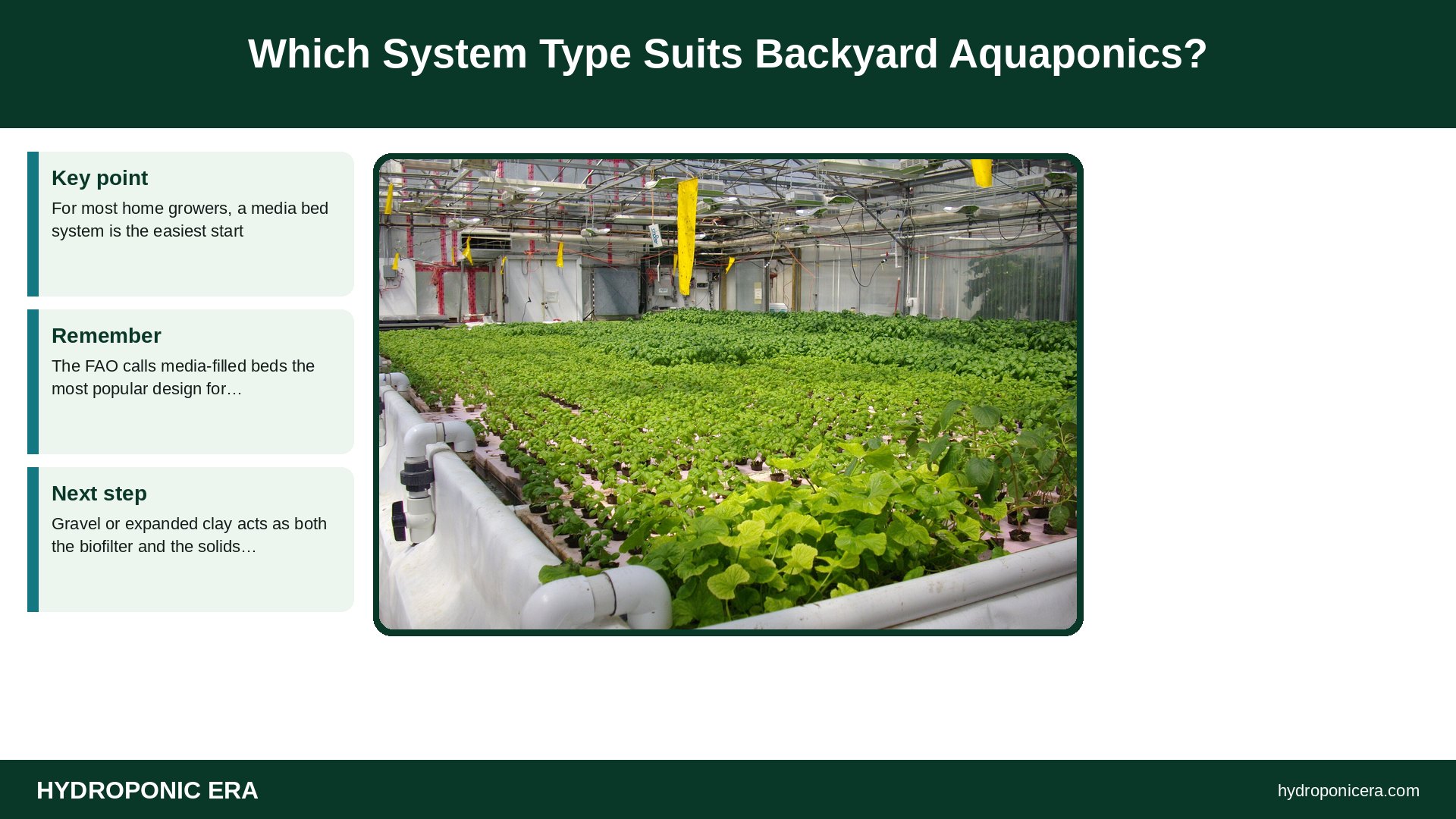
For most home growers, a media bed system is the easiest start. The FAO calls media-filled beds the most popular design for small-scale aquaponics because they’re space-efficient, low in cost and suitable for beginners. Gravel or expanded clay acts as both the biofilter and the solids filter. Raft systems produce lots of lettuce but need separate filters, while towers suit small patios. See aquaponics system types and aquaponics media beds.
Many backyard growers build from IBC totes or stock tanks. The FAO says DIY media beds are often made from plastic containers, modified IBCs or even old bathtubs, and that plastic tanks should be UV-resistant. See IBC aquaponics.
Backyard Aquaponics Weather: Rain, Heat and Cold
A backyard aquaponics system faces weather that indoor setups never see. The FAO notes that heavy rain can dilute the nutrient-rich water and flood a system that has no overflow, and that snow brings the same problems plus cold damage. Install an overflow pipe from the sump or fish tank, and consider a plastic-covered hoop house where heavy rain is common.
Temperature is the bigger challenge in most of the U.S. The FAO gives 64–86°F (18–30°C) as the general range for aquaponics. Summer sun can overheat a small tank, so shade it and keep water deep. Winter is harder:
- Southern states: warm-water fish like tilapia may work much of the year with a heater for cool spells.
- Cold states: use a greenhouse, switch to cold-hardy fish like goldfish or trout, or shut down for winter. See aquaponics in winter and aquaponics greenhouses.
Keeping Animals Out of Backyard Aquaponics
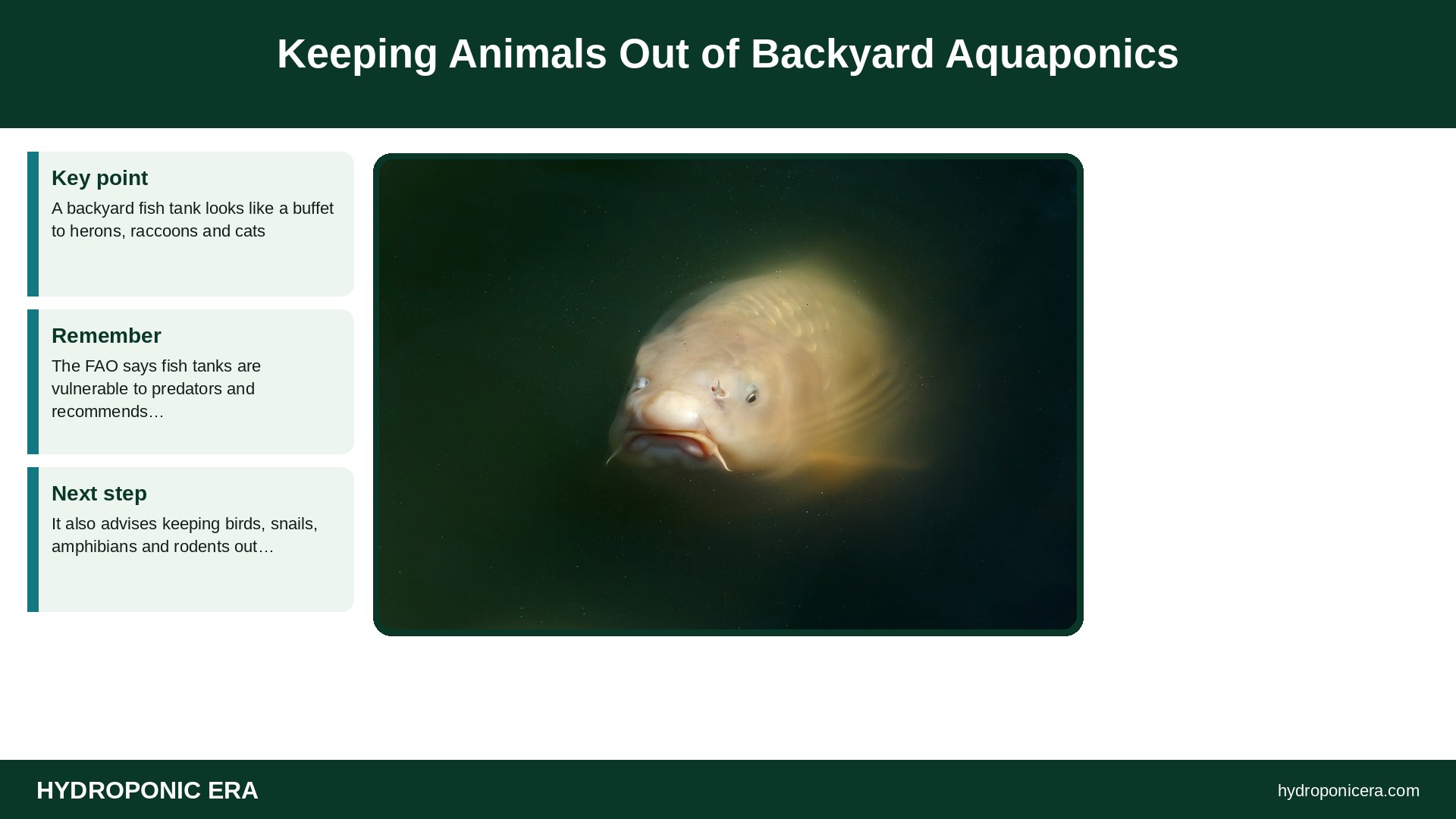
A backyard aquaponics fish tank looks like a buffet to herons, raccoons and cats. The FAO says fish tanks are vulnerable to predators and recommends shade netting, tarps or other screening over the tanks. It also advises keeping birds, snails, amphibians and rodents out, because they can carry fish pathogens and parasites. A sturdy lid and a fence around the system solve most problems. Don’t let pets drink from or play in the system.
Backyard Aquaponics Power and Safety
Water and electricity sit side by side in every aquaponics system. The FAO says outlets for water and air pumps should be shielded from water and protected with a residual-current device, which in the U.S. means a GFCI outlet or adapter. Use outdoor-rated extension cords only if needed, keep connections off the ground, and add drip loops so water can’t run along cords into outlets.
A pump or air failure can kill fish within hours in warm weather. A battery-powered air pump is cheap insurance. See aquaponics power outages and aquaponics air pumps.
Fish, Permits and Local Rules
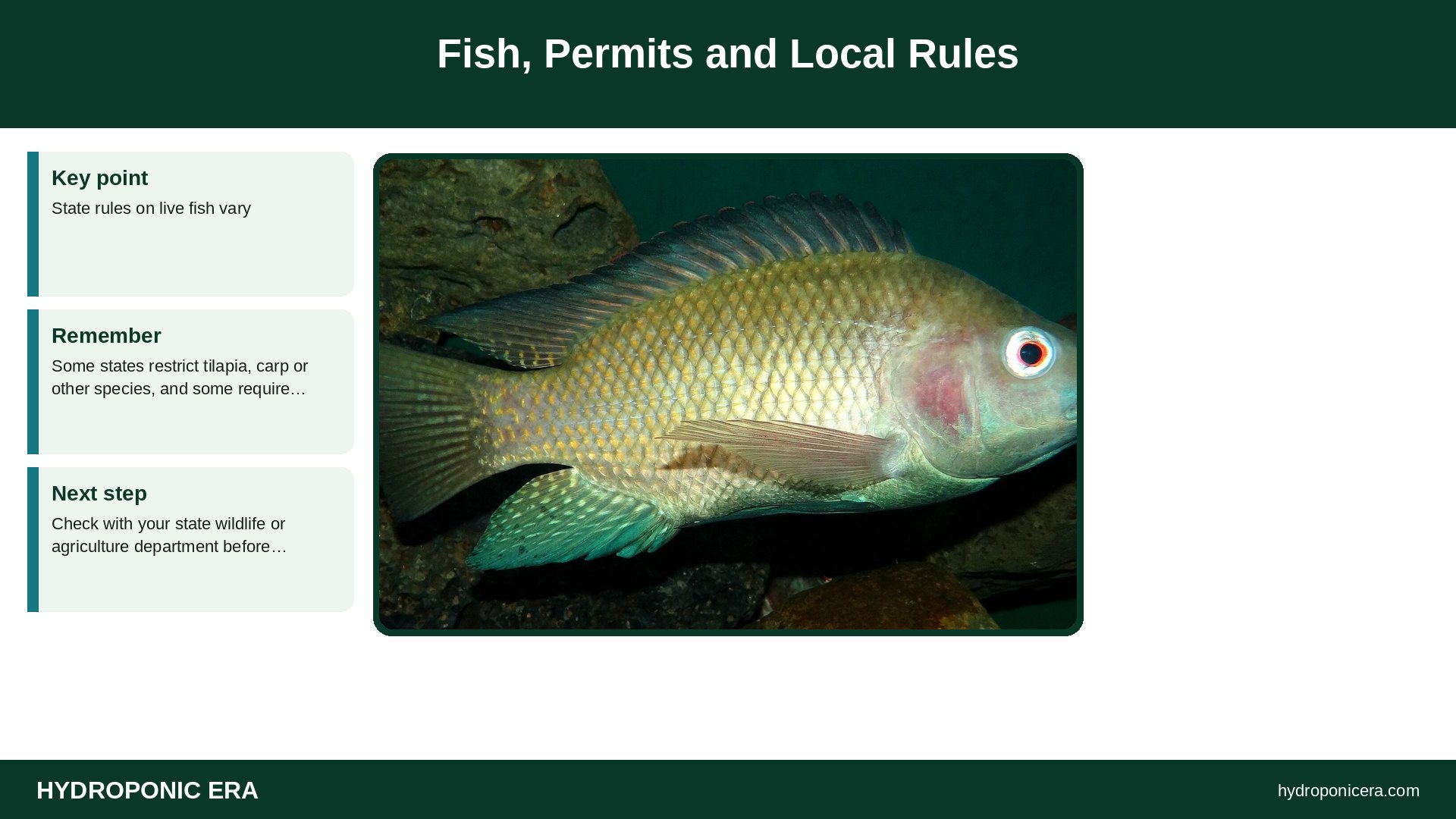
State rules on live fish vary. Some states restrict tilapia, carp or other species, and some require a permit or a licensed supplier even for home systems. Check with your state wildlife or agriculture department before buying fish, and never release fish or water into ponds or streams. See aquaculture permits for aquaponics, is tilapia legal and best fish for aquaponics.
Water source matters too. Kentucky State University warns that surface water from ponds or streams can bring in pathogens, algae, snails and pollutants. Use dechlorinated tap water, well water or collected rainwater instead. See how to dechlorinate water for aquaponics.
What to Grow in Backyard Aquaponics
- Cool season: lettuce, kale, chard and herbs. The FAO notes lettuce and salad greens can bolt and turn bitter in strong sun, so give them afternoon shade in summer.
- Warm season: tomatoes, peppers, cucumbers and basil, which need deeper media beds and more fish feed per square foot.
- Shade tricks: the FAO suggests planting tall, sun-loving crops on the west side to shade lower, light-sensitive plants in the afternoon.
See best plants for aquaponics.
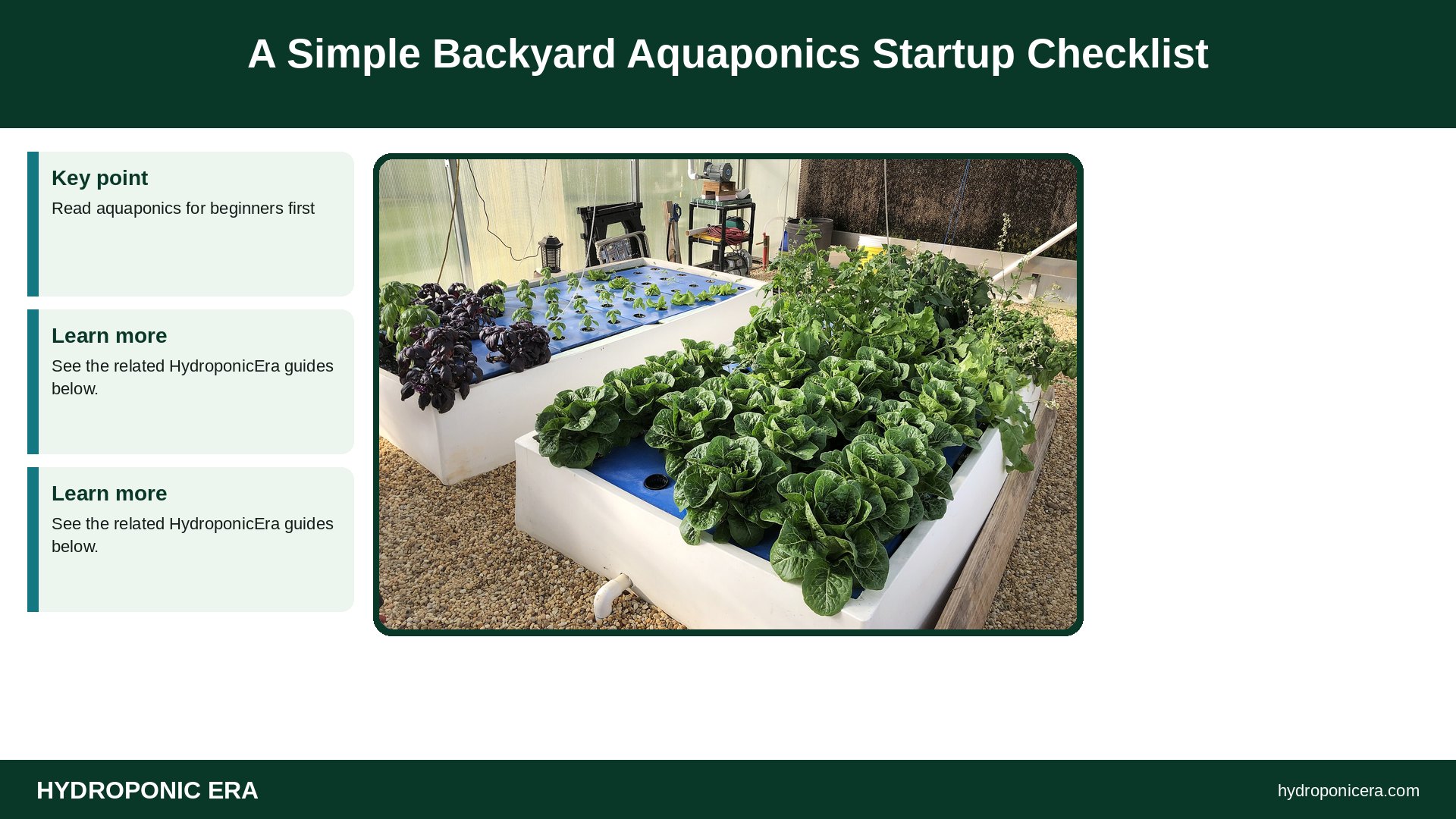
A Simple Backyard Aquaponics Startup Checklist
- Pick and level the site; set tank and beds on blocks or a slab.
- Shade and cover the fish tank; add predator netting.
- Install GFCI power and an overflow.
- Fill, run for leaks, and dechlorinate.
- Cycle the system for 3–5 weeks. See aquaponics cycling.
- Add fish and plants gradually; test water weekly.
New to the hobby? Read aquaponics for beginners first.
FAQs
How big should a backyard aquaponics system be?
The FAO suggests about 264 gallons (1,000 L) of fish tank and 32 square feet (3 m²) of beds for a family.
Can backyard aquaponics run all year?
In warm climates, yes; in cold states, you’ll need a greenhouse, cold-hardy fish or a winter break.
Should the fish tank be in the sun?
No. Shade it to prevent algae and temperature swings.
What fish are best outdoors?
Tilapia in warm areas; goldfish or trout where water stays cool.
Does rain hurt backyard aquaponics?
Heavy rain can dilute nutrients and flood beds without an overflow.
Do I need a permit?
Sometimes. Check your state’s rules for the fish species you plan to keep.
Sources
- FAO Fisheries and Aquaculture Technical Paper 589 — Small-scale aquaponic food production: Integrated fish and plant farming
- Kentucky State University — Aquaponics Handbook
- Southern Regional Aquaculture Center, Publication 454 — Recirculating Aquaculture Tank Production Systems: Aquaponics
- Photo credits (Wikimedia Commons, edited with titles): Greenhouse in Qingjing Small Swiss Garden 清境小瑞士花園溫室 – panoramio by lienyuan lee (CC BY 3.0); CDC South Aquaponics Raft Tank 1 2010-07-17 by Bryghtknyght (CC BY 3.0); Koi in a garden pond in Tuntorp 3 by W.carter (CC BY-SA 4.0); Oreochromis-niloticus-Nairobi by Bjørn Christian Tørrissen (CC BY-SA 3.0); Deepwater Aquaponics Floating Rafts Growing Lettuce, Basil and Arugula by Alabama Extension (CC0)