
Aquaponics fingerlings are young fish, usually 1–4 inches long, that you buy to stock a system. Buy them from a licensed hatchery that guarantees disease-free stock, choose a species legal in your state, and get them at 2–3 inches so they’re hardy but still cheap. Stock your cycled system at a fraction of its final capacity, acclimate them slowly, quarantine if possible, and feed small amounts of high-protein starter feed several times a day. Most fingerlings reach harvest size in 6–12 months depending on species and temperature.
Key takeaway: Healthy fingerlings from a reputable source, a fully cycled system and light early feeding prevent most first-batch losses.
| Step | What to do |
|---|---|
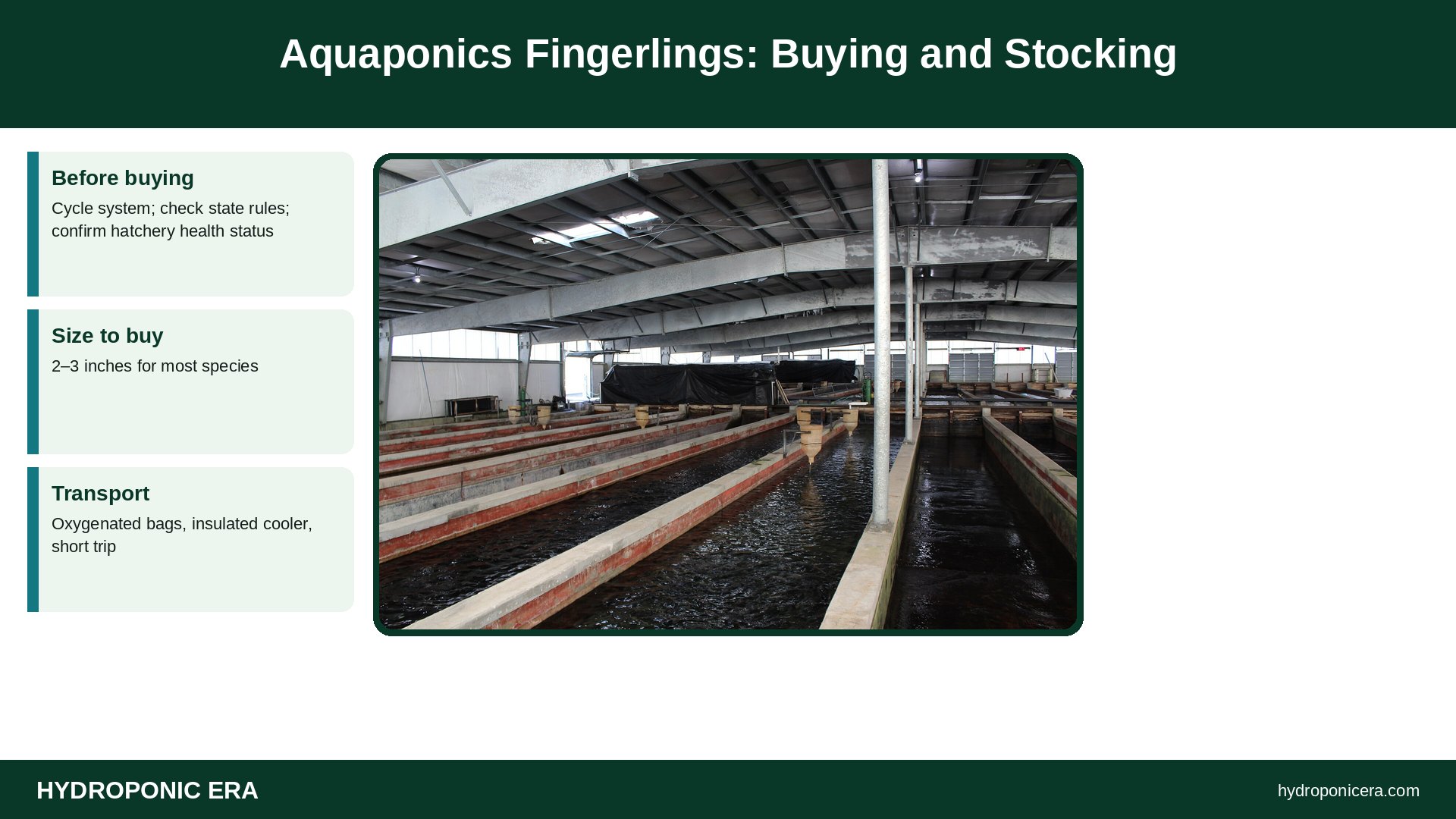
| Before buying | Cycle system; check state rules; confirm hatchery health status |
| Size to buy | 2–3 inches for most species |
| Transport | Oxygenated bags, insulated cooler, short trip |
| Arrival | Acclimate 30–60 minutes; quarantine if possible |
| First week | Feed lightly 2–4 times a day; test ammonia daily |
| Ongoing | Increase feed as they grow; grade by size |
Where to Buy Aquaponics Fingerlings
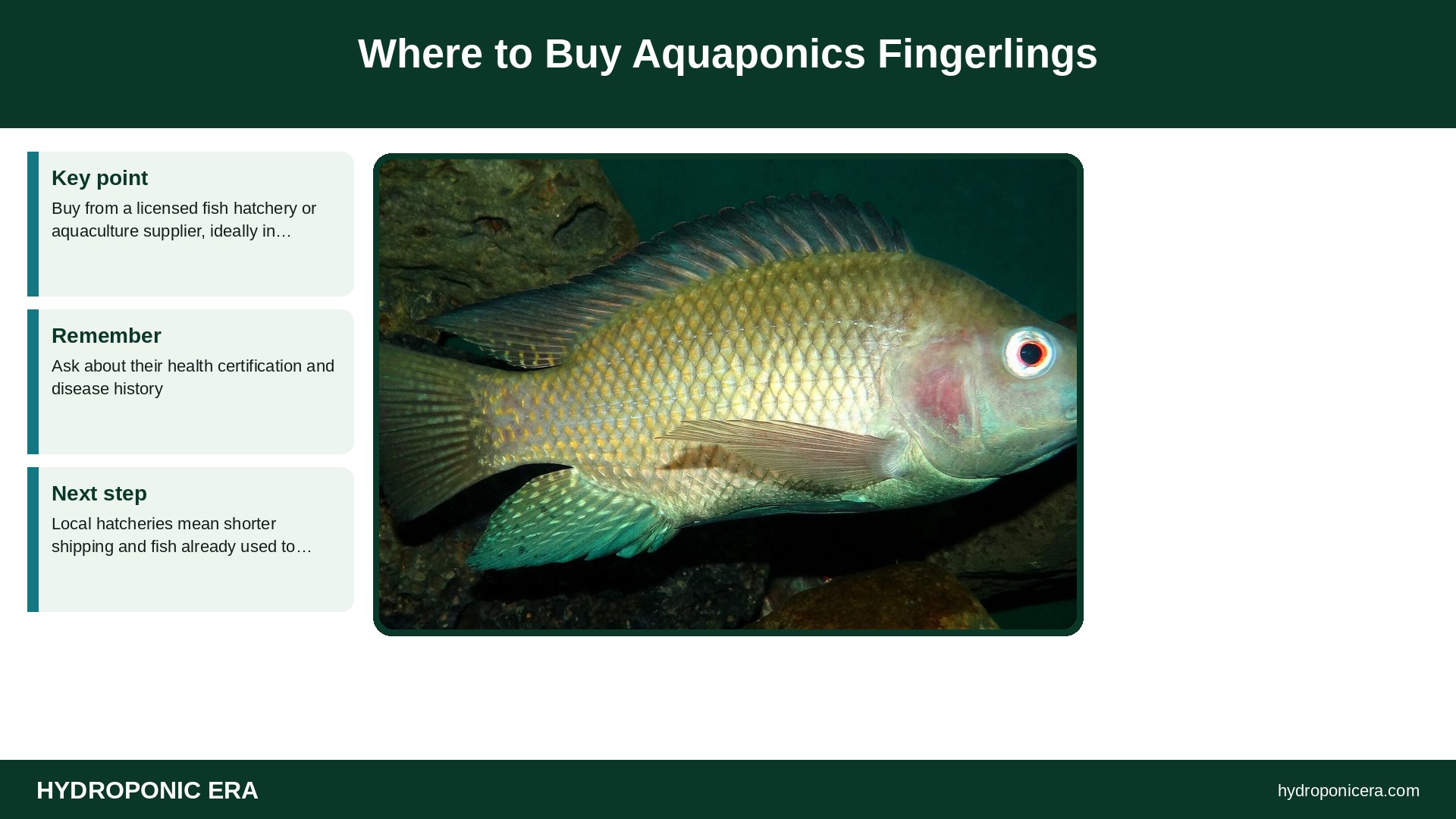
Buy from a licensed fish hatchery or aquaculture supplier, ideally in your region. Ask about their health certification and disease history. Local hatcheries mean shorter shipping and fish already used to similar water. Avoid wild-caught fish and pet-store feeder fish for food systems; they can carry parasites and disease. Many states regulate which species you can keep and require a permit to buy, transport or raise them. See aquaculture permits for aquaponics.
Choosing a Species
Match the fish to your water temperature. Tilapia need warm water (roughly 75–85°F), bluegill and catfish tolerate a broad range, and trout need cold water below about 65°F. Also consider what you like to eat and what’s legal locally. See best fish for aquaponics, tilapia aquaponics and bluegill aquaponics.
What Size to Buy
Very small fry (under 1 inch) are cheap but fragile and need fine feed. Fingerlings of 2–3 inches handle transport and new water much better. Larger juveniles cost more but shorten time to harvest. For a first batch, 2–3 inch fish are the sweet spot.
How Many to Stock
Plan stocking around the final weight at harvest. If your tank can support 30 pounds of fish and you plan to harvest at 1 pound each, stock about 30–35 fingerlings to allow for some losses. Starting with many tiny fish is easy; the trouble starts months later when they’re big. See aquaponics stocking density.
Prepare the System First
Your system should be fully cycled: ammonia and nitrite near zero and nitrate present. Check pH (about 6.8–7.2 is a good compromise for aquaponics), temperature and dissolved oxygen. A new, uncycled system is the most common reason first fingerlings die. See aquaponics cycling and aquaponics pH.
Transport and Arrival
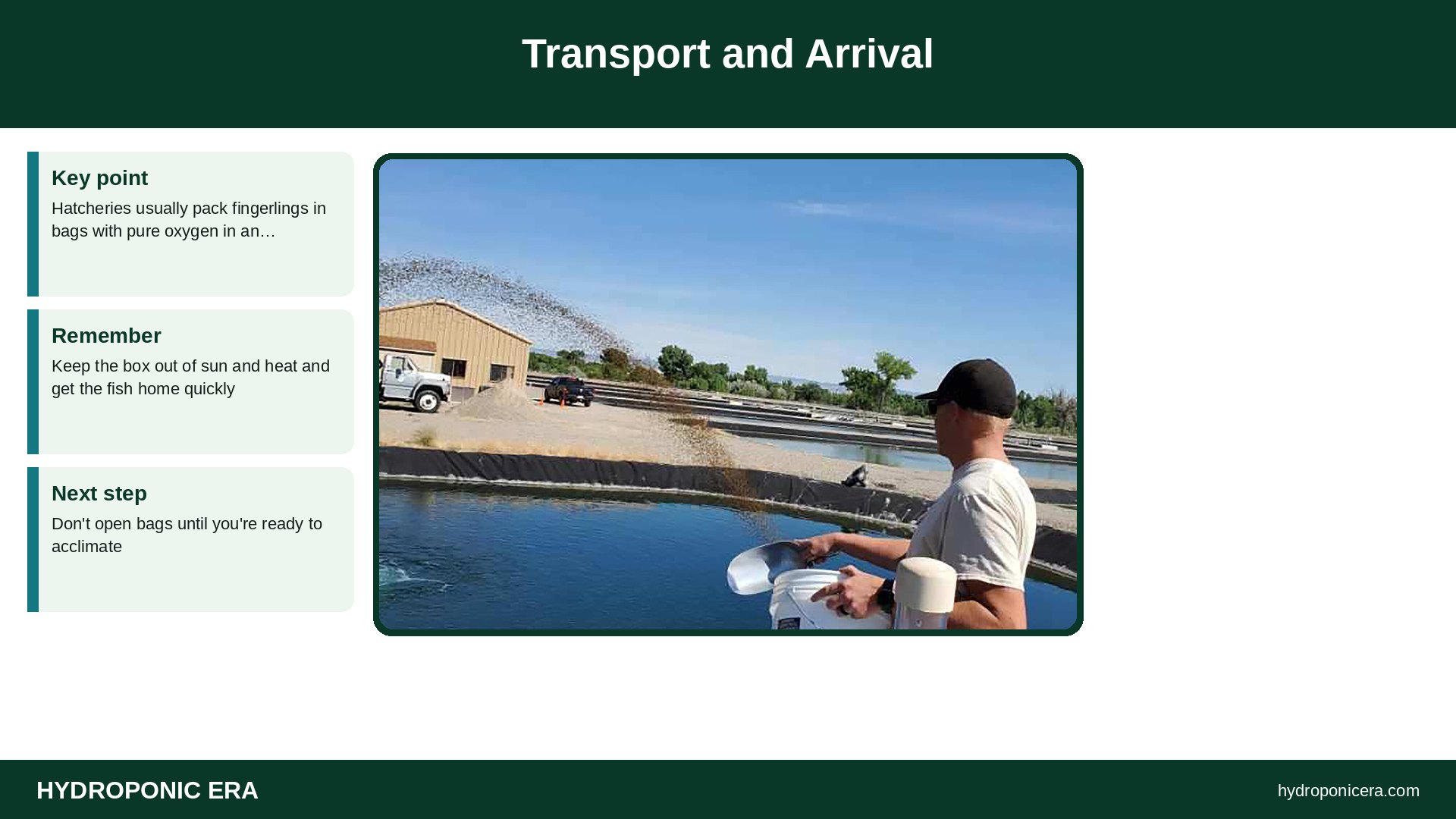
Hatcheries usually pack fingerlings in bags with pure oxygen in an insulated box. Keep the box out of sun and heat and get the fish home quickly. Don’t open bags until you’re ready to acclimate. Float the sealed bag in your tank to equalize temperature, then slowly add tank water to the bag over 30–60 minutes before netting fish in. See acclimating fish to aquaponics.
Quarantine
If you already have fish in the system, quarantine new aquaponics fingerlings in a separate tank for 2–4 weeks. That gives time for disease to show up before it reaches your main tank. See quarantining new fish.
Feeding Aquaponics Fingerlings
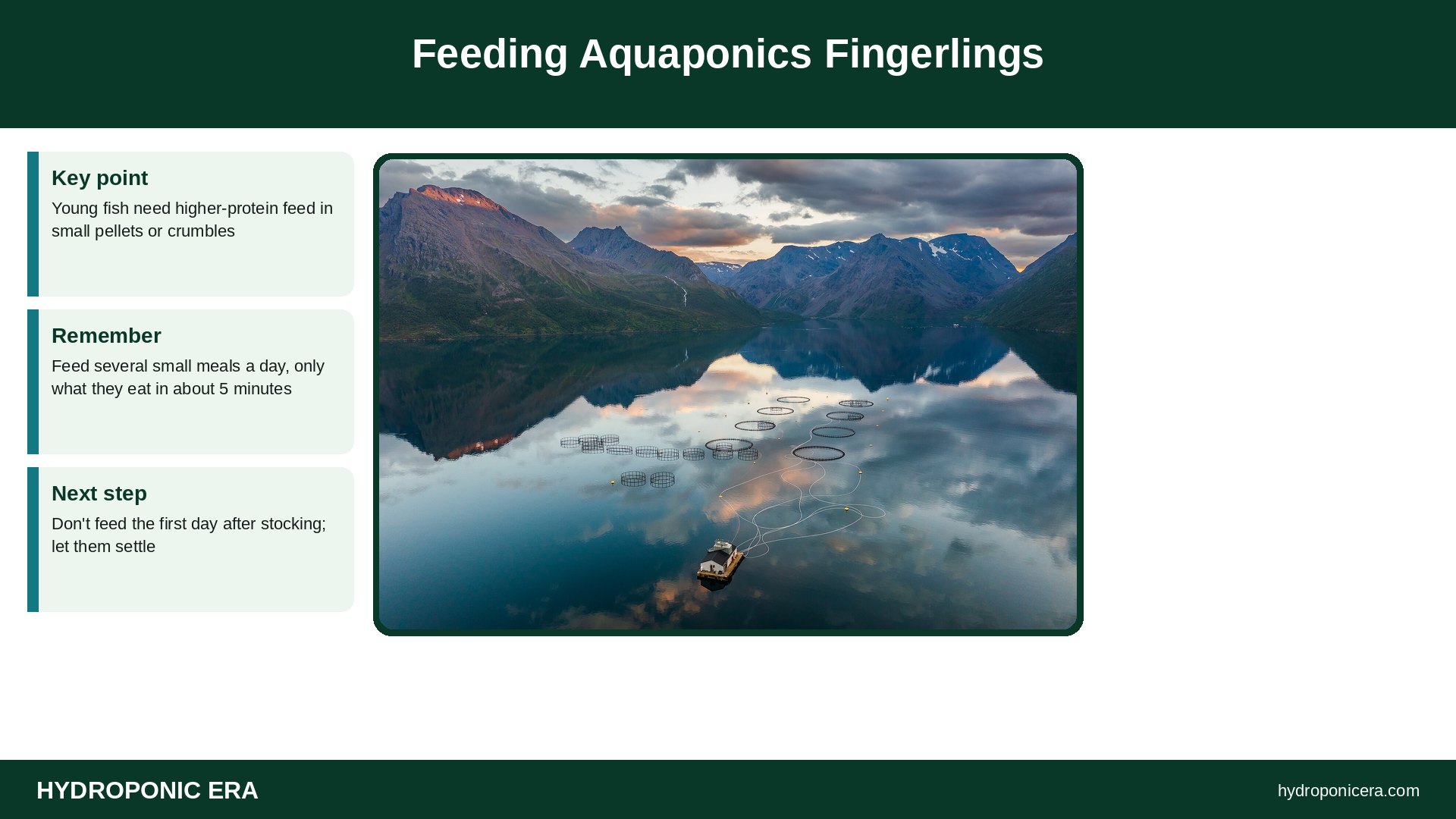
Young fish need higher-protein feed in small pellets or crumbles. Feed several small meals a day, only what they eat in about 5 minutes. Don’t feed the first day after stocking; let them settle. Increase portions gradually as they grow and as your plants need more nutrients. See aquaponics fish food.
Growth and Grading
Fish in the same batch grow at different rates. Large fish can bully smaller ones and take most of the food. Every month or two, sort fish by size and move the biggest ones to a separate tank. Grading produces a more even harvest and fewer losses.
Watch for Problems
Test ammonia and nitrite daily for the first two weeks. Signs of stress include gasping at the surface, clamped fins, hiding, and refusing feed. Lower feeding and check water first. See aquaponics fish not eating and aquaponics fish dying.
Questions to Ask the Hatchery
- Are the fish certified or inspected for disease, and when was the last check?
- What feed are they on now, and what pellet size?
- What water temperature, pH and hardness are they raised in?
- For tilapia: are they sex-reversed or hybrid all-male stock, and what percentage male?
- Do they guarantee live arrival, and what is the policy if fish die in the first days?
- Do you need a permit number or a receipt for transport in your state?
Good hatcheries answer these readily. Matching your system’s water to theirs reduces stress, and starting on the same feed avoids an early hunger strike.
Aquaponics Fingerlings and Plant Growth
A new batch of small fish produces little waste, so plants grow slowly at first. That’s normal. Nutrient output rises as the fish grow and eat more. To keep plants productive early, start with light feeders such as lettuce and herbs, and add fruiting crops later. Some growers stock a few larger juveniles alongside fingerlings, or stagger batches so there’s always a mix of sizes producing waste. See aquaponics fish to plant ratio.
Temperature Shock and Season
Order fingerlings when your system temperature matches the species. Tilapia shipped in early spring into a 65°F tank will stop eating and may get sick. Many backyard growers stock warm-water fish in late spring and harvest before the first frost, or heat a greenhouse system through winter. Cool-water fish such as trout are often stocked in fall. See aquaponics greenhouse.
Handling Tips
Use a soft, fine-mesh net and move fish quickly. Wet your hands if you must touch them, since dry hands strip the protective slime coat. Avoid netting in the heat of the day, and never leave fingerlings in a bucket without aeration. Gentle handling at stocking pays off in fewer infections later.
Record Keeping
Write down the date, number, average size and source of each batch of aquaponics fingerlings, plus daily feed and any losses. Weigh a sample of 5–10 fish monthly. These records show growth rate and feed conversion, tell you when to grade or harvest, and help you decide whether to use the same hatchery next time.
FAQs
How much do aquaponics fingerlings cost?
Often $1–$3 each for common species, more for specialty fish or small orders.
When can I add fingerlings?
After the system has fully cycled.
Can I ship fingerlings?
Many hatcheries ship overnight, but local pickup is less stressful.
How long until harvest?
About 6–12 months for tilapia, catfish and similar fish in warm water.
Should I buy all-male tilapia?
Yes, for food systems; they grow faster and won’t overbreed.
Can fingerlings live with adult fish?
Not safely; larger fish may eat or outcompete them.
Sources
- Southern Regional Aquaculture Center — SRAC 454: Aquaponics—Integrating Fish and Plant Culture
- FAO — Small-scale aquaponic food production
- University of Florida IFAS — Fish Health Management Considerations in Recirculating Aquaculture Systems, Part 2: Pathogens
- Photo credits (Wikimedia Commons, edited with titles): Raceways at Ennis National Fish Hatchery (51267218370) by USFWS Mountain Prairie (Public domain); Oreochromis-niloticus-Nairobi by Bjørn Christian Tørrissen (CC BY-SA 3.0); Oweston sting fish for sale at Tsukiji Fishmarket, Tokyo-30 by MichaelMaggs (CC BY-SA 3.0); Feeding fish (51250565367) by USFWS Mountain Prairie (Public domain); Fish farming on Øksfjorden in Loppa, Troms og Finnmark, Norway, 2022 August by Ximonic (Simo Räsänen) (CC BY-SA 4.0)