
Quick Answer
How to grow beans hydroponically: choose bush or pole types deliberately, give strong light, support for climbers, warm temperatures, and complete nutrition (do not assume soil rhizobia will fix all N in sterile hydro). Prefer drip/Dutch or media beds; pollination is usually straightforward for common beans.
Use HydroponicEra cluster links for pH, nutrients, lights, system choice, EC/TDS, and seedlings so this crop page stays practical rather than isolated.
Key Takeaways
- UMN Extension beans: warm-season legumes—translate warmth, light, and spacing indoors.
- In sterile hydro, plan nutrition explicitly; do not assume soil N-fixation will carry the crop.
- Trellis pole beans before they tangle lights and tubing.
- Match beans to a system that fits its root and climate habits—do not copy a lettuce recipe blindly.
- Oklahoma State soilless hydroponic guidance typically places solution pH near a plant-available band around 5.5–6.5 (verify with a calibrated meter).
- Use a complete hydroponic nutrient at a strength matched to crop stage—start milder for transplants than fruiting-crop bottles suggest.
- Strong, measured light matters as much as fertilizer—see PPFD/DLI thinking and the grow-lights guide.
- Root oxygen and reservoir hygiene prevent many mystery failures (dissolved oxygen, brown roots, cleaning guides).
- When leaves yellow, check pH and EC before assuming a single element is missing (lockout + yellow-leaves guides).
- Harvest style should match beans biology—pick pods regularly without shredding foliage.
Related HydroponicEra guides
- Cucumbers
- Zucchini
- Tomatoes
- Indoor pollination
- Best plants for hydroponics
- DWC vs NFT vs Dutch bucket
- Growing media
- Grow lights
- pH control
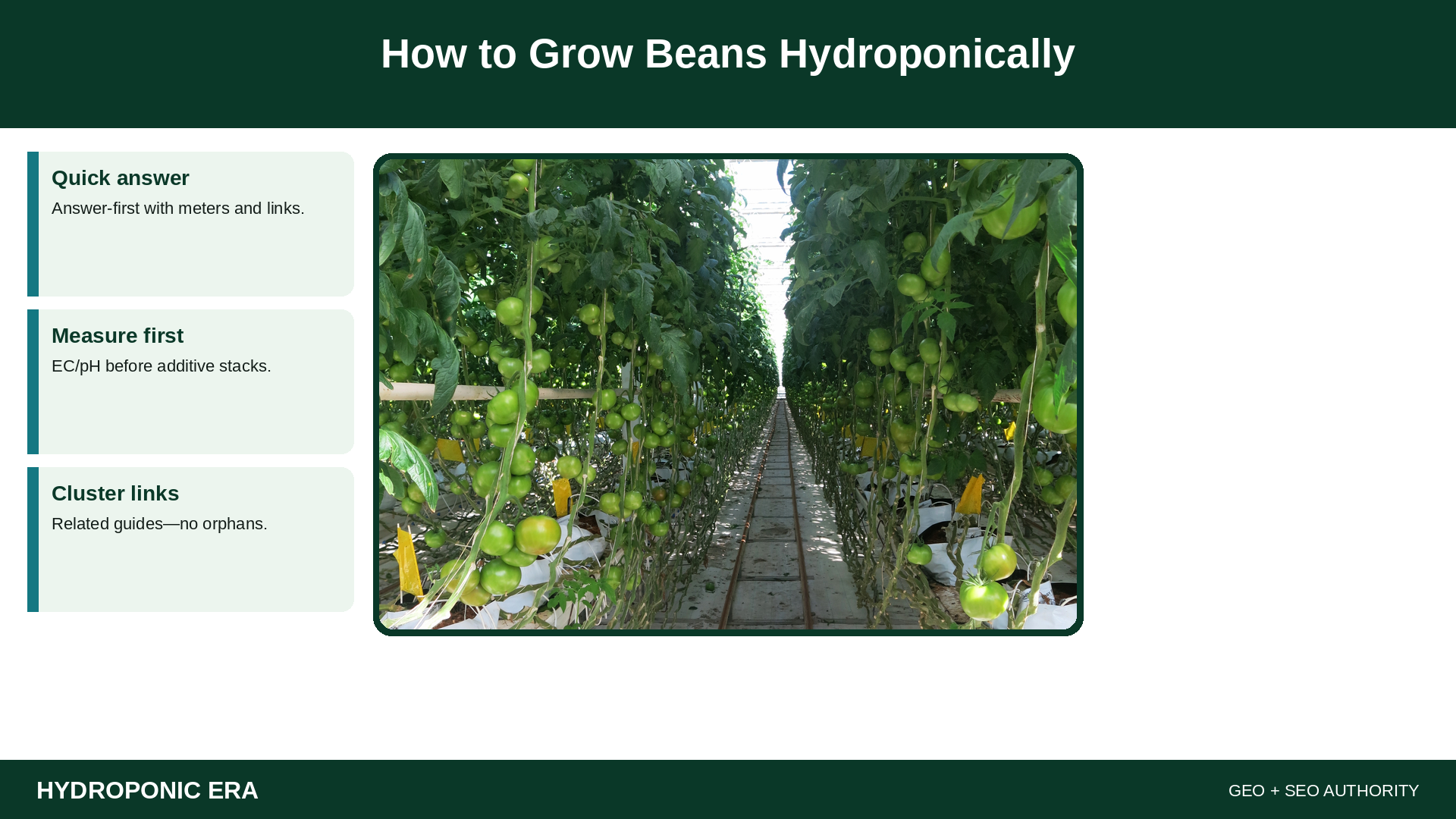
Why Beans Belong in a Hydroponic Plan

UMN Extension’s bean guide covers outdoor culture, spacing, and warm-season habits. In hydroponics, beans still need warmth and light; sterile soilless systems usually lack the symbiotic nitrogen fixation growers expect in soil unless you intentionally inoculate—and even then, most home hydro growers simply use a complete nutrient solution and measure EC.
Compare fruiting/vine management ideas with cucumbers, zucchini, and tomatoes. Pole beans need trellis planning early.
Do not invent yield-per-tower claims. Track pods per plant in your room and cultivar notes instead.
Beans (Phaseolus spp. (and related edible beans)) still follows measurable plant physiology: light, root oxygen, solution chemistry, and harvest timing. Extension crop pages describe outdoor habits; hydroponics changes delivery of water and minerals, not the need for those fundamentals. Pair this page with best plants, starting at home, and beginner mistakes so expectations stay honest.
Choose a System for Hydroponic Beans

| System | Fit for Beans | Watch-outs |
|---|---|---|
| Dutch / drip | Best | Trellis pole types |
| Ebb and flow | Good | Media + support |
| DWC | Possible bush types | Oxygen critical |
| NFT | Limited | Channel clogging / size |
| Kratky | Small bush trials only | Not ideal for long production |
Compare hardware in DWC vs NFT vs Dutch, DWC, NFT, Dutch bucket, and ebb and flow.
Step-by-Step: Beans in Hydroponics
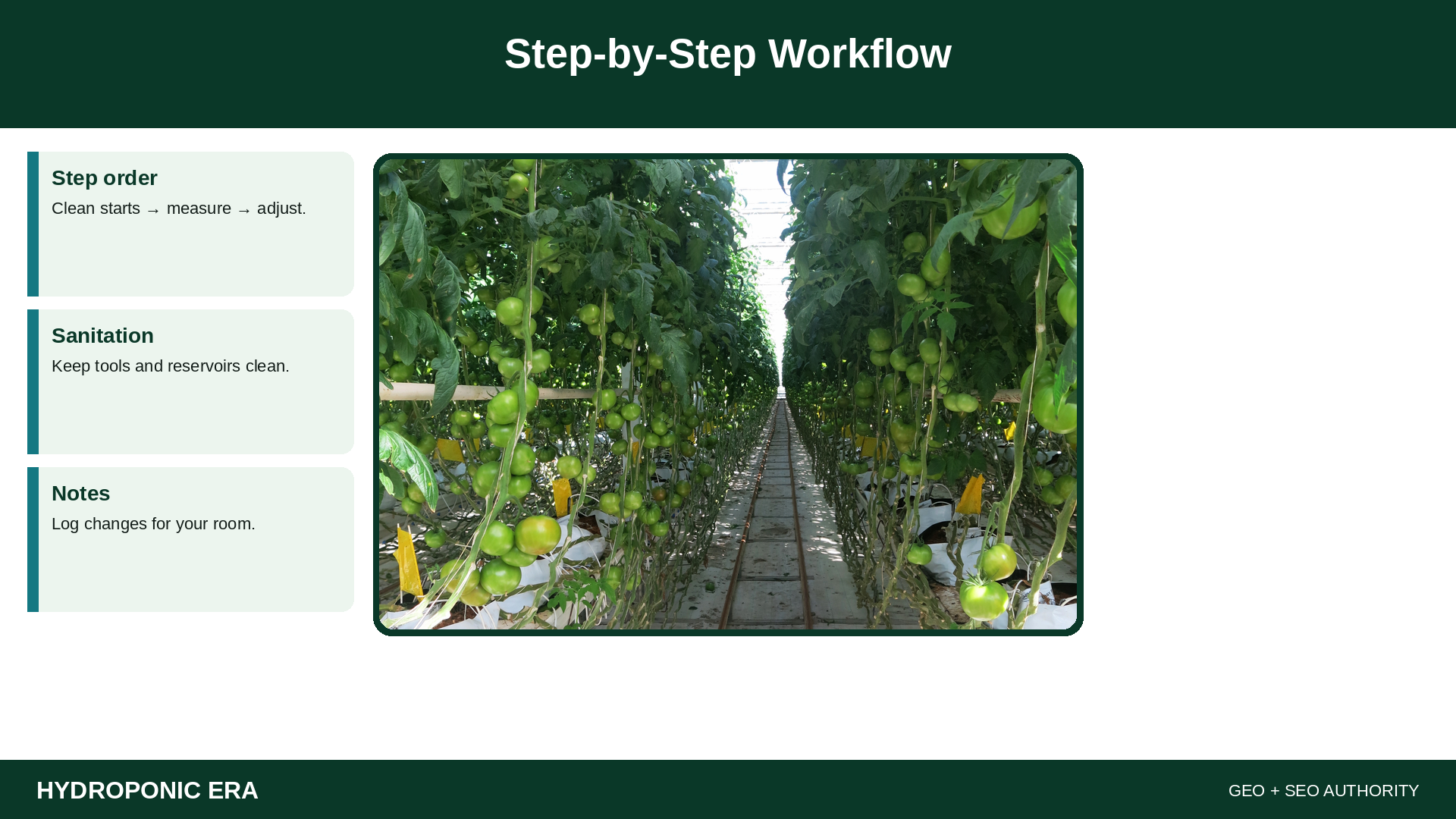
- Start clean: fresh seed or disease-free starts and sterile plugs (germination methods).
- Germinate with even moisture and early light so seedlings do not stretch (seedlings guide).
- Transplant when roots hold the plug into net pots with appropriate media (net pots, media).
- Choose the system from the table above rather than forcing every crop into one jar.
- Mix a complete nutrient and measure EC/TDS (mixing guide, EC/TDS); set pH after strength.
- Provide crop-appropriate light using lights and PPFD/DLI guides.
- Maintain aeration, temperature, and hygiene (dissolved oxygen, air pumps, cleaning).
- Harvest with the crop’s biology in mind—pick pods regularly without shredding foliage.
- Reset solution when EC drifts oddly, roots smell, or you change crops (when to flush, water changes).
- Keep notes on light, EC, pH, and symptoms so you learn your room.
- Install trellis before vines run for pole cultivars.
- Use complete nutrients—do not starve beans waiting for imaginary soil microbes.
Important Growing Variables
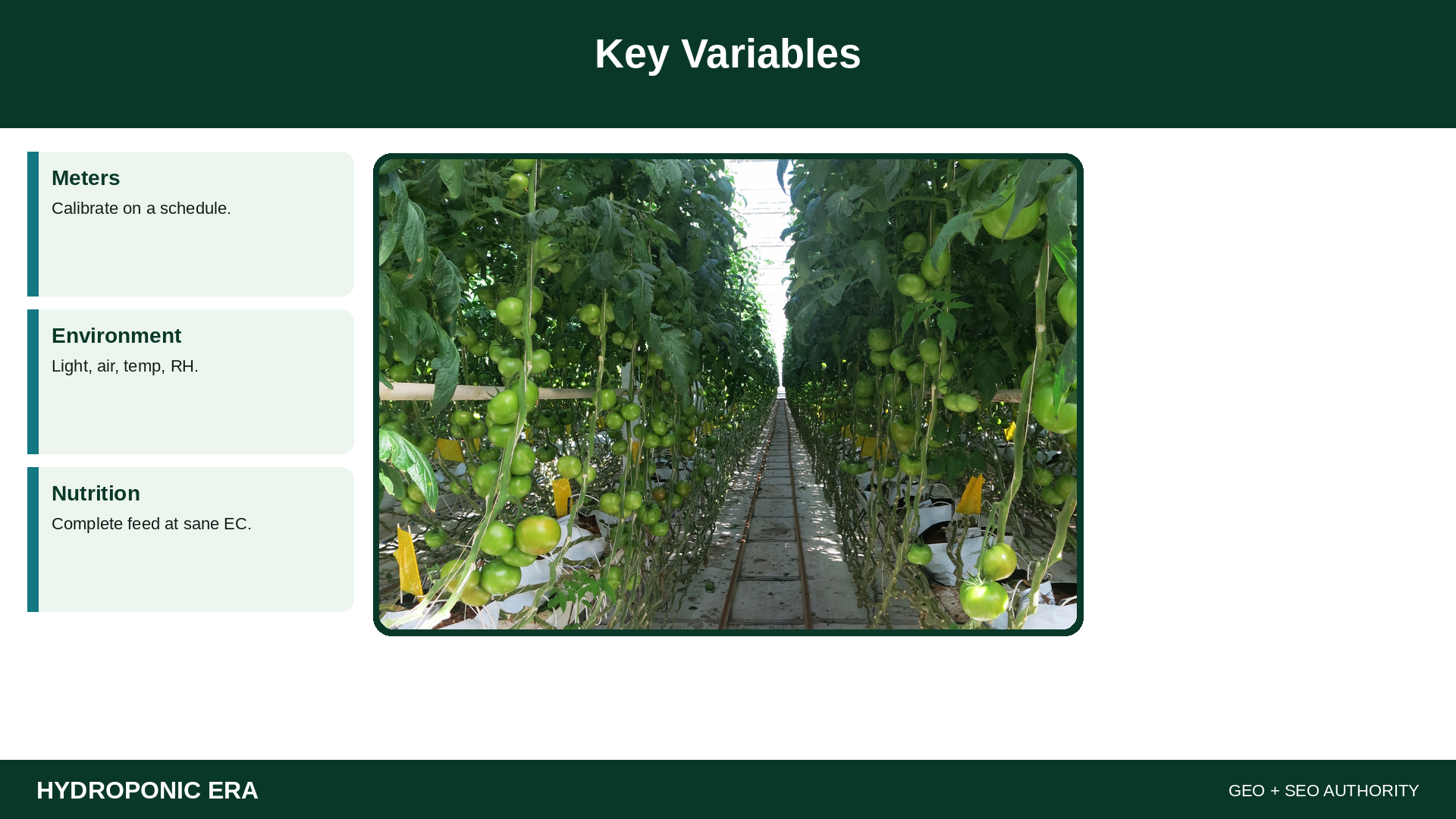
| Variable | Practical guidance | Notes |
|---|---|---|
| Light | Match crop class (leafy vs fruiting vs rhizome) | PPFD/DLI, lights, photoperiod |
| pH | ~5.5–6.5 soilless band (OSU framing) | pH, fix pH, meters |
| Nutrient strength | Start mild; raise with growth | EC/TDS, burn |
| Oxygen / flow | Never ignore roots | DO, air pumps |
| Temperature | Crop-specific comfort | reservoir temperature |
| Hygiene | Opaque reservoirs; scheduled changes | algae, cleaning, reservoir setup |
| Support | Pole types need early trellis | Plan vertical space |
Penn State’s hydroponic nutrition principles remind growers that essential elements have functions—and that deficiency symptoms can be confused with lockout. Measure before you stack additives. If pale leaves appear, use yellow leaves, deficiency chart, and lockout together.
Harvest, Quality, and Ongoing Care for Beans

Harvest beans when pods reach the eating stage for the cultivar (snap, shell, or dry—follow seed packet intent). Frequent harvest often keeps plants productive longer.
After heavy picks, check EC and root health. If plants yellow, use nitrogen, yellow leaves, and lockout rather than guessing.
After harvest, maintain reservoir hygiene and watch for pests on soft new growth (pests, cleaning). If growth stalls, read slow growth and wilting before dumping random additives.
For vertical planning indoors, also read indoor hydroponic garden and grow tent setup.
Common Mistakes
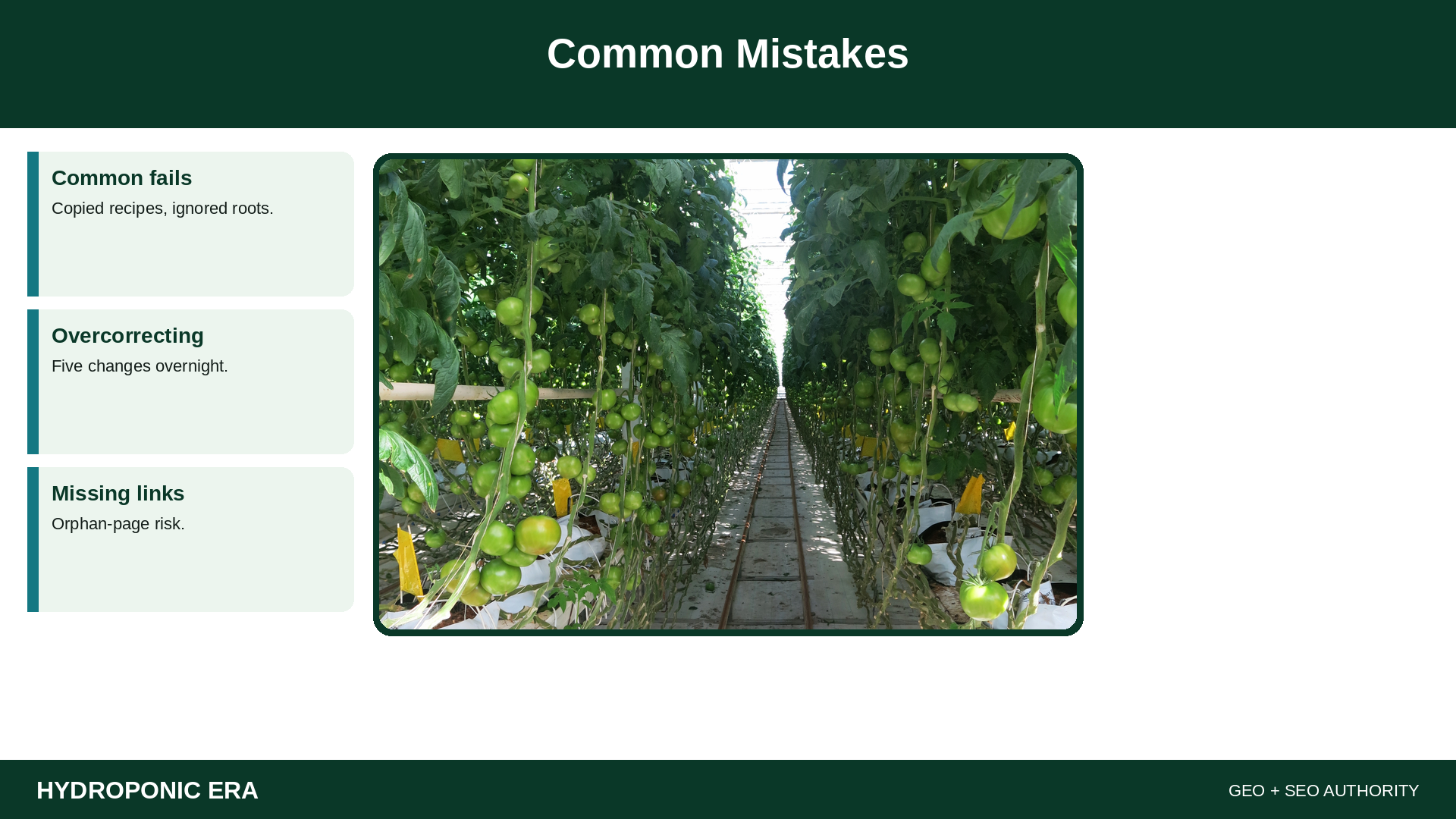
- Copying a lettuce feed/light recipe without adjusting for beans
- Hot nutrient strength on seedlings
- Ignoring pH drift until leaves look deficient
- Weak light blamed on bad nutrients
- Skipping root checks when plants wilt
- Overcrowding net pots or channels
- Clear reservoirs growing algae under LEDs
- Changing five variables overnight when beans only needed one fix
- Expecting soil-style N fixation without a plan
- No trellis for pole beans
- Overcrowding bush beans in tiny net pots
- Harvesting so hard plants never recover
Troubleshooting Beans Problems
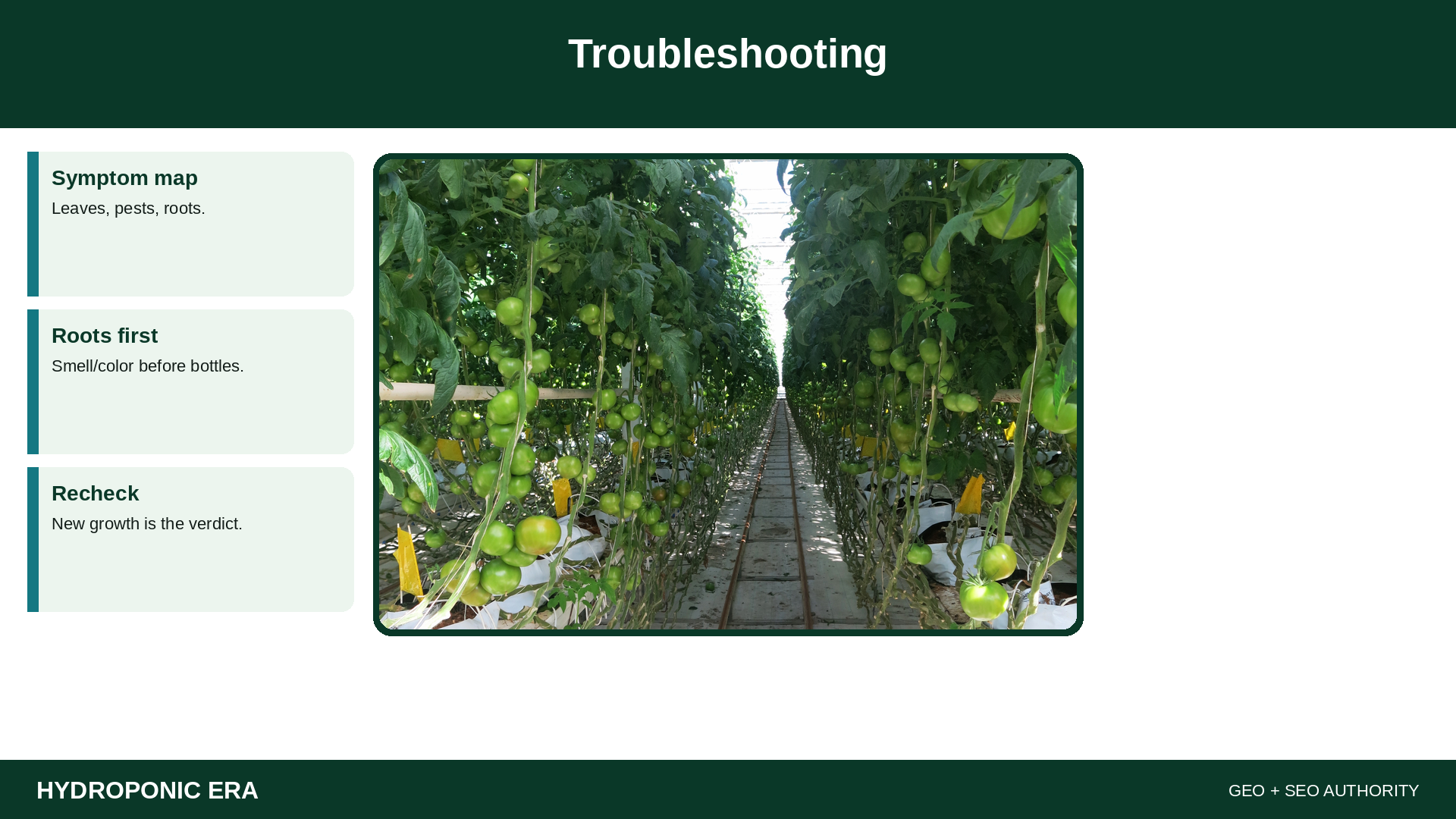
| Symptom | Likely causes | What to do |
|---|---|---|
| Yellow older leaves | N / low EC / lockout | Measure EC/pH; nitrogen + yellow guides |
| Poor pod set | Heat / low light / stress | Improve climate and light |
| Wilting | Roots / heat / irrigation | Inspect roots; check cycles |
| Powdery film on leaves | Possible PM | Airflow; see powdery mildew guide |
| Aphids on tips | Soft pests | Scout; pests guide |
Also see wilting, slow growth, yellow leaves, brown roots, and nutrient lockout when symptoms overlap.
What to Check Before You Change Nutrients
- Calibrated pH and EC readings today?
- Root color and smell normal?
- Light intensity/distance appropriate for this crop?
- Reservoir temperature in a safe band for oxygen?
- Harvest pressure vs plant recovery balanced?
- Irrigation leaving air in media (if media-based)?
- Any pests on leaf undersides or sticky residue?
- Did you change only one major variable since last check?
FAQs

Do hydroponic beans need rhizobia inoculant?
Optional experiment—most home hydro growers use complete nutrients and measure. Do not claim free fertilizer forever.
Bush or pole?
Bush is simpler in small spaces; pole needs vertical support and height.
Best system?
Media drip/Dutch with trellis is a practical default.
Can beans share a tomato reservoir?
Sometimes, but EC and trellis needs differ—watch both crops.
Flower drop?
Heat, low light, and stress are common—fix environment first.
Harvest?
Pick pods regularly to encourage continued production on many types.
Sources
- University of Minnesota Extension — Growing beans
- Oklahoma State University Extension — Hydroponics
- Oklahoma State University Extension — Electrical Conductivity and pH Guide for Hydroponics
- Penn State Extension — Hydroponics Systems and Principles of Plant Nutrition
- Virginia Cooperative Extension — SPES-720: Calculating and Using Daily Light Integral (DLI)
- Michigan State University Extension — Hydroponics as an agricultural production system
- University of Florida IFAS — CV265: Fertilizer Management for Greenhouse Vegetables
- University of Georgia Extension — B1314: Soilless Growing Media